TL;DR
NASA APOD’s November 22, 2026 image shows swirling clouds on Jupiter, photographed by the Juno spacecraft during its 14th close pass in 2018. The colors are enhanced, their chemical origins remain uncertain, and the cloud patterns offer a clearer clue to relative altitude: lighter clouds are typically higher than darker ones. From Earth, a telescope can show Jupiter’s disk and major bands, though not the detail in Juno’s close-up.
Juno’s featured Jupiter image was captured during its 14th low pass in 2018, and its orbit brings it near the planet about every 33 days.
Lighter Jupiter clouds are typically higher than darker ones, but the image does not reveal exact altitude for every feature.
Jupiter’s atmosphere is mostly colorless hydrogen and helium at cloud-top temperatures; trace compounds may supply the colors, with ammonium hydrosulfide one c…
The image is color-enhanced, so its vivid palette helps show patterns but does not identify each cloud’s chemistry.
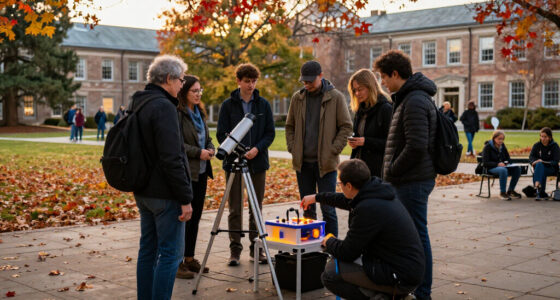
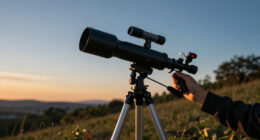
From Earth, a long-focal-length telescope can show Jupiter’s disk and broad bands; a wide-field lens suits the surrounding sky better.


Prime made for students and young adults
- Fast, free delivery for dorm and study essentials
- Prime Video and Amazon Music included
- Member-only deals
Juno’s close pass reveals a layered, restless Jupiter
NASA APOD’s November 22, 2026 image shows a close, color-enhanced view of Jupiter’s clouds, captured by Juno during its 14th low pass in 2018. Pale clouds curl around reddish regions at the lower right, while lighter cloud banks seem to cover darker areas toward the upper right. The image gives you a tight look at the planet’s cloud tops, rather than a complete globe or a view from Earth. [1] Think of the scene as a weather map made of overlapping brushstrokes. On Earth, a satellite photograph can show high white clouds crossing darker land or water; on Jupiter, the light and dark regions are all features of a deep atmosphere. NASA APOD says lighter clouds are typically higher than darker ones. That matters because cloud height is part of how scientists interpret the layers and motion of a vast atmosphere: a pale bank may sit above a darker region, giving a clue to how the visible structures overlap. “Typically” matters too: the image offers a helpful clue about relative height, not a universal rule that lets you calculate every cloud’s altitude from its shade alone. Other factors can affect brightness, so the pattern guides interpretation without resolving it by itself. Juno took the image during one of its repeated close approaches. Its orbit loops far from Jupiter and then sweeps near the planet roughly every 33 days, with each pass exploring a somewhat different sector. That rhythm is like returning to a vast, shifting storm system from a new roadside overlook every month: familiar bands remain, but the local pattern changes. Repeated passes let researchers put individual close-up views into a broader record, while the spacecraft’s changing path means no single frame represents the whole planet. Juno was near enough to show swirling detail that Earth-based views cannot resolve.Popular right now

Dyson Cyclone V10 Origin Cordless Vacuum

Shark PowerDetect Robot Vacuum and Mop Combo with 60-Day Self-Emptying Base (AV2800ZE)

KitchenAid Artisan 5-Qt Tilt-Head Stand Mixer, Almond Cream
As an affiliate, we earn on qualifying purchases.
Why Jupiter’s cloud colors remain a scientific puzzle
Jupiter’s visible cloud colors come from trace materials and atmospheric conditions that scientists have not fully pinned down. The bulk atmosphere is mostly hydrogen and helium, which are colorless at the chilly temperatures near the cloud tops. NASA APOD identifies ammonium hydrosulfide as one leading candidate among the small amounts of compounds that may help supply the color, while making clear that the answer is still under study. [1] That uncertainty is easy to overlook when an image looks so vivid. A rusty patch may invite you to label it as a particular chemical, but the color alone does not prove what molecule is there. Imagine seeing a red stain through a tinted window: you can describe the color and shape, but you need more evidence to identify what caused it. Juno’s image is color-enhanced, so its palette helps reveal structure and contrast; it should not be treated as a simple natural-color portrait of Jupiter. The distinction matters because a useful visual signal and a chemical diagnosis are different things: enhancement can make boundaries easier to compare, while making the displayed shades less direct evidence of what a human eye would see. This distinction makes the picture more interesting, not less. You can confidently discuss the patterns and the relative heights NASA describes, while treating the chemical explanation as an open question. A student comparing Jupiter photographs might notice familiar cream, orange, and brown bands across several images, yet those repeating shades still do not settle which trace compounds create them. Good planetary science separates what a camera records from what researchers infer, so a striking resemblance or recurring color can suggest questions without answering them.What you can see from Earth—and what stays out of reach
From Earth, you can see Jupiter’s bright disk and, with a modest telescope, some of its broad cloud bands and four large moons; you cannot reproduce the fine swirls in Juno’s close-up. The difference comes down to distance and scale: Juno photographed the clouds from a close pass, while your telescope gathers light across the enormous gap between Earth and Jupiter. [1] | Viewing method | What you can expect | Example | |—|—|—| | Naked eye | A bright, steady-looking point of light, with no visible disk detail | Find Jupiter among the stars when it is above your horizon | | Binoculars | A brighter point and, in steady conditions, the Galilean moons as tiny companions | Brace binoculars against a railing and look for small points beside the planet | | Small telescope | A disk, broad bands, and sometimes the moons’ changing positions | At moderate magnification, watch the planet’s shape sharpen during steady air | | Juno close-pass image | Dense cloud swirls and small-scale contrast, presented with enhanced color | The featured 2018 image shows detail an Earth observer cannot match | The table describes general observing expectations, not a guarantee for every night. Turbulent air can make Jupiter shimmer and blur, while a low planet looks worse through thicker layers of atmosphere. This creates a practical tradeoff: higher magnification can make the disk larger, but it also enlarges atmospheric blur and any wobble in the telescope. If you take a phone snapshot through an eyepiece, expect a tiny disk and perhaps soft bands; the dramatic close-up belongs to a spacecraft perspective, not a backyard setup. Even modest views still show something the close-up cannot: Jupiter as a complete disk in the context of its moons and the night sky.How to photograph Jupiter without a spacecraft
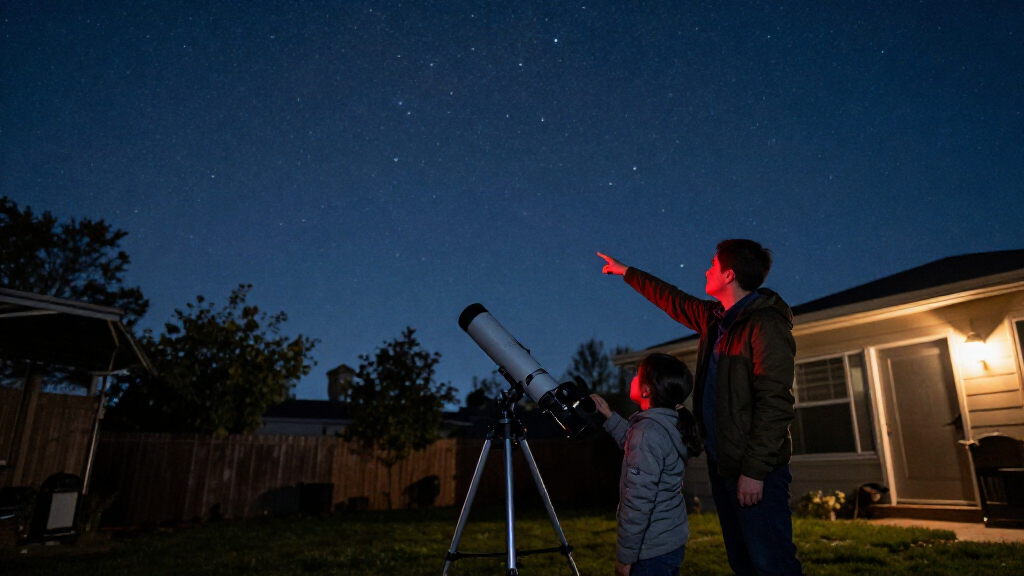
To photograph Jupiter from Earth, start with a small telescope and a stable mount, then focus carefully and capture a short video when the planet sits high in a dark, steady sky. That long-focal-length setup fits a bright planet better than a wide-field lens, which is designed to show broad stretches of sky rather than fine detail on a small disk. No single gear choice can overcome poor atmospheric steadiness, so patience matters as much as magnification.- Check the sky chart and weather. Confirm that Jupiter is above your horizon at a convenient hour. A clear forecast helps, but still air matters too; stars that twinkle violently often signal a view that will blur planetary detail.
- Use a telescope with a secure mount. A long focal length makes the planet appear larger in the frame. A wobbly tripod can turn even a brief video into a jittering blur.
- Focus on the planet’s edge. Adjust until Jupiter’s rim looks as crisp as the changing air allows. Refocus if the image softens as the telescope cools outdoors.
- Record several short clips. Keep the planet centered and avoid extreme magnification. You can later select sharper moments, while remembering that processed or color-adjusted results are not the same as Juno’s spacecraft image.
What the colors and perspective do—and don’t—tell you
The enhanced colors help you see cloud patterns and contrast, but they do not provide a direct chemical label for each patch. NASA APOD says lighter clouds are typically higher than darker ones; it does not claim that every pale feature has a known altitude or that a particular shade identifies a single compound. That careful distinction keeps a beautiful image from turning into an overconfident explanation. [1] Perspective matters, too. The featured frame comes from Juno’s close approach and shows only a portion of Jupiter, so it is not a map of the whole planet. A curved cloud band near the image edge may look compressed or stretched by the viewing angle. It is similar to photographing a globe from inches away: you see texture in one region, but cannot infer the shape of every feature on the far side. The close perspective is a strength for studying local structure and a limitation for judging how that structure fits into the full globe; wider views and repeated observations provide the missing context. Color-enhanced planetary images can be useful precisely because they make subtle differences easier to notice. They can help you compare adjacent cloud structures, track patterns, and ask which regions sit above others. But an edited palette can shift familiar expectations about “true” color. When you share the picture with a friend, describe it as a color-enhanced view and point to the visible pattern first: light curls crossing darker domains. That is the observation; the chemistry remains a question.Why Juno’s repeating visits make each image useful
Juno’s roughly 33-day loop gives researchers repeated close looks at different sectors of Jupiter, adding a new piece to the picture each time the spacecraft swoops near. NASA APOD notes that the mission explores a slightly different region on each pass, so one dramatic frame should be read as a local view within an ongoing series, not as the final word on the planet. [1] Imagine checking the same coastline from a low-flying aircraft every few weeks. One flight might catch a bright line of surf; another might reveal a new pattern of clouds or water. Jupiter’s atmosphere also changes, and repeated views give scientists opportunities to compare structures over time. That comparison can help distinguish a feature that persists from one that changes, although each pass sees a different sector and therefore does not provide a simple like-for-like repeat of the same scene. The exact image here dates to 2018 and came from Juno’s 14th low pass, a specific moment in the mission’s sequence. For a casual observer, this is a reminder that planetary photographs are snapshots, not static portraits. If you look at Jupiter through a telescope on two different nights, you may notice the planet’s moons in different positions even if the broad bands seem familiar. Juno’s close passes extend that sense of time and place: the spacecraft keeps returning, but the patch of cloud tops in view changes. The image therefore combines a striking scene with one frame in a longer record, where each close look adds detail but does not by itself explain every change.A simple plan for finding Jupiter tonight
You can look for Jupiter tonight by checking a current sky chart for your location, then choosing a clear stretch of sky where the planet rises high enough to view comfortably. The November 22, 2026 APOD date does not by itself tell you where Jupiter will appear from your home; the planet’s position and visibility change with date, time, and location. A chart or astronomy app can supply that local, current information. [1]- Set your location and observing time. A chart for Berlin at 9 p.m. can differ from one for New York at the same clock time. Use your own location and check whether Jupiter is above the horizon.
- Find a clear view. Choose a spot away from bright lamps and tall buildings. If Jupiter is low, wait for it to climb; looking through warm air above a roof can make the image waver.
- Start with your eyes. Jupiter appears as a bright point. Binoculars may reveal the nearby moons as tiny companions, especially when you steady your hands against a post or wall.
- Try a telescope if you have one. Use moderate magnification first, then adjust focus. Look for the disk and broad bands rather than expecting Juno-level cloud detail.