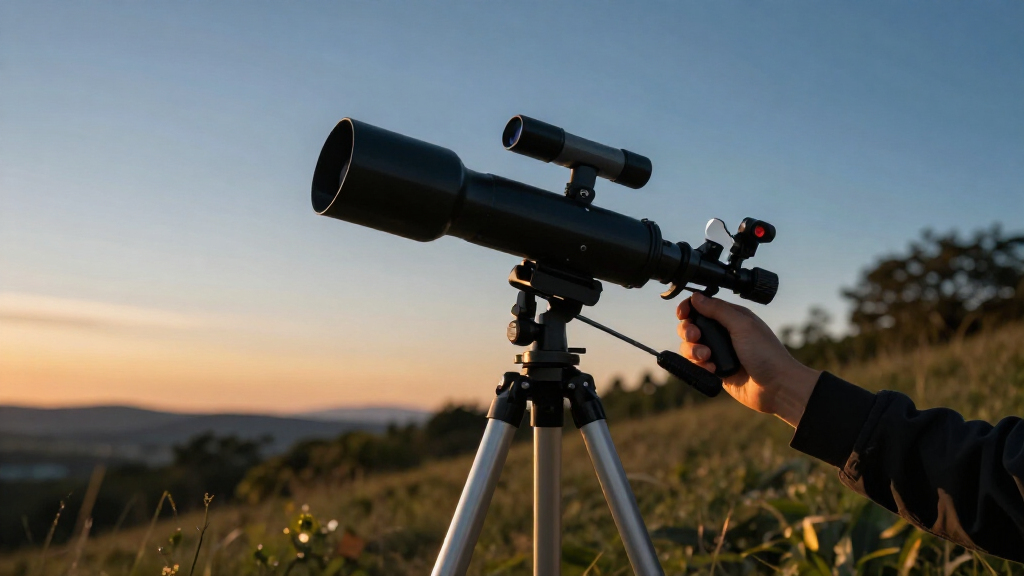
For a first astrophotography setup, the ZWO Seestar S30 Pro is my best overall pick because its app-controlled imaging approach reduces the setup and tracking work that often frustrates beginners. The Celestron StarSense Explorer LT 114AZ is a better fit if you want to learn the sky through a traditional telescope, while the SVBONY SV503 102mm f/7 ED offers a more capable optical platform for someone prepared to add imaging gear. The main tradeoff is between guided, automated capture and the greater control—and extra learning—of a conventional telescope and camera. Aperture, mount stability, portability, and whether a camera is included also change what each model can realistically do. Read on for my full comparison and buying advice.

Prime made for students and young adults
- Fast, free delivery for dorm and study essentials
- Prime Video and Amazon Music included
- Member-only deals
Key Takeaways
- Smart scopes lead for ease of capture: the Seestar S30 Pro, Dwarf Mini, and several 4K-screen models combine imaging and control features, reducing the need to build a separate camera-and-mount system.
- Traditional telescopes vary widely in imaging readiness: the StarSense Explorer LT 114AZ helps beginners locate targets, but sky guidance is not the same as automatic tracking for long exposures.
- Aperture alone does not settle the choice: the SVBONY SV503 102mm f/7 ED has a stronger upgrade path for optical imaging, while smaller smart scopes may be simpler for quick, self-contained sessions.
- Among the 70–90mm refractors, accessories and focal length shape the experience: phone adapters and carry bags help with entry-level use, but a phone mount does not provide the tracking and camera control needed for every target.
- Buy for the images you want to make: lunar and bright-planet viewing can suit a manual telescope, while faint deep-sky targets usually call for tracking, stacking, and a workflow the beginner is willing to learn.
| Smart Digital Telescope with Autofocus and 4K Astrophotography |  | Best for Hands-Off Digital Imaging | Telescope type: Digital refractor | Objective aperture: 80 mm | Focal length: 300 mm | VIEW LATEST PRICE | See Our Full Breakdown |
| Dianfan 90mm Aperture Refractor Telescope, 800mm Focal Length, with Stainless Steel Tripod, Phone Adapter, and Carry Bag |  | Best for Longer-Focal-Length Viewing | Telescope type: Refractor | Objective aperture: 90 mm | Focal length: 800 mm | VIEW LATEST PRICE | See Our Full Breakdown |
| Gskyer 70mm Refractor Telescope with Tripod, Carry Bag, Phone Adapter, and Remote |  | Best Lightweight Manual Starter | Telescope type: Refractor | Objective aperture: 70 mm | Focal length: 400 mm (f/5.7) | VIEW LATEST PRICE | See Our Full Breakdown |
| DWARFLAB Dwarf Mini Smart Telescope |  | Best Compact Smart Astronomy Imager | Objective aperture: 30 mm | Sensor: Sony IMX662, 1/2.8-inch, 2.9 μm pixels | Focal length: 150 mm | VIEW LATEST PRICE | See Our Full Breakdown |
| Dianfan 90mm Refractor Telescope, 500mm Focal Length, Blue |  | Best Value for a Larger Aperture | Telescope type: Refractor | Aperture: 90 mm | Focal length: 500 mm | VIEW LATEST PRICE | See Our Full Breakdown |
| JVAXS Smart Digital Astrophotography Telescope with 3-Inch Flip Screen, App Control, Remote, and 64GB Card |  | Best for Shared Screen Viewing | Objective lens diameter: 78 mm | Focus: Manual | Display: 3-inch flip-out screen | VIEW LATEST PRICE | See Our Full Breakdown |
| HUGERSTAR 90mm Aperture Refractor Telescope with Tripod and Accessories |  | Best for Learning with Conventional Optics | Telescope type: Refractor | Aperture: 90 mm | Focal length: 800 mm | VIEW LATEST PRICE | See Our Full Breakdown |
| YOTOMIGUO Smart Refractor Telescope with 4K Camera and Foldable Display |  | Best for Automatic Focusing | Telescope type: Refractor | Aperture: 80 mm | Focal length: 300 mm | VIEW LATEST PRICE | See Our Full Breakdown |
| Autofocus Digital Refractor Telescope with 4K Camera |  | Best for App and Remote Operation | Objective lens diameter: 80 mm | Focal length: 300 mm | Focus: Autofocus | VIEW LATEST PRICE | See Our Full Breakdown |
| Portable Smart Refractor Telescope with Autofocus and 4K Camera |  | Best Specified Smart Telescope Package | Telescope type: Refractor | Objective aperture: 80 mm | Focal length: 300 mm | VIEW LATEST PRICE | See Our Full Breakdown |
| 70mm Refractor Telescope with 4.5-Inch LCD Display |  | Best for Screen-Based Lunar Viewing | Optical design: Refractor | Aperture: 70mm | Focal length: 400mm | VIEW LATEST PRICE | See Our Full Breakdown |
| SVBONY SV503 102mm f/7 ED Refractor Telescope |  | Best for Learning Manual Deep-Sky Imaging | Optical design: ED refractor | Aperture: 102mm | Focal length: 714mm | VIEW LATEST PRICE | See Our Full Breakdown |
| Celestron StarSense Explorer LT 114AZ Smartphone-Guided Newtonian Telescope |  | Best for Finding Targets as a Beginner | Optical design: 114mm Newtonian reflector | Focal length: 1000mm | Mount: Manual altazimuth | VIEW LATEST PRICE | See Our Full Breakdown |
| Celestron AstroMaster 130EQ Beginner Telescope |  | Best for Aperture on a Manual Mount | Optical design: Newtonian reflector | Aperture: 130mm (5.1in) | Focal length: 650mm | VIEW LATEST PRICE | See Our Full Breakdown |
| ZWO Seestar S30 Pro Smart Telescope with App-Controlled Astrophotography |  | Best for Automated Deep-Sky Imaging | Mount: Altazimuth; supports equatorial mode | Focal length: 160mm | Field of view: 4.6° | VIEW LATEST PRICE | See Our Full Breakdown |
| beginner astrophotography telescope | Focal length | Mount | Focus |
|---|---|---|---|
| Smart Digital Telescope with A | 300 mm | — | Autofocus |
| Dianfan 90mm Aperture Refracto | 800 mm | Altazimuth | Manual |
| Gskyer 70mm Refractor Telescop | 400 mm (f/5.7) | Altazimuth | — |
| DWARFLAB Dwarf Mini Smart Tele | 150 mm | — | Manual and automatic |
| Dianfan 90mm Refractor Telesco | 500 mm | Altazimuth | — |
| JVAXS Smart Digital Astrophoto | — | — | Manual |
| HUGERSTAR 90mm Aperture Refrac | 800 mm | Altazimuth | — |
| YOTOMIGUO Smart Refractor Tele | 300 mm | — | Autofocus |
| Autofocus Digital Refractor Te | 300 mm | — | Autofocus |
| Portable Smart Refractor Teles | 300 mm | Tripod mount | Autofocus |
| 70mm Refractor Telescope with | 400mm | Altazimuth | — |
| SVBONY SV503 102mm f/7 ED Refr | 714mm | — | — |
| Celestron StarSense Explorer L | 1000mm | Manual altazimuth | — |
| Celestron AstroMaster 130EQ Be | 650mm | Manual German equatorial | — |
| ZWO Seestar S30 Pro Smart Tele | 160mm | Altazimuth; supports equatorial mode | Autofocus and manual focus |
More Details on Our Top Picks
Smart Digital Telescope with Autofocus and 4K Astrophotography
For beginners who want images on a screen rather than a traditional eyepiece-only setup, this model pairs an 80 mm refractor with autofocus, app control, and a flip-out display. Its 30 MP photos and 4K video make capture straightforward, while remote operation can reduce vibration from touching the telescope. Compared with the DWARFLAB Dwarf Mini, it offers a larger stated aperture and a more generous display setup, but it lacks the Dwarf Mini’s automated target finding and listed equatorial mode. The claimed 350× maximum zoom needs caution: the product data does not clarify whether that figure is optical, and high magnification alone does not guarantee useful detail. It is a convenient imaging-first choice, but the tripod mount and unspecified included storage card make it less suited to long-exposure tracking workflows.
Pros:- Autofocus and app or remote control reduce manual adjustments during capture.
- Flip-out screen and digital eyepiece provide more than one way to frame a subject.
- Records 30 MP photos and 4K video.
- Up to six hours of stated battery runtime supports extended observing sessions.
Cons:- The stated 350× zoom is not identified as optical magnification.
- A storage card is not specified as included, despite support for external storage.
- Tripod mounting does not provide the listed equatorial tracking options of the DWARFLAB Dwarf Mini.
Best for: Beginners who want autofocus, a built-in viewing screen, and simple remote photo or video capture for the Moon and daytime subjects.
Not ideal for: Buyers seeking a clearly specified optical magnification or a tracking mount for more demanding long-exposure astrophotography.
- Telescope type:Digital refractor
- Objective aperture:80 mm
- Focal length:300 mm
- Image sensor:Starlight CMOS
- Photo and video:30 MP photos; 4K video
- Focus:Autofocus
- Displays:Digital eyepiece and flip-out external screen
- Battery runtime:Up to 6 hours
- External storage support:Up to 512 GB
Our verdict“Choose this for accessible screen-based capture and autofocus, but skip it if your priority is clearly documented tracking for long exposures.”
Dianfan 90mm Aperture Refractor Telescope, 800mm Focal Length, with Stainless Steel Tripod, Phone Adapter, and Carry Bag
The Dianfan 90800 is the traditional, manually operated choice here: a 90 mm aperture and 800 mm focal length favor closer views of the Moon and bright objects over the wider framing of shorter instruments. Its phone adapter offers a basic route into imaging, but this is not an automated capture system like the Smart Digital Telescope with Autofocus and 4K Astrophotography; framing and focusing remain hands-on. The supplied eyepieces and 3× Barlow cover a stated 32×–240× range, though beginners should expect the highest magnifications to be most useful only when viewing conditions cooperate. A 45° mirror also makes daytime landscapes more natural to view than through many astronomy-first setups. The tradeoff is portability: at 4.7 kg, it is heavier than the 2.1 kg Dianfan 90500 and its 80 cm tube takes more room.
Pros:- 90 mm objective gathers more light than the 70 mm Gskyer refractor.
- 800 mm focal length suits closer views of the Moon and other bright targets.
- Includes two eyepieces, a 3× Barlow, phone adapter, and carry bag.
- 45° zenith mirror provides upright terrestrial viewing.
Cons:- Manual focus and altazimuth operation require hands-on aiming and adjustment.
- At 4.7 kg, it is heavier than the Dianfan 90500 and less convenient to carry.
- Phone-adapter imaging lacks the integrated sensor and capture controls of digital models.
Best for: Beginners who want a conventional refractor for lunar viewing and terrestrial observation, with a phone adapter for occasional image capture.
Not ideal for: Travelers seeking a lightweight setup or beginners who want automated target finding, autofocus, and app-led imaging.
- Telescope type:Refractor
- Objective aperture:90 mm
- Focal length:800 mm
- Magnification range:32×–240×
- Mount:Altazimuth
- Focus:Manual
- Field of view:1.56 degrees
- Weight:4.7 kg
- Included accessories:Stainless steel tripod, phone adapter, carry bag, 45° zenith mirror
Our verdict“Pick the 90800 for conventional lunar and daytime viewing with a phone adapter, not for lightweight travel or automated astrophotography.”
Gskyer 70mm Refractor Telescope with Tripod, Carry Bag, Phone Adapter, and Remote
The Gskyer keeps the entry experience simple: a 70 mm refractor, short 400 mm focal length, and altazimuth mount make it a lighter, wider-view alternative to the longer Dianfan 90800. That combination is friendlier for scanning the sky and carrying the kit, though its smaller aperture gives it less light-gathering capacity than either 90 mm Dianfan model. The included 25 mm and 10 mm eyepieces, Barlow, and 5×24 finder give beginners several ways to locate and frame targets; a smartphone adapter and wireless remote add a low-cost path to basic photos. Unlike the DWARFLAB Dwarf Mini, it has no automated target finding or sensor-led imaging, so users must aim and focus manually. Its best role is learning the fundamentals and trying lunar or daytime snapshots, not pursuing long-exposure deep-sky work.
Pros:- 70 mm aperture and 400 mm focal length make a relatively compact, wide-view starter setup.
- Includes two eyepieces, a 3× Barlow, and a crosshair finder.
- Carry bag and adjustable aluminum tripod support transport and storage.
- Smartphone adapter and wireless remote enable basic image capture without touching the phone during exposure.
Cons:- Smaller aperture gathers less light than either 90 mm Dianfan refractor.
- Manual aiming and focus provide no automated target finding or tracking.
- The product warns against aiming at or near the Sun, requiring care during daytime use.
Best for: First-time observers who want a portable manual telescope with a carry bag and phone accessories for casual lunar photography.
Not ideal for: Buyers who want automated tracking, a larger aperture for faint targets, or a telescope designed for long-exposure deep-sky imaging.
- Telescope type:Refractor
- Objective aperture:70 mm
- Focal length:400 mm (f/5.7)
- Mount:Altazimuth
- Eyepieces:25 mm (16×) and 10 mm (40×)
- Maximum magnification:120×
- Finderscope:5×24 with crosshair lines
- Tripod:Height-adjustable aluminum
- Included imaging accessories:Smartphone adapter and wireless camera remote
Our verdict“Choose the Gskyer to learn manual observing and try simple phone images in a portable package, not for serious deep-sky capture.”
DWARFLAB Dwarf Mini Smart Telescope
For a beginner who values automatic target finding over a conventional eyepiece experience, the Dwarf Mini is the most purpose-built imaging option in this group. Its Auto GOTO, app sky map, and 360° pivot simplify locating subjects, while optional equatorial mode and exposures up to 90 seconds offer a route toward more advanced capture. At just 1.85 lb, it is far easier to pack than either 90 mm Dianfan refractor. That portability comes with a real optical compromise: the 30 mm objective is much smaller than the 70 mm Gskyer or 80 mm digital refractor, limiting light gathering. Its 150 mm focal length and 2.45° field suit wider framing rather than close lunar detail. Smartphone dependence and a listed manual focus option also mean setup is not entirely hands-off.
Pros:- Auto GOTO and interactive sky map help beginners locate targets.
- Very compact at 1.85 lb, well suited to travel and quick sessions.
- Optional equatorial mode and exposures up to 90 seconds support experimentation with imaging.
- Light pollution filter and cloud processing add imaging tools in the app-based workflow.
Cons:- 30 mm objective is much smaller than the apertures on the Gskyer and Dianfan refractors.
- Smartphone is required for app control and core operation.
- Manual focus is also listed, so users may still need to make adjustments.
Best for: Travel-minded beginners who want app-guided target finding, wide-field imaging, and a compact instrument with an equatorial mode to explore longer exposures.
Not ideal for: Observers prioritizing close lunar detail, a traditional eyepiece telescope, or a larger aperture for gathering more light.
- Objective aperture:30 mm
- Sensor:Sony IMX662, 1/2.8-inch, 2.9 μm pixels
- Focal length:150 mm
- Field of view:2.45 degrees
- Weight:1.85 lb (840 g)
- Mount modes:Altazimuth and equatorial
- Maximum single-frame exposure:90 seconds
- Focus:Manual and automatic
- Imaging features:App control, Auto GOTO, light pollution filter, cloud processing
Our verdict“Choose the Dwarf Mini for portable, app-guided wide-field imaging, but favor a larger-aperture refractor for brighter visual views and lunar detail.”
Dianfan 90mm Refractor Telescope, 500mm Focal Length, Blue
The Dianfan 90500 gives beginners a 90 mm aperture in a lighter, shorter package than the 800 mm Dianfan 90800. Its 500 mm focal length and listed 2-degree field of view make it a more flexible fit for broad lunar framing and brighter sky targets, while the included eyepieces provide several magnification choices. A phone adapter offers a simple way to attempt snapshots, but the manual altazimuth mount means the user must keep adjusting position as celestial objects move. That makes it less suited to sustained astrophotography than the app-controlled Dwarf Mini, even though the 90500 has three times the stated objective diameter. Its backpack and 2.1 kg listed weight make it easier to take outdoors than the 90800, but the 25×–250× range should not be mistaken for guaranteed sharp views at the upper end.
Pros:- 90 mm aperture provides more light-gathering capacity than the 70 mm Gskyer.
- 500 mm focal length and 2-degree field offer a wider framing option than the Dianfan 90800.
- Includes three eyepieces, phone adapter, moon filter, and backpack.
- At 2.1 kg, it is lighter than the Dianfan 90800.
Cons:- Manual focus and altazimuth mounting require ongoing hands-on adjustments.
- No automated target finding or tracking is specified, limiting long-exposure astrophotography.
- The stated 250× upper magnification does not guarantee useful detail under typical viewing conditions.
Best for: Beginners who want a 90 mm conventional refractor that is easier to carry than a longer 800 mm model and includes basic phone-imaging accessories.
Not ideal for: Astrophotographers seeking automated tracking, long exposures, or a completely hands-off digital imaging workflow.
- Telescope type:Refractor
- Aperture:90 mm
- Focal length:500 mm
- Magnification range:25×–250×
- Eyepieces:6 mm, 12.5 mm, and 20 mm
- Mount:Altazimuth
- Field of view:2 degrees
- Weight:2.1 kg
- Included accessories:Smartphone adapter, moon filter, backpack, 1.5× erecting lens, 3× Barlow lens
Our verdict“Pick the 90500 for a more portable 90 mm refractor and basic phone snapshots, but choose a smart scope for automated imaging.”
JVAXS Smart Digital Astrophotography Telescope with 3-Inch Flip Screen, App Control, Remote, and 64GB Card
The JVAXS is a better fit for beginners who want to see and save a digital view than for those learning traditional eyepiece observing. Its 3-inch flip-out display makes it easy to share a view without taking turns at an eyepiece, while the app adds live viewing and phone transfers. A remote with a stated 85-foot range can reduce shake from touching the telescope during capture. Compared with the HUGERSTAR 90mm refractor, it puts less emphasis on optical observing accessories and more on camera-style convenience. The 78mm aperture and manual focus are meaningful limitations: focus still takes hands-on adjustment, and the listed information gives no optical magnification or tracking details. Its 4K video and 30 MP photos are capture specifications, not a promise of detailed or tracked deep-sky images.
Pros:- Flip-out display supports shared viewing without crowding around an eyepiece.
- App provides live viewing and photo and video transfers to a phone.
- Wireless remote is specified to work up to 85 feet away.
- Includes a 64GB card and offers diopter adjustment.
Cons:- Manual focus requires the user to adjust the focus ring.
- No optical magnification or tracking features are specified, limiting confidence about astrophotography capability.
- Its 78mm aperture is smaller than the HUGERSTAR 90mm’s.
Best for: Beginners who want a screen-based observing experience, shared views, and straightforward phone transfers.
Not ideal for: Learners seeking a conventional eyepiece telescope with stated magnification and tracking details, or anyone expecting automatic focusing.
- Objective lens diameter:78 mm
- Focus:Manual
- Display:3-inch flip-out screen
- Photo resolution:30 MP
- Video resolution:4K
- Remote range:Up to 85 feet
- Included storage:64GB card
- Maximum supported storage:512GB
- Warranty:2 years
Our verdict“Choose the JVAXS if screen-based shared viewing and phone transfers matter more than a documented optical magnification range or automatic focus.”
HUGERSTAR 90mm Aperture Refractor Telescope with Tripod and Accessories
For a beginner who wants to learn how a telescope works before leaning on digital capture, the HUGERSTAR offers the most conventional setup in this group. Its 90mm aperture and 800mm focal length pair with two eyepieces, a finder scope, and a 3× Barlow, giving newcomers several ways to frame the Moon and brighter targets. The included phone adapter supports basic imaging, but this is not a smart camera telescope: it has manual focus and an altazimuth mount, with no tracking or built-in camera specified. Compared with the JVAXS, it gives more explicit optical and eyepiece details but lacks a screen, app capture, and remote. The tripod, accessory tray, and bag make it a fuller observing kit, though assembly and manual aiming ask more of the user.
Pros:- 90mm aperture and fully multi-coated lenses provide a larger stated aperture than the digital refractors in this batch.
- Two eyepieces and a 3× Barlow offer multiple viewing configurations.
- Includes a finder scope, moon filter, phone adapter, accessory tray, and carrying bag.
- Adjustable tripod suits different observing positions.
Cons:- Manual focus and altazimuth operation require hands-on adjustment and aiming.
- No built-in camera, display, or tracking feature is specified.
- Assembly is required.
Best for: Beginners who want to practice manual aiming and eyepiece observing, with a phone adapter for occasional lunar photos.
Not ideal for: Buyers who want automatic tracking, built-in digital imaging, or app-based capture rather than a hands-on optical setup.
- Telescope type:Refractor
- Aperture:90 mm
- Focal length:800 mm
- Focal ratio:f/8.89
- Magnification:32×–240×
- Mount:Altazimuth
- Eyepieces:10 mm and 25 mm Kellner
- Lens coating:Fully multi-coated
- Tripod height:28.7–46.4 inches
Our verdict“Choose the HUGERSTAR if learning hands-on optical observing matters more than convenient, tracked digital astrophotography.”
YOTOMIGUO Smart Refractor Telescope with 4K Camera and Foldable Display
The YOTOMIGUO stands out among these compact digital refractors for listing autofocus, which can make getting a usable view less fiddly for a new observer than the JVAXS’s manual focus. Its foldable 3-inch display also gives users a direct viewing option, and the included 64GB card means there is storage ready for capture. Those conveniences come with gaps in the setup details: the listing does not specify a tripod or mount, and its headline 350× maximum magnification is not accompanied by a useful range or a tracking specification. Its 80mm aperture is close to the FASHIONARI and Portable Smart models, but their listed dual-screen controls and battery details make them easier to evaluate as complete digital packages. Treat the 4K capture as a recording feature, not proof of tracked deep-sky performance.
Pros:- Autofocus removes the manual focus adjustment required by the JVAXS and HUGERSTAR.
- Foldable 3-inch display supports direct viewing without a separate phone.
- Includes a 64GB memory card and supports external storage up to 512GB.
- Diopter adjustment accommodates some vision differences.
Cons:- No tripod or mount is specified, leaving a key part of the observing setup unclear.
- The listed 350× maximum is not paired with a magnification range or stated practical limits.
- A 1-year warranty is shorter than the JVAXS’s stated 2-year warranty.
Best for: Beginners prioritizing autofocus and a built-in foldable screen for casual lunar and bright-object viewing.
Not ideal for: Buyers who need a specified tripod or mount, a documented magnification range, or clear tracking details before choosing.
- Telescope type:Refractor
- Aperture:80 mm
- Focal length:300 mm
- Maximum magnification:350×
- Focus:Autofocus
- Display:3-inch foldable screen
- Camera:4K photos and videos
- Included storage:64GB memory card
- Warranty:1 year
Our verdict“Choose the YOTOMIGUO for autofocus and screen viewing, but verify the mounting setup before buying.”
Autofocus Digital Refractor Telescope with 4K Camera
The FASHIONARI combines autofocus with two ways to view: an integrated digital eyepiece for individual use and a fold-out screen for sharing. Its app and remote control add distance between the user and the telescope during capture, while the stated six-hour battery rating gives it a defined operating window. Compared with the similar Portable Smart Refractor, it has a closely matched 80mm aperture, 300mm focal length, 30 MP stills, and 4K video, but the Portable Smart listing specifies a tripod mount and ±4 diopter adjustment. That makes the FASHIONARI less fully documented as a ready-to-set-up package. The 350× maximum also needs caution: the supplied details do not explain practical magnification limits or tracking, and no mount is specified.
Pros:- Autofocus reduces the need for manual focus adjustments.
- App and remote support capture from up to 85 feet away.
- Integrated eyepiece and fold-out external screen suit both solo and shared viewing.
- Battery is rated for up to six hours of operation.
Cons:- No tripod or mounting system is specified, unlike the Portable Smart Refractor’s listed tripod mount.
- The 350× maximum is not accompanied by a practical magnification range or stated tracking.
- The supplied specifications do not state an included memory card.
Best for: Beginners who value app or remote capture and a fold-out screen for group viewing, and can source or confirm a suitable mount.
Not ideal for: Buyers wanting a clearly specified tripod setup or a telescope with documented tracking and practical magnification guidance.
- Objective lens diameter:80 mm
- Focal length:300 mm
- Focus:Autofocus
- Maximum magnification:350×
- Still image resolution:30 MP
- Video resolution:4K
- Displays:Integrated digital eyepiece and fold-out external screen
- Battery:4500 mAh; up to 6 hours
- Remote range:Up to 85 feet
Our verdict“Choose the FASHIONARI for remote-controlled digital viewing if you can confirm the mount and do not rely on the headline magnification alone.”
Portable Smart Refractor Telescope with Autofocus and 4K Camera
Among the compact digital options here, the Portable Smart Refractor has the clearest stated setup details: it lists a tripod mount, autofocus, app and wireless remote controls, and dual-screen viewing. That makes it easier to compare as a package than the FASHIONARI, whose description does not specify a mount. Both share an 80mm aperture, 300mm focal length, 30 MP stills, 4K video, and a battery rated for up to six hours, so the Portable Smart’s advantage is specification clarity rather than a stated leap in optical capability. It is well suited to casual imaging and shared views, but the 350× maximum is not a substitute for tracking details or a practical magnification range. Storage beyond built-in capacity calls for a card, and the listing describes the battery type as nonstandard.
Pros:- Tripod mount is specified, unlike the FASHIONARI and YOTOMIGUO listings.
- Autofocus, app control, and wireless remote reduce hands-on adjustments.
- Eyepiece and foldable external screen support individual and shared viewing.
- Battery is rated for up to six hours of operation.
Cons:- No tracking capability is specified, limiting confidence for long-exposure astrophotography.
- External memory card is required for storage beyond built-in capacity.
- The listing describes the battery type as nonstandard.
Best for: Beginners who want an autofocus digital telescope with a stated tripod mount, remote controls, and a foldable group-viewing screen.
Not ideal for: Astrophotographers seeking documented tracking for long exposures, or buyers who want an included external storage card.
- Telescope type:Refractor
- Objective aperture:80 mm
- Focal length:300 mm
- Focal ratio:f/8.89
- Focus:Autofocus
- Maximum magnification:350×
- Camera:30 MP stills; 4K video
- Mount:Tripod mount
- Battery:4500 mAh; up to 6 hours
Our verdict“Choose the Portable Smart Refractor if you want the most clearly specified mount-and-screen setup among these digital refractors, not a documented tracking system.”
70mm Refractor Telescope with 4.5-Inch LCD Display
This refractor’s defining advantage is its 4.5-inch LCD: beginners can share a view without taking turns at an eyepiece, then use the wireless remote to capture photos or video. Its optical eyepiece also preserves a traditional viewing option, unlike a dedicated smart telescope such as the ZWO Seestar S30 Pro, which is built around app-controlled imaging. The tradeoff is that the 70mm aperture and included 16x eyepiece make this a better fit for the Moon and daytime targets than ambitious deep-sky photography. Its 48MP photo figure does not change the telescope’s light-gathering limits. I’d choose it for accessible screen viewing and simple keepsake captures, not for detailed long-exposure astrophotography. The memory card is sold separately, and the small built-in memory makes one a practical add-on.
Pros:- LCD viewing lets several people share the view without crowding an eyepiece.
- Includes an optical eyepiece as an alternative to the screen.
- Wireless remote supports photo and video capture without touching the telescope.
- Rechargeable battery and memory-card expansion support portable sessions.
Cons:- The included eyepiece provides only 16x magnification.
- A memory card is sold separately, while built-in storage is only 32MB.
- Aperture and manual altazimuth operation limit its appeal for serious deep-sky imaging.
Best for: Beginners and families who want a shared LCD view of the Moon and an easy way to save casual photos or video.
Not ideal for: Beginners focused on detailed deep-sky imaging or high-magnification planetary views; the 70mm aperture and included 16x eyepiece are limiting.
- Optical design:Refractor
- Aperture:70mm
- Focal length:400mm
- Focal ratio:f/5.6
- Display:4.5-inch LCD
- Mount:Altazimuth
- Photo and video:Up to 48MP photos; 1080p video
- Battery:2000mAh rechargeable; up to 4.5 hours
Our verdict“Choose this model for screen-first lunar observing and casual captures, but pick the Seestar S30 Pro for automated deep-sky imaging.”
SVBONY SV503 102mm f/7 ED Refractor Telescope
The SV503 is the most camera-ready conventional optical tube in this group: its 102mm aperture, S-FPL51 ED glass, and 1:10 dual-speed focuser give a beginner more control over framing and precise focus than the all-in-one LCD refractor. The 360° field rotator is especially useful when a camera’s orientation needs adjusting without turning the telescope tube. Compared with the Celestron StarSense Explorer LT 114AZ, this refractor puts more emphasis on refined optics and imaging adjustments than on app-assisted target finding. That distinction matters: it is a telescope tube, not a complete beginner imaging system, and the finderscope is not included. Manual focus and the need for a suitable camera, mount, and target-finding plan make it a stronger choice for someone ready to assemble a setup than for a first-night, all-in-one experience.
Pros:- S-FPL51 ED glass helps reduce color fringing in bright targets.
- Dual-speed focuser supports more precise manual focusing.
- 360° field rotator helps align a camera without rotating the tube.
- Retractable hood helps shield the objective from stray light.
Cons:- Manual focusing requires hands-on adjustment during setup.
- A finderscope is not included, making initial target alignment harder.
- The optical tube alone calls for additional imaging and mounting equipment.
Best for: Beginners moving into camera-based lunar or deep-sky imaging who already have, or plan to build, a compatible mount and camera setup.
Not ideal for: First-time observers seeking a complete guided kit; it has manual focus and no included finderscope or camera.
- Optical design:ED refractor
- Aperture:102mm
- Focal length:714mm
- Focal ratio:f/7
- Optics:S-FPL51 ED glass, fully multi-coated
- Focuser:Manual dual-speed, 1:10
- Focus travel:90mm
- Field rotator:360°
- Item weight:3.95kg
Our verdict“Pick the SV503 if you want to learn controlled camera imaging with an optical tube you can build around, rather than a guided starter package.”
Celestron StarSense Explorer LT 114AZ Smartphone-Guided Newtonian Telescope
The StarSense Explorer LT addresses a common early hurdle: finding something beyond the Moon. Its smartphone-guided app uses sky recognition and on-screen arrows to help aim the telescope, while the 114mm Newtonian reflector gathers more light than the 70mm LCD refractor. Compared with the Celestron AstroMaster 130EQ, this model gives up some aperture and an equatorial mount in exchange for a more approachable target-finding aid. The app does not automate tracking or capture images, though; users still aim and follow objects with the manual altazimuth mount. That makes it a useful visual-learning platform, with astrophotography best approached as basic phone-at-eyepiece experimentation rather than hands-off imaging. It also depends on a compatible smartphone, so buyers should check device support before choosing it.
Pros:- Sky-recognition guidance helps beginners locate targets without relying only on star charts.
- 114mm reflector offers more light-gathering capacity than 70mm beginner refractors.
- Includes two eyepieces, a red-dot finderscope, tripod, and smartphone dock.
- Altitude slow-motion adjustment supports more controlled manual aiming.
Cons:- The manual mount requires users to track objects themselves.
- Guided navigation depends on owning a compatible smartphone.
- The supplied setup does not provide automated astrophotography capture or tracking.
Best for: New observers with a compatible smartphone who want help locating lunar, planetary, and brighter deep-sky targets before trying simple phone captures.
Not ideal for: Buyers seeking automated tracking or dedicated astrophotography; the mount is manual, and the app requires a compatible phone.
- Optical design:114mm Newtonian reflector
- Focal length:1000mm
- Mount:Manual altazimuth
- Eyepieces:10mm and 25mm
- Finderscope:Reflex red dot
- Field of view:2.04°
- Compatible devices:Most modern smartphones; Android 12+ and iOS 18+
- Warranty:2-year US warranty
Our verdict“Choose the StarSense LT if learning the night sky is your priority and you’re comfortable with manual tracking rather than automated imaging.”
Celestron AstroMaster 130EQ Beginner Telescope
With a 130mm mirror, the AstroMaster 130EQ offers the largest stated aperture among the conventional beginner scopes in this batch, giving it an advantage over the StarSense LT’s 114mm reflector for gathering light. Its German equatorial mount can follow the sky with right-ascension and declination adjustments, a useful introduction to how tracking works. But this is still a manual mount, not a motorized imaging platform: aiming, alignment, and keeping a target centered remain the user’s job. The StarSense LT is easier for locating targets thanks to its phone guidance, while this model favors aperture and hands-on mount practice. I’d treat astrophotography as a learning extension, especially for the Moon, rather than expect automated long exposures. At 17 pounds assembled, it is also less appealing for frequent carry-outs than a compact smart telescope.
Pros:- 130mm aperture provides greater light-gathering capacity than the 114mm StarSense LT.
- German equatorial mount introduces right-ascension and declination tracking.
- Two eyepieces and a red-dot finderscope are included.
- Tool-free assembly and adjustable tripod simplify initial setup.
Cons:- Manual aiming and tracking require practice, including equatorial alignment.
- No battery-powered or motorized tracking is specified.
- The assembled 17-pound weight is less convenient for frequent transport.
Best for: Beginners who want a larger-aperture visual scope and are willing to learn manual equatorial alignment and tracking.
Not ideal for: People seeking quick, guided setup or automatic deep-sky imaging; the equatorial mount is manual and the assembled scope weighs 17 pounds.
- Optical design:Newtonian reflector
- Aperture:130mm (5.1in)
- Focal length:650mm
- Mount:Manual German equatorial
- Eyepieces:20mm (33×) and 10mm (65×)
- Finderscope:StarPointer red dot
- Assembled weight:17lb (7.71kg)
- Warranty:2 years
Our verdict“Choose the AstroMaster 130EQ for aperture and manual mount practice, not for guided setup or automated astrophotography.”
ZWO Seestar S30 Pro Smart Telescope with App-Controlled Astrophotography
The Seestar S30 Pro is the clear choice here for beginners who want images without assembling a camera-and-telescope rig: GoTo targeting, automatic tracking, autofocus, and app-based processing handle much of the workflow. Its one-tap capture and mosaic stitching make it a different proposition from the SVBONY SV503, which offers manual optical control but requires the user to supply more of the imaging system. The S30 Pro’s dual-camera 4K-quality imaging, light-pollution filters, and AI processing are aimed at deep-sky results, not high-detail planetary work. It also needs to stay stationary during imaging for tracking stability, so portability means easy transport rather than shooting while moving. Buyers who want a conventional eyepiece-first telescope may prefer the Celestron StarSense LT; this is an app-led imaging device with a narrower observing role.
Pros:- Automatic GoTo targeting and tracking reduce the work of locating and following objects.
- Autofocus and one-tap imaging simplify capture for new astrophotographers.
- Mosaic stitching and AI image processing support a more automated workflow.
- Compact 3.64-pound design includes light-pollution filters and anti-dew protection.
Cons:- Not intended for planetary observation.
- Must remain stationary during deep-sky imaging for stable tracking.
- App-controlled imaging is less suited to buyers who want a conventional eyepiece-led telescope.
Best for: Beginners who want app-guided, automated deep-sky imaging and prefer built-in capture and processing over assembling a separate camera rig.
Not ideal for: Planetary observers or buyers seeking a conventional eyepiece-focused telescope; the design prioritizes deep-sky imaging and must remain stationary while capturing.
- Mount:Altazimuth; supports equatorial mode
- Focal length:160mm
- Field of view:4.6°
- Focus:Autofocus and manual focus
- Imaging:Dual-camera, 4K-quality imaging
- Control:App control, GoTo targeting, and automatic tracking
- Weight:3.64lb
- Power:Battery powered; one included nonstandard battery
Our verdict“Pick the Seestar S30 Pro for an automated entry into deep-sky imaging, but choose a conventional telescope if planets and eyepiece observing are your main goals.”
How We Picked
I ranked these beginner astrophotography telescopes by how directly they support a first successful imaging session, not by headline aperture or camera resolution alone. I weighed setup and target-finding effort, whether imaging hardware or app control is built in, mount and tracking implications, portability, and the likely learning curve. I also separated products designed as self-contained smart imaging systems from visual telescopes that can support phone snapshots but may need extra equipment for more ambitious astrophotography.
The order favors usable imaging workflows and clear beginner fit, then balances versatility and room to grow against complexity and added gear. A larger or more upgradeable optical tube can rank below a simpler smart scope when it asks a new user to supply and configure more of the imaging system. Because product listings do not make every mount, tracking, or camera capability equally clear, buyers should verify the included configuration and compatibility before purchase; a feature name alone does not guarantee long-exposure performance.
| beginner astrophotography telescope | Focus | Mount |
|---|---|---|
| Smart Digital Telescope with A | Autofocus | — |
| Dianfan 90mm Aperture Refracto | Manual | Altazimuth |
| Gskyer 70mm Refractor Telescop | — | Altazimuth |
| DWARFLAB Dwarf Mini Smart Tele | Manual and automatic | — |
| Dianfan 90mm Refractor Telesco | — | Altazimuth |
| JVAXS Smart Digital Astrophoto | Manual | — |
| HUGERSTAR 90mm Aperture Refrac | — | Altazimuth |
| YOTOMIGUO Smart Refractor Tele | Autofocus | — |
| Autofocus Digital Refractor Te | Autofocus | — |
| Portable Smart Refractor Teles | Autofocus | Tripod mount |
| 70mm Refractor Telescope with | — | Altazimuth |
| SVBONY SV503 102mm f/7 ED Refr | — | — |
| Celestron StarSense Explorer L | — | Manual altazimuth |
| Celestron AstroMaster 130EQ Be | — | Manual German equatorial |
| ZWO Seestar S30 Pro Smart Tele | Autofocus and manual focus | Altazimuth; supports equatorial mode |
Factors to Consider When Choosing Beginner Astrophotography Telescopes
Choosing between these models starts with the kind of image you want and how much setup you are willing to do. A telescope that excels at visual observing may not track a target for imaging, while an automated smart scope can simplify capture but offer less hands-on control. These broader checks can help you avoid buying a promising-looking instrument that does not fit your observing conditions or plans.
Decide What You Want to Photograph
The Moon is bright, large, and forgiving, so it is a sensible first target for a basic telescope and phone adapter. Planets need enough magnification and steady viewing, but they are small in the sky and often benefit from capturing video and selecting sharp frames later. Nebulae and galaxies ask for a different setup: accurate tracking, repeated exposures, and image stacking matter more than a high-magnification claim. Beginners sometimes expect one telescope to excel at all three jobs, but focal length, sensor size, and tracking create real compromises. Choose your main target first, then check whether the telescope’s imaging method supports it. A built-in camera can be convenient, but it does not automatically make every deep-sky target easy.
Separate Sky Guidance From Tracking
Phone guidance can help you point at an object, but it does not necessarily keep that object centered as Earth rotates. This distinction matters when comparing a guided manual scope such as the StarSense Explorer LT 114AZ with an app-controlled imaging scope. For brief lunar shots, manual repositioning may be manageable; for longer exposures, tracking becomes much more important. Check whether the mount actually tracks, whether it aligns automatically, and what exposure limits apply. A beginner can save frustration by treating target finding, tracking, and image capture as three separate capabilities. If a listing uses broad phrases such as “smart” or “astrophotography,” look for concrete details about each step.
Budget for the Whole Imaging Setup
The telescope is only one part of a conventional imaging setup. Depending on the model and your goals, you may also need a camera, a compatible mount, adapters, power, storage, and software for processing images. A phone holder can make casual snapshots possible, but it is not a substitute for tracking or a dedicated camera when exposures grow longer. All-in-one smart telescopes reduce the number of parts to match, though they can limit hardware choices and upgrades. Compare the included components with the complete setup you intend to use, not just the optical tube. This is often where a seemingly simple manual telescope becomes a more involved project.
Match Focal Length and Aperture to Your Patience
Aperture gathers light and helps reveal detail, but it does not by itself determine image quality or ease of use. Longer focal lengths can frame small targets more tightly, while wider views make it easier to locate and compose larger objects. A tight field of view also makes tracking and focusing more demanding for a beginner. Shorter refractors and smart scopes can be more forgiving for broad targets and quick sessions, while a larger optical tube may reward careful setup with greater versatility. Consider whether you prefer easy framing or a closer view, and check the camera or sensor pairing where available. Do not choose by magnification claims alone; stable optics and a suitable field of view matter more.
Plan Around Portability, Power, and Your Site
A telescope that is easy to carry may get used more often, especially if you need to travel away from streetlights or store equipment between sessions. Smart scopes can reduce loose accessories, but they still depend on charged batteries, a phone or tablet, and clear app operation. Conventional setups may need a stable tripod, extra power, and more time for alignment. Also check where you will observe: balconies, small yards, and dark-sky sites each impose different limits on setup space and viewing direction. A compact instrument is not automatically useful if its display is hard to see outdoors or its controls depend on a strong connection. Think through the full routine from storage to pack-up, not only the telescope’s listed weight.
Choose an Upgrade Path You Will Actually Use
Some beginners want a self-contained instrument that produces images with minimal equipment; others want to learn manual focusing, framing, and processing and may later add a dedicated camera. Those paths favor different purchases. An integrated smart scope can make first results less technical, while an optical tube such as the SVBONY SV503 can support a more modular setup but requires compatible mount and imaging choices. Before paying for upgrade potential, identify the specific next component you might add and confirm compatibility. Avoid buying a more complex telescope on the assumption that advanced features will make the first session easier. The best growth path is the one that matches how much time you want to spend learning equipment versus capturing the sky.
Frequently Asked Questions
Can I take good astrophotography images with a phone adapter?
A phone adapter can work well for casual lunar photos and simple views of bright objects, especially when the telescope is steady and the phone camera can focus through the eyepiece. It is less suited to faint deep-sky targets because a phone mount does not provide tracking, and the eyepiece setup can make framing and focus fiddly. For planets, short video clips may give you more usable frames than a single photo. Check that the adapter fits both your phone and the eyepiece, and expect results to vary with the phone’s camera controls. If deep-sky imaging is your goal, prioritize a tracked setup or an integrated imaging telescope instead.
Is an app-guided telescope enough for deep-sky astrophotography?
App guidance helps you locate targets, but deep-sky imaging usually also needs tracking and a way to capture and combine multiple exposures. Some smart telescopes bundle those steps into an app-controlled workflow; a phone-guided visual telescope may only show you where to point. Before buying, confirm whether the instrument tracks the sky, what camera it uses, and whether its software supports saving or stacking images. Exposure length, sensor capability, and your local sky conditions also affect results. If the listing does not clearly describe tracking, do not assume that app guidance means long-exposure imaging is supported.
Should I choose a smart telescope or a traditional telescope for my first setup?
Choose a smart telescope if you want an integrated camera-and-app workflow and prefer spending less time matching separate parts. Choose a traditional telescope if learning to locate objects, observing through an eyepiece, or selecting your own camera and mount matters more to you. The Celestron StarSense Explorer LT 114AZ illustrates that a phone can guide target finding without turning a manual telescope into an automated imaging system. A smart scope can be easier to start with, but it may offer fewer choices for changing cameras or accessories. Your preferred balance between convenience and hands-on control is more useful than a simple “better telescope” label.
What should I check before buying a telescope advertised with a 4K camera?
Check what the 4K label refers to: the camera’s recording resolution, a display, or a marketing description of the imaging system. Resolution alone does not tell you how well the instrument tracks, gathers light, focuses, or handles faint objects. Look for details on camera controls, storage, exposure options, app compatibility, and whether the mount follows targets. Also verify what accessories are included and whether the telescope needs a phone or separate power source. For a beginner, a clear capture workflow and reliable tracking can matter more than a large resolution number.
Is a 102mm ED refractor too advanced for a beginner?
Not necessarily, but an optical tube like the SVBONY SV503 102mm f/7 ED is better treated as the foundation of a system than as a complete beginner imaging kit. You may need to choose a compatible mount, camera, adapters, and focusing approach, so setup takes more planning than with an all-in-one smart telescope. That extra work can suit someone who wants to learn the imaging process and build a flexible system over time. If you want quick, guided captures with fewer separate purchases, an integrated smart scope is a simpler starting point. Confirm the tube’s included accessories and mount requirements before deciding.
Conclusion
For the strongest blend of beginner-friendly capture and an integrated workflow, I recommend the ZWO Seestar S30 Pro as best overall. If you want a more accessible first step into traditional observing and target finding, choose the Celestron StarSense Explorer LT 114AZ as best for beginners, while keeping in mind that guidance is not the same as tracking. My best value direction is a straightforward 70–90mm refractor such as the Gskyer 70mm when your first goal is Moon and bright-object viewing with simple phone snapshots. For a buyer ready to build a more capable imaging system, the SVBONY SV503 102mm f/7 ED is my best premium pick, provided you plan for the needed mount and camera. Choose the Dwarf Mini or another compact smart scope for portability and an all-in-one approach; choose a manual refractor for visual learning. Match the purchase to the workflow you will enjoy, not just the most impressive specification.