To protect your camera in cold weather, keep batteries warm by storing them in your pocket until needed, and avoid rapid temperature changes that cause condensation. Prevent lens fogging by letting your gear acclimate gradually, using silica gel packs, and applying lens hoods or filters. Resist wiping fogged lenses immediately; instead, wait for them to warm slightly and evaporate naturally. If you want to learn advanced tips to keep your equipment safe and maximize your shots, stay tuned.
Key Takeaways
- Keep batteries warm in insulated pockets and avoid exposing them to extreme cold for prolonged periods.
- Allow batteries to acclimate indoors before use to prevent sudden capacity loss and leakage.
- Gradually transition your camera from warm to cold environments, keeping gear sealed to reduce condensation.
- Use lens hoods or filters to shield lenses from moisture and cold air, minimizing fogging.
- Allow fogged lenses to warm naturally before wiping gently with a microfiber cloth to prevent scratches.

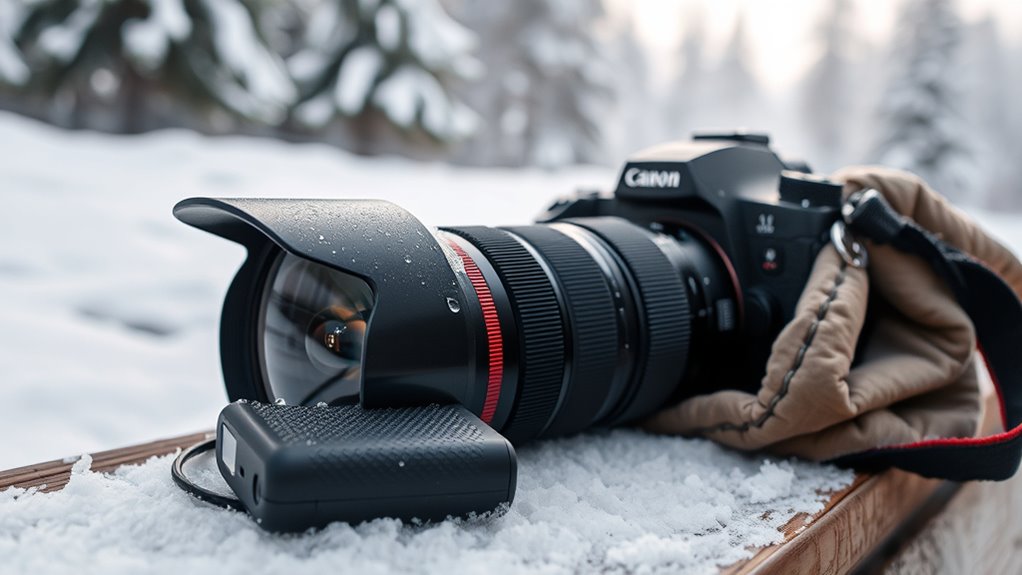
Lens condensation is another common issue when shooting in cold weather. As you move from a warm indoor environment to the chilly outdoors, moisture can condense on your lens surfaces, causing fogging and blurring your images. To prevent lens condensation, allow your camera to acclimate gradually. Keep your gear in a sealed plastic bag when transitioning between different environments, and give it time to reach ambient temperature before opening it. When you do bring your camera outside, avoid wiping the lens immediately if you notice fogging—this can leave smudges or scratch the glass. Instead, let the condensation evaporate naturally or gently wipe it with a microfiber cloth once the lens has warmed up slightly. Use lens hoods or filters to shield your lens from moisture and cold air, and consider using silica gel packs in your camera bag to absorb excess moisture. These simple precautions can help maintain image clarity and prevent damage to your equipment. Additionally, using lens warmers can help keep your lens free from fogging during prolonged outdoor shoots in cold weather.

HERCHR USB Warming Electric Heated Phone Bag, Universal Cold-Proof Battery Protection Cellphone Holder Case with Camera Window for Outdoor in Winter Thermal Phone Case Cellphone Heating Bag Case
- Battery Protection: Maintains phone temperature and extends battery life
- Large Capacity: Fits most 5-7 inch phones and small items
- User-friendly Design: Transparent window for touchscreen use and adjustable lanyard
As an affiliate, we earn on qualifying purchases.
As an affiliate, we earn on qualifying purchases.
Frequently Asked Questions
How Can I Prevent My Camera Battery From Dying Quickly in Cold Temperatures?
To prevent your camera battery from dying quickly in cold temperatures, you should use battery insulation, such as a hand warmer or a dedicated battery holder with insulating material. Additionally, practice good power management by turning off your camera when not in use and reducing screen brightness. Keep spare batteries warm in your pocket, and swap them out as needed. These steps help preserve battery life in cold conditions.
What Are the Best Ways to Warm up My Equipment Safely?
When you need to warm up your gear safely, don’t put it directly on a heater—let’s not give it a hot foot. Instead, use hand warmers wrapped in insulated covers around your camera and batteries. Keep your equipment in a padded bag or a soft cloth to prevent rapid temperature changes. This way, your gear warms gradually and stays protected, allowing you to shoot comfortably without risking damage.
How Do I Protect My Lens From Condensation After Shooting in Cold Weather?
To protect your lens from condensation after shooting in cold weather, you should prevent lens fogging and condensation buildup. Keep your lens in a sealed plastic bag for a while to let it gradually warm up with its surroundings. When you’re ready to shoot, avoid sudden temperature changes by acclimating your equipment slowly. Using silica gel packs can also absorb excess moisture, helping maintain clear, fog-free lenses.
Can Cold Weather Damage My Camera’s Internal Components?
Think of your camera as a delicate dancer, and cold weather as an unpredictable partner. Yes, it can damage your camera’s internal components if unprotected. To prevent this, use camera insulation like insulated bags and electronic shielding to guard against moisture and extreme cold. These measures help keep your gear safe, preventing condensation from forming inside and ensuring your camera performs smoothly, no matter how chilly the environment.
Are There Specific Accessories to Help With Cold Weather Photography?
Yes, you can use specific accessories to improve your cold weather photography. Thermal gloves keep your fingers warm and allow dexterity, making it easier to operate your camera. An insulated camera bag offers protection against the cold and helps maintain your gear’s temperature. These accessories guarantee you stay comfortable, prevent battery drain, and keep your equipment functioning properly during cold shoots.

OptiPlus Anti-Fog Lens Cleaning Spray Kit l Cleaning Spray and Microfiber Cloth for Glasses, Laptops Screens, Smart Phones, Optical Lens, Goggles, Watch Screen and More l Defogging and Cleaning l 2oz
- Long-lasting Anti-fog Protection: Prevents fog on all lens types daily
- Safe for All Lenses: Suitable for coated, anti-reflective, and prescription lenses
- Trusted Brand by Professionals: Hilco Vision ensures quality and reliability
As an affiliate, we earn on qualifying purchases.
As an affiliate, we earn on qualifying purchases.
Conclusion
So, next time you’re braving the cold with your camera, remember these tips—because nothing screams “professional photographer” like battling foggy lenses and frozen batteries. Who knew that capturing winter wonderlands would also involve a crash course in battery care and condensation prevention? But hey, if all else fails, just pretend you’re a snow-obsessed explorer. After all, nothing says “artistic genius” like risking frostbite for that perfect shot. Stay warm and keep clicking!

NEEWER 58mm ND Lens Filter Kit: UV, CPL, FLD, ND2, ND4, ND8, Lens Hood and Lens Cap Compatible with Canon Nikon Sony Panasonic DSLR Cameras with 58mm Lens
- Complete Lens Filter Kit: Includes ND, CPL, UV, FLD filters, hood, cap, pouch, tether
- Compatible with 58mm Lenses: Fits all cameras with 58mm lens thread
- Balanced Exposure with ND Filters: ND2, ND4, ND8 reduce light for proper exposure
As an affiliate, we earn on qualifying purchases.
As an affiliate, we earn on qualifying purchases.

15 Pcs 20 Gram Silica Gel Packs, Transparent Desiccant, Desiccant Packets for Storage, Moisture Packs for Spices Jewelry Shoes Boxes Electronics Storage
- High Adsorption Capacity: Effective moisture absorption
- Safe and Non-Toxic: Food-safe silica gel beads
- Reusable and Easy to Reactivate: Oven or microwave reactivation
As an affiliate, we earn on qualifying purchases.
As an affiliate, we earn on qualifying purchases.