

Light pollution from urban areas brightens the night sky and disrupts ecosystems, affecting wildlife and human health. Excessive artificial lighting can disorient animals like bats, insects, and sea turtles, while also harming nocturnal species’ behaviors. It can also disturb your sleep cycle and increase energy consumption, contributing to climate change. Reducing unnecessary lights and using smarter, directed fixtures can lessen these impacts. Keep exploring to discover how addressing light pollution benefits our planet and your well-being.
Key Takeaways
- Artificial lighting from urban areas causes widespread skyglow, obscuring the natural night sky.
- Light pollution disrupts nocturnal animals’ behaviors, affecting hunting, mating, and navigation.
- Increased artificial light leads to disorientation and population declines in insects, sea turtles, and other wildlife.
- Excessive illumination contributes to higher energy consumption, greenhouse gas emissions, and climate change.
- Reducing unnecessary lighting benefits ecosystems, preserves the night sky, and promotes environmental sustainability.

Light pollution, which results from excessive or misdirected artificial lighting, is increasingly disrupting ecosystems and human health. When city streets, buildings, and billboards emit bright, poorly directed light, they create an urban glow that extends far beyond the intended area. This glow not only obscures the night sky but also interferes with the natural behaviors of nocturnal creatures. As you walk through a city at night, you might notice how the ambient light seems to spill into parks, forests, and waterways. This pervasive illumination can have profound impacts on nocturnal ecosystems, which rely on darkness to regulate biological rhythms and behaviors.
Animals that are active at night, such as bats, owls, insects, and marine life, depend on darkness for hunting, mating, and navigation. When artificial lights flood their habitats, they become disoriented, leading to decreased feeding success and disrupted reproductive cycles. For example, insects drawn to artificial lights often become easy prey or die from exhaustion, reducing their populations and affecting species that depend on them for food. Similarly, sea turtles hatchlings, which instinctively move toward the moonlit ocean, can become confused by city lights, leading them away from the water and risking death on busy roads. These disruptions threaten the delicate balance of nocturnal ecosystems, causing ripple effects that can impair biodiversity and ecosystem health. Additionally, the increase in artificial lighting has been linked to higher energy consumption and greenhouse gas emissions, contributing to climate change.
Your awareness of the urban glow’s reach can help you understand the importance of reducing light pollution. By choosing to minimize unnecessary lighting, using shielded fixtures, and turning off lights when they’re not needed, you can help restore the natural darkness that nocturnal ecosystems depend on. The benefits extend beyond protecting wildlife; reducing light pollution also improves human health by allowing our circadian rhythms to stay aligned with the natural day-night cycle. Constant exposure to artificial light at night has been linked to sleep disorders, increased stress levels, and other health issues.
Recognizing how pervasive the urban glow has become, you can advocate for responsible lighting practices in your community. Supporting policies that limit unnecessary nighttime lighting and promoting the use of energy-efficient, downward-shielded fixtures can make a significant difference. By doing so, you not only help preserve the beauty of the night sky but also contribute to the health of nocturnal ecosystems and your own well-being. Every small action counts in mitigating light pollution and restoring the natural balance that keeps our environment thriving. Furthermore, advancements in AI safety measures can assist municipalities in implementing smarter lighting controls, reducing waste and environmental impact.

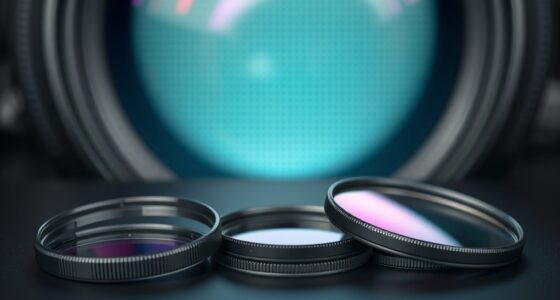
SVBONY Telescope Filter, 2" UV IR Cut Block Filter, Blocks Red Ultraviolet
The UV-IR-Cut filter uses the very latest coating technology; to deliver the finest filtration qualit-and lifetime durability used...
As an affiliate, we earn on qualifying purchases.
Frequently Asked Questions
How Does Light Pollution Affect Nocturnal Animal Navigation?
You might not realize it, but light pollution seriously disrupts nocturnal animal navigation. It causes wildlife disorientation, making it hard for animals like turtles and birds to find their way. Migratory disruption occurs as bright artificial lights confuse their natural cues, leading to exhaustion or death. This interference impacts their survival and reproductive success, highlighting how artificial lighting harms their natural behaviors and ecosystems.
Can Light Pollution Influence Plant Growth and Blooming Cycles?
Yes, artificial light from urban lighting can influence plant development and flowering cycles. When you expose plants to artificial light, it can disrupt their natural rhythms, causing them to bloom earlier or later than usual. Light pollution affects their growth by interfering with their ability to detect day and night cues, which are vital for healthy flowering cycles. You should consider minimizing artificial light exposure to support proper plant development.
What Are the Economic Costs Associated With Light Pollution?
Imagine you’re tossing money into a bonfire—that’s how light pollution burns through your budget. The economic costs are significant, driven by energy waste from unnecessary lighting and the need for costly upgrades to reduce glare. You spend more on electricity and maintenance, and local economies suffer from lost tourism and astronomy revenues. Cutting back on excess lighting saves you money and preserves your night skies, turning darkness into a valuable resource.
How Do Different Types of Artificial Lighting Vary in Environmental Impact?
Different types of artificial lighting vary markedly in environmental impact due to their spectral emission and lighting design. LED lights, with their customizable spectral output, can reduce light pollution if designed properly. Incandescent and fluorescent lights often emit broader spectra, attracting more insects and disrupting ecosystems. You can minimize harm by choosing lighting with appropriate spectral emission and effective lighting design, which reduces unnecessary skyglow and preserves natural habitats.
Are There Regions With Minimal Light Pollution Still Experiencing Ecological Effects?
You might think remote areas are untouched by ecological effects, but dark sky reserves and rural darkness reveal a different story. Even in these regions, subtle disturbances ripple through ecosystems, impacting nocturnal animals and plant cycles. These untouched zones aren’t immune; they still face ecological effects driven by distant light sources or atmospheric conditions. So, even in the least illuminated places, nature’s delicate balance can be unexpectedly disrupted.

SVBONY UV IR Cut Telescope Filter 1.25", Blocks Red Ultraviolet
This UV/IR Cut off filter blocks undesirable ultraviolet and infrared rays that may interfere with obtaining the high...
As an affiliate, we earn on qualifying purchases.
Conclusion
So, next time you leave your porch light on all night, remember you’re not just wasting energy—you’re blinding the stars and confusing wildlife. Who needs natural darkness anyway? After all, who wouldn’t want a sky so bright with artificial glow that it outshines the universe’s own beauty? Maybe it’s time to turn off that light and give the planet a much-needed break, or keep shining bright and enjoy the cosmic chaos you’ve created.

OPTOLONG 1.25" UV/IR Cut Filter for CCD Digital Astrophotography
1. 96% transmission at 486nm (H-beta) 2.95% transmission at 496nm (OIII)
As an affiliate, we earn on qualifying purchases.

National Geographic Glow in the Dark Solar System Model for Kids Ages 8-12
BUILD & DISPLAY A MOVING, GLOWING SOLAR SYSTEM – With this kit, kids can customize all 8 planets...
As an affiliate, we earn on qualifying purchases.

![SpaceX Starship Flight 13 Livestream [Video]](https://astrophotographyhq.com/wp-content/uploads/2026/07/spacex-starship-flight-13-livestream-video-featured-260x140.jpg)