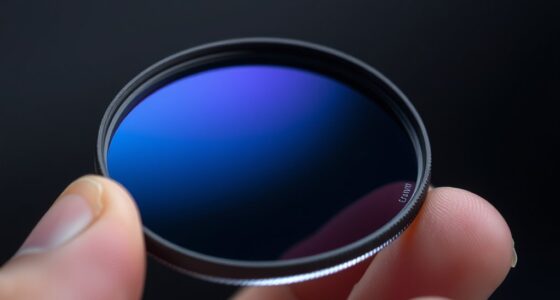
To clean and maintain your astronomical filters safely, handle them by the edges and wear lint-free gloves to avoid fingerprints and dirt. Regularly inspect the filters and remove dust with a blower or soft brush, then use a microfiber cloth with optical cleaning solution for smudges. Avoid touching the coated side directly, and never use harsh chemicals. Proper care keeps your filters in top shape, ensuring clear images—learn more tips to prolong their life and performance.
Key Takeaways
- Handle filters by edges and wear lint-free gloves to prevent oil and dirt transfer.
- Use a blower or soft brush to remove dust before cleaning with a microfiber cloth.
- Apply cleaning solutions sparingly to the cloth, avoiding direct contact with the filter surface.
- Wipe in straight, circular motions from the center outward with minimal pressure.
- Regularly inspect filters for damage or smudges to ensure optimal optical performance.

Astronomical filters are essential tools for capturing clear, detailed images of celestial objects, but their performance depends on proper maintenance and cleaning. To guarantee your filters remain effective, you need to focus on optical coating preservation and handling techniques. Optical coatings are delicate layers applied to filter surfaces to enhance their selectivity and durability, but they can be easily damaged if you’re not careful. Keep in mind that even small scratches or smudges can degrade image quality, so handling your filters with care is vital.
When handling filters, always hold them by the edges to avoid touching the glass surface directly. Wearing lint-free gloves can help prevent oils and dirt from transferring onto the coatings, which can cause spots or reduce light transmission. Always place your filters on a clean, soft surface when not in use to avoid accidental scratches. Never use your fingers to clean or adjust the filters, and avoid touching the coated side unless absolutely necessary. Using proper handling techniques minimizes the risk of damaging the optical coatings and preserves the filter’s performance over time.
Cleaning your astronomical filters requires a gentle and methodical approach. First, inspect the filter under a bright light to identify any dust, smudges, or residues. If dust is present, use a blower bulb or a soft brush designed for optical surfaces to remove loose particles—never use compressed air, as it can dislodge coatings or embed dirt into the surface. For smudges or fingerprints, lightly breathe on the surface to create a thin layer of moisture, then gently wipe with a microfiber cloth specifically meant for optics. Always wipe in a straight, circular motion from the center outward, applying minimal pressure to avoid damaging the delicate coatings.
Avoid harsh chemicals or abrasive cleaners, as they can strip or damage the optical coatings. Instead, use a cleaning solution formulated for optical surfaces, applied sparingly to the microfiber cloth. Never spray cleaners directly onto the filter; always apply them to the cloth first. When finished cleaning, inspect the filter again to guarantee no streaks or residues remain. Proper maintenance and cleaning not only extend the life of your astronomical filters but also guarantee that every observation or photograph you capture is sharp, clear, and free from unwanted artifacts. Regularly inspect your filters to catch any potential damage early and ensure optimal performance.
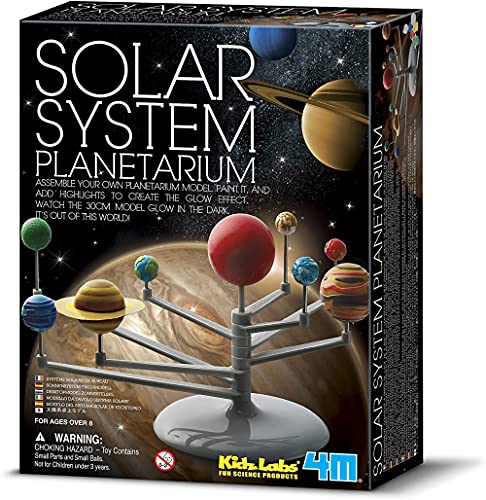
4M Solar System Planetarium - DIY Glow In The Dark Astronomy Planet Model Stem Toys Gift for Kids & Teens, Girls & Boys, Model:3427
- Educational Solar System Model: Learn about the solar system
- Complete Kit Included: Planets, stencils, glow paint, and more
- Easy Assembly: Includes detailed instructions
As an affiliate, we earn on qualifying purchases.
Frequently Asked Questions
Can I Use Household Glass Cleaner on Astronomical Filters?
You shouldn’t use household glass cleaners on astronomical filters because they often contain chemicals that can damage the filter’s coating. Using household cleaners risks causing filter damage, which can impair your view and reduce image quality. Instead, opt for a gentle, specialized optical cleaning solution and soft cloths designed for astronomical filters. This approach keeps your filters clean without risking damage, ensuring clear, sharp views of the night sky.
How Often Should I Replace My Astronomical Filters?
You should replace your astronomical filters based on their filter lifespan and your replacement schedule, typically every 1-3 years. Regularly inspect them for scratches, dirt, or damage, and replace if they impact image quality. Proper maintenance extends their life, but if you notice persistent spots or reduced clarity, it’s time for a new filter. Staying attentive ensures ideal viewing and protects your equipment over time.
Are There DIY Methods to Repair Scratches on Filters?
Scratches on filters are like tiny cracks in a mirror—hard to fix but not impossible. While DIY repair for scratches is tempting, it’s generally not recommended because improper methods can worsen the damage. For effective scratch removal, consider professional repair services or replacing the filter. If you choose DIY, research carefully, use gentle polishing compounds designed for optics, and proceed with caution to avoid further damage.
What Environmental Factors Most Affect Filter Longevity?
Environmental exposure and storage conditions most affect your filter’s longevity. You should protect filters from harsh elements like moisture, dust, and extreme temperatures, which can cause deterioration or damage. Always store your filters in a clean, dry, and stable environment, ideally in protective cases. Proper storage minimizes environmental stress, ensuring your filters stay in good condition longer and deliver clear, accurate views during your astronomical observations.
Is There a Risk of Damaging Filters During Transportation?
Yes, there’s a risk of damaging filters during transportation if you’re not careful. Fragile coatings on filters can easily be scratched or chipped if you don’t handle them properly. Always use proper handling techniques, like holding filters by their edges and avoiding direct contact with the surface. Store them securely in padded cases to prevent jarring or impact. Taking these precautions helps protect your filters from damage during transit.

Wow in the World Kids’ Telescope & Astronomy Kit, 25x & 50x Magnification, Adjustable 48” Tripod, Includes Star Wheel & Companion Audio Content, Intro to Astronomy for Ages 6+ by Thames & Kosmos
- Durable Refractor Telescope: Perfect for young astronomers
- Variable Magnification: 25x and 50x options with eyepieces
- Adjustable Tripod: 48-inch aluminum tripod with extendable legs
As an affiliate, we earn on qualifying purchases.
Conclusion
By caring for your astronomical filters with gentle hands and patience, you help guarantee clear views of the night sky’s hidden wonders. Think of cleaning as tending to a delicate garden, where each careful touch preserves its beauty and clarity. When you treat your filters with respect, they’ll reward you with crisp, stunning images that spark your curiosity and deepen your connection to the universe. Keep them pristine, and your celestial journey will always shine brightly.

Discovery™ Galactic Space Science Kit – 61 Experiment STEM Lab for Kids| Astronomy & Chemistry Activity Set| Includes DIY Telescope, Crystals, Slime, Moon Rocks| Educational Learning Toy Gift| Ages 8+
- Number of Experiments: 61 space-themed STEM activities
- Includes DIY Telescope: Build a working paper telescope
- Crystal and Moon Rock Kits: Excavate moon rocks and grow crystals
As an affiliate, we earn on qualifying purchases.

National Geographic Glow in the Dark Solar System Model for Kids Ages 8-12
- Build a glowing 3D solar system: Create a glowing, customizable solar system model
- Complete all-in-one kit: Includes paints, decals, poster, and tools
- Easy to assemble with kid-friendly instructions: Simple instructions for young builders
As an affiliate, we earn on qualifying purchases.