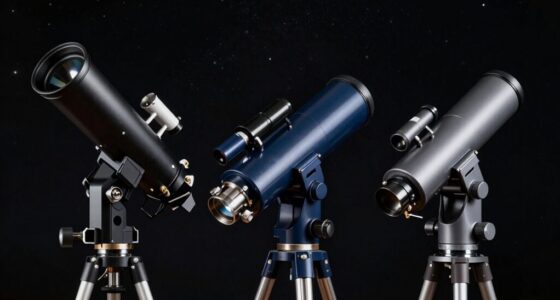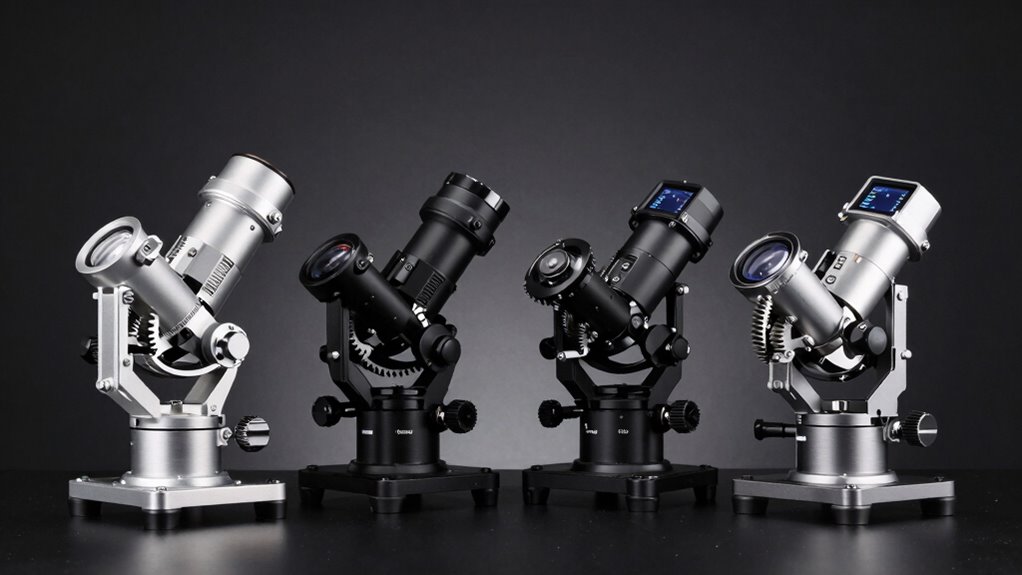
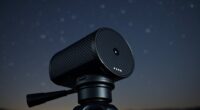
Choosing an equatorial mount with low periodic error is essential for achieving precise astrophotography and smooth tracking of celestial objects. Among the top options, the Sky-Watcher EQ6-R stands out for its impressive tracking accuracy and payload capacity, ideal for serious astrophotographers. The Celestron CGEM II offers a balanced mix of power and advanced computerized controls, but it’s heavier and less portable. For low-latitude regions, the SkyGuider Pro Base Mount provides excellent polar alignment, although it’s more specialized and limited to star tracking accessories. The IOptron HAE43EC introduces high-resolution encoders for real-time error correction, making it versatile but requiring some technical setup. Lastly, the Celestron Advanced VX offers a dependable, budget-friendly option with solid accuracy, but its payload limit might restrict larger telescopes. Your choice depends on whether you prioritize portability, payload, or advanced error correction.

Prime made for students and young adults
- Fast, free delivery for dorm and study essentials
- Prime Video and Amazon Music included
- Member-only deals
Key Takeaways
- The Sky-Watcher EQ6-R provides the highest payload capacity combined with quiet belt-driven tracking, ideal for astrophotographers needing stability.
- Celestron CGEM II balances payload and advanced computerized features but is relatively heavy, making it less portable for field use.
- The SkyGuider Pro Base Mount specializes in low-latitude astrophotography, offering excellent polar alignment but limited compatibility.
- IOptron HAE43EC’s high-resolution encoders support real-time error correction, suited for users comfortable with technical setup.
- Celestron Advanced VX offers reliable tracking at a lower cost, suitable for beginners and moderate setups.
| Sky-Watcher EQ6-R Fully Computerized GoTo German Equatorial Telescope Mount |  | Best Overall for Precision and Power | Payload Capacity: 44 pounds | Tripod Leg Diameter: 2 inches | Power Type: 12V | VIEW ON AMAZON | See Our Full Breakdown |
| Celestron CGEM II Computerized Equatorial Mount & Tripod – 40lb Payload |  | Best for Power and Advanced Control | Payload Capacity: 40 lbs | Tripod Weight: 20 lbs | Tracking Modes: Sidereal, Solar, Lunar | VIEW ON AMAZON | See Our Full Breakdown |
| SkyGuider Pro Base Mount for Star Tracker Low Latitude Version |  | Best for Low-Latitude Astrophotography | Material: CNC-machined aluminum | Compatibility: iOptron SkyGuider Pro | Latitude Adjustment: Yes | VIEW ON AMAZON | See Our Full Breakdown |
| iOptron HAE43EC Dual Equatorial & Alt-Azimuth Mount with High Precision Encoders |  | Best for Versatility and Real-Time Error Correction | Product Dimensions: 15.25 x 15.25 x 9.5 inches | Item Weight: 22 pounds | Supported Load: 44 pounds | VIEW ON AMAZON | See Our Full Breakdown |
| Celestron Advanced VX Computerized German Equatorial Mount – 30lb Payload |  | Best Budget-Friendly Low-Error Mount | Weight Capacity: 30 lbs | Tripod Legs Material: Stainless steel | Latitude Adjustment Range: 7 to 77 degrees | VIEW ON AMAZON | See Our Full Breakdown |
More Details on Our Top Picks
Sky-Watcher EQ6-R Fully Computerized GoTo German Equatorial Telescope Mount
The Sky-Watcher EQ6-R is renowned for its highly accurate GoTo tracking, making it a top pick for astrophotographers focused on low periodic error. Its belt-driven stepper motors operate quietly, supporting long exposures without noise interference. With a 44-pound payload, it can handle extensive optical setups, and the built-in illuminated polar finder simplifies alignment. Compared with smaller mounts, its larger payload and stability make it more suitable for serious astrophotography, but it’s notably heavy and requires a dedicated power source. This model makes the most sense for users who want reliable, high-precision tracking and don’t mind the weight or setup time.
Pros:- Exceptional tracking accuracy
- Quiet operation with belt-driven motors
- Large payload capacity supports complex setups
- Built-in polar finder simplifies alignment
Cons:- Heavy and less portable
- Requires a dedicated 12V power source
- Complex setup process
Best for: Advanced astrophotographers needing high payload capacity and low periodic error
Not ideal for: Portable users or beginners seeking lightweight, simple setup
- Payload Capacity:44 pounds
- Tripod Leg Diameter:2 inches
- Power Type:12V
- Latitude Range:May-65 degrees
- Mounting Saddle Type:D/V
- Weight:Heavy
Our verdict“This mount is the best choice for those prioritizing low periodic error and stable, high-precision tracking, despite its weight.”
Celestron CGEM II Computerized Equatorial Mount & Tripod – 40lb Payload
The Celestron CGEM II provides a robust platform for astrophotography and observation, with a 40-pound payload and precise tracking. Its computerized NexStar+ hand controller with an extensive database simplifies object location, making it suitable for users who want automation paired with accuracy. Compared to the EQ6-R, it offers similar payload capacity but adds advanced features like multiple celestial modes, which can enhance tracking performance. However, it’s quite heavy and can take time to set up, which might be a downside for users who need quick portability. It’s an excellent middle ground for those who want a dependable mount with low periodic error but are willing to handle its weight.
Pros:- High payload capacity supports various telescopes
- Accurate tracking in multiple celestial modes
- Advanced computerized controls
- Breaks down into manageable parts
Cons:- Heavy and less portable
- Time-consuming setup for beginners
- Costlier than simpler mounts
Best for: Intermediate to advanced astrophotographers who value automation and power
Not ideal for: Travelers or beginners seeking lightweight, quick-to-assemble options
- Payload Capacity:40 lbs
- Tripod Weight:20 lbs
- Tracking Modes:Sidereal, Solar, Lunar
- Control System:NexStar+
- Portability:Moderate
Our verdict“A solid choice for users wanting a blend of power, accuracy, and automation, with some tradeoff in portability.”
SkyGuider Pro Base Mount for Star Tracker Low Latitude Version
The SkyGuider Pro Base Mount is tailored for low-latitude regions, offering exceptional polar alignment features that improve tracking accuracy in challenging conditions. Its CNC-machined aluminum construction ensures durability while maintaining lightweight portability. This mount is optimized for SkyGuider Pro star trackers, making it perfect for long-exposure astrophotography at lower latitudes, but it’s quite specialized. Its complex setup and limited accessory compatibility mean it’s best suited for dedicated users comfortable with detailed adjustments. Compared with larger mounts, it excels in precision in specific environments but sacrifices versatility.
Pros:- Excellent polar alignment for low latitudes
- Durable CNC aluminum construction
- Reduces vibrations during long exposures
- Latitude adjustment feature
Cons:- Limited compatibility with other systems
- Requires additional accessories for full setup
- Complex for beginners
Best for: Astrophotographers working at low latitudes seeking precise star tracking
Not ideal for: Users needing a general-purpose mount or supporting large telescopes
- Material:CNC-machined aluminum
- Compatibility:iOptron SkyGuider Pro
- Latitude Adjustment:Yes
- Vibration Reduction:Yes
Our verdict“This mount offers outstanding low-latitude performance but is limited in scope, best for specialized astrophotography setups.”
iOptron HAE43EC Dual Equatorial & Alt-Azimuth Mount with High Precision Encoders
The IOptron HAE43EC stands out for its dual-mode operation, supporting both equatorial and alt-azimuth configurations. The high-resolution encoders enable real-time error correction, which significantly reduces periodic error and improves tracking precision. Its lightweight design, weighing only 22 pounds, makes it portable for field use, though setup can be complex for newcomers. Compared with traditional mounts, the encoders provide a technological edge for low-error tracking, but the nonstandard batteries and limited user reviews suggest it’s better suited for experienced users willing to troubleshoot and optimize.
Pros:- Supports both equatorial and alt-azimuth modes
- High-resolution encoders for real-time correction
- Lightweight and portable
- Supports up to 44 pounds of equipment
Cons:- Requires nonstandard batteries
- Setup can be technically demanding
- Limited user feedback available
Best for: Tech-savvy astrophotographers seeking flexible, error-corrected mounts
Not ideal for: Beginners or those needing straightforward, plug-and-play solutions
- Product Dimensions:15.25 x 15.25 x 9.5 inches
- Item Weight:22 pounds
- Supported Load:44 pounds
- Mount Type:Dual Equatorial & Alt-Azimuth
- Encoder Type:High-resolution right ascension
- Power:Nonstandard battery
Our verdict“This mount is ideal for users who want advanced error correction and versatility, with some complexity in setup and operation.”
Celestron Advanced VX Computerized German Equatorial Mount – 30lb Payload
The Celestron Advanced VX offers a dependable, budget-conscious option with a 30-pound payload and solid tracking performance. Its stainless steel tripod provides stability, and the computerized hand control makes object acquisition straightforward. While it may not match the payload or feature set of higher-end mounts, it still offers accurate tracking and multiple celestial modes, making it suitable for beginners or casual astrophotographers. Its weight and setup complexity are manageable, but the 30-pound payload limits larger telescopes, which could be a drawback for more ambitious setups. Nonetheless, it delivers good low periodic error control at a more accessible price point.
Pros:- Affordable and reliable
- Sturdy tripod stability
- Accurate tracking in multiple modes
- Easy to operate for beginners
Cons:- Limited payload capacity
- Heavier than some portable options
- Setup may be complex for absolute novices
Best for: Beginners or hobbyists seeking reliable low-error tracking without high cost
Not ideal for: Heavy or professional setups requiring large payloads
- Weight Capacity:30 lbs
- Tripod Legs Material:Stainless steel
- Latitude Adjustment Range:7 to 77 degrees
- Total Kit Weight:47 lbs
- Tracking Modes:Sidereal, Solar, Lunar
- Hand Control Database:40,000+ objects
Our verdict“This mount provides a good balance of low periodic error and affordability, suitable for newcomers or light setups.”

How We Picked
Our selection process focused on mounts that demonstrate low periodic error, essential for sharp astrophotography. We prioritized products with proven tracking accuracy, considering their engineering, control systems, and user feedback. Payload capacity was a major factor, as stability under load directly influences tracking precision. Portability and ease of setup were also evaluated, ensuring options suit different user needs—from field astronomers to dedicated astrophotographers. We balanced high-end features like advanced encoders and computerized controls with practical tradeoffs such as weight and complexity, aiming to recommend mounts that offer real low-error performance without unnecessary compromises.
Factors to Consider When Choosing Equatorial Mount With Low Periodic Error
Selecting an equatorial mount with low periodic error hinges on understanding your specific needs. If you’re aiming for high-precision astrophotography with large payloads, a mount like the Sky-Watcher EQ6-R offers exceptional accuracy but at the expense of portability. For those working in low-latitude regions, specialized mounts like the SkyGuider Pro deliver excellent polar alignment performance. Versatile users who want real-time error correction might prefer the iOptron HAE43EC, while budget-conscious hobbyists can find reliable low-error tracking in more affordable models like the Celestron Advanced VX. The key is to balance your priority for accuracy, payload, portability, and ease of use.
Understanding Periodic Error and Its Impact
Periodic error refers to the small, cyclical deviations in a mount’s tracking accuracy caused by gear imperfections. Low periodic error is critical for astrophotography because it reduces star trailing and sharpens images. When evaluating mounts, look for specifications or user reports that mention low gear periodic error, ideally below 10 arcseconds. Be aware that even premium mounts may require periodic calibration or error correction features like high-resolution encoders for optimal performance.
Key Features to Consider
Beyond periodic error, consider payload capacity, which ensures your mount can handle the optical equipment you plan to use. Portability might matter if you intend to travel with your setup. Automated GoTo controls and alignment aids streamline setup, especially for beginners. For astrophotography, features like vibration damping, polar alignment aids, and error correction mechanisms can make a noticeable difference in image quality. Always weigh these features against your budget and intended use to find the best fit.
Tradeoffs and Practical Tips
High-precision mounts often come with increased weight and setup complexity, which can limit field portability. Conversely, lighter mounts might sacrifice some tracking accuracy or payload capacity. For best results, ensure your power supply is reliable, especially for heavier mounts. Regular calibration and maintenance can help keep low periodic error performance consistent over time. Recognizing these tradeoffs allows you to choose a mount that aligns with your specific astrophotography ambitions and mobility needs.
Frequently Asked Questions
What causes periodic error in equatorial mounts?
Periodic error primarily results from imperfections in the gear train of the mount’s drive system. These tiny inaccuracies cause cyclical deviations in the tracking of celestial objects, leading to star trailing if not corrected. High-quality gears, precise manufacturing, and error correction systems help minimize this error, which is crucial for long-exposure astrophotography.
How does low periodic error benefit astrophotography?
Low periodic error ensures the mount’s tracking remains stable over long periods, reducing star trails and blurring in images. This stability allows for sharper, more detailed astrophotos without extensive post-processing or reliance on autoguiding systems. For serious astrophotographers, low periodic error is a fundamental feature for achieving professional-grade results.
Can I improve the periodic error of my mount?
Yes, many mounts can be calibrated or have error correction features like high-resolution encoders or periodic error correction (PEC) routines. Regular maintenance, proper balancing, and accurate polar alignment also help reduce the impact of periodic error. Upgrading to a mount with inherently low gear error or adding dedicated error correction devices can further enhance tracking precision.
Is a heavier mount always better for low periodic error?
Not necessarily. While heavier mounts tend to have better stability and can support larger payloads with minimal vibration, weight isn’t the sole factor in low periodic error. Precision engineering, gear quality, and design play equally vital roles. Some lightweight mounts incorporate advanced features like encoders to achieve low error, but overall, weight often correlates with stability and accuracy.
What features should I look for in a mount with low periodic error?
Look for gear quality and manufacturing precision, specifications or user reports indicating gear periodic error below 10 arcseconds, and features like high-resolution encoders or PEC routines. An integrated polar alignment aid and stable, vibration-damping construction also contribute to maintaining low tracking error during long exposures. Matching these features to your specific astrophotography needs will help you select the best mount.
Conclusion
For dedicated astrophotographers seeking maximum precision and payload, the Sky-Watcher EQ6-R stands out despite its weight and complexity. Users prioritizing automation and moderate payloads will find the Celestron CGEM II a suitable choice, balancing power and ease of use. Those working in low-latitude regions or focusing on star tracking might prefer the SkyGuider Pro Base Mount, while tech-savvy users who want versatility and real-time correction should consider the iOptron HAE43EC. Beginners or hobbyists on a budget will benefit from the Celestron Advanced VX, which offers reliable low periodic error without the high price tag. Your ideal mount depends on your specific astrophotography goals and mobility needs.
Halloween Picks
halloween
As an affiliate, we earn on qualifying purchases.