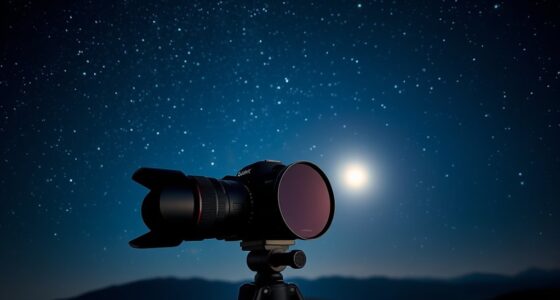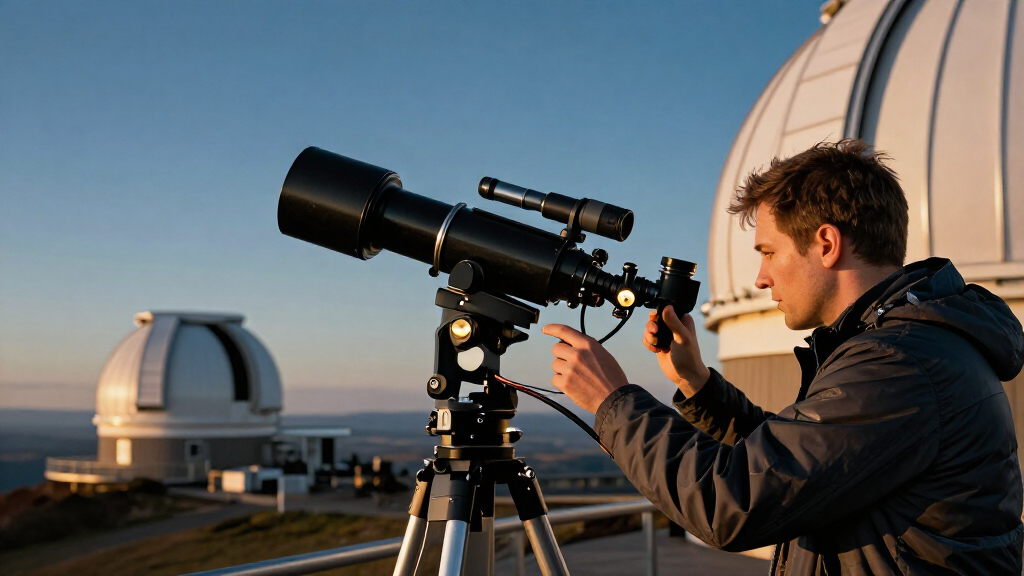

The best deep sky astrophotography camera for most dedicated imaging setups is the SVBONY SC571CC, whose cooled APS-C sensor offers room to frame wide nebulae and galaxies. For a smaller sensor in a simpler cooled package, the SVBONY SV605CC with IMX533 is a strong alternative, while the DWARFLAB Dwarf 3 suits beginners who want an automated smart telescope rather than a camera to pair with separate gear. The main tradeoffs are sensor size, cooling and calibration control, ease of setup, and how much of the imaging system you already own. A dedicated camera can offer more control, but it asks you to build and manage a mount, optics, and capture workflow. Read on for the full comparison and buying advice.

Prime made for students and young adults
- Fast, free delivery for dorm and study essentials
- Prime Video and Amazon Music included
- Member-only deals
Key Takeaways
- The SC571CC stands apart for sensor area: its APS-C IMX571 makes it the most flexible choice here for wider framing, but it needs compatible optics and a more involved imaging setup.
- The SV605CC with IMX533 is the compact cooled-camera alternative: it gives dedicated imagers cooling and a square sensor without the larger APS-C imaging circle the SC571CC calls for.
- Cooling separates serious capture cameras from entry-level options: the SV405CC and SV605CC models offer temperature control, while the SV105, SV205, SV305C, and SV705C prioritize simpler, less specialized capture.
- Filter bundles solve different problems, not the same problem: the SV605CC with SV220 is aimed at dual-band nebula imaging, while the SV240 multi-narrowband package is for buyers whose filter strategy matches its bandpass.
- Smart telescopes trade setup flexibility for convenience: the Dwarf Mini, Dwarf 3, and Seestar S30 Pro package optics and automation together, while the standalone cameras leave more choice over the telescope and mount.
| SVBONY SV705C Telescope Camera with IMX585 Sensor and USB 3.0 |  | Best Entry-Level Deep-Sky Camera | Sensor: IMX585, 1/1.2-inch | Maximum resolution: 3856 × 2180 | Image area: 11.2 × 6.3 mm | VIEW LATEST PRICE | See Our Full Breakdown |
| SVBONY SV405CC Cooled Astrophotography Camera with IMX294 Sensor |  | Best for Long-Exposure Imaging | Sensor: IMX294 back-illuminated 4/3-inch color CMOS | Resolution: 4144 × 2822; 11.7MP | Pixel size: 4.63μm | VIEW LATEST PRICE | See Our Full Breakdown |
| SVBONY SV605CC Cooled Astrophotography Camera with SV220 2-Inch Dual-Band Nebula Filter |  | Best for Urban Nebula Imaging | Sensor: IMX533 color CMOS, 1-inch | Resolution: 3008 × 3008; 9MP | Pixel size: 3.76μm | VIEW LATEST PRICE | See Our Full Breakdown |
| SVBONY SV605CC Cooled Astrophotography Camera with SV240 Multi-Narrowband Filter |  | Best Multi-Line Filter Bundle | Sensor: IMX533 color CMOS, 1-inch | Resolution: 3008 × 3008; 9MP | Pixel size: 3.76μm | VIEW LATEST PRICE | See Our Full Breakdown |
| SVBONY SV105 Telescope Camera with IMX307 CMOS Sensor |  | Best for Bright-Target Practice | Sensor: 1/2.8-inch IMX307 color CMOS | Maximum resolution: 1920 × 1080 | Maximum frame rate: 30fps | VIEW LATEST PRICE | See Our Full Breakdown |
| SVBONY SV605CC Cooled Color Astrophotography Camera with IMX533 Sensor |  | Best Square-Sensor Cooled Camera | Sensor: 1-inch IMX533 color | Resolution: 9 MP, 3008 × 3008 | Pixel size: 3.76 μm | VIEW LATEST PRICE | See Our Full Breakdown |
| DWARFLAB Dwarf Mini Smart Telescope |  | Best Lightweight Smart Telescope | Sensor: Sony IMX662, 1/2.8-inch | Pixel size: 2.9 μm | Focal length: 150 mm | VIEW LATEST PRICE | See Our Full Breakdown |
| SVBONY SC571CC Cooled Color Astronomy Camera with IMX571 APS-C Sensor |  | Best for Wide-Field Deep-Sky Imaging | Sensor: IMX571 APS-C BSI CMOS | Resolution: 26 MP | Sensor area: 23.4 × 15.7 mm | VIEW LATEST PRICE | See Our Full Breakdown |
| ZWO Seestar S30 Pro Smart Telescope |  | Best All-in-One for Easy Deep-Sky Sessions | Mount: Alt-azimuth; supports equatorial mode | Focal length: 160 mm | Field of view: 4.6° | VIEW LATEST PRICE | See Our Full Breakdown |
| SVBONY SV205 Telescope Camera, 7.05MP IMX415, 1.25-inch |  | Best for Lunar and Planetary Video | Sensor: 7.05 MP IMX415 color CMOS | Sensor size: 1/2.8 inch | Pixel size: 1.45 × 1.45 μm | VIEW LATEST PRICE | See Our Full Breakdown |
| DWARFLAB Dwarf 3 Smart Telescope |  | Best for Portable, App-Controlled Imaging | Mount: Altazimuth; EQ mode available | Objective lens diameter: 35 mm | Focus: Autofocus | VIEW LATEST PRICE | See Our Full Breakdown |
| SVBONY SV305C 2.1MP Color Astrophotography Camera |  | Best for Lunar and Planetary Capture | Sensor: IMX662 back-illuminated CMOS | Resolution: 2.1 MP | Pixel size: 2.9 μm | VIEW LATEST PRICE | See Our Full Breakdown |
| deep sky astrophotography camera | Sensor | Pixel size | Weight | Resolution |
|---|---|---|---|---|
| SVBONY SV705C Telescope Camera | IMX585, 1/1.2-inch | — | — | — |
| SVBONY SV405CC Cooled Astropho | IMX294 back-illuminated 4/3-inch color CMOS | 4.63μm | 3.08 pounds | 4144 × 2822; 11.7MP |
| SVBONY SV605CC Cooled Astropho | IMX533 color CMOS, 1-inch | 3.76μm | — | 3008 × 3008; 9MP |
| SVBONY SV605CC Cooled Astropho | IMX533 color CMOS, 1-inch | 3.76μm | — | 3008 × 3008; 9MP |
| SVBONY SV105 Telescope Camera | 1/2.8-inch IMX307 color CMOS | — | 0.29kg | — |
| SVBONY SV605CC Cooled Color As | 1-inch IMX533 color | 3.76 μm | 1.6 kg | 9 MP, 3008 × 3008 |
| DWARFLAB Dwarf Mini Smart Tele | Sony IMX662, 1/2.8-inch | 2.9 μm | 840 g (1.85 lb) | — |
| SVBONY SC571CC Cooled Color As | IMX571 APS-C BSI CMOS | 3.76 μm | 1.31 lb | 26 MP |
| ZWO Seestar S30 Pro Smart Tele | — | — | 3.6 lb | — |
| SVBONY SV205 Telescope Camera | 7.05 MP IMX415 color CMOS | 1.45 × 1.45 μm | 9.6 oz | — |
| DWARFLAB Dwarf 3 Smart Telesco | — | — | 2.28 kg | — |
| SVBONY SV305C 2.1MP Color Astr | IMX662 back-illuminated CMOS | 2.9 μm | — | 2.1 MP |
More Details on Our Top Picks
SVBONY SV705C Telescope Camera with IMX585 Sensor and USB 3.0
I’d place the SVBONY SV705C among entry-level deep-sky options for buyers who also want a camera suited to the Moon and planets. Its 1/1.2-inch IMX585 sensor provides more resolution than the SV105’s Full HD IMX307, while USB 3.0 supports quicker data transfer. High near-infrared sensitivity and dual-gain HCG give it useful flexibility, including reduced read noise without giving up as much dynamic range. Compared with the cooled SV405CC, though, the SV705C lacks active cooling, which is a drawback for long-exposure work where controlling sensor heat matters. Its CS port also suits lens-based setups only if you have compatible C- or CS-mount optics. I’d choose it for a mixed-use setup, not as my first pick for dedicated, long-session deep-sky imaging.
Pros:- IMX585 sensor captures up to 3856 × 2180 resolution
- High near-infrared sensitivity broadens imaging options
- Dual-gain HCG helps reduce read noise while retaining dynamic range
- CS port and included C-CS adapter support compatible lenses
Cons:- No active cooling for managing sensor heat during long exposures
- Entry-level deep-sky positioning makes it less specialized than the cooled SV405CC
- Lens-based use requires compatible C- or CS-mount optics
Best for: Astrophotographers starting deep-sky imaging who also want a high-resolution camera for lunar, planetary, or near-infrared imaging.
Not ideal for: Imagers focused on long exposures who want active cooling, or buyers who need a camera that works with their setup without checking mount compatibility.
- Sensor:IMX585, 1/1.2-inch
- Maximum resolution:3856 × 2180
- Image area:11.2 × 6.3 mm
- Sensor diagonal:12.85 mm
- Peak quantum efficiency:Approximately 90%
- Full well capacity:38 ke−
- Connection:USB 3.0
- Mount:CS port; includes C-CS adapter
Our verdict“Choose the SV705C if you want one high-resolution camera for planetary and beginner deep-sky imaging, but opt for the cooled SV405CC for more dedicated long-exposure sessions.”
SVBONY SV405CC Cooled Astrophotography Camera with IMX294 Sensor
For buyers prioritizing long-exposure deep-sky work, I’d rank the SVBONY SV405CC ahead of the uncooled SV705C. Its two-stage TEC cooling can lower sensor temperature by up to 30°C below ambient, helping reduce dark current and noise during extended capture sessions. The 4/3-inch, 11.7MP IMX294 sensor and 14-bit output give it a larger imaging format and substantial full-well capacity, while HCG mode offers another way to manage read noise. A 256MB buffer and USB 3.0 support data transfer, though full-resolution frame rates vary by RAW format. This is a more specialized and heavier setup than the SV705C, and it calls for capture software rather than simple plug-and-play use. I’d favor it for a cooled imaging rig, not casual lunar video.
Pros:- Two-stage TEC cooling reaches up to 30°C below ambient
- 4/3-inch, 11.7MP IMX294 sensor offers a larger format than the SV705C
- 14-bit output and 63ke− full well capacity support broad tonal capture
- USB 3.0 and 256MB buffer support data handling
Cons:- Requires compatible capture software and a more involved imaging workflow
- Full-resolution frame rate depends on RAW format
- At 3.08 pounds, it adds substantial weight to a camera train
Best for: Deep-sky imagers building a software-controlled setup for extended exposures who want active cooling and a 4/3-inch color sensor.
Not ideal for: Casual planetary or lunar observers seeking a compact, simple camera, or buyers who do not want to manage capture software and cooling hardware.
- Sensor:IMX294 back-illuminated 4/3-inch color CMOS
- Resolution:4144 × 2822; 11.7MP
- Pixel size:4.63μm
- Full well capacity:63ke−
- ADC:14-bit
- Cooling:Two-stage TEC; up to 30°C below ambient
- Interface and buffer:USB 3.0, 5Gbps; 256MB DDRIII
- Weight:3.08 pounds
Our verdict“Pick the SV405CC for cooled, long-exposure deep-sky imaging; choose the lighter SV705C if you value mixed planetary use over active cooling.”
SVBONY SV605CC Cooled Astrophotography Camera with SV220 2-Inch Dual-Band Nebula Filter
The SV605CC with SV220 filter is the most targeted choice here for capturing emission nebulae under light-polluted skies. Its cooled IMX533 sensor pairs with a 7nm dual-band filter that passes OIII and H-alpha, helping isolate those emissions from much of the surrounding skyglow. That bundled filter gives it a more purpose-built urban-nebula role than the SV405CC, which offers a larger 4/3-inch sensor but does not include a nebula filter in this configuration. Cooling up to 30°C below ambient and glow suppression suit longer capture sessions. The tradeoff is a narrower use case: a dual-band filter is not a universal solution for every deep-sky target, and the camera uses manual focus. I’d choose it for nebula work, not as an all-target camera.
Pros:- Cooled 1-inch IMX533 sensor with glow suppression
- Included 7nm filter passes OIII and H-alpha emission lines
- Filter is designed to block much artificial light and skyglow
- USB 3.0 connection supports imaging data transfer
Cons:- Dual-band filtering is specialized rather than suited to every deep-sky target
- Manual focus requires adjustment by the imager
- Listing gives separate weights for the filter and full item, which may complicate setup planning
Best for: Deep-sky imagers in light-polluted locations who mainly photograph emission nebulae and want a cooled camera bundled with a dual-band filter.
Not ideal for: Buyers seeking one camera-and-filter setup for galaxies, star clusters, and a broad range of targets, or those who prefer automated focusing.
- Sensor:IMX533 color CMOS, 1-inch
- Resolution:3008 × 3008; 9MP
- Pixel size:3.76μm
- Quantum efficiency:Up to 80%
- Cooling:TEC cooling up to 30°C below ambient
- Connection:USB 3.0
- Included filter:SV220 2-inch, 7nm dual-band
- Filter passbands:OIII 500.7nm and H-alpha 656.3nm
Our verdict“Choose this SV605CC bundle for cooled, filtered nebula imaging from bright skies, while the SV405CC is a better fit if sensor area matters more than an included nebula filter.”
SVBONY SV605CC Cooled Astrophotography Camera with SV240 Multi-Narrowband Filter
I’d distinguish this SV605CC and SV240 bundle from the SV220 version by its wider emission-line target list. The included multi-narrowband filter is designed for H-alpha, OIII, and H-beta, while the SV220 bundle specifies OIII and H-alpha passbands at 7nm. Both use a cooled 9MP IMX533 sensor, so the choice is less about camera capability than which filter profile better suits your nebula targets. The camera’s cooling can reach 30°C below ambient, supporting longer exposures, and the filter is aimed at reducing urban light pollution. However, this remains a specialized filter setup rather than a general-purpose answer for every deep-sky subject. Manual focus also means the bundle does not simplify focusing. I’d pick it over the SV220 version when H-beta coverage is a priority.
Pros:- Cooled 9MP IMX533 sensor supports longer-exposure imaging
- Included SV240 filter targets H-alpha, OIII, and H-beta
- Filter is designed to reduce light pollution for urban imaging
- USB 3.0 interface supports camera data transfer
Cons:- Narrowband filtering is specialized and may not suit broadband targets
- Manual focus requires hands-on adjustment
- Not water resistant
Best for: Urban-sky nebula imagers who want a cooled IMX533 camera bundled with a filter targeting H-alpha, OIII, and H-beta.
Not ideal for: Astrophotographers who mainly shoot broadband galaxies or want automated focusing and a filter for general-purpose imaging.
- Sensor:IMX533 color CMOS, 1-inch
- Resolution:3008 × 3008; 9MP
- Pixel size:3.76μm
- Quantum efficiency:Up to 80%
- Cooling:TEC cooling up to 30°C below ambient
- Interface:USB 3.0
- Included filter:SV240 2-inch multi-narrowband filter
- Filter wavelengths:H-alpha, OIII, H-beta; core-wavelength transmittance over 90%
Our verdict“Choose the SV240 bundle over the SV220 version if H-beta coverage matters to your nebula targets; otherwise, compare the SV220’s stated 7nm passbands against your filter needs.”
SVBONY SV105 Telescope Camera with IMX307 CMOS Sensor
The SVBONY SV105 is the easiest camera in this group to position as a starter for bright-target video, but I would not treat it as a serious deep-sky imaging pick. Its 1/2.8-inch IMX307 sensor records Full HD at up to 30fps, making it better suited to the Moon and planets than faint nebulae or galaxies. Compared with the SV705C, it has a smaller sensor, lower maximum resolution, and USB 2.0 rather than USB 3.0; in return, it offers a straightforward 1.25-inch barrel that fits common telescope accessories. It is described as plug-and-play, though capture software still varies by operating system. I’d buy it for learning video capture on bright objects, then step up to a cooled model such as the SV405CC for long-exposure deep-sky work.
Pros:- Plug-and-play setup with no driver required
- Records Full HD video at up to 30fps
- 1.25-inch barrel fits common telescope accessories
- Compatible with Windows, Linux, Android, and macOS
Cons:- Small sensor and Full HD resolution are limiting for faint deep-sky targets
- USB 2.0 offers a slower connection than the SV705C’s USB 3.0
- Not compatible with iOS devices and still requires capture software
Best for: Beginners who want an accessible 1.25-inch camera for lunar and planetary video before moving into dedicated deep-sky imaging.
Not ideal for: Deep-sky imagers targeting faint objects with long exposures, or iPhone and iPad users seeking direct compatibility.
- Sensor:1/2.8-inch IMX307 color CMOS
- Maximum resolution:1920 × 1080
- Maximum frame rate:30fps
- Barrel size:1.25 inches (31.75mm)
- Thread:M28.5 × 0.6
- Connection:USB 2.0
- Weight:0.29kg
- Compatibility:Windows, Linux, Android, and macOS; not compatible with iOS devices
Our verdict“Choose the SV105 for affordable-feeling simplicity in lunar and planetary practice, but select the SV705C or a cooled camera for dedicated deep-sky imaging.”
SVBONY SV605CC Cooled Color Astrophotography Camera with IMX533 Sensor
The SV605CC is a strong fit for deep-sky imagers who want a dedicated cooled camera without moving to the larger APS-C format of the SVBONY SC571CC. Its 1-inch, 9 MP square IMX533 sensor produces a balanced frame that can be useful for compact targets and flexible cropping, while dual-layer cooling helps control thermal noise during longer exposures. The 3.76 μm pixels and stated quantum efficiency of up to 80% add to its light-capture appeal, and USB 3.0 handles image transfer. The tradeoff is a smaller sensor and lower resolution than the SC571CC, so it gives less sky coverage and cropping room. It is also a specialist camera, not a self-contained telescope: buyers need a compatible optical and computer-based imaging setup.
Pros:- Cooled IMX533 sensor helps reduce thermal noise during long exposures
- Square 3008 × 3008 format offers flexible framing and cropping
- Up to 80% quantum efficiency supports light capture
- USB 3.0 connection for image transfer
Cons:- Smaller 1-inch sensor captures less sky than the SC571CC’s APS-C sensor
- Requires a compatible telescope and separate imaging setup
- At 1.6 kg, it is heavier than the listed smart telescopes
Best for: Deep-sky photographers seeking a cooled, square-format color camera for a telescope setup, without needing an APS-C sensor
Not ideal for: Beginners looking for an all-in-one smart telescope or imagers who want the wider field and larger sensor of the SC571CC
- Sensor:1-inch IMX533 color
- Resolution:9 MP, 3008 × 3008
- Pixel size:3.76 μm
- Quantum efficiency:Up to 80%
- Cooling:Dual-layer semiconductor; up to 30°C below ambient
- Connectivity:USB 3.0
- Dimensions:6.5 × 6.3 × 8.46 in
- Weight:1.6 kg
Our verdict“Choose the SV605CC if you want a cooled square-sensor camera for dedicated deep-sky imaging and do not need the larger field of the SC571CC.”
DWARFLAB Dwarf Mini Smart Telescope
For a buyer who values simple, portable deep-sky sessions over a modular camera-and-telescope rig, the Dwarf Mini takes a different route from the SV605CC and SC571CC: it combines optics, sensor, tracking, and app control in one battery-powered unit. Its 840 g body is easy to carry, while automated target selection and tracking reduce the setup work. Equatorial mode and exposures up to 90 seconds give it more deep-sky flexibility than a basic point-and-capture device, and the built-in light-pollution filter can help when observing from brighter locations. The 1/2.8-inch IMX662 sensor and 30 mm objective, however, are far smaller than the sensors in dedicated cooled cameras, limiting image scale and detail. App operation also depends on a smartphone, and manual focus may involve more hands-on adjustment than the automated workflow suggests.
Pros:- Lightweight 840 g design with battery power for portable sessions
- App includes automated target selection and tracking
- Equatorial mode and exposures up to 90 seconds support deep-sky imaging
- Built-in light-pollution filter and cloud image processing
Cons:- Small 1/2.8-inch sensor offers less image area than dedicated cameras such as the SV605CC
- Smartphone is required for app control
- Manual focus may require user adjustment
Best for: Travel-minded beginners who want app-guided deep-sky imaging in a compact, self-contained telescope
Not ideal for: Imagers seeking large-sensor detail, cooled-camera control, or a camera that works without a smartphone
- Sensor:Sony IMX662, 1/2.8-inch
- Pixel size:2.9 μm
- Focal length:150 mm
- Field of view:2.45°
- Objective lens diameter:30 mm
- Mount:Altazimuth and equatorial
- Maximum single-frame exposure:90 seconds
- Weight:840 g (1.85 lb)
Our verdict“Pick the Dwarf Mini for portable, app-led imaging rather than maximum sensor area or fine control over a dedicated camera rig.”
SVBONY SC571CC Cooled Color Astronomy Camera with IMX571 APS-C Sensor
The SC571CC earns its place for deep-sky photographers who want more sensor area and resolution than the SV605CC’s 1-inch IMX533 provides. Its 26 MP APS-C sensor can capture a wider portion of the telescope’s image circle, giving more framing room for extended nebulae and less need to mosaic. The 16-bit ADC, stated quantum efficiency above 80%, and dual-stage cooling up to 35°C below ambient support long-exposure work, while zero amp glow and a software-controlled front-window heater address common image artifacts and dew. The 512 MB buffer and USB 3.0 Type-C connection are aimed at steady data handling. This is still a dedicated camera, not an all-in-one system like the Seestar S30 Pro, and its larger sensor may require a telescope with a sufficiently large corrected image circle.
Pros:- 26 MP APS-C sensor provides more field coverage than the SV605CC’s 1-inch sensor
- 16-bit ADC and quantum efficiency above 80%
- Dual-stage cooling and zero amp glow support cleaner long exposures
- Software-controlled front-window heater helps limit dew
Cons:- Requires a compatible telescope and a more involved imaging setup than the Seestar S30 Pro
- APS-C sensor can expose limitations in a telescope’s corrected image circle
- USB 3.0 Type-C still requires computer and capture-software compatibility
Best for: Experienced deep-sky imagers who want APS-C framing, high resolution, and cooled long-exposure capture from a compatible telescope
Not ideal for: Beginners seeking a ready-to-use smart telescope or owners of optics that cannot illuminate an APS-C sensor well
- Sensor:IMX571 APS-C BSI CMOS
- Resolution:26 MP
- Sensor area:23.4 × 15.7 mm
- Pixel size:3.76 μm
- ADC:16-bit
- Cooling:Dual-stage TEC; up to 35°C below ambient
- Buffer:512 MB DDR3
- Weight:1.31 lb
Our verdict“Choose the SC571CC when your telescope can cover APS-C and you want more deep-sky framing and resolution than a 1-inch cooled camera offers.”
ZWO Seestar S30 Pro Smart Telescope
The Seestar S30 Pro suits buyers who want automated deep-sky imaging without assembling a separate camera, mount, and telescope. Compared with the modular SVBONY SV605CC, it gives up cooled-sensor control and upgrade flexibility in exchange for app-based GoTo targeting, tracking, and one-tap imaging. Its 30 mm apochromatic optics, 4.6-degree field of view, and light-pollution filters favor wide-field targets and straightforward sessions; the dual-camera 4K imaging and AI noise reduction broaden its imaging toolkit. At 3.6 lb, it remains portable, but deep-sky imaging requires a stationary setup for stable tracking. The small objective also limits fine detail compared with a larger telescope and dedicated camera. This model is not intended for planetary observation, so buyers focused on planets should choose another type of system.
Pros:- Automated targeting, tracking, and one-tap imaging simplify operation
- 30 mm apochromatic optics and 4.6-degree field of view suit wide-field targets
- Light-pollution filters support imaging from brighter locations
- Compact 3.6 lb, battery-powered design
Cons:- Not intended for planetary observation
- Must remain stationary during deep-sky imaging for stable tracking
- Small 30 mm objective provides less detail-gathering capacity than a larger telescope
Best for: Beginners and casual observers who want app-guided, wide-field deep-sky imaging in a self-contained telescope
Not ideal for: Planetary imagers or advanced users seeking a cooled camera, larger aperture, and modular control like the SV605CC setup
- Mount:Alt-azimuth; supports equatorial mode
- Focal length:160 mm
- Field of view:4.6°
- Objective lens diameter:30 mm
- Focusing:Auto focus and manual focus
- Imaging features:Dual-camera 4K imaging, AI noise reduction, light-pollution filters
- Power:Battery powered
- Weight:3.6 lb
Our verdict“Choose the Seestar S30 Pro for convenient wide-field imaging in one app-controlled package, not for planetary work or a customizable camera rig.”
SVBONY SV205 Telescope Camera, 7.05MP IMX415, 1.25-inch
The SV205 is the outlier in this deep-sky roundup: its strengths point more toward the Moon, planets, and live telescope viewing than long-exposure nebula imaging. The 7.05 MP IMX415 sensor records up to 30 frames per second at 1920 × 1080 in MJPG, or 15 frames per second at 3264 × 2160 in uncompressed YUV. Those video modes let planetary imagers capture sequences for later processing, unlike the cooled SV605CC, which is better suited to long deep-sky exposures. USB 3.0 connects it to a computer, and its 1.25-inch interface fits many telescope setups, though some users will need an adapter. It lacks the cooling and deep-sky-oriented features of the other dedicated cameras here, so buyers targeting faint objects should choose a cooled model instead.
Pros:- 7.05 MP color sensor supports detailed video capture
- Records 1920 × 1080 at up to 30 FPS in MJPG
- Offers uncompressed YUV capture at 3264 × 2160 and 15 FPS
- USB 3.0 connection and 1.25-inch interface suit many telescope setups
Cons:- Not cooled, making it less suited to faint deep-sky targets and long exposures than the SV605CC
- Some telescopes may require a suitable 1.25-inch adapter
- Not compatible with Apple phones or tablets
Best for: Telescope owners who mainly want computer-based lunar, planetary, or terrestrial video and occasional live viewing
Not ideal for: Deep-sky photographers who need cooled long exposures, or users who want a phone- or tablet-based camera
- Sensor:7.05 MP IMX415 color CMOS
- Sensor size:1/2.8 inch
- Pixel size:1.45 × 1.45 μm
- Interface:1.25-inch
- Connectivity:USB 3.0
- Video modes:1920 × 1080 at up to 30 FPS (MJPG); 3264 × 2160 at 15 FPS (YUV)
- Compatible operating systems:Windows, Linux, macOS with Astroamx Capture
- Weight:9.6 oz
Our verdict“Choose the SV205 for lunar and planetary video on a computer, but select a cooled camera for serious deep-sky exposures.”
DWARFLAB Dwarf 3 Smart Telescope
The Dwarf 3 suits people who want a compact, self-contained route into sky imaging rather than a camera to attach to an existing telescope. Its automatic object targeting, tracking, and autofocus reduce the setup work, while the app handles image processing. A 35 mm objective and dual imaging system also give it daytime uses that dedicated astronomy cameras such as the SVBONY SV305C do not offer. That flexibility comes with a different ceiling: the Dwarf 3 is a smart telescope, not a specialist planetary camera with the SV305C’s stated sensor details and capture functions. App control is required, and the advertised 4K tracking does not by itself establish final image resolution or quality. I’d choose it for travel and convenience, not for users building a modular deep-sky rig.
Pros:- Portable design with a carrying bag for outdoor sessions
- Automatic object targeting, tracking, and autofocus reduce manual setup
- Dual imaging system supports daytime and nighttime photography
- Includes magnetic filters and app-based image processing
Cons:- Requires a smartphone or computer for control
- Not a dedicated telescope camera for users seeking detailed sensor and capture specifications
- Promotional 4K clarity claims do not establish the quality of deep-sky results
Best for: Travelers and first-time sky imagers who want automated targeting, tracking, and processing in a compact system, with daytime photography as a bonus.
Not ideal for: Astrophotographers who already own a telescope and want a dedicated camera with documented sensor specifications, or who prefer computer-based control over an app.
- Mount:Altazimuth; EQ mode available
- Objective lens diameter:35 mm
- Focus:Autofocus
- Control devices:Smartphone, laptop, or personal computer
- Dimensions:2.56 × 8.74 × 5.59 in
- Weight:2.28 kg
- Included items:Carrying bag, magnetic filters, filter pouch, wipe cloth, USB-C cable
- Warranty:2 years
Our verdict“Choose the Dwarf 3 if portability and automated operation matter more than the modular camera control and documented capture features of a dedicated camera such as the SVBONY SV305C.”
SVBONY SV305C 2.1MP Color Astrophotography Camera
The SV305C is a specialist choice for the Moon, planets, and electronic assisted astronomy, rather than a broad deep-sky camera. Its 2.9 μm pixels, low readout noise, and ROI capture help users work with smaller image areas and faster capture workflows on bright targets. A 128 MB buffer can also help protect frames if USB communication is interrupted. Compared with the SVBONY SV705C, whose listed sensor resolution is not provided here, the SV305C’s 2.1 MP resolution and IMX662 sensor are clearly specified; its USB 2.0 interface is the less appealing fit for users prioritizing high-throughput capture. The built-in UV/IR cut filter is fixed, which limits filter flexibility. I’d pick it for lunar and planetary sessions, not as my main camera for faint nebulae or galaxies.
Pros:- IMX662 back-illuminated sensor with low readout noise
- 2.9 μm pixels and ROI support suit focused planetary and lunar capture
- 128 MB image buffer can help guard against frame loss during USB interruptions
- Includes a 1.25-inch telescope interface and CS-C adapter ring
Cons:- USB 2.0 is a less suitable fit for buyers seeking a high-throughput camera connection
- Built-in UV/IR cut filter cannot be removed
- Its 2.1 MP sensor and stated planetary focus limit its appeal for faint deep-sky imaging
Best for: Beginners with a telescope who want a dedicated color camera for lunar and planetary video capture or electronic assisted astronomy.
Not ideal for: Deep-sky imagers focused on faint targets, larger fields, or flexible filter swaps; the listed resolution is modest and the built-in UV/IR cut filter is not removable.
- Sensor:IMX662 back-illuminated CMOS
- Resolution:2.1 MP
- Pixel size:2.9 μm
- Full well capacity:38 ke−
- Image buffer:128 MB DDRIII
- Interface:USB 2.0
- Telescope interface:1.25-inch
- Mount compatibility:CS mount; includes CS-C adapter ring
- Capture functions and filter:ROI, 2×2 binning, built-in UV/IR cut filter
Our verdict“Choose the SV305C for an accessible telescope-mounted camera aimed at the Moon and planets, but look to a dedicated deep-sky model rather than this camera for faint extended targets.”
How We Picked
I ranked these deep sky astrophotography cameras by how well each option serves a real imaging workflow, not by sensor megapixels alone. The key criteria were sensor format and likely framing flexibility, cooling and temperature control, connection to common telescope setups, filter usefulness, and the amount of setup and maintenance a buyer takes on. I also separated dedicated astronomy cameras from smart telescopes: they can all produce night-sky images, but they suit different buyers and should not be judged as interchangeable gear.
The SC571CC leads for dedicated imagers because its APS-C sensor offers the broadest framing potential among the standalone cooled cameras listed. The cooled SV605CC IMX533 and SV405CC follow for buyers who value cooling in smaller sensor formats, while the filter-bundled SV605CC models earn distinct roles based on their intended nebula workflows. Uncooled entry cameras rank lower for sustained deep-sky imaging, though they can make sense for learning and simpler setups. Smart telescopes are ranked on integrated ease of use rather than upgrade flexibility, with their bundled design treated as a benefit for some buyers and a limitation for others.
Factors to Consider When Choosing Deep Sky Astrophotography Cameras
Choosing a camera is only one part of building a deep-sky imaging system. I would match the sensor and workflow to the telescope, mount, skies, and time you can spend capturing and processing data—not buy the largest sensor or most bundled kit by default.
Match Sensor Size to Your Telescope and Targets
A larger sensor captures a wider field only if the telescope can illuminate it well and the image stays sharp across that field. Before choosing APS-C, check your telescope’s corrected image circle, focuser capacity, and whether your mount can handle the camera and accessories. Small galaxies may benefit more from a tighter field than large nebulae, so sensor size is not a simple quality ranking. A common mistake is buying a large-format camera first and discovering that the telescope’s corners show vignetting or distorted stars. Smaller sensors such as the IMX533 format can simplify matching and still frame many targets well. Use a field-of-view calculator with your actual focal length and intended targets before deciding.
Decide Whether Cooling Fits Your Imaging Routine
Cooling helps keep sensor temperature consistent across a capture session, which can make calibration frames easier to match and reduce variation in thermal signal. It does not replace dark frames, good exposure choices, or a stable power supply. If you image for long sessions or want repeatable data across nights, a cooled camera is often worth the added cost, cabling, and setup time. For short experiments, lunar and planetary capture, or first steps with a modest rig, an uncooled model may be easier to live with. Buyers sometimes focus on cooling while overlooking whether they have the power and software workflow to control it. Consider the whole capture routine, including temperature-matched calibration frames, rather than treating cooling as a standalone image-quality guarantee.
Plan the Full Imaging Chain Before Buying
A camera must work with more than the telescope: the mount, computer, capture software, adapters, cables, and power arrangement all affect the session. Check driver and software compatibility for the operating system and capture application you intend to use. Confirm the camera’s physical connection and backfocus needs before ordering adapters; small spacing errors can affect focus or star shape. USB bandwidth and cable length can also matter when a camera sends large files during long sessions. A smart telescope bundles much of this chain, while a dedicated camera gives you more freedom but leaves more compatibility decisions to you. Write down the complete connection path before choosing between those approaches.
Choose Filters for Your Sky and Targets
Filters can help isolate emission nebula signals, especially under light-polluted skies, but they do not improve every target. Dual-band and multi-narrowband designs can be useful for emission nebulae, while broadband galaxies and reflection nebulae generally call for a different approach. Filter compatibility depends on the camera’s color response, optical system, and how the filter is mounted. A bundled filter can be convenient, but it should not be the deciding factor if its bandpass does not match the targets you plan to image. Also account for the time and processing choices needed to combine filtered data with other exposures. Start with your target list and sky conditions, then choose a filter strategy rather than assuming more bands are always better.
Weigh Automation Against Upgrade Freedom
Smart telescopes reduce the number of separate components to select and connect, which can make capturing the first images more approachable. That convenience comes with limits: the included optics, mount, sensor, and software define much of the system, so replacing one part may not be practical. A standalone astronomy camera takes longer to build into a working rig but lets you change telescopes, mounts, and filters over time. Buyers often underestimate the learning curve of a modular setup or, in the opposite direction, assume an all-in-one instrument offers the same flexibility as a custom rig. Choose based on whether you value a shorter path to automated sessions or long-term control over each component. Your available setup time may matter as much as the camera’s sensor.
Budget for Calibration, Storage, and Power
Deep-sky capture creates a workflow beyond the initial equipment choice: calibration frames, file storage, image stacking, and post-processing all take time and resources. Cooled cameras may need dependable external power, while smart telescopes can simplify some hardware demands but still produce data that needs review and storage. Check file sizes and capture settings against your computer’s available space, especially if you plan long sessions. Leave room in your system plan for adapters, dew control, power distribution, and a way to keep the optics aligned and clean. A lower-cost camera can become a poor fit if the required accessories exceed your setup capacity. Think about the full night of imaging, from setup through processing, before committing to a camera style.
Frequently Asked Questions
Should I choose the SC571CC or the cooled SV605CC with IMX533?
Choose the SC571CC if your telescope supports an APS-C image circle and you want more framing room for larger targets. The SV605CC IMX533 is a better fit if you prefer a smaller square sensor and a more compact cooled-camera setup. Neither format automatically produces better results; matching the sensor to your focal length and target is more useful than choosing by size alone. Check image-circle coverage, backfocus, and field of view with your specific telescope. If those details are uncertain, the smaller format may be easier to accommodate.
Is a cooled astronomy camera worth choosing over an uncooled camera?
Cooling is most useful when you take long exposures, image repeatedly, and want consistent sensor temperatures for calibration. It can make dark-frame matching more predictable, but it does not remove the need to calibrate or process the data. An uncooled camera can be a reasonable starting point for short sessions or a simpler system, especially if you are still learning capture and stacking. Factor in power, cables, and software control before paying for cooling. The best choice depends on your routine, not on cooling as a label alone.
Can I use the SV605CC filter bundles for targets other than emission nebulae?
The SV220 dual-band and SV240 multi-narrowband bundles are aimed at narrowband-style imaging, so their strongest fit is emission targets whose light falls within the filters’ passbands. They are not universal filters for every deep-sky subject. Broadband targets such as galaxies and reflection nebulae may call for different capture choices, and a filter can suppress useful light as well as unwanted background. Check the filter specifications and camera compatibility before selecting a bundle. If your target list is mixed, consider whether one bundled filter will cover enough of your planned sessions.
Should a beginner start with a smart telescope or a standalone camera?
A smart telescope such as the Dwarf Mini, Dwarf 3, or Seestar S30 Pro is a better starting point if you want an integrated instrument with less component matching. A standalone camera is more appropriate if you already own a suitable telescope and mount or want to build a modular system. Smart designs can limit later upgrades, while a camera-based rig brings more setup, compatibility, and troubleshooting work. Think about whether your priority is a straightforward first capture or control over optics and accessories. The easier choice is not automatically the better long-term choice if you expect to change your system soon.
Do I need an APS-C camera for wide nebulae?
No. A smaller sensor can frame a wide nebula when paired with a shorter focal length or a suitable reducer, while an APS-C sensor may capture a broader field on the same compatible optical system. The result depends on focal length, sensor dimensions, and whether the telescope provides a well-corrected image across the sensor. A large sensor can add vignetting or edge-shape problems if the optics are not designed for it. Use a field-of-view calculator and check your telescope’s image-circle guidance before choosing. The SC571CC’s APS-C format is valuable when the rest of the rig can take advantage of it, not as a requirement for nebula imaging.
Conclusion
For a dedicated rig with optics that support the format, my best overall pick is the SVBONY SC571CC for its APS-C framing flexibility. The best value for a cooled-camera workflow is the SV605CC with IMX533, particularly for buyers who do not need an APS-C sensor. For a best premium-style dedicated option, choose the SC571CC when your telescope and mount can support its larger imaging area; its advantage is useful sensor space, not a promise of effortless setup. Beginners who want an integrated route should look at the DWARFLAB Dwarf 3, while the SV605CC with SV220 best suits buyers focused on dual-band nebula imaging and the SV240 bundle those whose targets match its multi-narrowband approach. If you already own a telescope and want to learn with a simpler camera, compare the uncooled SV705C, SV305C, SV205, and SV105 against your capture needs. Choose the camera that fits your targets, optics, and willingness to manage the full imaging chain.
Halloween Picks
halloween
As an affiliate, we earn on qualifying purchases.