
TL;DR

Prime made for students and young adults
- Fast, free delivery for dorm and study essentials
- Prime Video and Amazon Music included
- Member-only deals
Scientists have found a new type of crystal called a clathrate within trinitite, the glassy residue of the first nuclear test in 1945. This discovery sheds light on the extreme conditions during the explosion and the formation of unusual materials. The finding highlights the natural laboratory of nuclear detonations for exploring novel matter.
Scientists have discovered a new chemical structure called a clathrate inside trinitite, the glassy residue from the 1945 Trinity nuclear test, revealing insights into matter formed under extreme conditions during the explosion.
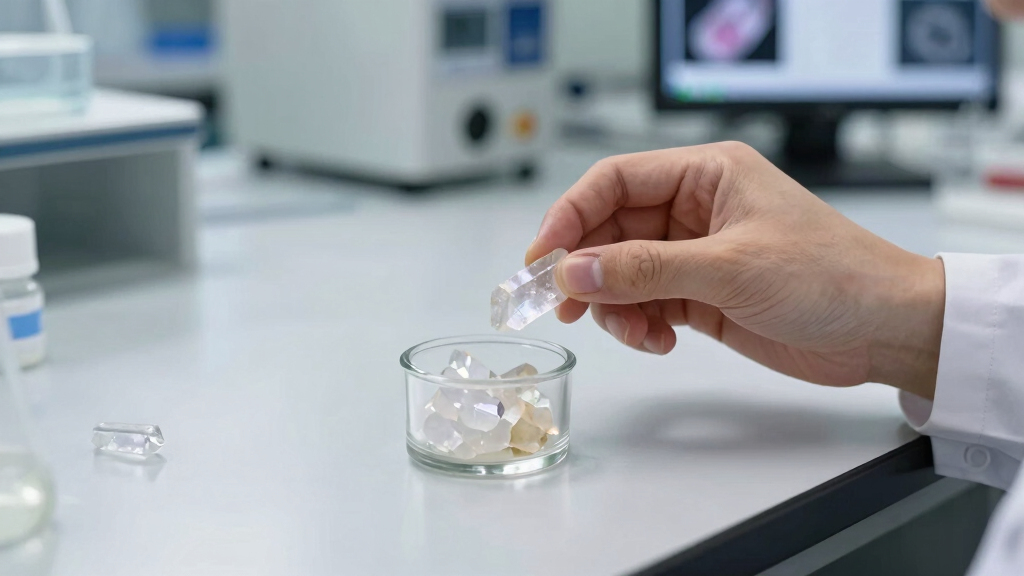
The discovery was made by researchers analyzing trinitite samples, which are formed from melted sand and vaporized materials after the Trinity test. The new clathrate is a cage-like crystal structure trapping atoms such as calcium, copper, and iron inside silicon-based frameworks. It was found within a copper-rich metallic droplet embedded in the trinitite.
According to Luca Bindi, a geologist at the University of Florence and co-author of the study, this represents a completely new kind of clathrate crystal, never before observed in nature or in nuclear explosion products. The formation of such structures is attributed to the extreme temperatures exceeding 1,500°C and pressures of several gigapascals during the blast, conditions that cause atoms to rearrange into unusual, metastable forms in seconds.
Why It Matters
The identification of this novel clathrate expands understanding of high-energy natural processes and the types of materials they can produce. It demonstrates how nuclear detonations serve as natural laboratories for creating unique crystalline matter that cannot be easily replicated in laboratories. These findings may influence future research in materials science, geology, and nuclear physics.
As an affiliate, we earn on qualifying purchases.
Background
The Trinity test was the first-ever nuclear explosion, occurring on July 16, 1945, in New Mexico. It involved a plutonium bomb that released energy equivalent to 25 kilotons of TNT. Previous studies of trinitite have revealed unusual materials, including a quasicrystal discovered in 2021, which challenged traditional notions of solid-state structures. Both the quasicrystal and now the new clathrate reflect the extreme conditions during the blast, which created nonequilibrium matter.
The recent discovery was published on May 11 in the Proceedings of the National Academy of Sciences. Scientists suggest that areas with different elemental compositions during the explosion led to the formation of different crystalline structures, with copper-rich zones favoring quasicrystals and copper-scarce zones forming the new clathrate.
“This is a completely new kind of clathrate crystal—something never seen before in nature or in the products of a nuclear explosion.”
— Luca Bindi
“The extreme conditions of the Trinity test allow for the formation of metastable phases that might not be found in laboratory experiments.”
— G. Nelson Eby
As an affiliate, we earn on qualifying purchases.
What Remains Unclear
It remains unclear how widespread such clathrates are in natural or artificial high-energy events, and whether similar structures can be synthesized in laboratory conditions. Further research is needed to understand their properties and potential applications.
As an affiliate, we earn on qualifying purchases.
What’s Next
Scientists plan to analyze additional trinitite samples to determine the prevalence of these clathrates and explore their formation mechanisms. Future studies may attempt to replicate the extreme conditions in controlled experiments to better understand these novel materials.
As an affiliate, we earn on qualifying purchases.
Key Questions
What is a clathrate crystal?
A clathrate is a cage-like crystal structure that traps other atoms inside its framework, often forming under specific high-pressure and high-temperature conditions.
Why is this discovery important?
It reveals new forms of matter created during nuclear explosions, expanding knowledge of extreme natural processes and potentially informing materials science and geology.
Can these crystals be created in laboratories?
Currently, it is uncertain if similar structures can be synthesized under controlled conditions. The extreme environment during the Trinity test is difficult to replicate precisely.
Does this affect nuclear safety or weapons development?
No, the discovery pertains to the scientific understanding of materials formed under extreme conditions and does not impact nuclear safety or weapons technology directly.
Halloween Picks
halloween
As an affiliate, we earn on qualifying purchases.




![Terence Tao: Math 2.0 [Pdf]](https://astrophotographyhq.com/wp-content/uploads/2026/10/terence-tao-math-2-0-pdf-featured-260x140.jpg)