
TL;DR

Prime made for students and young adults
- Fast, free delivery for dorm and study essentials
- Prime Video and Amazon Music included
- Member-only deals
NASA has successfully created an emulator for Voyager 1’s Flight Data System, allowing the spacecraft to continue transmitting scientific data despite aging hardware. This development extends Voyager 1’s operational capabilities and preserves its scientific mission.
NASA has successfully developed a computer emulator for Voyager 1’s Flight Data System (FDS), enabling the spacecraft to continue transmitting scientific data despite its aging onboard hardware. This breakthrough addresses critical challenges posed by the spacecraft’s obsolete systems and extends its operational life, which is of significant interest to space scientists and mission teams.
The emulator was created by NASA’s Jet Propulsion Laboratory (JPL) as part of a broader effort to preserve Voyager 1’s ability to communicate with Earth. The FDS, which manages data collection and transmission, was built in the late 1970s and has been increasingly difficult to operate due to hardware degradation and obsolete components. According to NASA officials, the emulator replicates the original FDS’s functions in software, allowing the spacecraft to process and send scientific data without relying on the original hardware. This development was tested successfully during recent communication sessions with Voyager 1, confirming its capability to interpret and transmit data accurately. NASA emphasized that this emulator could serve as a model for similar legacy systems on other spacecraft, potentially extending their operational lifespan and scientific utility.Implications for Long-Term Space Missions
This development is significant because it demonstrates a practical solution for maintaining critical systems on aging spacecraft, potentially extending their operational life beyond hardware limitations. For Voyager 1, which has been in space since 1977 and is now over 14 billion miles from Earth, maintaining communication is vital for ongoing scientific observations. The emulator reduces the risk of data loss due to hardware failure and could set a precedent for future missions facing similar aging systems. It also highlights NASA’s capability to innovate with software solutions, reducing the need for costly hardware replacements in deep space environments.
As an affiliate, we earn on qualifying purchases.
Voyager 1’s Aging Systems and Mission Challenges
Voyager 1 launched in September 1977, part of NASA’s Voyager program designed to study the outer planets and interstellar space. Over decades, its onboard systems have aged, with hardware components such as the Flight Data System becoming increasingly difficult to operate due to obsolescence and wear. Despite these challenges, Voyager 1 has continued to send valuable scientific data back to Earth, including measurements of magnetic fields, cosmic rays, and interstellar particles. Previous efforts to maintain communication involved hardware repairs and software updates, but hardware degradation has posed a persistent threat to its mission. The recent development of a software emulator for the FDS marks a significant step in addressing these long-term operational hurdles.
“Creating a software-based solution for such an old system is a major milestone, demonstrating how software can extend the life of hardware in space.”
— Dr. Lisa Morgan, mission engineer
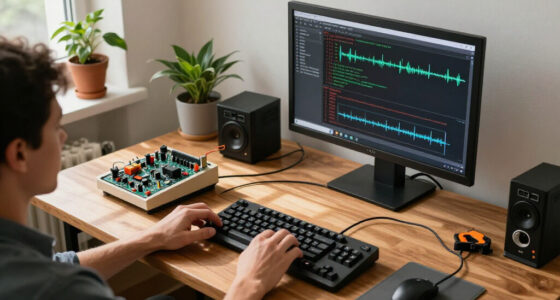
spacecraft flight data system simulator
As an affiliate, we earn on qualifying purchases.
As an affiliate, we earn on qualifying purchases.
Remaining Technical and Operational Uncertainties
While the emulator has been successfully tested during recent communications, it is not yet clear how long it will sustain Voyager 1’s data transmission without hardware failures. The long-term stability of the software solution and its ability to adapt to unforeseen hardware issues remain uncertain. Additionally, NASA has not disclosed whether further hardware repairs or upgrades are planned for other onboard systems, which could impact the spacecraft’s continued operation.
As an affiliate, we earn on qualifying purchases.
Next Steps for Voyager 1’s Data Transmission Capabilities
NASA plans to continue monitoring the emulator’s performance during upcoming communication sessions and assess its long-term stability. The agency is also exploring whether similar software solutions can be applied to other aging spacecraft, potentially extending their operational lifespan. Further updates are expected as NASA evaluates the emulator’s effectiveness over the coming months and considers additional measures to support Voyager 1’s mission.
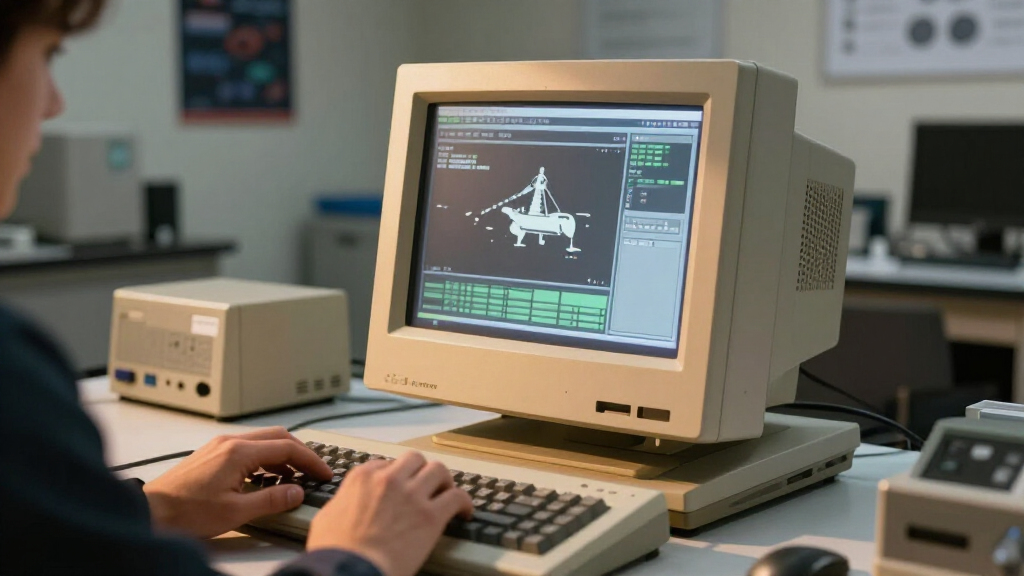
space mission data transmission tools
As an affiliate, we earn on qualifying purchases.
As an affiliate, we earn on qualifying purchases.
Key Questions
How does the Voyager 1 emulator work?
The emulator replicates the functions of the original Flight Data System in software, allowing the spacecraft to process and transmit scientific data as if the hardware were still operational.
Will this emulator extend Voyager 1’s mission indefinitely?
While it significantly prolongs the spacecraft’s ability to send data, long-term operation depends on the emulator’s stability and the spacecraft’s remaining hardware health. Further testing will determine its durability.
Could this approach be used on other aging spacecraft?
Yes, NASA is exploring similar software solutions for other spacecraft facing hardware obsolescence, which could help extend their operational lives.
What scientific data does Voyager 1 continue to send?
Voyager 1 transmits data related to magnetic fields, cosmic rays, and interstellar particles, providing valuable insights into the environment beyond our solar system.
Source: hn
Evergreen bestsellers Picks
bestsellers
As an affiliate, we earn on qualifying purchases.