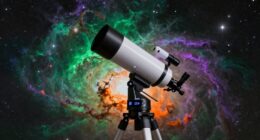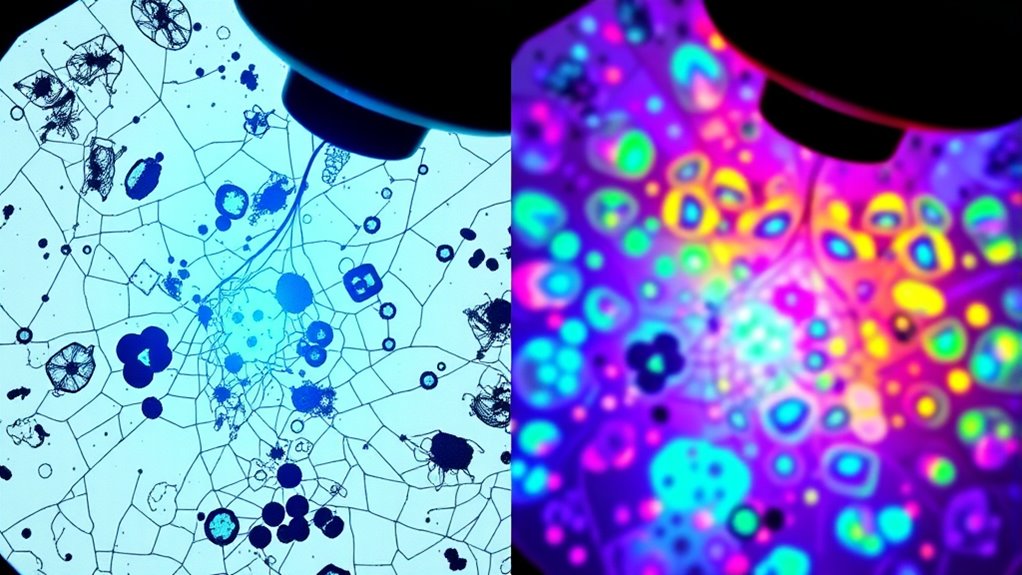

Narrowband filters focus on specific emission lines like H-alpha, allowing you to capture detailed nebulae with high contrast by blocking most light pollution and moonlight. Broadband filters, on the other hand, let in a wider range of wavelengths, enabling you to quickly capture natural, full-color images of the night sky. Understanding these differences helps you choose the right filter for your goals; keep exploring to discover more about their uses and techniques.
Key Takeaways
- Narrowband filters transmit a very specific, narrow wavelength range, ideal for isolating emission lines like H-alpha or OIII.
- Broadband filters allow a wider spectrum of light, suitable for capturing natural, full-color images quickly.
- Narrowband filters excel in high-contrast, detailed nebula imaging, especially under light pollution, requiring longer exposures.
- Broadband filters are better for quick, colorful captures of wide-field objects like star fields and planets.
- Choice depends on imaging goals: detailed structures with narrowband or vibrant, natural colors with broadband.
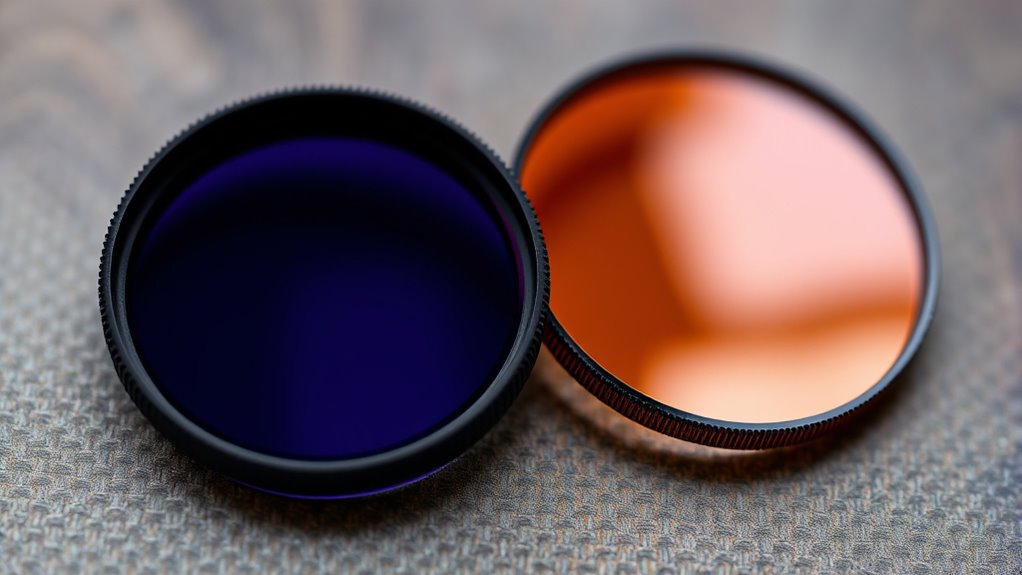
When choosing between narrowband and broadband filters, understanding their fundamental differences can considerably impact your imaging results. The core distinction lies in their filter design: narrowband filters are engineered to transmit a very specific, tight range of wavelengths—often just a few nanometers—focusing on particular emission lines like H-alpha or OIII. Broadband filters, on the other hand, allow a much wider spectrum of light to pass through, typically spanning several tens of nanometers. This difference in design directly influences how you apply these filters during astrophotography, affecting everything from exposure times to image clarity.
Narrowband filters are particularly effective when you want to isolate specific celestial features. Their precise filter design enables you to capture detailed structures within nebulae and galaxies by blocking out unwanted light pollution and moonlight. Because they transmit only a narrow slice of the spectrum, they require longer exposure times to gather enough light, but the payoff is a high-contrast, detailed image with minimal background noise. When applying narrowband filters, your application techniques should focus on maximizing signal-to-noise ratios. This often involves stacking multiple long-exposure images, ensuring your mount tracks accurately to prevent star trails, and adjusting camera settings to optimize the filter’s selectivity.
In contrast, broadband filters excel in situations where you want to capture a more natural, full-color representation of the night sky. Their wider filter design allows for shorter exposures since they let in more light overall. This makes them ideal for capturing wide-field images of star fields, planets, and the Moon. The application techniques for broadband filters tend to be more straightforward: you can often shoot handheld or with shorter exposures, and post-processing can enhance color balance and detail. They’re especially useful when atmospheric conditions are good, and you want to quickly survey or capture a variety of objects without the need for extensive stacking or long exposures.
Choosing between these filters hinges on your imaging goals. If you’re after detailed nebular images with high contrast, narrowband filters are your best bet, but be prepared to refine your application techniques for longer exposures and stacking. If you prefer quick, colorful captures of a broad range of objects or are working under good skies with minimal light pollution, broadband filters will serve you well. Ultimately, understanding the interplay between filter design and application techniques helps you leverage each filter’s strengths, ensuring your astrophotography sessions produce the best possible results. Additionally, a clear understanding of filter types can help you select the most suitable equipment for your specific needs and improve your overall imaging quality.
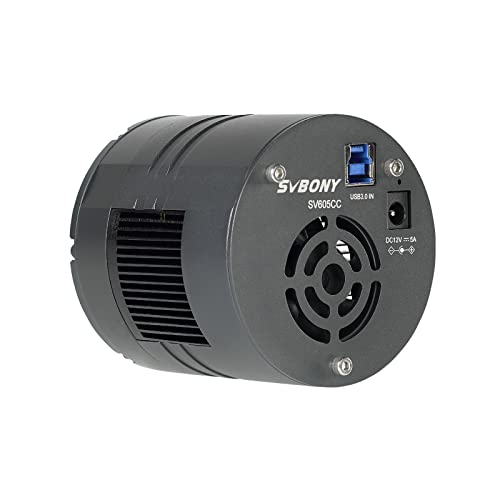
SVBONY SV605CC Cooled Astrophotography Camera, Double Layer Semiconductor Refrigeration, 9MP IMX533 USB3.0 CMOS Color Telescope Camera, for Deep Sky Astrophotography Panoramic Astronomy&Lucky Imaging
SV605CC deep sky camera is suitable for deep space photography enthusiasts; suitable for deep space photography; panoramic astronomy;...
As an affiliate, we earn on qualifying purchases.
Frequently Asked Questions
How Do Narrowband and Broadband Filters Affect Signal Strength?
Narrowband filters focus on a small filter bandwidth, which helps you reduce signal attenuation from unwanted frequencies, boosting your signal clarity. Broadband filters, with a wider bandwidth, allow more frequencies through but can cause more signal attenuation, potentially weakening your signal. By choosing the right filter, you control the balance between filtering unwanted noise and maintaining signal strength, ensuring better performance based on your specific needs.
Can I Use Both Filter Types Simultaneously?
Yes, you can use both filter types simultaneously in a dual filter setup, but you need to verify filter compatibility first. Combining narrowband and broadband filters can improve signal quality by reducing unwanted noise while capturing specific frequencies. Make certain they are compatible in size and mount type, and position them correctly in your optical path. This setup can enhance your signal clarity without risking damage or interference.
Are There Specific Applications Best Suited for Each Filter Type?
Think of filter selection like choosing the right tool for your mission. Narrowband filters excel in applications needing high contrast, like astrophotography or detecting specific signals. Broadband filters suit general imaging and situations where you want to capture broader light spectra. Each filter type’s application suitability depends on your goals—use narrowband filters for precision tasks, and broadband filters when you need versatility and a wider view.
How Do Environmental Factors Impact Filter Performance?
Environmental factors like atmospheric interference can critically impact your filter performance, causing signal distortions or noise. Thermal stability is also essential; temperature fluctuations can alter filter characteristics, reducing effectiveness. You should consider these factors when choosing and deploying filters, especially in outdoor or variable environments. Proper insulation and calibration help maintain peak performance, ensuring your system stays accurate and reliable despite environmental challenges.
What Maintenance Is Required for These Filters Over Time?
Think of your filters like a vintage radio needing regular tuning. Over time, you should check their filter longevity and perform calibration procedures to guarantee peak performance. Clean the filters gently to prevent dust buildup, and inspect for any damage or wear. Replace filters as recommended by the manufacturer, and keep records of maintenance to track performance. Regular upkeep keeps your filters functioning at their best, much like a well-tuned vintage radio.

SVBONY SV405CC Cooled Telescope Camera, 11.7 MP USB3.0, BI IMX294 CMOS Color Sensor, Astrophotography Camera with AR Coating, Astronomy Electronic Eyepiece for Deep Sky Astrophotography&Lucky Imaging
High-Sensitivity 4/3" Sensor: Back-illuminated IMX294 with 4.63μm pixels (4144x2822) for excellent light capture. The 63ke- full well capacity...
As an affiliate, we earn on qualifying purchases.
Conclusion
Understanding the difference between narrowband and broadband filters helps you choose the right tool for your needs. Did you know that narrowband filters can detect objects as faint as magnitude 20, making them ideal for deep-sky observations? This statistic shows how specialized filters can reveal details hidden to the naked eye. By selecting the right filter, you enhance your astronomical experience and uncover wavelengths others might miss. So, pick wisely and see the universe in a whole new light.

ZWO ASI585MC AIR Cooled Color Astronomy Camera w/Built-in Guide Camera & ASIAir with Power Supply
10 Unmissable Advantages:1.3 in 1 Camera: Imaging, Guiding, Control System 2.256G eMMC Storage 3.STARVIS 2 Technology 4.4K Resolution...
As an affiliate, we earn on qualifying purchases.

SVBONY SV605MC Telescope Camera, 9 Megapixel, IMX533 Sensor, CMOS Cooled Monochrome Astronomy Camera with USB 3.0 for Moon, Saturn, Planets and Deep Sky Astrophotography
SV605MC cooled camera suitable for deep sky photography users; enthusiasts who use narrow-band filters to shoot; deep sky...
As an affiliate, we earn on qualifying purchases.