
With one-shot color narrowband imaging, you can capture detailed spectral data in a single shot, thanks to advanced sensors and optical technology that isolate specific wavelengths without needing monochrome cameras. This method simplifies setup, reduces processing, and offers vibrant, high-contrast images ideal for astrophotography, vegetation analysis, or industrial inspection. By choosing the right camera and filters, you guarantee accurate, high-quality results. Exploring this further reveals how you can optimize your imaging workflow for cleaner data and better insights.

Get school and study supplies delivered free — and shop member deals
- Fast, free delivery on millions of items
- Access to Prime Big Deal Days deals on October 6–7
- Prime Video, Amazon Music and more included
Key Takeaways
- Advanced sensors with spectral analysis capabilities capture narrowband and color data simultaneously, eliminating the need for monochrome cameras.
- Proper calibration and optimized filters ensure high-quality, accurate narrowband images without multiple exposures.
- Data processing techniques like stacking and noise reduction enhance image clarity and detail in single-shot captures.
- Combining specialized optical components with sensitive sensors allows for clear, high-contrast narrowband imaging in one shot.
- Emerging technologies and AI-driven processing are improving data quality and simplifying workflows without monochrome cameras.
one-shot color narrowband astrophotography camera
As an affiliate, we earn on qualifying purchases.
As an affiliate, we earn on qualifying purchases.
What Is One-Shot Color Narrowband Imaging and How Does It Work?
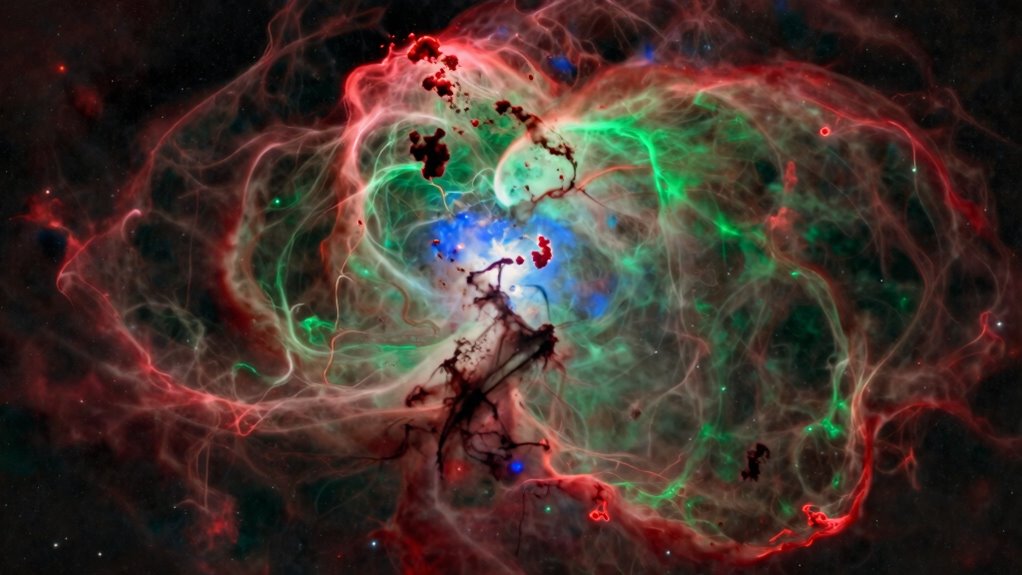
Have you ever wondered how astronomers capture detailed images of faint celestial objects? One-shot color narrowband imaging uses specialized color sensors combined with advanced image processing to do just that. Instead of traditional monochrome cameras, these sensors detect specific narrowband wavelengths directly, capturing rich, detailed color data in a single shot. The key is in the image processing, which combines the narrowband data with color information, resulting in vibrant, precise images. This process simplifies equipment setup and reduces the need for multiple exposures, saving you time while maintaining high image quality. By integrating color sensors with smart processing techniques, you get clear, detailed astrophotography data without relying on mono cameras, making it an efficient choice for capturing faint objects in the night sky.
spectral imaging filter for industrial inspection
As an affiliate, we earn on qualifying purchases.
As an affiliate, we earn on qualifying purchases.
What Are the Benefits of One-Shot Narrowband Imaging Compared to Traditional Methods?

One-Shot Color Narrowband: Get Clean Data Without a Mono Camera
What makes one-shot narrowband imaging stand out from traditional methods is its efficiency and simplicity. Instead of capturing multiple exposures for each color, it gathers all data in a single shot, saving time and reducing errors. This approach enhances color accuracy by minimizing misalignment and inconsistencies between images. Additionally, it leverages sensor sensitivity effectively, capturing faint details more reliably without needing complex filters or multiple exposures. You benefit from cleaner data, less post-processing, and quicker results. Tights for fashion enthusiasts are designed with precision, much like how this imaging technique captures detail. Furthermore, this method contributes significantly to exploring new frontiers in digital content creation. By ensuring color accuracy is achieved with precision, it supports a more immersive viewing experience. Here’s how it compares:
| Benefit | Traditional Methods | One-Shot Narrowband |
|---|---|---|
| Color Accuracy | Multiple exposures risk misalignment | Precise, single exposure |
| Sensor Sensitivity | Limited by filter switching | Optimized for faint signals |
| Efficiency | Time-consuming | Fast, one-shot capture |
| Data Quality | Potential for artifacts | Cleaner, more reliable data |
Moreover, this technique aligns perfectly with the current trend of data storage solutions, ensuring that your imaging results are preserved efficiently.
advanced sensors for narrowband imaging
As an affiliate, we earn on qualifying purchases.
As an affiliate, we earn on qualifying purchases.
What Are the Key Components and Technologies in One-Shot Narrowband Cameras?
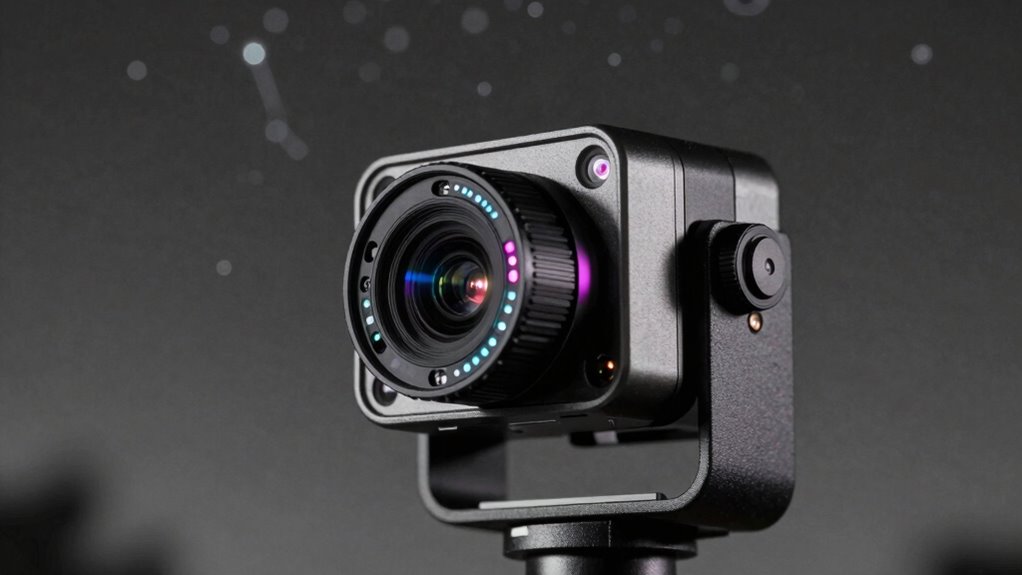
One-shot narrowband cameras rely on advanced sensor technology combined with specialized optical components to capture multiple narrowband wavelengths simultaneously. The core of these cameras is their sensor design, which enables precise spectral analysis of light across different wavelengths in a single exposure. This sensor often uses a mosaic filter array or multiple micro-filters to isolate specific spectral bands, allowing for detailed data collection without moving parts. The optical components, including filters and dichroic beam splitters, are carefully engineered to guarantee accurate separation of wavelengths. These technologies work together to provide clean, high-quality data, making it possible to analyze complex astronomical objects or scenes efficiently. The combination of sensor design and optical technology is fundamental to achieving the quick, simultaneous spectral analysis that defines one-shot narrowband imaging.
high sensitivity narrowband camera
As an affiliate, we earn on qualifying purchases.
As an affiliate, we earn on qualifying purchases.
How Do You Choose the Best One-Shot Narrowband Camera for Your Needs?

When selecting a one-shot narrowband camera, you need to take into account how well it will work with your existing equipment. Think about the available wavelength options and whether they match your imaging goals, and keep your budget in mind to find a model that offers the best value. Making these choices carefully ensures you get a camera that fits your needs without overspending.
Compatibility With Equipment
Choosing the right one-shot narrowband camera begins with evaluating your existing equipment and verifying compatibility. Check if your mount and connection interfaces match the camera’s specifications. Sensor sensitivity varies between models; higher sensitivity captures faint details better, so consider your typical target objects. Compatibility also depends on your guiding system and filter wheel, if used, requiring proper calibration techniques to maintain accuracy. Confirm your software supports the camera’s driver and data formats. Power requirements and cooling systems should align with your setup to prevent overheating during long exposures. Confirm that your mount can handle the camera’s weight. Properly assessing these factors helps avoid costly mismatches and ensures smooth integration, letting you focus on capturing clean, high-quality data.
Wavelength Selection Options
Selecting the right wavelength options for your narrowband camera depends on your specific astrophotography goals and target objects. You need to take into account spectral resolution, which determines how precisely the camera isolates specific wavelengths. Higher spectral resolution offers cleaner data and better contrast, essential for detailed nebula imaging. Additionally, wavelength selection impacts color calibration, influencing how accurately your final image represents true colors. Narrowband filters typically target specific emission lines like H-alpha, OIII, or SII, so choose wavelengths aligned with your desired targets. Think about your imaging environment too; broader wavelengths might be more forgiving in light-polluted skies. Ultimately, balancing spectral resolution with your target’s emission characteristics ensures you capture the most meaningful data without sacrificing image quality or color accuracy.
Budget and Cost Considerations
Are you finding it challenging to choose the best one-shot narrowband camera within your budget? Conducting a thorough cost analysis helps you compare features against price, ensuring you get value without overspending. Effective budget planning involves setting a clear price range and prioritizing essential features. Consider the following:
- Initial purchase price and potential upgrades
- Compatibility with your current setup
- Operating and maintenance costs
- Image quality versus affordability
- Resale value and long-term investment
Balancing these factors helps you avoid overspending while meeting your imaging needs. Remember, a higher upfront cost might save money long-term if it reduces maintenance or upgrade costs. Carefully analyzing costs ensures you select a camera that fits your budget and provides the best performance for your astrophotography goals.
What Are the Main Applications of One-Shot Narrowband Imaging?

One-shot narrowband imaging shines in astrophotography, helping you capture stunning celestial details with enhanced contrast. It also proves valuable for precise vegetation monitoring, allowing you to assess plant health quickly. Additionally, this technology offers significant advantages in industrial inspection, detecting defects and issues more effectively.
Astrophotography Enhancements
One-Shot Narrowband imaging has become an essential tool for astrophotographers aiming to capture detailed and vibrant images of deep-sky objects. It enhances astrophotography by enabling you to gather clean data quickly, even in less-than-ideal conditions, thanks to advanced color sensors and efficient image processing. This approach allows you to combine narrowband data with visible light, creating striking color images that reveal faint structures. You can also reduce light pollution effects and improve contrast without multiple exposures. Additionally, it simplifies workflow by eliminating the need for separate mono cameras. The technology empowers you to:
- Capture high-contrast nebulae and galaxies
- Enhance faint detail visibility
- Reduce exposure times
- Simplify image processing workflows
- Combine broadband and narrowband data seamlessly
Precise Vegetation Monitoring
Building on the advantages of narrowband imaging in astrophotography, this technology also offers powerful tools for precise vegetation monitoring. With high spectral resolution, you can distinguish subtle differences in plant health and stress levels by capturing specific bands associated with chlorophyll and other pigments. This enhances your ability to detect early signs of disease or nutrient deficiency. Additionally, narrowband imaging improves color accuracy, providing consistent, true-to-life data that assists in accurate assessments. You can monitor large areas quickly and efficiently, making it ideal for precision agriculture, forestry management, and environmental studies. By using one-shot color narrowband cameras, you avoid the complexity of multispectral setups, gaining reliable, clean data that helps optimize crop yields and supports sustainable land management.
Industrial Inspection Benefits
Industrial inspection benefits from narrowband imaging’s ability to detect subtle variations in material properties with high accuracy. This technology enhances quality control by identifying flaws or inconsistencies that might be missed with traditional methods. With optimized sensor sensitivity, you can capture precise data even in challenging lighting conditions. Proper color calibration guarantees consistent results across different inspections, reducing errors. One-shot narrowband imaging is especially useful for detecting corrosion, cracks, or contamination in materials. It also improves process monitoring and reduces inspection time, increasing efficiency. By leveraging these advantages, you gain reliable, detailed insights into your manufacturing processes, ensuring product integrity and safety. Additionally, the principles of eco-friendly natural pools can inspire sustainable practices in industrial applications.
- Detects corrosion, cracks, and contamination
- Enhances color calibration accuracy
- Improves sensor sensitivity for low-light conditions
- Speeds up inspection processes
- Ensures consistent, high-quality results
How Can You Capture High-Quality Narrowband Data Without a Monochrome Camera?

While monochrome cameras are traditionally preferred for high-quality narrowband imaging, you can still capture excellent data with color cameras by carefully selecting filters and optimizing your process. Focus on using narrowband filters suited for your target wavelengths to minimize spectral overlap and improve signal clarity. Proper color calibration ensures your camera’s response aligns with the true colors of the emission lines, preserving data accuracy. Additionally, effective data processing techniques—such as stacking multiple exposures, noise reduction, and contrast adjustments—enhance image quality. By combining precise filter choices with diligent calibration and processing, you can produce clean, high-quality narrowband data without relying on a monochrome camera. This approach broadens your options while maintaining imaging standards.
What Are Common Challenges and Limitations of One-Shot Narrowband Imaging?
Despite the advantages of using color cameras for narrowband imaging, several challenges can hinder your results. Sensor sensitivity often limits the quality of narrowband data, especially in low-light conditions, leading to weaker signals. Data processing becomes more complex because separating true narrowband signals from noise requires advanced algorithms and computational power. Additionally, color sensors may struggle with spectral overlap, reducing accuracy. Calibration can also be tricky, affecting the consistency of results. Moreover, narrowband filters demand precise alignment, and any misalignment impacts data quality. These limitations mean you might need to compromise on image clarity or spend extra time refining data. Being aware of these challenges helps you plan better and optimize your imaging setup for more reliable results.
Recognizing challenges like sensor sensitivity, calibration, and filter alignment helps optimize narrowband imaging results.
- Sensor sensitivity issues
- Complex data processing
- Spectral overlap challenges
- Calibration difficulties
- Filter alignment problems
What Are the Future Trends and Innovations in One-Shot Narrowband Cameras?
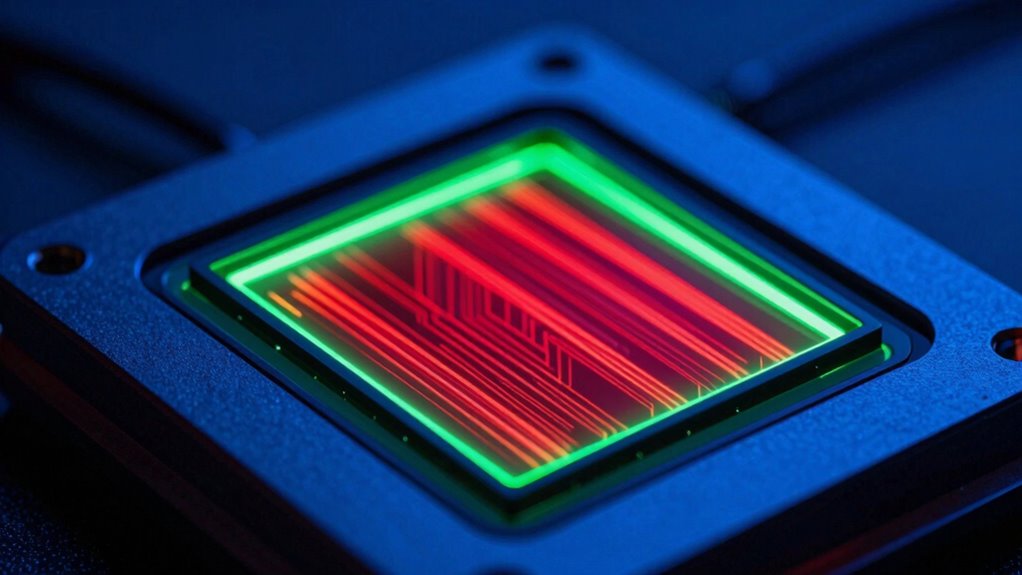
Advancements in sensor technology and computational algorithms are driving exciting innovations in one-shot narrowband cameras. Sensor miniaturization allows for more compact, lightweight designs, making these cameras suitable for a broader range of applications, from portable astrophotography to embedded systems. Improved sensors also enhance sensitivity and resolution, enabling cleaner data collection without a mono camera. Meanwhile, data compression techniques are evolving to optimize storage and transmission efficiency, ensuring high-quality narrowband images with minimal bandwidth. Future developments will likely focus on integrating AI-driven processing for real-time data analysis and further reducing hardware size without sacrificing performance. These innovations will make one-shot narrowband cameras more versatile, accessible, and capable of delivering clean, precise data across various scientific and imaging fields.
Frequently Asked Questions
Can One-Shot Color Narrowband Imaging Replace Traditional Monochrome Setups Entirely?
One-shot color narrowband imaging can’t fully replace traditional monochrome setups yet. While it uses a color filter to simplify data collection and benefits from enhanced sensor sensitivity, it often falls short in capturing the fine details and high contrast that monochrome cameras provide. Monochrome systems still excel for astrophotography, especially in narrowband imaging, because they offer more precise control over individual wavelengths and better overall image quality.
What Are the Ideal Astrophotography Scenarios for One-Shot Color Narrowband Cameras?
Like a finely tuned instrument, your one-shot color narrowband camera excels in nebula imaging and bright emission regions. It’s perfect when you want quick, vibrant results without extensive filter swaps. With its sensor sensitivity, you capture faint details efficiently, and durable filters guarantee longevity through tough conditions. Use it in scenarios with moderate light pollution, where ease of use and reliable performance make it your ideal astrophotography companion.
How Does Ambient Light Pollution Affect One-Shot Narrowband Imaging Quality?
Ambient light pollution, especially sky glow from city lights, impacts your one-shot narrowband imaging by increasing background noise and reducing contrast. Light pollution makes it harder for your camera to distinguish faint objects, even with narrowband filters. To get the best results, shoot from dark skies and use filters effectively. This way, you minimize the effects of sky glow and improve the clarity and quality of your astrophotography images.
Are There Specific Software Requirements for Processing One-Shot Narrowband Data?
You’ll need specialized software that handles sensor calibration and data processing to reveal the true potential of your one-shot narrowband images. Think of it as tuning an instrument—calibration aligns your data perfectly, while processing transforms raw signals into stunning visuals. Programs like PixInsight or AstroPixelProcessor are your allies, helping you refine and enhance your data, ensuring your images shine with clarity and detail, free from noise and distortions.
What Maintenance Is Required for Optimal Performance of One-Shot Narrowband Cameras?
To keep your one-shot narrowband camera performing at its best, you should regularly perform sensor calibration to guarantee accurate data collection. Additionally, maintain your filters by cleaning them gently to prevent dust and debris that can affect image quality. Check for firmware updates and follow manufacturer guidelines for periodic maintenance. Properly maintaining your camera’s sensor and filters helps ensure consistent, high-quality results over time.
Conclusion
In the world of astrophotography, one-shot color narrowband cameras are your trusty compass, guiding you through cosmic mysteries without the need for monochrome gear. They simplify your journey, offering vibrant, clean data with a splash of innovation. As technology advances, you’ll find your astronomical adventures becoming even more vivid and effortless, like painting the universe with a single brushstroke. Embrace these tools, and watch your celestial canvas come alive in breathtaking detail.
Halloween Picks
halloween
As an affiliate, we earn on qualifying purchases.