
TL;DR

Prime made for students and young adults
- Fast, free delivery for dorm and study essentials
- Prime Video and Amazon Music included
- Member-only deals
Red sprites are brief, glowing discharges high above thunderstorms, caused by powerful lightning. Recent advances and optimal locations like the Tatacoa Desert help us see these phenomena and understand Earth’s electrical linkages.
Imagine a lightning storm on a clear night, but instead of just thunder and flashes within the clouds, sudden flashes of deep crimson dance high above. These are red sprites — fleeting, mesmerizing bursts of color that last just milliseconds. They’re like the lightning’s secret fireworks, hidden from most eyes but breathtaking to those who know where and how to look.
In the Tatacoa Desert, a place famous for its dark skies and minimal light pollution, scientists and photographers have captured these elusive events with incredible clarity. This article unpacks what red sprites are, why they’re so fascinating, and how recent discoveries in 2026 are expanding our understanding of these atmospheric wonders. If you’ve ever wondered what’s happening miles above thunderstorms, stay tuned — this sky story might just change how you see the night.
Red sprites are brief, red flashes occurring high above thunderstorms, triggered by strong positive lightning strikes.
The Tatacoa Desert offers ideal conditions for observing these phenomena due to its dark skies and high elevation.
Advances in high-speed imaging in 2026 have unveiled detailed structures of sprites, deepening scientific understanding.
Photographing sprites requires patience, a wide-angle lens, and dark, stormy conditions — they’re fleeting but beautiful.
Sprites are part of a broader family of atmospheric phenomena that reveal the complex electrical links between Earth’s clouds and upper atmosphere.
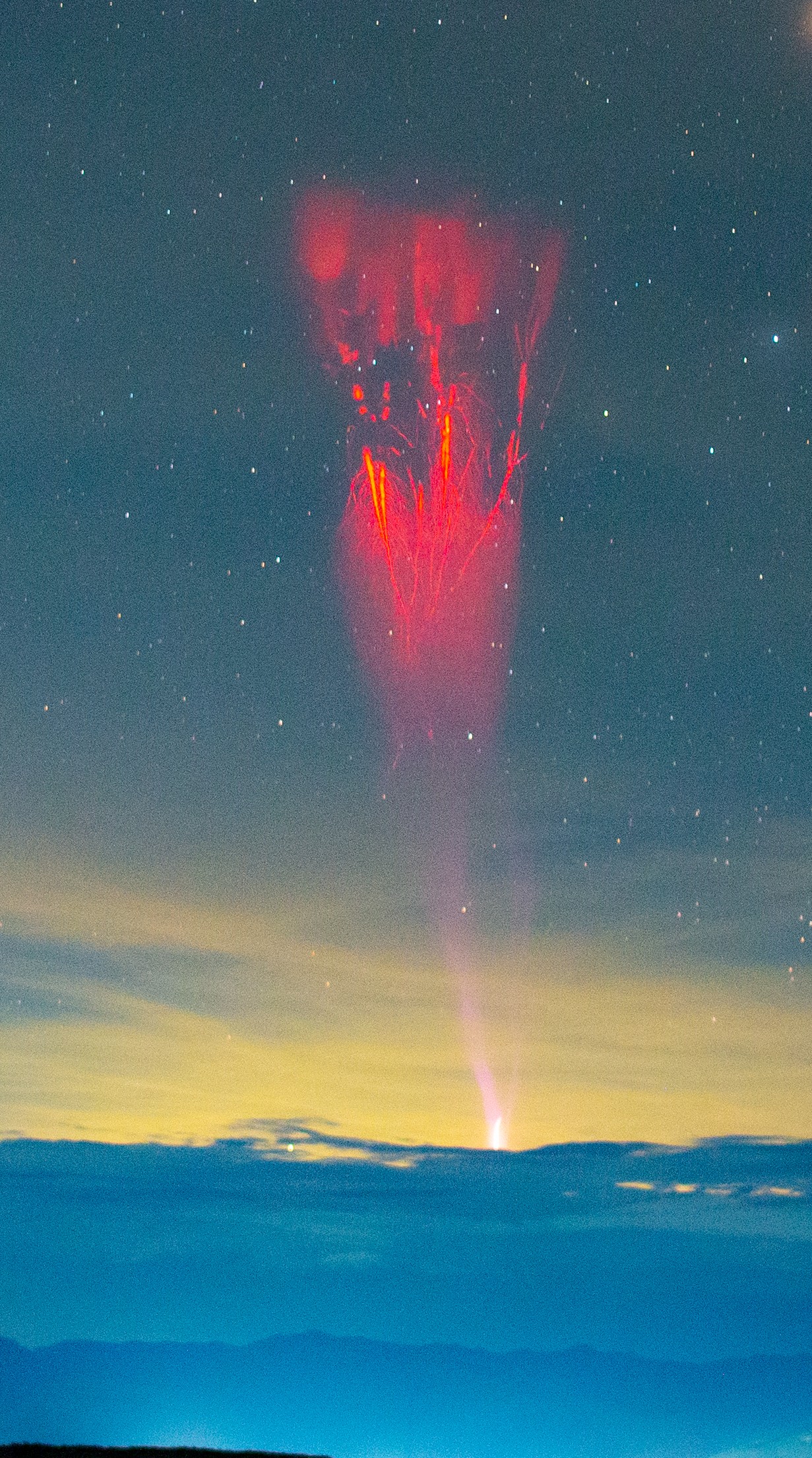
Red sprites are a type of transient luminous event — flashes of bright red light that shoot upward from thunderstorm regions, reaching heights of 50 to 90 kilometers. They look like ghostly jellyfish or fiery carrots frozen in time, flickering for just a few milliseconds. These luminous bursts are triggered by the intense positive lightning strikes at the bottom of storms, which send electrical signals racing upward into the upper atmosphere.
Understanding the physical process behind red sprites is crucial because it reveals how electrical energy and charged particles interact in Earth’s atmosphere. These phenomena are not just beautiful; they are indicators of the electrical dynamics within storms that can influence atmospheric chemistry and even climate patterns. The rapid electrical discharges can alter the composition of the upper atmosphere, affecting processes like ozone formation and nitrogen cycle dynamics. Recognizing how positive lightning initiates sprites helps scientists better understand the energy transfer from storm clouds to the upper layers of the atmosphere, which is essential for modeling weather and climate systems.
wide angle camera lens for astrophotography
As an affiliate, we earn on qualifying purchases.
As an affiliate, we earn on qualifying purchases.
Why The Tatacoa Desert Is Perfect for Catching Red Sprites
The Tatacoa Desert isn’t just a dry, rocky place — it’s a prime spot for atmospheric photography. Its clear, dry air means less haze and more stable viewing conditions. Plus, its high elevation reduces atmospheric interference, giving a sharper window into the sky’s electrical dramas.
During recent campaigns in 2026, researchers used wide-field cameras and sensitive photometers here, capturing sprites with stunning clarity. Imagine standing beneath a thunderstorm, flashlight in hand, but instead of ordinary lightning, you’re witnessing delicate, crimson tendrils stretching into the dark sky. That’s exactly what Tatacoa’s conditions facilitate — a perfect stage for these fleeting, fiery phenomena.
The significance of Tatacoa’s environment extends beyond just clear skies; its remote location minimizes light pollution, allowing for more detailed and uninterrupted observations. For photographers, this means the chance to capture the ephemeral beauty of sprites without the competing glow of city lights. For scientists, it provides an ideal natural laboratory to study the initiation and structure of these high-altitude electrical events, leading to better predictive models and understanding of storm-related upper atmospheric phenomena.
high-speed camera for capturing lightning
As an affiliate, we earn on qualifying purchases.
As an affiliate, we earn on qualifying purchases.
Recent Breakthroughs in 2026: Seeing the Sky’s Fireworks Up Close
Scientists have made huge strides in 2026, thanks to advancements in high-speed imaging and satellite data. Cameras now record thousands of frames per second, revealing the intricate tendrils and branching patterns of sprites in stunning detail. This technology helps us understand their structure and connection to lightning strikes.
These technological advances are not just about capturing beautiful images; they are critical for decoding the underlying physics of sprites. By analyzing high-resolution data, researchers are uncovering how these electrical discharges propagate, branch, and influence the upper atmosphere’s chemistry. For example, understanding the link between specific lightning types and sprite formation can improve storm prediction models and provide insights into how electrical energy is transferred through Earth’s atmosphere. Moreover, these discoveries have implications for understanding similar phenomena on other planets, broadening our perspective on planetary atmospheres and electrical activity beyond Earth.
Thanks to these technological leaps, we are now able to observe the sky’s fiery displays in unprecedented detail, turning a fleeting phenomenon into a well-understood scientific event that bridges atmospheric physics, climate science, and planetary exploration.
As an affiliate, we earn on qualifying purchases.
How to Photograph Red Sprites: Capture the Sky’s Crimson Fireworks
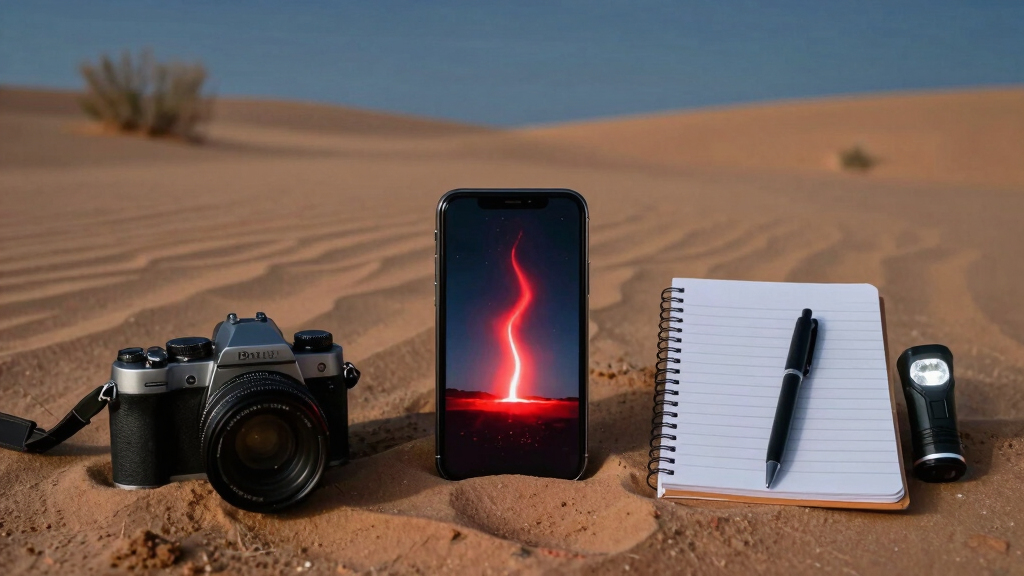
If you want to catch a glimpse of red sprites, here’s a simple step-by-step guide. First, pick a dark, clear night during thunderstorm season — storms with strong positive lightning are your best bet. Use a wide-angle lens (at least 24mm) on a sturdy tripod, aiming toward a storm cloud overhead.
- Set your camera to manual mode, with a shutter speed of 10-30 seconds. Longer exposures increase your chances of capturing fleeting sprites, but be mindful of overexposure from ambient light or lightning flashes.
- Use a low ISO (around 400) to reduce noise but keep enough sensitivity for faint flashes. Adjust ISO based on your camera’s performance and the darkness of the sky.
- Start recording and keep your camera pointed at the storm. Patience is key — sprites are unpredictable and brief, often appearing in bursts or streaks that may require multiple attempts to capture.
- Review your shots afterward, looking for faint red flashes or tendrils. Some cameras with high frame rates can be set to record bursts for later analysis, increasing your odds of catching these elusive phenomena.
Remember, the key to successful sprite photography is understanding the conditions that produce them and being prepared to experiment. Dark skies, active storms with positive lightning, and a steady hand with your camera will give you the best shot at capturing these spectacular, fleeting displays.
remote shutter release for long exposure
As an affiliate, we earn on qualifying purchases.
As an affiliate, we earn on qualifying purchases.
Red Sprites vs. Other Sky Phenomena: What’s the Difference?
| Phenomenon | Where It Happens | How Long It Lasts | Appearance |
|---|---|---|---|
| Red Sprites | High above thunderstorms, 50-90 km altitude | A few milliseconds | Bright red tendrils, jellyfish-like |
| Elves | Upper ionosphere, 90-100 km | Less than a millisecond | Diffuse, expanding rings of light |
| Blue Jets | Within thunderstorms, reaching 40-50 km | Seconds | Blue, cone-shaped jets |
| Gigantic Jets | Between cloud tops and ionosphere | Seconds | Bright, blueish arcs |
While all these phenomena are related to thunderstorms, red sprites stand out for their vibrant color and high altitude, making them the most visually striking of the bunch. Their brief appearance and stunning red hue symbolize the intense electrical activity occurring far above the storm clouds, offering a glimpse into the upper atmosphere’s complex electrical choreography. Recognizing these differences helps scientists categorize and study each event’s unique origin and impact, which can influence our understanding of atmospheric electricity and its effects on climate and communication systems.
Frequently Asked Questions
Can I see red sprites with my eyes?
Usually not. Red sprites are faint and last only a few milliseconds, making them difficult to spot without specialized high-speed cameras. In rare cases, under very specific conditions, experienced observers with night vision might catch glimpses.When is the best time to photograph red sprites?
During thunderstorm season, especially when large storms produce strong positive lightning. Clear, dark nights with minimal light pollution, like in the Tatacoa Desert, increase your chances.Are red sprites dangerous?
No. They occur high above the clouds and are not harmful to humans. They’re simply a beautiful atmospheric phenomenon caused by electrical discharges.How do scientists study sprites?
Using high-speed cameras, sensitive photometers, and satellite data, scientists analyze their structure, triggers, and effects on upper atmospheric chemistry. Recent advances have opened new windows into understanding these fleeting flashes.Could we see sprites on other planets?
Yes. NASA’s Juno spacecraft has observed sprite-like flashes on Jupiter, indicating that similar electrical phenomena occur on other worlds with thick atmospheres and lightning activity.Conclusion
Red sprites turn the night sky into a fleeting, fiery dance — a reminder of how dynamic and mysterious our atmosphere truly is. With better tools and clearer skies, we’re finally able to witness these secret fireworks and grasp their role in Earth’s electrical symphony.
Next time a storm rolls in, keep your camera ready. You might just catch a burst of crimson that turns an ordinary night into a spectacular show — proof that even the briefest moments can be extraordinary when you know where to look.
Fall Picks
fall essentials
As an affiliate, we earn on qualifying purchases.