TL;DR

Prime made for students and young adults
- Fast, free delivery for dorm and study essentials
- Prime Video and Amazon Music included
- Member-only deals
NASA APOD’s November 1, 2026 entry describes a collection of full-Moon colors photographed from Italy over ten years: red and yellow near the horizon, rarer blue, an unexplained purple, and the faint red of a 2018 total lunar eclipse. The colors mostly reveal how Earth’s atmosphere alters moonlight, so use a long lens, compare images with the APOD caption, and treat the Moon’s appearance as evidence about the viewing conditions—not as a change in the Moon itself.
The Moon’s reddish or yellow appearance near the horizon usually reflects a longer path through Earth’s atmosphere, not a change to the lunar surface.
NASA APOD describes blue lunar color as rarer and potentially linked to larger atmospheric particles; the purple example has no definite cause in the caption.
The final image in the collection shows the total lunar eclipse of July 2018, when sunlight refracted through air around Earth gave the eclipsed Moon a faint r…
Choose a wide-field lens to include a horizon or foreground and a long focal length to show more detail on the lunar disk; record time and conditions with eith…
The APOD date, exact caption, credit, and any linked claims should be checked on NASA’s live page on or after November 1, 2026.

Why the Moon’s color changes before it reaches your eyes
The Moon’s color changes mainly because Earth’s atmosphere filters and scatters the reflected sunlight on its way to you. When the Moon sits low, its light travels through more air than when it’s high overhead, often losing more blue light along the way and leaving a warmer yellow or red appearance. The Moon itself remains a gray, sunlight-reflecting world. NASA APOD describes the featured picture as a collection of apparent colors of the full Moon, recorded across ten years and at different places in Italy. “Apparent color” is a useful phrase here: it means the color you see from Earth, not a newly painted lunar surface. Think of the atmosphere as a shifting pane of tinted glass—except the pane is many kilometres thick, uneven, and sometimes full of fine dust. You can see the effect after sunset. A low Moon rising over rooftops may glow honey-yellow, while an hour later it looks much paler as it climbs. The same pattern can appear at moonrise over a beach, where haze over the water softens the light. The color alone doesn’t identify a particular kind of dust or prove that the air is polluted; it tells you that light has crossed a changing stretch of atmosphere. That’s why the photograph is more than a palette of pretty lunar snapshots. Each frame pairs the Moon with a different path through air, a different location, and different observing conditions. A camera records the result, but the careful caption keeps you from confusing atmospheric color with the Moon’s actual surface.Popular right now

Vitamix Propel Series 750 Professional-Grade Blender, 4 Programs, Black

Bose QuietComfort Ultra Wireless Noise-Cancelling Headphones with Spatial Audio, Black

De'Longhi Magnifica Evo Fully Automatic Espresso Machine with Manual Milk Frother, Silver
As an affiliate, we earn on qualifying purchases.
What red, yellow, blue, and purple Moons can tell you
Red and yellow Moons usually appear near the horizon, where a longer passage through the atmosphere scatters away some blue light; blue is rarer and may point to larger particles in the air. NASA APOD describes the purple example more cautiously: its cause isn’t clear and could involve several effects together. These colors are clues, not a simple atmospheric measuring tool. A warm Moon is the easiest example to recognize. Imagine the full Moon rising behind a line of trees: its lower edge may look amber, then its disk turns cream or gray as it climbs. Fine dust can contribute to the warm cast, but the view depends on the full path of light and the conditions along it. You can’t diagnose the exact contents of the atmosphere by eye from one photograph. Blue Moon color is rarer. NASA APOD notes that a blue appearance can indicate an atmosphere carrying larger dust particles, but the careful word is “can.” The purple Moon is even less straightforward; the caption doesn’t claim one settled explanation. This is a useful reminder that a vivid image can contain genuine uncertainty. A colorful result doesn’t automatically mean scientists know the precise chain of causes.- Red or yellow: often seen when the Moon is low, as more atmosphere filters its light.
- Blue: unusual, and potentially associated with larger particles in the atmosphere.
- Purple: not assigned a definite cause in the APOD explanation; several effects may be involved.
- Gray-brown: the Moon’s appearance outside Earth’s atmosphere, where it shines by reflected sunlight.
How a lunar eclipse turns moonlight a dim red
A total lunar eclipse can make the Moon look faintly red because sunlight bends through air around Earth before reaching the Moon inside Earth’s shadow. The atmosphere filters that light, and the remaining glow falls across the lunar surface. NASA APOD identifies the last image in the color collection as the total lunar eclipse of July 2018. The geometry is striking: Earth sits between the Sun and Moon, and the Moon passes into Earth’s shadow. Yet the shadow isn’t always pitch black. Sunlight that grazes Earth’s atmosphere is refracted—bent—around the planet, while the atmosphere removes or scatters some wavelengths. The light that reaches the eclipsed Moon can therefore look reddish, much like the warm hues of a low Moon, but the cause involves the eclipse’s alignment as well as the atmosphere. Picture watching from a quiet backyard. During the eclipse, the bright white disk gradually darkens; at totality, it may become a dim red-brown circle against a starry sky. It won’t necessarily match the saturated red of a graphic or a heavily edited photograph. Your view depends on atmospheric conditions around Earth, local clouds, your eyesight, and the brightness of nearby lights. The 2018 frame matters because it gives the color sequence a different kind of example from ordinary moonrise. The horizon images show light travelling through a long path to your location. The eclipsed image shows light bent through air around Earth before landing on the Moon. Both are atmospheric stories, but they’re not interchangeable explanations. When you describe a red Moon, say whether it was low on the horizon or eclipsed; that detail changes what the color means.How to photograph lunar color without inventing it
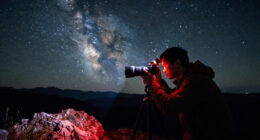
To photograph lunar color honestly, use a long focal-length lens, keep the exposure controlled, and record the Moon’s height and local conditions. A wide-field lens is better when you want buildings, trees, or a horizon in the frame; a longer lens makes the Moon itself larger and preserves more visible detail. Choose according to the story you want the photograph to tell.- Pick the frame before the Moon rises. For a warm horizon Moon, choose a clear view toward the rising direction and include a familiar foreground object, such as a roofline or distant ridge. For a detailed lunar disk, use a long focal length and a stable tripod.
- Start with a low ISO and a fast shutter. The Moon is brighter than the surrounding sky, so an automatic night setting may turn it into a white blur. Take a test frame, check the highlights, and shorten the exposure if lunar detail disappears.
- Record the time and conditions. Note whether the Moon was near the horizon, whether haze or thin cloud was visible, and which lens you used. A small notebook entry makes the image more useful than a file named “moon-final-7.”
- Keep edits restrained. Adjust exposure and contrast to show what the camera captured, but don’t push saturation until a pale yellow Moon becomes electric orange. If you combine frames or alter color, say so in the caption.
What APOD tells you—and what you should verify
NASA APOD is a daily astronomy feature that pairs an image with an explanatory caption, but the entry isn’t automatically a live view of tonight’s sky. It may show a distant object, a past event, a spacecraft image, or a processed combination of observations. For this Moon story, the caption gives the color explanations and identifies the eclipse image as July 2018; check the dated APOD page for final publication details. That date check matters because the requested APOD entry is dated November 1, 2026, a future date relative to the research information available while preparing this article. The supplied description identifies the subject and factual basis, but the live NASA page should be checked on or after that date before publication. Confirm the exact title, image credit, caption, and any linked science claims rather than assuming the date or page details are already independently verified. A useful habit is to separate what the image directly shows from what the caption explains. You can directly see a set of colored lunar disks and a dim red eclipse Moon. The connection between low altitude and longer atmospheric path, or between an eclipse and refracted sunlight, is the explanatory science. If an image has been combined from multiple exposures or processed for color, look to its caption and credit information before calling it a natural-color photograph.- Check the APOD page for the exact date and image credit.
- Read whether the image is a photograph, composite, or visualization.
- Use linked NASA, observatory, or research pages to confirm any new scientific claim.
- If you want to observe the Moon yourself, check local rise time, weather, and viewing direction separately.
What to do with this story on your next clear night
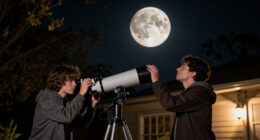
Use the APOD’s color story as a simple observing experiment: watch the Moon at two heights, compare what you see, and record the conditions before drawing conclusions. The goal isn’t to prove the Moon changed; it’s to notice how your view changes as its light crosses different amounts of air. Even a quick comparison can sharpen your eye for both astronomy and photography. Start with the Moon low enough to sit above a clear horizon. Note its color, apparent sharpness, and whether buildings or trees make it easier to judge the hue. Return to the view when it has climbed higher. If it looks less yellow, that contrast is a practical demonstration of the longer atmospheric path near the horizon—not a sudden change in the lunar surface. If you photograph both views, keep your framing and white balance as consistent as you can. Auto white balance may shift from one image to the next, making the camera’s own choices look like changes in the sky. Write down the time, location, lens, and whether haze or cloud was present. For a family outing, give one person the camera and another the notebook; comparing the notes afterward is more revealing than guessing from memory. You can also use the story to set expectations. A blue or purple Moon is unusual, and one colorful frame doesn’t identify the atmospheric cause with certainty. A red Moon near the horizon is common enough to watch for, but it isn’t guaranteed on a given evening. Weather, local terrain, and the Moon’s path all matter. The best practical takeaway is modest: look first, photograph second, and describe what you actually observed. If you plan a specific session, check a local sky forecast and moonrise time. APOD can help you understand the picture; it can’t promise the same view from your street.Frequently Asked Questions
Is the Moon actually red or yellow when I see it near the horizon?
The Moon’s surface hasn’t turned red or yellow. Its light passes through more of Earth’s atmosphere near the horizon, and that path can scatter away some blue light, leaving a warmer appearance. Haze and dust can contribute, so the exact hue varies.
Why does a lunar eclipse make the Moon look red?
During a total lunar eclipse, the Moon enters Earth’s shadow, but some sunlight bends through air around Earth and reaches the lunar surface. The atmosphere filters that light, often leaving a faint red glow. The July 2018 eclipse image in the APOD color collection shows this effect.
Can I photograph a colored Moon with a phone?
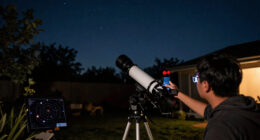
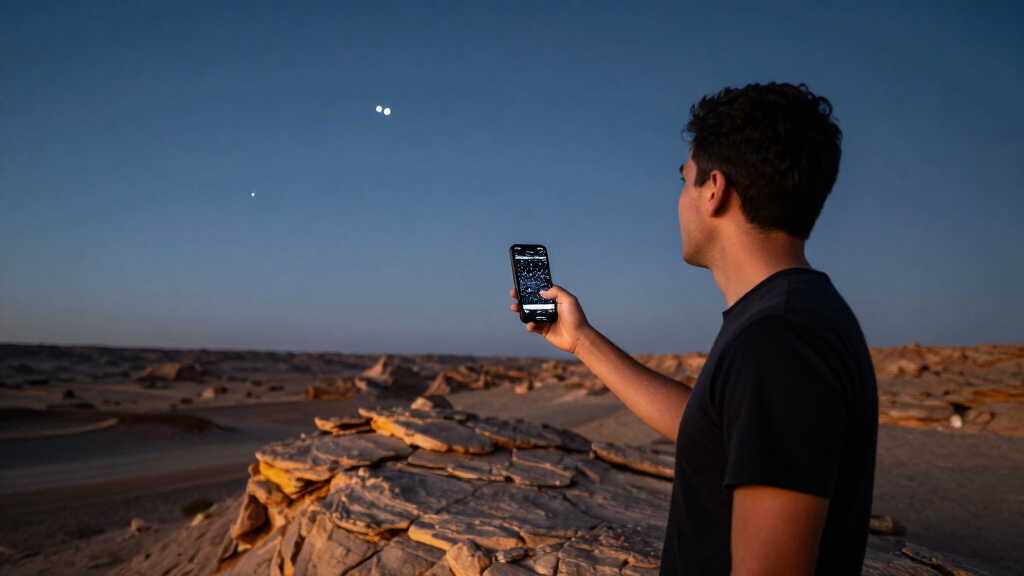
Yes. A phone can capture the Moon in a scene, especially if you steady it and include a foreground object such as a building or tree. Phones may overexpose the lunar disk or shift its color automatically, so compare the image with what you saw and avoid heavy saturation edits.
What lens should I use for a Moon photograph?
Use a wide-field lens when you want the horizon and surrounding landscape in the frame. Choose a long focal-length lens when you want the Moon to fill more of the image and show surface detail. The right choice depends on whether your story is about the lunar disk or the Moon in its setting.
Does NASA APOD always show something I can see tonight?
No. APOD is an astronomy image feature, not a promise that the subject is visible from your location that evening. An entry can show a past event, a distant galaxy, a spacecraft image, or a processed visualization. Check local observing times and conditions separately.
How can I verify the November 1, 2026 APOD details?
Check NASA’s APOD page on or after November 1, 2026 for its exact title, image credit, caption, and links. If the caption refers to a new result or mission update, confirm that claim with the linked NASA, observatory, or research institution page before repeating it.