TL;DR
Open a free Amazon Business account
Business pricing, bulk buying and tax-exempt orders.
As an affiliate, we earn on qualifying purchases.
The NOAA predicts the northern lights could be visible in nine U.S. states along the northern border on Sunday night due to a solar coronal mass ejection. The event is linked to geomagnetic storms that may enhance aurora visibility and activity.
The National Oceanic and Atmospheric Administration (NOAA) forecasts that the northern lights could be visible in nine U.S. states along the northern border on Sunday night due to a geomagnetic storm caused by a recent solar eruption.
According to NOAA, a coronal mass ejection (CME) that left the sun on Saturday is expected to reach Earth by Monday, triggering geomagnetic storms of varying intensity in the coming days. The forecast indicates a Kp index of five out of nine for Sunday night, suggesting the aurora borealis could be brighter and visible farther south than usual.
States along the U.S.-Canadian border, including North Dakota, the Upper Peninsula of Michigan, northern Minnesota, northern Montana, and northern parts of Washington, Idaho, Wisconsin, and South Dakota, have the highest chance of seeing the northern lights. NOAA also notes a high probability of aurora visibility in Alaska, where conditions are most favorable.
Why It Matters
This development is significant because increased geomagnetic activity can make the northern lights visible over a wider geographic area, offering a rare opportunity for viewers in parts of the continental U.S. to observe the aurora borealis. Additionally, geomagnetic storms can impact satellite operations and communication systems, making monitoring important for relevant industries and agencies.
As an affiliate, we earn on qualifying purchases.
Background
Coronal mass ejections are large expulsions of solar material that interact with Earth’s magnetic field, often causing geomagnetic storms. Such events have occasionally led to visible auroras at lower latitudes, especially during strong solar activity. This particular CME follows a series of solar eruptions earlier this week, with NOAA forecasting increased geomagnetic disturbances over the next few days.
“The aurora could be brighter and visible farther south than usual due to the upcoming geomagnetic storm.”
— NOAA spokesperson
As an affiliate, we earn on qualifying purchases.
What Remains Unclear
While NOAA predicts a Kp index of five for Sunday night, which suggests potential visibility, actual aurora appearance depends on local weather conditions, light pollution, and the precise strength of the geomagnetic storm. The forecast for subsequent nights remains uncertain as the solar activity continues to evolve.
long exposure camera for astrophotography
As an affiliate, we earn on qualifying purchases.
As an affiliate, we earn on qualifying purchases.
What’s Next
Monitoring of the geomagnetic activity will continue through the coming days, with NOAA providing updated forecasts. Observers are encouraged to check local conditions and be prepared to view the northern lights if conditions remain favorable.
As an affiliate, we earn on qualifying purchases.
Key Questions
Can I see the northern lights in southern states?
While the likelihood is lower than in northern states, the forecast indicates that some southern areas along the U.S.-Canadian border may have a chance to see the aurora if geomagnetic activity remains strong.
What is the best time to view the northern lights?
Viewing is most favorable around midnight, typically from 10 p.m. to 2 a.m., when auroral activity peaks.
How can I photograph the aurora effectively?
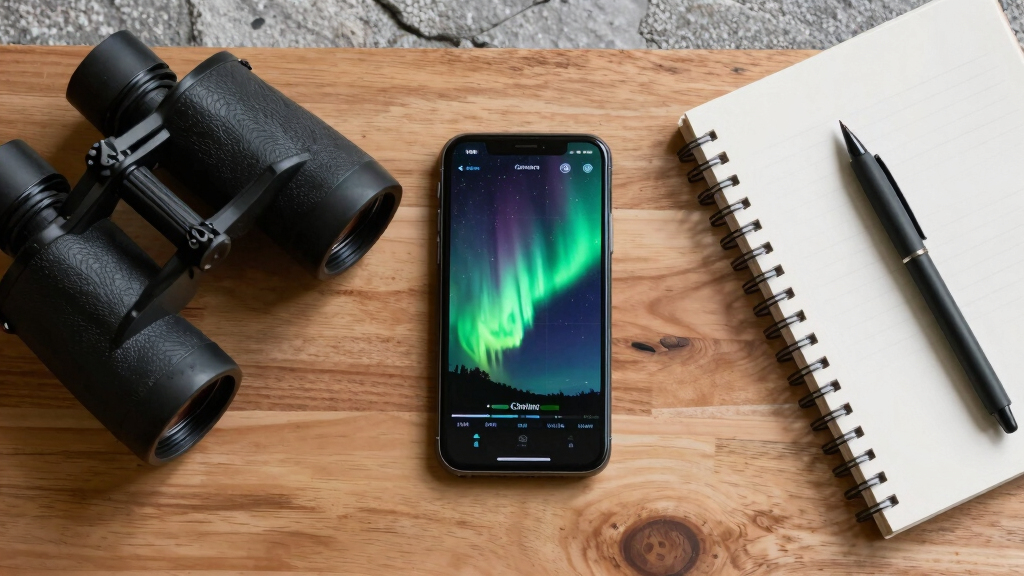
Use a smartphone in night mode with the flash off, a tripod, and a long exposure. Shooting in RAW format can also improve image quality.
Will this event impact satellite or communication systems?
Minor to moderate geomagnetic storms can affect satellite operations and radio communications, but significant disruptions are not expected at this level.
Source: Google Trends
Fall Picks
fall essentials
As an affiliate, we earn on qualifying purchases.