
TL;DR
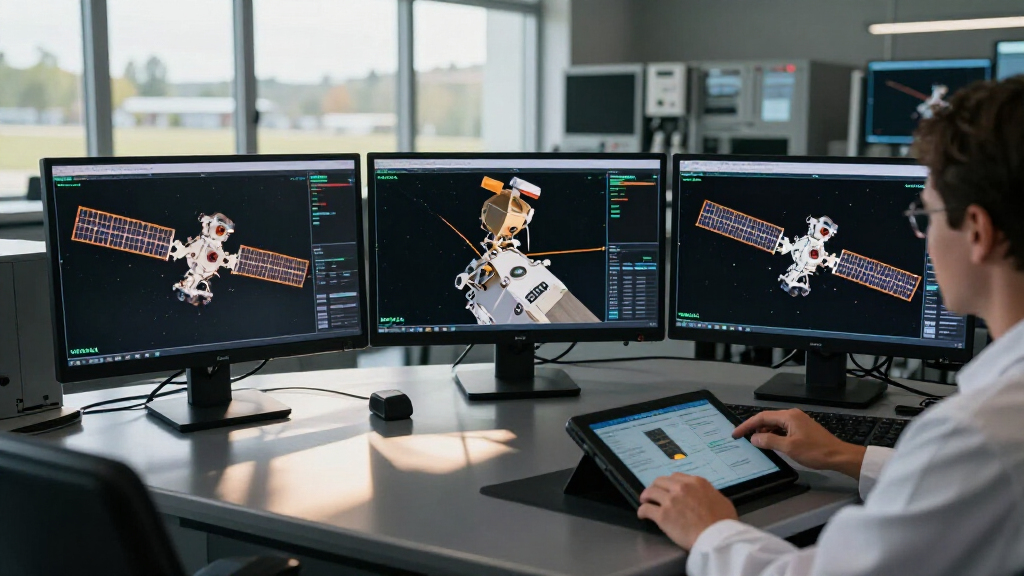
In 2025, the U.S. declassified key details about three top-secret satellites—URSALA, RAQUEL, and FARRAH—marking a significant development in space-based signals intelligence. The satellites support tactical military operations and represent decades of covert technological evolution.
The U.S. government has officially declassified details about three top-secret satellites—URSALA, RAQUEL, and FARRAH—launched in 2025, which are now confirmed to be integral to space-based signals intelligence (SIGINT). These revelations shed light on their roles in supporting military and intelligence operations, marking a significant shift in understanding the country’s covert space assets.

Prime made for students and young adults
- Fast, free delivery for dorm and study essentials
- Prime Video and Amazon Music included
- Member-only deals
The satellites, part of a covert program managed by the National Reconnaissance Office (NRO), are designed to gather electronic intelligence signals from orbit, supporting tactical military operations. Their declassification includes previously secret payload details and space shuttle mission data, indicating a long-standing evolution from simple, quick-response units to sophisticated systems supporting battlefield intelligence.
According to official sources, URSALA, RAQUEL, and FARRAH are part of a broader family of covert satellites developed since the 1960s, originally intended for rapid deployment and cost-effective signals collection. Their recent declassification reveals they are now integral to supporting the warfighter, providing real-time electronic signals data to military forces worldwide. The exact technical capabilities and operational scope remain partially classified, but the launch of these satellites in 2025 signifies a leap in tactical space-based SIGINT.
Implications for Military and Intelligence Operations
The declassification of URSALA, RAQUEL, and FARRAH underscores a strategic shift toward space-based electronic intelligence supporting tactical military operations. These satellites enhance real-time signals interception, geolocation, and battlefield awareness, giving U.S. military forces a significant advantage in modern conflicts. Their development reflects decades of covert technological evolution, transitioning from simple, quick-response units to sophisticated, standardized systems integrated into national and tactical command structures.
This development also signals an increased emphasis on space-based SIGINT as a critical element of national security, potentially prompting other nations to accelerate their own space intelligence programs. The ability to deploy and operate such satellites rapidly—initially designed to respond to emerging threats—demonstrates the ongoing importance of covert space assets in maintaining strategic superiority.
Popular right now

Bose QuietComfort Wireless Noise-Cancelling Headphones, Moonlight Grey

iRobot Roomba 105 Combo Robot Vacuum and Mop with AutoEmpty Dock

Dyson Cyclone V10 Origin Cordless Vacuum
As an affiliate, we earn on qualifying purchases.
Historical Development of Covert Space SIGINT Satellites
The origins of these satellites trace back to the 1960s, with the initial launch of small ‘hitchhiker’ satellites like URSALA and RAQUEL, which were deployed alongside larger reconnaissance systems such as HEXAGON. Originally called Program 11 or P-11, these units were designed for quick, inexpensive deployment to gather electronic signals and support tactical military needs. Over time, the program evolved, with satellites becoming more standardized and mission-focused, especially during the 1970s and 1980s, when the NRO began to develop dedicated low Earth orbit SIGINT satellites under the Mission 7300 designation.
Their design prioritized cost-effectiveness and rapid development, often resulting in short operational lifespans of one to four years due to low orbits and atmospheric drag. By the 1980s, efforts were underway to merge signals intelligence capabilities with ocean surveillance, leading to more sophisticated systems. The recent declassification reveals that these satellites, once highly classified, now form a core part of the U.S. military’s tactical intelligence infrastructure, supporting operations worldwide.
Remaining Technical and Operational Details Unknown
While the declassified information provides insight into the satellites’ existence and general purpose, many specifics remain undisclosed. Details about their exact technical capabilities, operational scope, and how they integrate with other intelligence systems are still classified or not publicly available. It is also unclear how these satellites are deployed, their precise coverage areas, and their current operational status beyond the 2025 launch.
Future Developments and Potential Declassifications
Further disclosures are expected as the U.S. government continues to declassify additional details about these satellites and related programs. Analysts anticipate potential updates on their operational performance and technological innovations. Additionally, other nations may accelerate their own space SIGINT efforts in response, leading to an evolving strategic landscape in space intelligence. Monitoring official statements and upcoming declassification releases will be crucial for understanding the full scope and impact of these assets.
Key Questions
What are URSALA, RAQUEL, and FARRAH satellites used for?
They are space-based electronic intelligence satellites designed to intercept and geolocate signals from ground sources, supporting tactical military operations worldwide.
When were these satellites launched and declassified?
The satellites were launched in 2025, and details about them have been declassified in the past two months, revealing their roles and capabilities.
How do these satellites differ from earlier space assets?
Compared to earlier covert satellites, URSALA, RAQUEL, and FARRAH are more standardized, technologically advanced, and integrated into tactical military support systems, reflecting decades of evolution in space-based SIGINT.
Are other countries developing similar space-based intelligence systems?
While details are limited, experts suggest that other nations are likely pursuing their own space SIGINT programs, potentially leading to a new strategic competition in space intelligence.
What are the implications of this declassification for global security?
The exposure of these assets highlights the importance of space-based signals intelligence in modern warfare and may prompt other nations to accelerate their own development, affecting future security dynamics.
Source: hn