
TL;DR

Prime made for students and young adults
- Fast, free delivery for dorm and study essentials
- Prime Video and Amazon Music included
- Member-only deals
Comet Tempel 2’s dust trail, visible from Earth, is a narrow band of debris left from past orbits. Recent images in 2026 show its structure and help scientists learn about comet activity and small particle dynamics.
Ever wonder what streaks across the night sky alongside comets? It’s often the dust trail—a narrow, shimmering ribbon of debris that traces the comet’s past journeys.
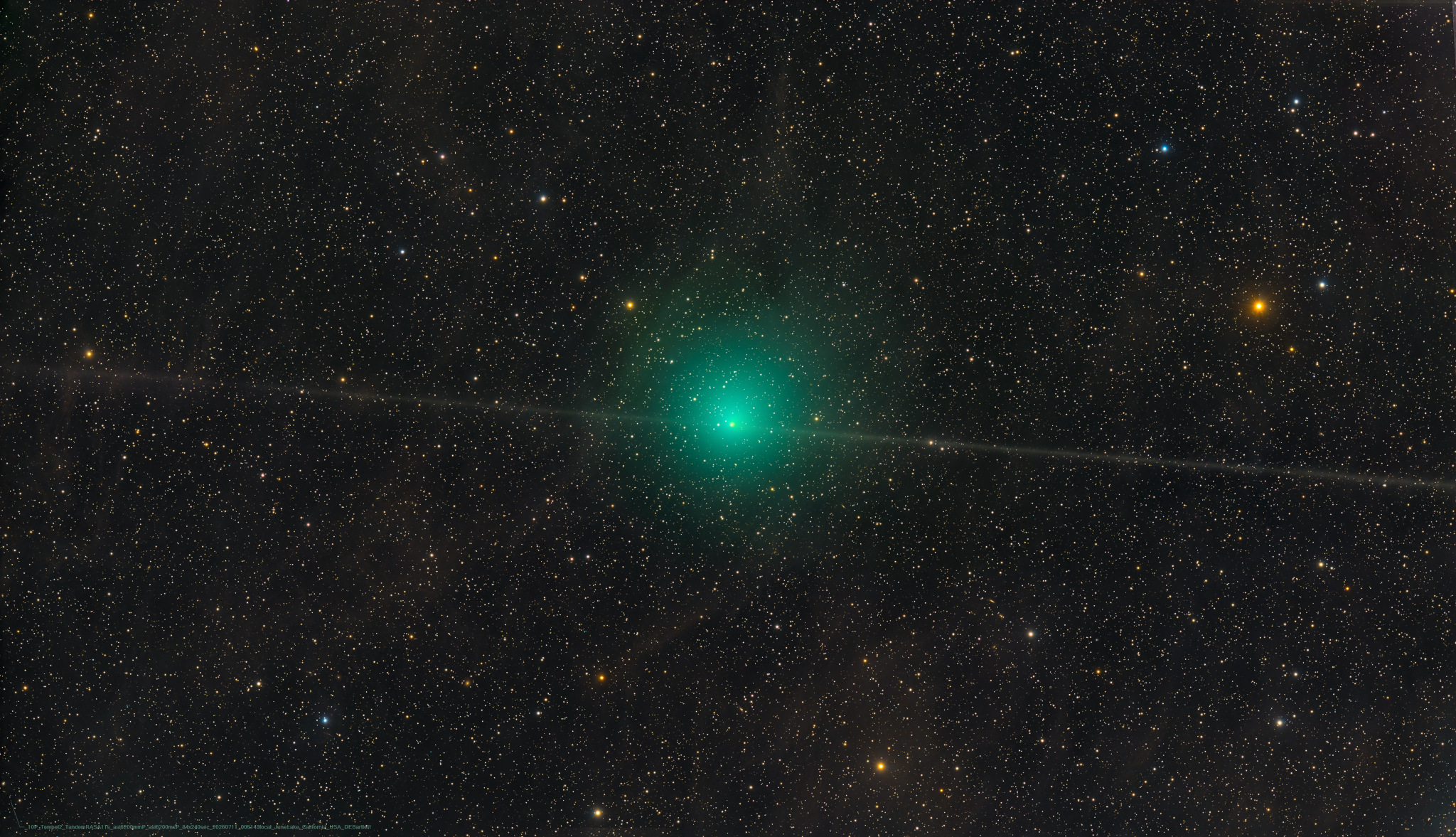
In July 2026, NASA’s Astronomy Picture of the Day captured an incredible image of Comet Tempel 2’s dust trail, revealing a delicate, almost ghostly line extending along its orbit. This trail isn’t just a pretty sight; it’s a record of the comet’s long history of shedding tiny particles, and a window into the complex dance of small bodies around the Sun.
Today, we’ll explore what makes Tempel 2’s dust trail special, how astronomers observe and analyze it, and what it tells us about the origins of our solar system—and our night sky.
Comet Tempel 2’s dust trail is a narrow, dense ribbon of particles left from previous orbits, not a fan-shaped tail.
Observing the trail around July 20, when Earth crosses the orbital plane, offers a rare chance to see it more clearly.
The composition and structure of the trail reveal the comet’s gradual shedding process and its long-term evolution.
Using wide-field telescopes or binoculars under dark skies enhances your chances of spotting this faint feature.
Studying dust trails helps scientists understand how comets shape the small particles in our solar system and influence meteoroid streams.
What exactly is a dust trail—and why should you care?
A dust trail is a narrow stream of particles left behind by a comet after it passes close to the Sun. Unlike the broad, fan-shaped tail that fans out behind the comet, the trail forms a tight band along the orbit, made of larger particles that don’t get pushed away as easily.
Imagine walking through a crowded street, leaving a trail of breadcrumbs behind. Over time, these breadcrumbs—representing tiny dust particles—accumulate along your path. For comets, this trail is a record of their long-term activity, spanning multiple orbits.
Understanding this distinction is crucial because the dust trail acts as a historical record of the comet’s behavior over thousands of years. It helps scientists determine whether a comet has been gradually shedding material or experiencing sudden outbursts. This insight informs us about the physical properties of comet nuclei, their structural integrity, and their potential to produce meteor streams. In essence, the dust trail is a long-term archive, revealing the subtle, cumulative processes that shape the small bodies in our solar system and influence the meteoroids that sometimes streak through our atmosphere.
astronomical binoculars for night sky viewing
As an affiliate, we earn on qualifying purchases.
As an affiliate, we earn on qualifying purchases.
How does Comet Tempel 2’s dust trail form and evolve?
The dust trail forms when the comet’s surface heats up during perihelion, releasing tiny particles that drift along its orbital plane. These particles are remnants of past activity, ejected during previous close passes to the Sun.
Over time, the trail becomes a layered archive. As Tempel 2 journeys around the Sun every 5.4 years, it sheds more dust, building a dense, narrow trail along its orbit.
The recent image from July 11 shows this trail as a thin, bright line. As Earth crosses through the orbital plane on July 20, the trail may appear even brighter and narrower, giving us a unique chance to observe its structure in detail.
This process of formation and evolution is significant because it provides a timeline of the comet’s activity. The size, density, and distribution of particles within the trail reveal how gently or violently the comet sheds material. For instance, a trail dominated by larger particles suggests a relatively steady, low-energy process, whereas a trail with smaller, more dispersed particles might indicate recent outbursts or fragmentation. Tracking these changes over multiple orbits helps scientists understand the physical evolution of the nucleus, including how it responds to solar heating and potential structural weaknesses that could lead to fragmentation or increased activity in future perihelion passages.
wide-field telescope for observing comets
As an affiliate, we earn on qualifying purchases.
As an affiliate, we earn on qualifying purchases.
How to spot the dust trail from Earth—tips for amateur astronomers
Seeing the dust trail isn’t like spotting a bright comet’s tail. It’s a subtle feature best observed with a wide-field telescope or binoculars during favorable conditions.
Here’s how to get a good shot:
- Choose a dark sky, away from city lights.
- Use a wide-field camera or binoculars with a stable mount.
- Time your observations around July 20, when Earth crosses the trail’s orbital plane.
- Look for a faint, straight line extending along Tempel 2’s orbit, especially in the early morning or late evening sky in the constellation Capricornus.
Patience helps. Longer exposures reveal the faint dust trail better than quick snapshots, and a steady hand or tripod keeps the image sharp.
Understanding the optimal conditions and techniques is vital because the trail’s faintness makes it easy to mistake for background noise or optical artifacts. Recognizing the trail’s alignment with the orbit and timing your observations accordingly significantly increases your chances of detecting this elusive feature, which offers a window into the comet’s long-term activity and the small particles that populate our solar system.
star gazing binoculars for dark skies
As an affiliate, we earn on qualifying purchases.
As an affiliate, we earn on qualifying purchases.
What the dust trail reveals about comets—and our solar system
Every tiny dust particle tells a story. The composition, size, and distribution of the trail’s material help scientists understand how comets like Tempel 2 evolve over time.
For example, the fact that Tempel 2’s trail contains larger particles suggests it’s been shedding material gradually, not through violent outbursts. This steady loss indicates a relatively intact, resilient nucleus that responds calmly to solar heating, which in turn influences its long-term stability and evolution. Conversely, a trail with a higher proportion of smaller particles or irregular distribution might hint at recent fragmentation events or more violent activity, which could significantly alter the comet’s future behavior.
Studying these dust streams also sheds light on the early solar system, as comets preserve primitive material from its formation 4.6 billion years ago. The composition of these particles—rich in organics and ices—provides clues about the primordial environment of the solar nebula. By analyzing the physical and chemical properties of the dust in the trail, scientists can piece together the conditions that led to planet formation and the delivery of volatile compounds to Earth, contributing to our understanding of planetary habitability and the origins of life.
As an affiliate, we earn on qualifying purchases.
Comparison: Dust trail vs. comet tail — what’s the difference?
| Feature | Dust Trail | Comet Tail |
|---|---|---|
| Composition | Large particles (millimeters to centimeters) | Smaller dust and gas particles |
| Appearance | Narrow, straight band along orbit | Diffuse, fan-shaped, often curved away from Sun |
| Location | Along the orbital plane | Points away from Sun, in the anti-solar direction |
| Formation process | Residual material from past perihelion passages | Recent activity, driven by solar heating |
Understanding these differences helps astronomers interpret what they see and piece together a comet’s history from observations. Recognizing that the dust trail is a long-lasting record of past activity allows scientists to differentiate it from the more transient, solar-driven tail, which reflects current activity. This distinction enables more accurate modeling of comet behavior and better predictions of future activity, contributing to safer spacecraft navigation and deeper insights into the physical processes governing small body evolution in our solar system.
Frequently Asked Questions
Why does Comet Tempel 2 have a dust trail instead of just a tail?
The dust trail consists of larger particles released over multiple orbits, which stay close to the comet’s orbital path. Smaller particles form the tail, pushed away by sunlight. The trail is a long-lasting record of the comet’s past activity.How can I tell if I’m seeing the dust trail or just a faint tail?
The dust trail appears as a thin, straight line along the orbit, often faint and difficult to see without long exposures. The tail is usually broader, fan-shaped, and points away from the Sun. During Earth’s crossing, the trail may appear as a narrow line in your images.Is the dust trail dangerous for spacecraft or Earth?
Generally, dust trails are too sparse to pose a threat. However, understanding their structure helps space agencies plan safe routes for spacecraft during close approaches or missions to comets.What makes observing the dust trail more challenging than viewing the comet itself?
Dust trails are much fainter and subtler than the bright coma and tail. They require dark skies, stable mounts, and long exposures to capture their delicate structure, unlike the more obvious brightness of a comet’s head or tail.What do dust trails tell us about the early solar system?
Because comets preserve primitive material from the solar system’s formation, analyzing dust trails reveals clues about the composition and conditions of the early solar nebula, dating back over 4.6 billion years.Conclusion
The dust trail of Comet Tempel 2 is a silent witness to its ancient voyage around the Sun. Watching it from Earth offers a direct connection to the comet’s long history, revealing the slow, steady shedding of cosmic material. Every faint line in the sky hints at stories from billions of years ago, shaping our understanding of the solar system’s past and future.
Next time you look up and spot a comet, remember: the real beauty might be in that thin, ghostly trail—an echo of the solar system’s earliest days, quietly whispering its secrets.
Fall Picks
fall essentials
As an affiliate, we earn on qualifying purchases.