
TL;DR
Asteroid 152637 1997 NC1, about 440 meters wide, will fly past Earth at 1.6 million miles on June 27. The event is observable via livestreams, but poses no danger.
A potentially hazardous asteroid approximately 440 meters wide will pass within 1.6 million miles of Earth on June 27, at a speed of nearly 20,000 mph. The event is observable through livestreams, but NASA confirms it poses no risk to the planet.
Asteroid 152637 1997 NC1 will reach its closest point to Earth at 7:16 a.m. EDT (1116 GMT) on June 27, passing at a distance of about 1,594,339 miles (2,565,839 km). According to NASA, it will not impact Earth or the Moon during this flyby. The asteroid, estimated to be 440 meters in diameter, is classified as potentially hazardous due to its size and orbit, but current calculations show no threat.
Science observers will have the opportunity to view the asteroid via two livestreams hosted by the Virtual Telescope Project, starting at 7 p.m. EDT on June 26 and 27, using robotic telescopes in Italy. The asteroid will be visible as a point of light moving through the stars of the constellation Ophiuchus, reaching a peak brightness of magnitude +10 around 8 p.m. EDT on June 27.
Why the June 27 Flyby Matters for Space Safety
While the asteroid’s flyby is confirmed to be harmless, it offers a rare chance for astronomers and the public to observe a large near-Earth object (NEO) at close range. Monitoring such objects helps improve understanding of asteroid orbits and potential future threats. The event coincides with World Asteroid Day, which aims to raise awareness of asteroid impact risks and planetary defense efforts.

NightWatch: A Practical Guide to Viewing the Universe
As an affiliate, we earn on qualifying purchases.
As an affiliate, we earn on qualifying purchases.
Background on Asteroid 152637 1997 NC1 and Past Encounters
Asteroid 152637 1997 NC1 was first discovered in 1997 and has been monitored for its orbit since then. It is classified as a potentially hazardous asteroid due to its size and orbit that bring it close to Earth periodically. Such flybys occur roughly once every ten years, but the asteroid’s current approach is notable for its visibility and proximity. Previous close approaches have not resulted in any impact threats, and NASA maintains that this week’s encounter is safe.
“This flyby provides a valuable opportunity to observe a large asteroid at close range, which can help refine our understanding of near-Earth objects.”
— an anonymous researcher

Celestron Cometron 7x50mm Astronomy Binoculars
- Easy-to-Use for Beginners: Ideal for learning astronomy
- 7x Magnification: Provides a wide field of view
- Large 50mm Objectives: Gathers more light for bright images
As an affiliate, we earn on qualifying purchases.
As an affiliate, we earn on qualifying purchases.
Uncertainties About Future Orbital Changes or Risks
While current calculations show no impact risk, it is not yet clear whether future orbital changes could alter the asteroid’s trajectory. Ongoing observations will refine orbit models, but no immediate threats are expected from this flyby.
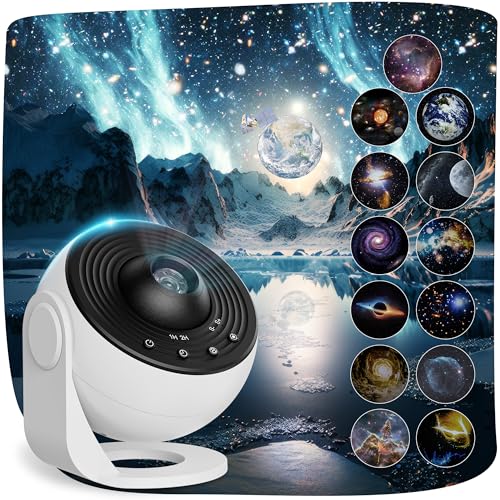
Galaxy Projector Night Light, 13-in-1 Star Projector for Bedroom, White
- Enhanced Brightness and Clarity: Doubles previous brightness with sharp HD stars
- 13 Space Themes: Includes 13 galaxy projection scenarios
- Wide Coverage Area: Projects up to 16.4ft with 135-754 sq ft coverage
As an affiliate, we earn on qualifying purchases.
As an affiliate, we earn on qualifying purchases.
Next Steps in Monitoring and Public Engagement
Scientists will continue tracking asteroid 152637 1997 NC1 to refine its orbit and assess any future risks. The livestreams will provide an opportunity for public engagement, and space agencies will analyze data gathered during the flyby to improve detection and tracking methods for potentially hazardous objects.

National Geographic Outer Space Gemstone Dig Kit with 5 Real Specimens
- Real Rock and Gem Specimens: Includes 5 genuine specimens
- Space-Themed Excavation Experience: Fun STEM discovery activity
- User-Friendly Excavation Tools: Includes digging tool, brush, and magnifier
As an affiliate, we earn on qualifying purchases.
As an affiliate, we earn on qualifying purchases.
Key Questions
Will asteroid 152637 1997 NC1 impact Earth?
No, current data confirms that the asteroid will pass at over 1.6 million miles, posing no impact threat during this flyby.
How can I watch the asteroid flyby?
The Virtual Telescope Project will host two livestreams on June 26 and 27, starting at 7 p.m. EDT, featuring live views of the asteroid from robotic telescopes in Italy.
Why is this asteroid classified as potentially hazardous?
It is classified as potentially hazardous due to its size (about 440 meters) and its orbit, which brings it relatively close to Earth, although it currently poses no threat.
What can I see with my own telescope?
Using small telescopes or binoculars, observers can see the asteroid as a point of light moving through the stars of Ophiuchus, reaching peak brightness around 8 p.m. EDT on June 27.
What is the significance of this event?
It provides an opportunity to study a large NEO at close range, helping scientists improve asteroid tracking and planetary defense measures, especially as it coincides with World Asteroid Day.
Source: Google Trends