
TL;DR

Prime made for students and young adults
- Fast, free delivery for dorm and study essentials
- Prime Video and Amazon Music included
- Member-only deals
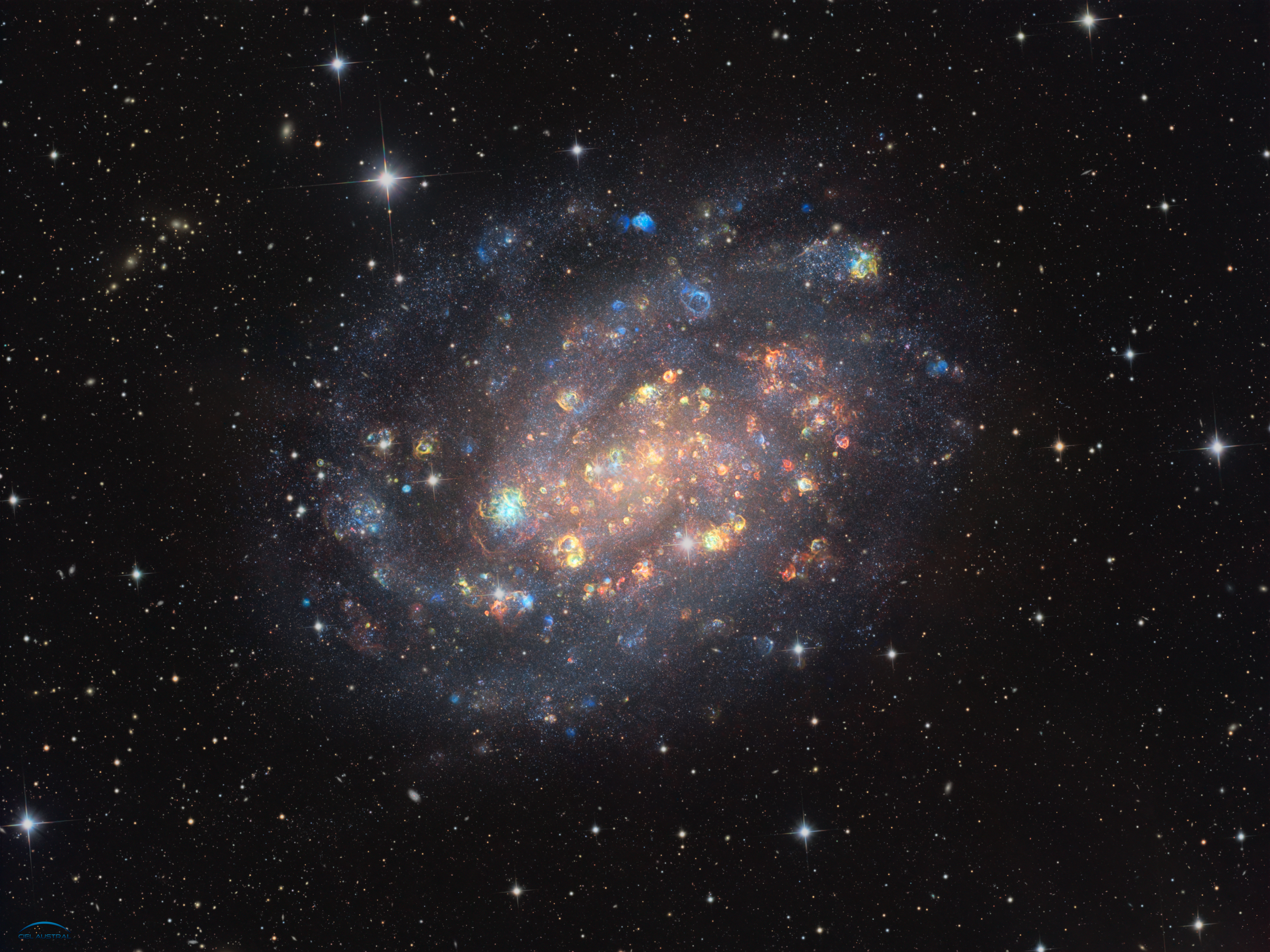
NGC 300 is a bright, nearby spiral galaxy about 6 million light-years away. Its vivid star-forming regions and gas clouds make it a stunning and scientifically valuable cosmic gemstone for amateur and professional astronomers alike.
Imagine a glittering gemstone in the night sky—bright, colorful, and full of life. That’s NGC 300, a spiral galaxy only 6 million light-years away, glowing with vibrant star-forming regions and swirling gas clouds. Seeing it from your backyard? Challenging, but not impossible with the right gear and conditions. Its beauty isn’t just skin-deep; it’s a cosmic laboratory packed with clues about how galaxies grow and change.
Tonight, you’re about to learn what makes NGC 300 a standout in the universe—what it looks like, why astronomers care, and how you can appreciate its stunning features even from afar. Prepare for a journey into a galaxy that’s a glittering, starry gemstone in our cosmic neighborhood.
NGC 300 is a bright, nearby spiral galaxy perfect for amateur observation and astrophotography.
Its vivid gas clouds and star-forming regions make it a stellar example of galaxy evolution in action.
Recent research shows active supernova remnants and complex gas structures within NGC 300.
Using a modest telescope, you can glimpse parts of this cosmic gemstone in the night sky.
Studying NGC 300 helps scientists understand how galaxies build and recycle stars over time.
What Is NGC 300? A Nearby Galaxy That Looks Like a Sparkling Gem
NGC 300 is a spiral galaxy classified as type Sc, meaning it has elegant, winding arms filled with stars and gas. Located about 6 million light-years away in the constellation Sculptor, it spans roughly 70,000 light-years—about the size of our own Milky Way. Its brightness and clarity make it one of the best targets for both sky watchers and scientists.
Imagine a sprawling cosmic whirlpool, with bright knots of young stars and delicate filaments of gas. NGC 300’s arms are dotted with nebulae and star clusters, glowing in shades of red, green, and blue—thanks to ionized gases like hydrogen, sulfur, and oxygen. It’s like a celestial fireworks display, frozen in time and space.
This galaxy isn’t just pretty—it’s a window into how galaxies build and evolve, especially because it’s relatively close, so we can study its individual stars and gas clouds in detail.
amateur telescope for galaxy observation
As an affiliate, we earn on qualifying purchases.
As an affiliate, we earn on qualifying purchases.
Recent Discoveries That Make NGC 300 a Cosmic Hotspot
Modern observatories like Hubble have peeled back layers of NGC 300, revealing its vibrant stellar nurseries and gas clouds in unprecedented detail. Recent images highlight hundreds of star-forming regions, where clouds of hydrogen and other gases glow brightly under ultraviolet radiation from young, massive stars.
Scientists have also spotted supernova remnants—faint, expanding shells of gas from exploded stars—adding to the galaxy’s dynamic story. Infrared and radio telescopes have mapped the distribution of gas and dust, showing complex structures that influence how stars are born.
One standout discovery? NGC 300 has experienced multiple supernovae in recent years, offering snapshots of stellar death that enrich the galaxy’s gas with heavy elements, fueling future star formation. This ongoing cycle makes NGC 300 a living, breathing laboratory for astrophysics.
astrophotography telescope for deep sky objects
As an affiliate, we earn on qualifying purchases.
As an affiliate, we earn on qualifying purchases.
Why NGC 300 Is a Star-Watcher’s Dream
NGC 300 is a treasure trove for astronomers because it’s close enough to resolve individual stars and gas clouds with large amateur telescopes—under dark skies, it appears as a faint, elongated smudge. Using a telescope with a wide field of view, you can pick out bright knots and patches of nebulosity, especially in the southern hemisphere.
If you have a 4-inch or larger telescope, try imaging it during a moonless night. The colorful gas clouds—especially the greenish oxygen and reddish hydrogen—are visible in long exposures. It’s like capturing a tiny piece of a galaxy’s life story in your camera.
For astrophotographers, NGC 300 offers a chance to photograph a galaxy with rich star formation and gas features without needing massive, specialized gear. It’s a perfect target for learning galaxy imaging techniques.
As an affiliate, we earn on qualifying purchases.
How NGC 300 Helps Us Understand Galaxy Life Cycles
NGC 300 isn’t just pretty—scientists use it to understand how galaxies grow and change over time. Its active star-forming regions, gas clouds, and supernova remnants provide clues about how galaxies recycle material to make new stars.
For example, the bright H II regions—clouds of ionized hydrogen—are signs of recent star birth. The gas dynamics show how material moves within the galaxy, influencing where new stars will form next.
By comparing NGC 300 to our Milky Way, astronomers learn how different environments affect star formation and galactic evolution. Its relative proximity makes this comparison more detailed and accurate.
So, every time we observe NGC 300, we’re witnessing a galaxy in the midst of its life story—an ongoing saga of creation, destruction, and rebirth.
As an affiliate, we earn on qualifying purchases.
How to Spot NGC 300: A Step-by-Step Guide
- Check your location: NGC 300 shines best in the southern hemisphere or low northern latitudes.
- Pick a dark, moonless night—away from city lights.
- Use a telescope of at least 4 inches aperture for the best view.
- Point your telescope toward the constellation Sculptor, which is high in the sky in winter for the Southern Hemisphere or autumn in the north.
- Look for a faint, elongated patch that hints at a galaxy’s shape—bright core with faint arms.
- For astrophotos, use long exposures—several minutes—to reveal gas clouds and star clusters.
Patience matters. With the right conditions and a steady hand, you’ll catch a glimpse of this cosmic gemstone that’s been shining for millions of years.
Comparison: NGC 300 vs. Other Nearby Spiral Galaxies
| Feature | NGC 300 | The Milky Way | Andromeda (M31) |
|---|---|---|---|
| Distance | ~6 million light-years | ~100,000 light-years | ~2.5 million light-years |
| Size | 70,000 light-years | 100,000–120,000 light-years | 220,000 light-years |
| Star Formation Activity | High, many H II regions | Moderate, with active regions | Lower, but ongoing |
| Visibility from Earth | Best in the southern hemisphere | Visible with binoculars | Visible with binoculars or small telescopes |
This table shows how NGC 300 compares with our galaxy and Andromeda. Its relatively close distance and active star formation make it a prime target for detailed study, unlike more distant galaxies which appear as faint smudges.
Frequently Asked Questions
Can I see NGC 300 with my backyard telescope?
Yes, if you have a telescope of 4 inches or larger and observe under dark skies, NGC 300 appears as a faint, elongated smudge. Long exposure astrophotography helps reveal its gas clouds and star-forming regions.Why is NGC 300 called a ‘cosmic gemstone’?
Because it shines with vibrant gas clouds and active star-forming regions, making it visually striking and scientifically valuable—like a sparkling jewel in the universe.How does studying NGC 300 help us understand our galaxy?
By comparing its structure and star formation processes with the Milky Way, scientists gain insights into how spiral galaxies grow, evolve, and recycle material over billions of years.Are there ongoing missions observing NGC 300?
While no mission focuses solely on NGC 300, it is frequently observed by surveys using Hubble, ALMA, and other telescopes to study nearby galaxies’ star formation and gas dynamics.What’s the best time to observe NGC 300?
In the southern hemisphere, look for it during winter months when it’s high in the sky. In the north, autumn evenings offer the best chance, away from city lights and moonlight.Conclusion
NGC 300 is more than just a faint smudge in the sky—it’s a vibrant, active galaxy telling a story billions of years in the making. Its colorful gas clouds and star factories make it a perfect window into the life cycle of galaxies.
Next clear night, aim your telescope toward Sculptor. You might just catch a glimpse of this shimmering cosmic gemstone—reminding us that the universe is full of beauty, waiting to be seen and understood.
Fall Picks
fall essentials
As an affiliate, we earn on qualifying purchases.