
TL;DR
Open a free Amazon Business account
Business pricing, bulk buying and tax-exempt orders.
Create a free accountAs an affiliate, we earn on qualifying purchases.
The Mermaid Nebula supernova remnant is a colorful, filament-filled structure formed from a star explosion thousands of years ago. Modern telescopes reveal its composition, shape, and role in cosmic ray production, offering insights into stellar death and galactic chemistry.
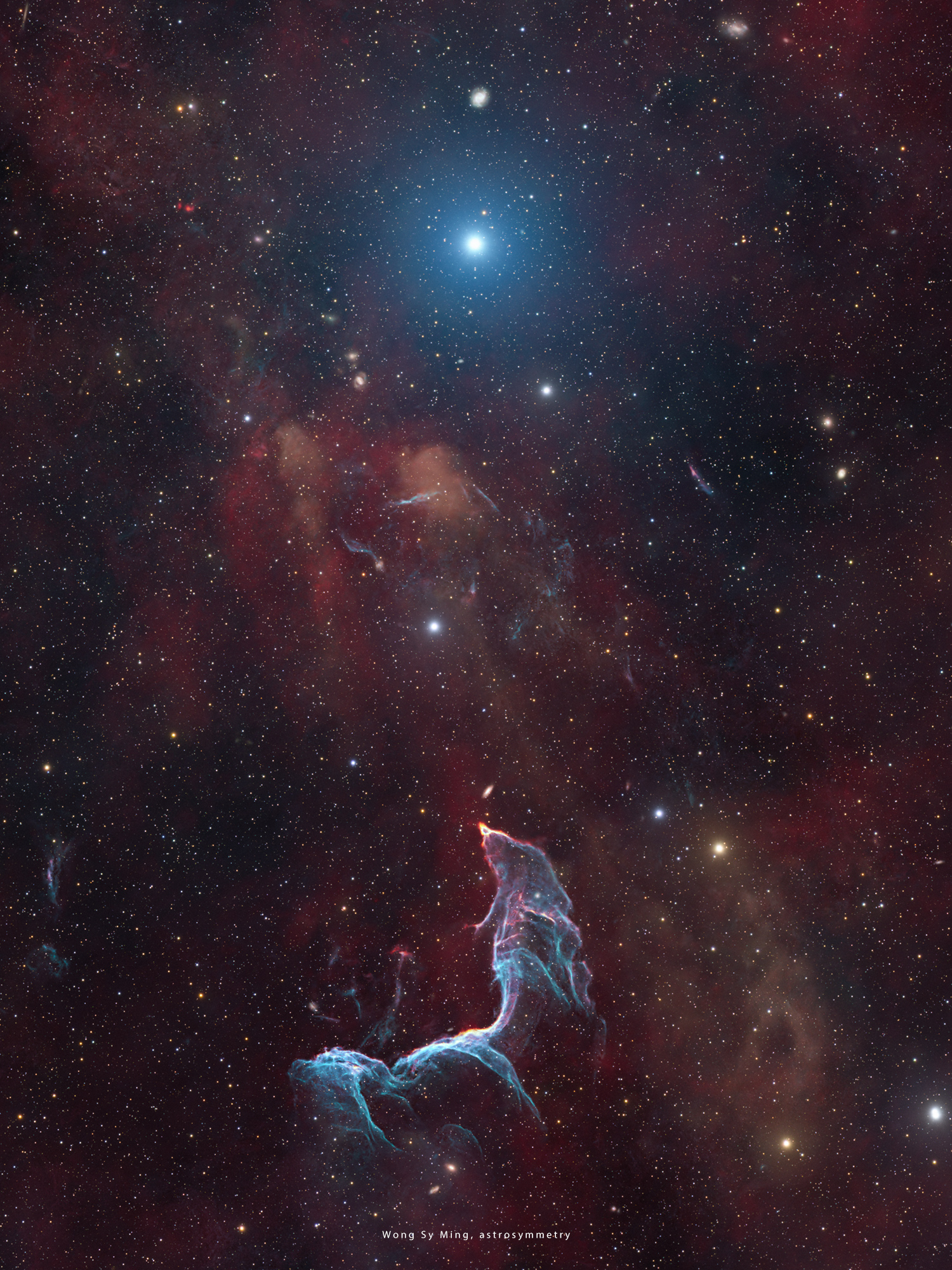
Imagine a cosmic creature, shimmering with vibrant blues and fiery reds — a celestial mermaid caught in the aftermath of an explosive death. That’s the Mermaid Nebula, a stunning supernova remnant, glowing with the echoes of a star that blew apart thousands of years ago. Its intricate filaments and brilliant colors aren’t just beautiful—they tell a story about how stars end, how elements spread, and how space itself energizes.
Why should you care? Because this nebula isn’t just a pretty picture; it’s a cosmic laboratory revealing secrets about stellar life cycles, cosmic ray origins, and the ongoing evolution of our galaxy. In this article, you’ll see how recent advances in telescopes and spectroscopy bring this distant explosion into clearer focus, offering a vivid snapshot of the universe’s fiery, beautiful death dance.
Key Takeaways
- Supernova remnants like the Mermaid Nebula glow for tens of thousands of years, dispersing heavy elements into space.
- Advances in telescopes and spectroscopy reveal detailed structures, chemical compositions, and magnetic fields within remnants.
- The nebula’s shock waves accelerate particles, making it a significant source of cosmic rays in our galaxy.
- Capturing these objects requires long exposures, narrowband filters, and dark skies—just like catching a fleeting cosmic firework.
- Studying remnants like the Mermaid helps us understand how stars end and how galaxies recycle matter for new generations of stars.
amateur telescope for deep sky astrophotography
As an affiliate, we earn on qualifying purchases.
As an affiliate, we earn on qualifying purchases.
What Makes the Mermaid Nebula Look Like a Mythical Creature?
The Mermaid Nebula’s shape and colors come from the complex interplay of explosion shockwaves, magnetic fields, and interstellar gas. Its filamentary structure resembles a mermaid’s flowing hair or tail, thanks to the way the explosion’s debris interacts with surrounding space. The blue regions glow from doubly ionized oxygen, while the deep reds come from hydrogen gas—each color revealing different chemical layers.
Imagine tossing a handful of glitter into a thunderstorm. The sparks dance and shimmer, shaped by unseen forces. That’s what’s happening here—magnetic fields and shock fronts sculpt the debris into a stunning, almost living sculpture seen from Earth with advanced telescopes.
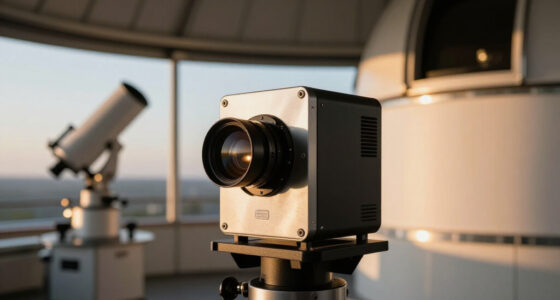
For amateur astronomers aiming to glimpse this nebula, a large, wide-field telescope paired with narrowband filters for oxygen and hydrogen lines helps capture its vibrant hues. Think of it as trying to catch the flickering tail of a comet—best with the right gear and clear, dark skies.
narrowband filters for astrophotography
As an affiliate, we earn on qualifying purchases.
As an affiliate, we earn on qualifying purchases.
Thanks to cutting-edge telescopes like the James Webb Space Telescope (JWST) and next-gen ground observatories, scientists now see finer details in supernova remnants than ever before. These instruments detect faint emissions from heavy elements and map magnetic fields, revealing the nebula’s intricate filaments and shock structures in stunning clarity.
For example, high-resolution spectroscopy shows the presence of elements like iron and sulfur, confirming how supernovae seed space with heavy metals. Meanwhile, polarization studies help map magnetic field lines, shedding light on how particles get accelerated to high energies.
If you’re a backyard astrophotographer, this means more detailed images with longer exposures and specialized filters. A dark sky and a fast, wide-field camera can help you capture the nebula’s shimmering filaments, bringing this distant explosion into focus for your own backyard universe.
high-resolution astronomical spectroscope
As an affiliate, we earn on qualifying purchases.
As an affiliate, we earn on qualifying purchases.
Why Do Supernova Remnants Like This Last So Long?
Supernova remnants such as the Mermaid Nebula can glow for tens of thousands of years. That’s because the explosion’s shockwaves continue to ripple outward, energizing surrounding gas and dust long after the initial blast. These shock fronts heat interstellar material, causing the glow we observe with telescopes.
Think of a stone thrown into a pond; the ripples keep spreading and bouncing around, gradually fading. In space, these ripples—shock waves—persist much longer, dispersing heavy elements like oxygen and iron into the galaxy, fueling future stars and planets.
For example, the Crab Nebula, a famous supernova remnant, shines brightly for hundreds of years, thanks to ongoing pulsar activity. The Mermaid Nebula, although a few thousand light-years away, shares this extended glow that astronomers study to understand the lifecycle of stellar death.
Tip for observers: catching these remnants in early phases requires patience, but their long-lasting glow means they remain visible for millennia—an ongoing cosmic fireworks display.
large aperture wide-field telescope
As an affiliate, we earn on qualifying purchases.
As an affiliate, we earn on qualifying purchases.
What Does the Mermaid Tell Us About Cosmic Rays and Space Energy?
The Mermaid Nebula is more than a pretty face; it’s a powerhouse for cosmic ray production. Shock waves from the explosion accelerate particles to near-light speeds, creating the high-energy particles that fill space as cosmic rays. These particles influence everything from satellite electronics to climate on Earth.
Recent studies suggest supernova remnants like this are major cosmic ray sources, especially in our galaxy’s spiral arms. The shock fronts act like natural particle accelerators—think of them as giant space-scale particle colliders.
For instance, the energy from these shock waves helps energize particles, propelling them into interstellar space. This process is similar to how particle accelerators on Earth work, but on a cosmic scale—massive, violent, and incredibly efficient.
Understanding this helps scientists piece together how space weather affects us, and how the galaxy recycles energy and matter for new stars and planets.
What’s Next in Exploring the Mermaid and Its Secrets?
Future research will focus on mapping the magnetic fields within the nebula through polarization studies. This helps us see how particles are accelerated and how shock fronts evolve over time. Advanced computer models will build three-dimensional images of the remnant, revealing its structure in unprecedented detail.
Scientists are also eager to track the evolution of the pulsar—a neutron star left behind—that spins twice every second but remains elusive in visible light. X-ray and radio observations will shed light on its properties and how it influences the nebula’s shape.
For amateur astronomers, upcoming developments mean sharper images and perhaps even new, surprising features to discover in this cosmic remnant. As our tools improve, so does our understanding of these celestial explosions and their role in the grand story of the universe.
Frequently Asked Questions
Can I see the Mermaid Nebula with my backyard telescope?
Most supernova remnants like the Mermaid Nebula need large, specialized telescopes and narrowband filters to reveal their colors. For amateur astronomers, capturing detailed images is possible with advanced equipment and dark skies, but visual observation alone is challenging due to their faintness.How long does a supernova remnant like this last?
Supernova remnants can remain visible for up to 50,000 years or more, as shock waves continue to energize surrounding gas. Their glow gradually fades as the shock dissipates, but they leave an enduring chemical legacy in space.What do the colors in the nebula tell us?
Colors come from different gases emitting light at specific wavelengths. Blue indicates doubly ionized oxygen, while red comes from hydrogen. These hues help astronomers determine the chemical makeup and physical conditions within the remnant.Are remnants like the Mermaid involved in creating cosmic rays?
Yes. Shock waves from the explosion accelerate particles to high energies, producing cosmic rays that travel through space. These energetic particles influence space weather and contribute to the energetic environment of our galaxy.What will future studies tell us about this nebula?
Future research aims to map magnetic fields, analyze particle acceleration, and create 3D models of the remnant. These studies will deepen our understanding of how supernova remnants evolve and influence their galactic surroundings.Conclusion
The Mermaid Nebula isn’t just a stunning cosmic sculpture; it’s a vibrant record of stellar death and space’s energetic heartbeat. Every filament, every color, whispers stories of explosions that shaped our galaxy. As technology unlocks new layers of detail, we get closer to understanding the universe’s most dramatic events.
Next time you gaze up at the night sky, remember—these remnants are the universe’s way of recycling itself. They’re a reminder that even in death, stars give new life to the cosmos, fueling the endless cycle of creation and destruction.
Fall Picks
fall essentials
As an affiliate, we earn on qualifying purchases.
![The Early History Of The Singular Value Decomposition (1993) [Pdf]](https://astrophotographyhq.com/wp-content/uploads/2026/07/the-early-history-of-the-singular-value-decomposition-1993-pdf-featured-560x300.jpg)