

Prime made for students and young adults
- Fast, free delivery for dorm and study essentials
- Prime Video and Amazon Music included
- Member-only deals
At a Glance
| Criteria | Celestron NexStar 5SE | Sky-Watcher StarTravel 80 | Winner |
|---|---|---|---|
| Portability | Moderate—compact but slightly heavier | Excellent—lightweight, highly portable | A |
| Optical Quality | High—aperture 130mm, good for detailed images | Moderate—aperture 80mm, decent for wide-field imaging | B |
| Ease of Use | Moderate—requires some familiarity | Very easy—minimal setup required | B |
| Mounting and Setup | Motorized, quick setup | Manual alt-az mount, simple to assemble | A |
| Power Consumption | Consumes more power due to motor systems | Low—minimal power needed | B |
| Price | Higher—costs more upfront | Lower—more affordable | B |
| Versatility | Limited to astrophotography and visual observing | Highly portable, suitable for travel | B |
| Accessories | Includes basic accessories, upgrade options available | Basic accessories, upgrade possible | A |
Dwarflab Dwarf Mini Smart Telescope – Portable Astronomy Telescope
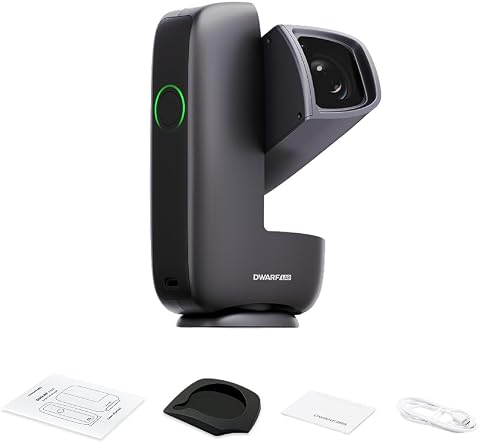
<p>The <strong>Dwarflab Dwarf Mini Smart Telescope</strong> stands out for its <strong>ultra-lightweight design</strong> and comprehensive app control, making it the ideal companion for travel, hiking, or camping. Weighing just 1.85 lbs, it’s easily carried in a backpack or pocket. Its <strong>advanced imaging features</strong>, including long exposure support and cloud processing, elevate it beyond simple star gazing. The full 360° rotation allows flexible viewing angles, but it’s primarily designed for <strong>portable outdoor use</strong> and isn’t suited for setup as a fixed observatory. Its reliance on a compatible smartphone and a potential learning curve for its advanced functions are tradeoffs that users should consider.</p>
Dwarflab Dwarf Mini Smart Telescope – Portable Astronomy Telescope
- ✔ Weight: 1.85 lbs
- ✔ Sensor: Sony IMX662 1/2.8-inch, 2.9μm pixels
- ✔ Exposure Support: Up to 90 seconds

Dwarflab Dwarf 3 Smart Telescope, App-Controlled Astrophotography Camera
- ✔ Weight: 3 lb / 1.35 kg
- ✔ Lens System: Dual lens (telephoto and wide-angle)
- ✔ Auto-Tracking: Yes
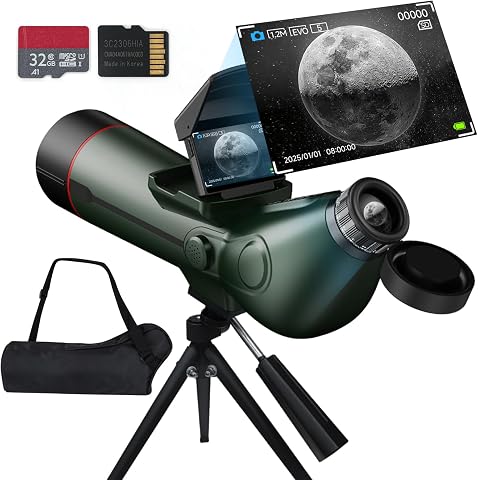
Smart Refractor Telescope with Auto-Focus and Digital Features
- ✔ Aperture: 80mm
- ✔ Focal Length: 300mm
- ✔ Magnification: up to 350X
Pros:
- Extremely compact and lightweight, perfect for on-the-go use
- App control and intuitive star mapping simplify navigation
- Supports long exposure and cloud image processing
- Full 360° rotation for flexible viewing
Cons:
- Limited to portable use, not suitable for permanent setups
- Requires smartphone or device for operation
- Advanced features may have a learning curve
Best for: Travelers, outdoor enthusiasts, beginners wanting high-tech features in a compact form
Not ideal for: Deep-sky astrophotography or fixed observatory setups
Bottom line: An excellent choice for travelers seeking high-tech, portable astrophotography with minimal setup.
“An excellent choice for travelers seeking high-tech, portable astrophotography with minimal setup.”
Dwarflab Dwarf 3 Smart Telescope, App-Controlled Astrophotography Camera
<p>The <strong>Dwarflab Dwarf 3</strong> makes a compelling case for casual astrophographers who want a <strong>dual-lens system</strong> for both daytime and nighttime photography. Weighing just 3 lbs, it’s still highly portable and features <strong>auto-tracking</strong> and <strong>4K resolution</strong> imaging, which significantly enhances image quality for a device of this size. Its <strong>smart app interface</strong> and cloud processing make it accessible for all skill levels, but its <strong>beginners and casual users</strong> should be aware that it’s not designed for professional-grade astrophotography or deep-sky imaging. The reliance on internet connectivity and additional accessories can increase the overall cost and complexity.</p>
Pros:
- Lightweight and portable for travel
- Dual lenses enable versatile day and night photography
- Smart auto-tracking with high-res 4K imaging
- Easy-to-use app with cloud processing
Cons:
- Limited to beginner and casual use
- Dependent on smartphone app and internet
- Higher cost due to features and accessories
Best for: Casual astrophotographers, outdoor travelers, users seeking versatile daytime/nighttime imaging
Not ideal for: Professional astrophotography or fixed observatory setups
Bottom line: A versatile, portable imaging tool suited for casual astrophotography and outdoor adventures, with some connectivity dependencies.
“A versatile, portable imaging tool suited for casual astrophotography and outdoor adventures, with some connectivity dependencies.”
Smart Refractor Telescope with Auto-Focus and Digital Features
<p>The <strong>Smart Refractor Telescope</strong> offers a different approach, emphasizing high magnification (up to 350X) and extended viewing capabilities. Its <strong>80mm aperture</strong> and <strong>fast focal length</strong> produce bright, detailed images suitable for astronomy, birdwatching, or long-distance photography. The <strong>dual-screen display</strong> and support for high-capacity storage enable real-time observation and detailed photo capture. While it’s more complex to operate and less portable due to its tripod and accessories, it’s the ideal choice for users who want <strong>more detailed, high-magnification images</strong> without sacrificing portability entirely. The higher price and complexity are tradeoffs for its advanced features.</p>
Pros:
- Bright, high-quality optics with up to 350X magnification
- Dual-screen display for real-time viewing
- Supports large external storage
- Long battery life with auto shut-off options
Cons:
- Complex for beginners to operate
- Relatively high cost
- Less portable due to size and tripod
Best for: More serious amateur astronomers, birdwatchers, long-distance photographers
Not ideal for: Casual users or those seeking ultra-portable devices
Bottom line: A high-magnification, portable refractor ideal for detailed observation and advanced amateur use, with some tradeoffs in size and complexity.
“A high-magnification, portable refractor ideal for detailed observation and advanced amateur use, with some tradeoffs in size and complexity.”
As an Amazon Associate we earn from qualifying purchases.
Key Differences
The core difference between these telescopes revolves around their purpose and design philosophy. The NexStar 5SE is a motorized, computer-controlled scope designed for users seeking high-quality images and advanced features. Its larger aperture and tracking capabilities make it suitable for serious astrophotography, though it sacrifices some portability and ease of setup. Conversely, the Sky-Watcher StarTravel 80 emphasizes portability and simplicity, making it an ideal choice for casual users or those new to astrophotography who prioritize quick setup and travel-friendly size. The tradeoff manifests as a compromise between image detail and convenience; the 5SE delivers sharper images but is bulkier, while the StarTravel 80 provides ease of use at the expense of some image resolution and depth.Detailed Comparison
Portability (Sky-Watcher StarTravel 80 wins — major)
The Sky-Watcher StarTravel 80 is significantly lighter and smaller, making it easier to carry and transport. Its compact form factor is ideal for travel and spontaneous observing sessions, whereas the NexStar 5SE, though still portable, is bulkier and slightly heavier, requiring more effort to transport. The difference is major, meaning the StarTravel 80 is clearly better suited for frequent travel or casual outings, but the 5SE’s portability still qualifies for light transport with some planning.Optical Quality (Celestron NexStar 5SE wins — major)
The NexStar 5SE boasts a 130mm aperture with high-quality optics, providing sharper, more detailed images, especially for deep-sky objects and astrophotography. The StarTravel 80 features an 80mm aperture, which is sufficient for wide-field views and basic astrophotography but less capable of capturing fine details. The gap is major, with the 5SE providing significantly better image resolution and light-gathering ability for serious astrophotography.Ease of Use (Sky-Watcher StarTravel 80 wins — moderate)
The StarTravel 80 is designed for simplicity: lightweight, minimal setup, and manual operation make it very accessible for beginners or casual users. The NexStar 5SE, although user-friendly, requires understanding of motor controls, alignment, and more complex operation. The difference is moderate—both are manageable, but the StarTravel 80 is more straightforward for newcomers.Mounting and Setup (Celestron NexStar 5SE wins — major)
The NexStar 5SE features a motorized, computerized alt-azimuth mount that allows for quick, automated alignment and tracking, benefiting astrophotography requiring precise tracking. The StarTravel 80 comes with a simple manual mount, which is easier to assemble but less precise for long exposures. The gap is major, with the 5SE providing superior tracking and stability for imaging.Power Consumption (Sky-Watcher StarTravel 80 wins — minor)
The 5SE’s motorized mount demands more power, often requiring batteries or external power sources, which adds some complexity for portable use. The StarTravel 80’s manual mount needs minimal or no power, making it more practical for spontaneous or off-grid observations. The difference is minor in daily use but significant for portability and convenience.Price (Sky-Watcher StarTravel 80 wins — moderate)
The Sky-Watcher StarTravel 80 is generally more affordable, making it accessible for beginners or casual hobbyists. The NexStar 5SE, with its advanced features and larger aperture, costs more upfront. The gap is moderate, but for those on a tight budget, the StarTravel 80 provides a compelling value.Versatility (Celestron NexStar 5SE wins — moderate)
The 5SE offers more versatility with its motorized tracking, enabling astrophotography and detailed observation without manual adjustments. The StarTravel 80 is primarily suited for visual observation and basic astrophotography, limited by its manual mount. The difference is moderate, favoring the 5SE for more diverse use cases.Accessories (Celestron NexStar 5SE wins — moderate)
The 5SE often comes with a range of accessories like computerized hand controllers and better optical accessories, while the StarTravel 80’s accessories are more basic but sufficient for beginners. The 5SE provides more advanced upgrade options, making it more adaptable for future needs. The gap is moderate.Celestron NexStar 5SE: Pros and Cons
Pros:
- High-quality optics with larger aperture for detailed images
- Motorized, computerized mount for precise tracking
- Versatile for astrophotography and deep-sky imaging
- Includes advanced accessories and upgrade options
Cons:
- Heavier and bulkier for portability
- Higher price point
- Requires more power and setup time
Sky-Watcher StarTravel 80: Pros and Cons
Pros:
- Lightweight and highly portable
- Very easy to set up and operate
- More affordable for beginners
- Low power requirements
Cons:
- Smaller aperture limits image detail
- Manual mount less suitable for long exposures
- Less versatile for advanced astrophotography
- Fewer upgrade options
Who Should Choose What
Choose Celestron NexStar 5SE if:
- You are an enthusiast or aspiring astrophotographer needing detailed images
- You don’t mind a larger, somewhat heavier instrument for superior image quality
- You want advanced tracking and automation for long exposures
- Budget is less of a concern, and you seek future upgrade potential
Choose Sky-Watcher StarTravel 80 if:
- You are a beginner or casual astronomy enthusiast emphasizing portability and ease of use
- You prefer quick setup and spontaneous observing sessions
- Budget is limited, and you want a lightweight, simple instrument
- You mainly do visual observation or basic astrophotography
Value for Money
Paying more for the NexStar 5SE makes sense for serious hobbyists or those pursuing advanced astrophotography, as its optics and tracking capabilities deliver better results. For casual users or travelers, the StarTravel 80 offers excellent value, providing sufficient performance in a compact form. The decision depends on how much you prioritize image quality versus convenience and portability.Final Verdict
Choose the NexStar 5SE if you are committed to serious astrophotography and willing to invest in a larger, more complex system. Opt for the Sky-Watcher StarTravel 80 if portability, ease of use, and affordability are your top priorities. For most beginners or casual observers, the StarTravel 80 provides a better starting point, while enthusiasts aiming for detailed images should prefer the 5SE.Frequently Asked Questions
Can the Sky-Watcher StarTravel 80 be used for astrophotography?
Yes, but its manual mount limits long-exposure astrophotography. It’s suitable for wide-field imaging and basic astrophotography, but not ideal for detailed deep-sky imaging without additional modifications.Is the NexStar 5SE portable enough for travel?
It is portable compared to larger telescopes but requires some effort to carry and set up. It’s best suited for car-based trips rather than backpacking.Which telescope is better for a beginner?
The Sky-Watcher StarTravel 80 is easier to set up and operate, making it more suitable for beginners. The NexStar 5SE can be used by beginners willing to learn its features and setup process.Does the larger aperture of the 5SE justify the extra cost?
Yes, if your goal is detailed astrophotography and deep-sky observation. The larger aperture captures more light and reveals finer details, justifying the higher price for dedicated hobbyists.Are additional accessories necessary for these telescopes?
Both telescopes come with basic accessories. The 5SE benefits from advanced eyepieces and filters, while the StarTravel 80 can be upgraded with simple, portable accessories for better experience.Evergreen bestsellers Picks

Dyson HushJet Compact Air Purifier, White/Silver

Sony BRAVIA 6 77-Inch OLED 4K HDR Smart Google TV with Gemini (K-77A60)

LG 77-Inch OLED evo C5 Series Smart TV (2025)
As an affiliate, we earn on qualifying purchases.