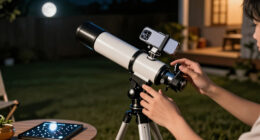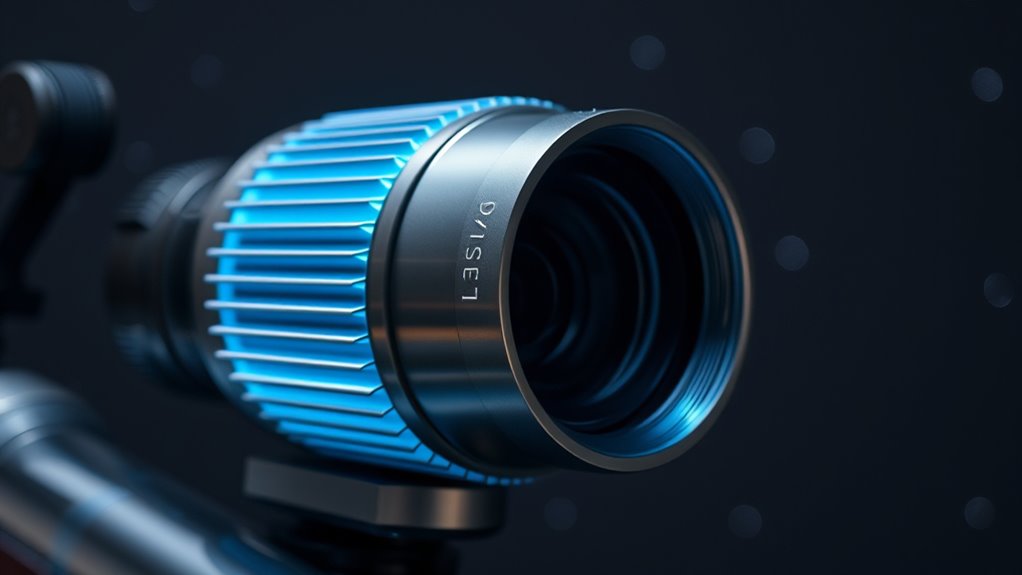

Cooling is vital in astro cameras because it helps keep your sensor at a stable, ideal temperature, which reduces noise and improves image quality. When the sensor overheats, thermal noise creates specks that obscure faint details in astronomical objects. Effective cooling keeps temperatures more consistent, especially during warm nights or long exposures. If you want to understand how proper temperature control can enhance your astrophotography results, you’ll find more valuable insights ahead.

Prime made for students and young adults
- Fast, free delivery for dorm and study essentials
- Prime Video and Amazon Music included
- Member-only deals
Key Takeaways
- Cooling stabilizes sensor temperature, reducing thermal noise and improving image clarity during long exposures.
- Effective temperature control prevents overheating, which can cause grainy images and obscure faint celestial details.
- Thermoelectric cooling maintains consistent sensor performance despite environmental temperature fluctuations.
- Cooler sensors enhance the signal-to-noise ratio, allowing for better detection of faint objects like galaxies and nebulae.
- Proper cooling minimizes noise artifacts, reducing the need for extensive image stacking and post-processing.
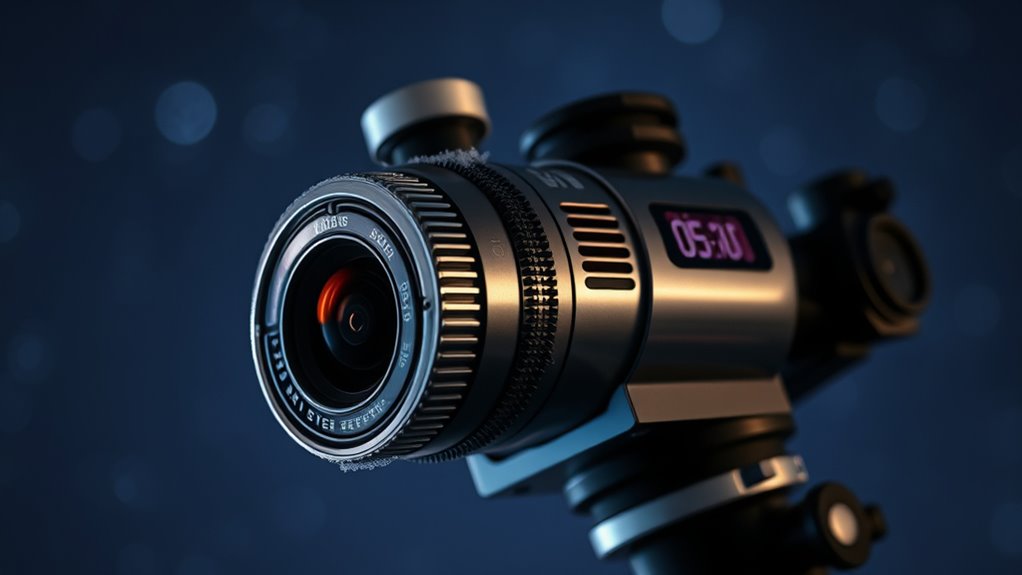
Effective temperature control is essential for getting clear, high-quality images with your astro camera. When you’re capturing distant celestial objects, even the slightest temperature fluctuations can introduce noise and compromise your data. That’s why thermal regulation plays such a crucial role in astrophotography. Maintaining a stable temperature ensures your camera’s sensor operates within ideal limits, reducing the risk of thermal noise that can obscure faint details in your images. Sensor cooling is a core component of this process, actively lowering the temperature of your camera’s sensor to minimize heat buildup during long exposures. By implementing efficient cooling systems, you prevent the sensor from heating up due to prolonged exposure and electronic activity, which can generate unwanted noise that diminishes image clarity.
When your camera’s sensor overheats, it produces thermal noise that appears as random specks and graininess across your images. This noise becomes more prominent as exposure times increase, which is common in astrophotography. Without proper cooling, these artifacts can make it difficult to distinguish real celestial details from the noise. Sensor cooling works by dissipating excess heat away from the sensor, often through thermoelectric or Peltier devices, which actively regulate temperature levels. This process not only stabilizes the sensor’s temperature but also ensures that your images are cleaner and more precise. The more consistent your thermal regulation, the less likely you are to encounter fluctuating noise levels that require extensive post-processing.
Moreover, sensor cooling improves your workflow by reducing the time spent on noise reduction during image processing. When your sensor stays cool throughout your imaging session, your captured data has a higher signal-to-noise ratio from the start. This means you can achieve better results with fewer stacked images and less editing, saving you valuable time and effort. It also enhances your ability to capture faint objects like galaxies and nebulae, which demand long exposures and minimal noise. The importance of thermal regulation becomes even more apparent during warmer nights or when imaging in environments with high ambient temperatures, as these conditions can cause sensors to heat up more quickly. Investing in an astro camera with effective sensor cooling can make a significant difference in the quality of your astrophotography.
astro camera sensor cooling system
As an affiliate, we earn on qualifying purchases.
As an affiliate, we earn on qualifying purchases.
Frequently Asked Questions
How Does Temperature Affect Astro Camera Sensor Lifespan?
Higher temperatures cause your astro camera sensor to degrade faster, reducing its lifespan. Excess heat accelerates sensor degradation and increases the risk of thermal runaway, which can damage the sensor permanently. By keeping the sensor cool, you prevent these issues, ensuring better image quality and longer-lasting performance. Proper cooling is essential for maintaining your camera’s longevity and avoiding costly repairs or replacements down the line.
Can Cooling Systems Increase Camera Noise Levels?
Cooling systems don’t increase camera noise; instead, they improve noise reduction by enhancing cooling efficiency. Think of your camera as a delicate instrument, where proper cooling acts like a calming breeze, reducing thermal noise that can distort images. When you optimize cooling, you allow your sensor to operate smoothly, capturing cleaner, sharper images. So, rather than raising noise levels, effective cooling keeps your astro camera performing at its best, revealing the universe’s true colors.
What Maintenance Is Required for Cooling Components?
You should regularly perform cooling system maintenance to guarantee optimal performance. This includes cooling component inspection, checking for dust, corrosion, or damage, and cleaning fans and vents. Additionally, verify that the cooling system’s connections are secure and functioning properly. By maintaining and inspecting your cooling components, you prevent potential issues, extend the lifespan of your astro camera, and ensure consistent, high-quality imaging results.
Are There Portable Cooling Options for Field Astrophotography?
Yes, there are portable solutions for field cooling that suit astrophotography on the go. You can choose compact, battery-powered cooling fans or mini refrigeration units designed for portability. These options help maintain ideal temperatures during your sessions, reducing noise and improving image quality. Field cooling options are especially beneficial when you’re away from power sources, ensuring your astro camera stays cool and performs at its best in remote locations.
How Does Temperature Impact Long-Exposure Image Quality?
Imagine your camera’s sensor as a quiet lake, disturbed by thermal noise like ripples. When you don’t control temperature, thermal noise increases, clouding image clarity during long exposures. Cooler temperatures reduce this noise, resulting in sharper, more detailed images. Without proper cooling, your astrophotos risk becoming blurry or grainy, making temperature management essential for capturing the universe’s beauty with precision and clarity.
thermoelectric cooling for astrophotography
As an affiliate, we earn on qualifying purchases.
As an affiliate, we earn on qualifying purchases.
Conclusion
Keeping your astro camera cool is like giving it a gust of fresh air—without it, noise and imperfections can cloud your images. When you control the temperature, you’re basically guiding your camera through the night’s chill, helping it perform at its best. So, don’t let heat spoil your stargazing adventure; master temperature control, and watch your astrophotography shine brighter than a thousand stars. Your cosmic masterpiece depends on it!
Peltier device for camera cooling
As an affiliate, we earn on qualifying purchases.
As an affiliate, we earn on qualifying purchases.
long exposure astrophotography camera
As an affiliate, we earn on qualifying purchases.
As an affiliate, we earn on qualifying purchases.
Columbus Day / Indigenous Peoples' Day Picks
long weekend sales
As an affiliate, we earn on qualifying purchases.