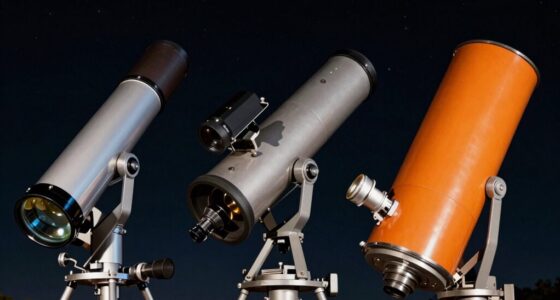
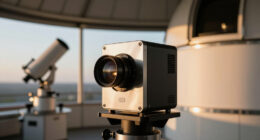
When choosing between a refractor and a reflector, consider that refractors deliver sharp, high-contrast images and are easier to maintain with simple cleaning and minimal adjustments. Reflectors offer larger apertures for brighter deep-sky views but require more upkeep, like collimation and careful storage. Both need regular cleaning and protective covers to keep their optics in top shape. Keep your setup stable and stored properly, and you’ll enjoy better views—keep exploring to learn more about maintaining each type successfully.
Key Takeaways
- Refractors require minimal maintenance, primarily gentle cleaning and periodic collimation, ensuring consistent high-quality images over time.
- Reflectors need regular collimation and careful cleaning of mirrors to maintain optimal performance and prevent image degradation.
- Proper storage in a dry, dust-free environment and protective covers extend the lifespan of both refractors and reflectors.
- Using gentle cleaning solutions and avoiding abrasive materials preserves lens and mirror coatings effectively.
- Routine mount checks and tightening screws help reduce vibrations and maintain alignment, enhancing viewing stability.

Celticbird Astronomical Telescope Accessory Kit – with 3pcs Plossl Eyepieces Set, 4pcs Filter Set, a 2X Barlow Lens
- Telescope Accessory Kit: Includes 3 eyepieces, 4 filters, 2X Barlow lens
- Plossl Eyepieces: 6mm, 12.5mm, 20mm for versatile viewing
- Enhanced Magnification: 2X Barlow lens doubles eyepiece power
As an affiliate, we earn on qualifying purchases.
As an affiliate, we earn on qualifying purchases.
Comparing Image Quality and Ease of Use
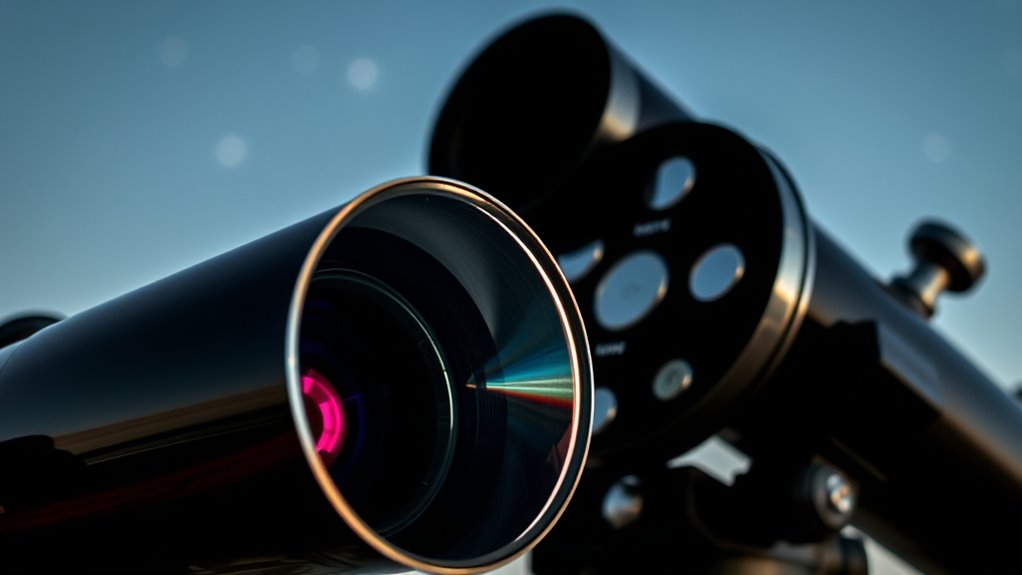
When comparing image quality and ease of use between refractors and reflectors, it’s important to contemplate how each telescope handles different viewing conditions. Refractors typically offer superior optical clarity, delivering sharp, high-contrast images, especially for planetary and lunar observations. They’re often more user-friendly because of their straightforward design, making setup and alignment easier for beginners. Reflectors, on the other hand, can provide larger apertures at a lower cost, offering bright images of deep-sky objects. However, they may require more frequent adjustments and maintenance to maintain excellent performance. Overall, if you prioritize optical clarity and simplicity, a refractor might suit you better. But if you want larger viewing capabilities with some added complexity, a reflector could be more appropriate. Creating the perfect farmhous bedroom ambience can also influence your comfort and enjoyment during long observation sessions.

Astromania Laser Collimator for Newtonian Dobsonian Marca Telescopes, Telescope Alignment 1.25 Inch with 7 Red Laser Bright Levels, Great Telescope Accessories Laser Alignment Tool for Collimation
- Compatibility: Fits 1.25-inch Newtonian telescopes
- Precise Collimation: Quick and accurate alignment
- Durable Construction: Premium metal and anodized aluminum
As an affiliate, we earn on qualifying purchases.
As an affiliate, we earn on qualifying purchases.
Practical Maintenance Tips for Longevity
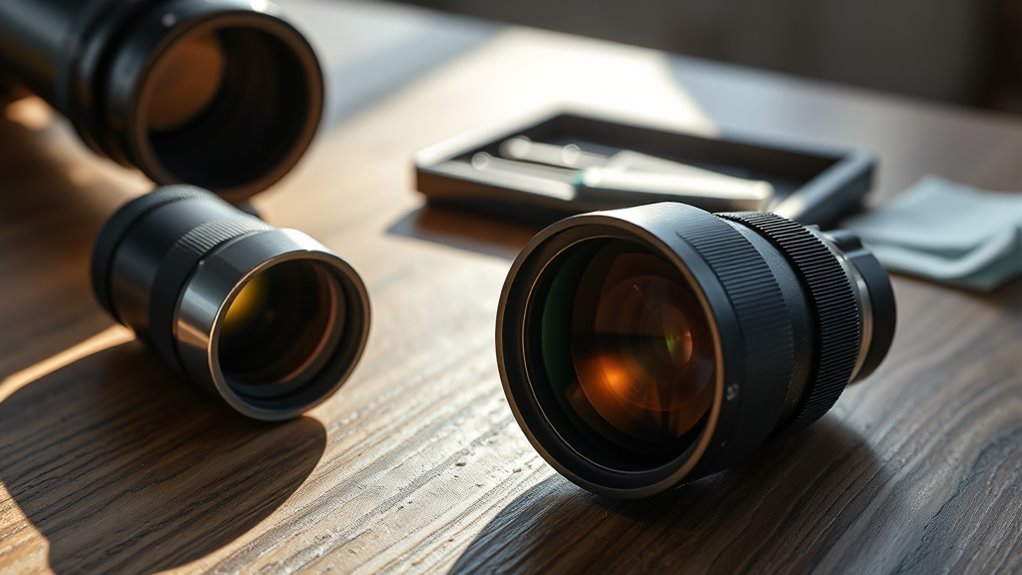
Maintaining your telescope properly can considerably extend its lifespan and guarantee consistently clear images. Regularly clean lens coatings with a gentle lens cleaning solution and a soft cloth to prevent dust buildup that can degrade image quality. Keep the optical elements covered when not in use to avoid scratches or dirt. Check mount stability frequently; a steady mount reduces vibrations that blur your view. Tighten screws and bolts as needed, but avoid over-tightening, which can cause misalignment. Store your telescope in a dry, dust-free environment to prevent corrosion and damage. Periodic inspections and maintenance, like collimation for reflectors, also help maintain ideal performance. For those interested in Chevrolet Tuning, similar principles of regular checks and upgrades can optimize vehicle performance and longevity. By following these practical tips, you’ll keep your telescope in excellent condition, ensuring sharp images for years to come.

ZEISS Lens Care Pack – 2x 8oz Streak-Free Lens Spray and Microfiber Cloths for Eyeglasses and Optics
- Streak-Free Lens Cleaning: Includes cleaner and microfiber cloths
- Safe for Various Lenses: Suitable for coated, prescription, and sunglasses
- Gentle, Non-Toxic Formula: Ammonia-free, low VOC, safe for all lenses
As an affiliate, we earn on qualifying purchases.
As an affiliate, we earn on qualifying purchases.
Making the Right Choice for Your Stargazing Style
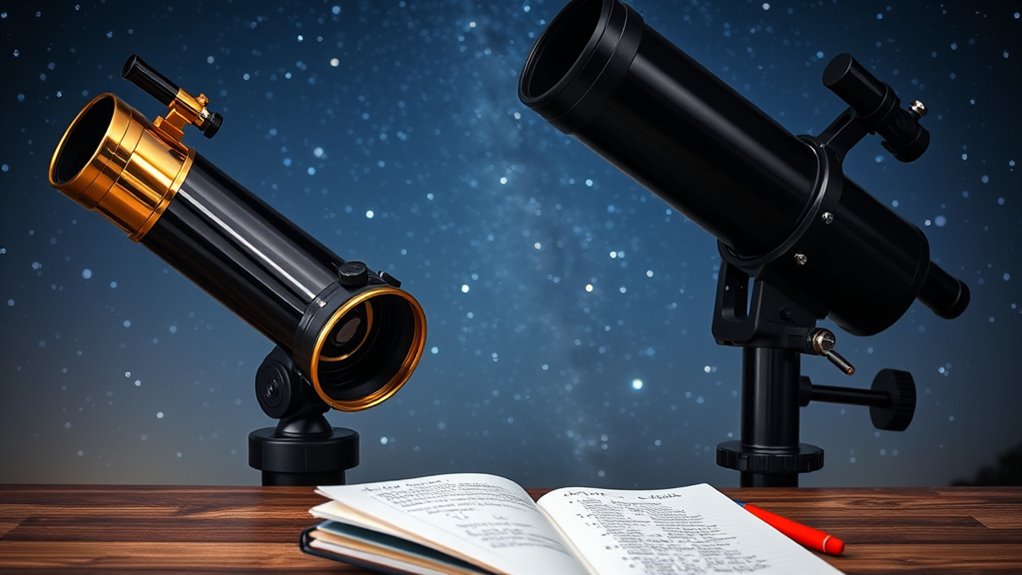
Choosing the right telescope depends on how you prefer to explore the night sky and what you want to observe. If visual appeal matters, refractors often offer sleek designs with crisp, high-contrast images that look great on display. On the other hand, if portability is your priority, reflectors tend to be lighter and more compact, making them easier to transport to remote stargazing spots. Think about your typical observing sessions—do you want a telescope that’s easy to carry around or one that provides stunning, detailed views? Your choice should align with your style, whether it’s quick setup for spontaneous stargazing or a more serious setup for extended sessions. Making this decision helps guarantee your stargazing experience is enjoyable and tailored to your preferences. Additionally, considering opening hours for your local astronomy clubs or stores can be helpful when seeking advice or purchasing equipment.
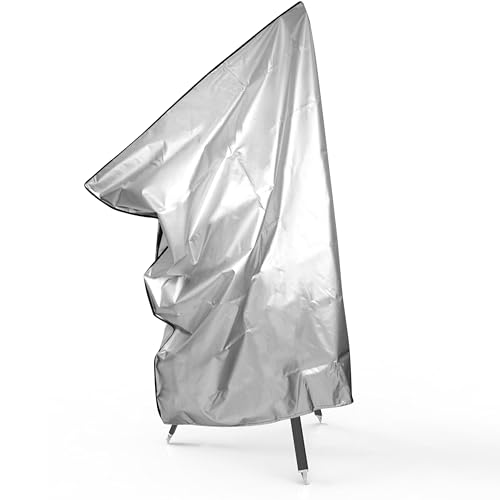
Telescope Cover Waterproof Outdoor, 47 x 63 Inch (160x120cm), Protective Protector for Large Astronomical Telescopes Indoor Outside Against Sun Dust Moisture, Adjustable Fixing Drawstring (Silver)
- Package Includes: 1 silver telescope cover
- Size: 47 x 63 inches (160x120cm)
- Material: Water-resistant Oxford 420D fabric
As an affiliate, we earn on qualifying purchases.
As an affiliate, we earn on qualifying purchases.
Frequently Asked Questions
How Do Refractors and Reflectors Perform in Different Weather Conditions?
Refractors generally handle different weather conditions better due to their sealed lenses, offering good weather resistance and consistent seasonal performance. Reflectors, however, are more vulnerable to moisture and temperature changes, which can affect their alignment and optics. To guarantee ideal performance, you should regularly protect your telescope from humidity, dew, and extreme temperatures, especially during seasonal shifts. Proper maintenance helps maintain clarity and extend your telescope’s lifespan in varying weather conditions.
Are There Specific Accessories That Better Suit Each Telescope Type?
You should choose accessories based on your telescope type. Refractors often work best with sturdy mounting options like altazimuth or equatorial mounts for stability, and they typically support a wide range of eyepiece compatibility. Reflectors benefit from larger mounts that handle their weight and size, and some models may require specific adapters. Always check your telescope’s specifications to guarantee the accessories you pick fit and perform at their best.
What Are the Safety Considerations During Telescope Maintenance?
During telescope maintenance, you should always wear safety gear like gloves and eye protection to prevent injuries. Follow a thorough maintenance checklist to make certain you don’t miss steps, especially when handling delicate parts. Be cautious with glass lenses or mirrors, and work in a clean, stable environment. Regularly inspecting your equipment helps prevent accidents and keeps your telescope in top shape for clear night sky views.
How Do I Troubleshoot Common Image Quality Issues?
To troubleshoot common image quality issues, start by checking your lens for dirt or smudges and clean it carefully with lens cleaning solution and a microfiber cloth. Next, perform collimation adjustments to align your mirrors properly, ensuring sharp, clear images. Also, verify your focus and look for any obstructions or dew on the lens. Regular maintenance keeps your telescope performing at its best, giving you crisp, detailed views.
Can I Upgrade or Modify My Telescope Over Time?
Ever wonder if your telescope can evolve with your skills? Yes, you can upgrade or modify your telescope over time. Explore telescope upgrades like better eyepieces, filters, or even motorized mounts. Modification options include adjusting focusers or adding tracking systems. These enhancements improve your viewing experience and extend your instrument’s lifespan. So, don’t hesitate to customize your setup—your telescope can grow with your passion for astronomy.
Conclusion
Choosing between a refractor and a reflector depends on your stargazing style and maintenance preferences. While many believe reflectors offer better views for less money, they require more upkeep. Conversely, refractors often need less maintenance but come at a higher cost. The truth? Regular, simple maintenance can keep either type performing well for years. So, trust your needs, do your research, and remember—proper care can turn your telescope into a lifelong celestial companion.