TL;DR

Prime made for students and young adults
- Fast, free delivery for dorm and study essentials
- Prime Video and Amazon Music included
- Member-only deals
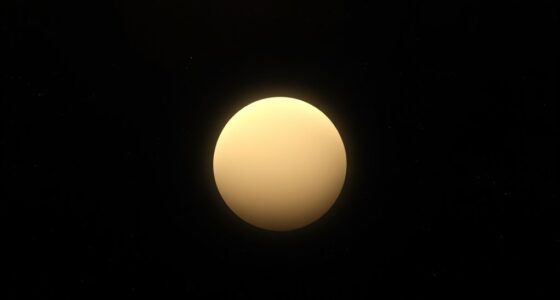
NASA’s Astronomy Picture of the Day for October 10, 2026, features a mosaic centered on the Moon’s farside, assembled from Lunar Reconnaissance Orbiter images. The farside’s rougher, more heavily battered surface contrasts with the nearside’s broad dark maria; a thicker farside crust is a likely explanation, not a settled conclusion presented by the image.
NASA’s Astronomy Picture of the Day (APOD) for October 10, 2026, features a detailed mosaic centered on the Moon’s farside, assembled from images taken by the Lunar Reconnaissance Orbiter (LRO). The view highlights a stark contrast with the hemisphere familiar from Earth: the farside is rough and heavily cratered, while the nearside has broad areas of smoother, dark lunar plains called maria.
NASA says the featured image was made from observations by LRO’s wide-angle camera. It forms part of a global mosaic built from more than 15,000 images acquired between November 2009 and February 2011. In the highest-resolution version, surface features are shown at a scale of 100 meters per pixel, according to the APOD explanation.
The image is centered on the farside, the hemisphere that faces away from Earth. The Moon is tidally locked in synchronous rotation, meaning it turns once on its axis in about the same time it takes to orbit Earth. As a result, observers on Earth generally see the same lunar hemisphere, although spacecraft in orbit can image the other side.
The APOD description draws attention to differences in the two hemispheres’ surfaces. The farside appears rougher and more battered by impacts, while the nearside is marked by large, relatively smooth dark maria. NASA’s explanation says a thicker farside crust is a likely reason: it could have made it more difficult for molten material from inside the Moon to reach the surface and spread into the plains that form maria. The explanation presents this as a likely account, rather than a conclusion established by the picture alone.
A Clear View of Lunar Differences
The mosaic offers readers a broad, detailed view of a hemisphere that cannot be seen directly from Earth. It also puts a familiar feature of the Moon’s appearance into perspective: the dark plains prominent in the night sky are not distributed evenly across both sides. The farside-nearside contrast is a major geological difference, not simply a change in lighting or viewing angle.
That distinction matters for understanding how the Moon developed. The suggested link between crust thickness and the scarcity of maria connects the visible surface to processes beneath it: whether interior material could rise, reach the surface and spread. The image documents surface features; the proposed explanation helps frame why those features may differ. It does not, by itself, measure crust thickness or settle the geological question.
The APOD feature also shows how spacecraft mapping can change what is familiar. Earth-based observers see one side over and over because of the Moon’s rotation, but orbital imaging has made global views possible. By assembling many observations into a mosaic, the LRO project makes the hidden hemisphere easier to examine as part of the Moon as a whole.
lunar reconnaissance orbiter model
As an affiliate, we earn on qualifying purchases.
As an affiliate, we earn on qualifying purchases.
How the Farside Mosaic Was Made
NASA’s Astronomy Picture of the Day publishes an image or photograph of the universe with a short explanation written by a professional astronomer. The October 10 entry credits NASA, Goddard Space Flight Center, Arizona State University and the Lunar Reconnaissance Orbiter. Its listed authors and editors are Jerry Bonnell, Cecilia Chirenti, Robert Nemiroff and Keighley Rockcliffe.
The featured view draws on a larger mapping effort, rather than a single exposure taken on October 10. NASA says the global mosaic uses more than 15,000 LRO images collected over a period running from November 2009 to February 2011. The APOD date is the publication date of the feature; it is not the date the underlying observations were made.
The Moon’s synchronous rotation explains why the farside is hidden from ordinary Earth-based viewing. It does not mean the farside is permanently dark: sunlight reaches it during the lunar day. Spacecraft in orbit have provided views and measurements of that hemisphere, including the observations used in this mosaic.
As an affiliate, we earn on qualifying purchases.
What the Mosaic Cannot Establish
The image shows the surface but does not, on its own, determine why the two hemispheres differ. NASA’s description identifies a thicker farside crust as a likely explanation for the limited formation of maria there, but the supplied material does not give a crust-thickness measurement, quantify the difference between hemispheres or describe competing explanations.
The source also does not report new observations or a new scientific study tied to the APOD publication. The mosaic is based on LRO imagery collected from November 2009 through February 2011; the October 10, 2026, date marks the featured explanation. No additional findings, mission update or new analysis are described in the source.
As an affiliate, we earn on qualifying purchases.
The Next APOD Feature
NASA’s listing points readers to the next day’s Astronomy Picture of the Day, identified as “Sunday’s Childe.” The October 10 entry does not announce a new LRO observation campaign or a forthcoming test of the crust explanation. Any further scientific conclusions would require evidence beyond the mosaic and the brief APOD description.
For readers following this specific feature, the immediate next development is the next daily image and its accompanying explanation. NASA’s page provides the credited image source and the observation period for the mosaic, while the geological explanation remains framed as likely.
As an affiliate, we earn on qualifying purchases.
Key Questions
What does NASA’s October 10, 2026, APOD show?
It features a Lunar Reconnaissance Orbiter mosaic centered on the Moon’s farside, highlighting its rough, cratered surface.
Why do people on Earth usually see the Moon’s nearside?
The Moon is tidally locked in synchronous rotation: it rotates once on its axis in about the time it takes to orbit Earth, so the same hemisphere generally faces us.
How was the farside mosaic assembled?
NASA says it is part of a global mosaic made from more than 15,000 LRO images acquired between November 2009 and February 2011. The highest-resolution version represents features at a scale of 100 meters per pixel.
Why does the farside have fewer broad dark maria?
NASA’s explanation says a thicker farside crust is a likely reason, because it could have restricted molten material from reaching the surface. The APOD entry does not present the mosaic as proof of that explanation.
Does the farside remain in darkness?
No. “Farside” means the hemisphere generally turned away from Earth, not a permanently dark side. Sunlight reaches it during the lunar day.
Source: primary
Columbus Day / Indigenous Peoples' Day Picks
long weekend sales
As an affiliate, we earn on qualifying purchases.