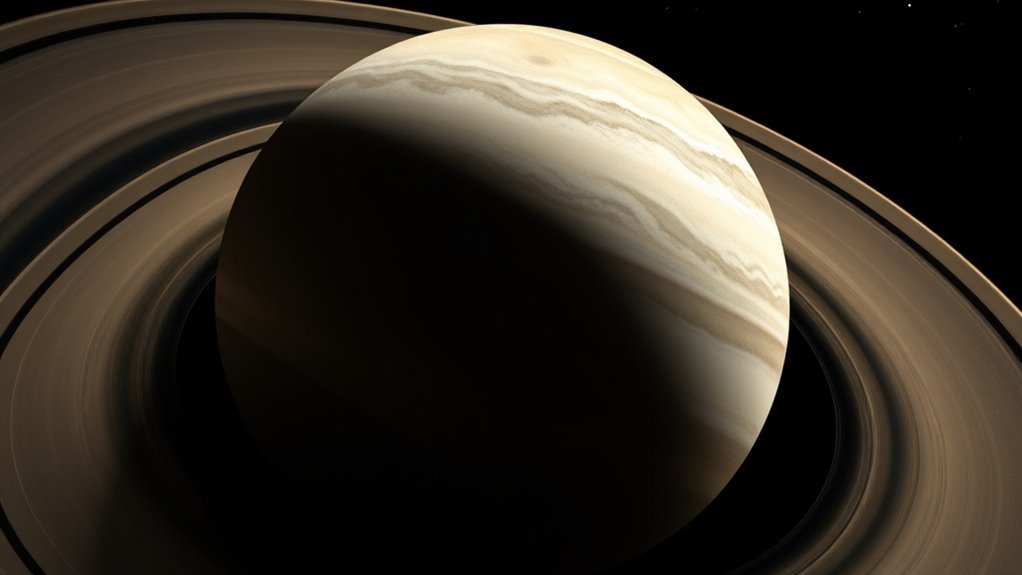
During Saturn’s opposition, the planet is closest to Earth, providing ideal conditions for close-up imaging. You can capture stunning photos that reveal the intricate details of its iconic rings and active moons. Use high-resolution equipment to maximize detail and take advantage of the shadows cast by the rings and moons for added depth. As you explore further, you’ll discover even more about Saturn’s dynamic features and the best techniques for capturing them.

Get school and study supplies delivered free — and shop member deals
- Fast, free delivery on millions of items
- Access to Prime Big Deal Days deals on October 6–7
- Prime Video, Amazon Music and more included
Key Takeaways
- Opposition provides optimal viewing conditions, maximizing detail in imaging Saturn’s rings and surface features.
- Capture high-resolution images of ring patterns, gaps, and wave structures visible during opposition.
- Use the shadows cast by rings and moons to analyze their positions and the planet’s orbital mechanics.
- Track the movement of moons like Titan and Rhea for dynamic, time-lapse imaging of Saturn’s system.
- Clear, steady atmospheric conditions during opposition improve image quality and detail in close-up captures.
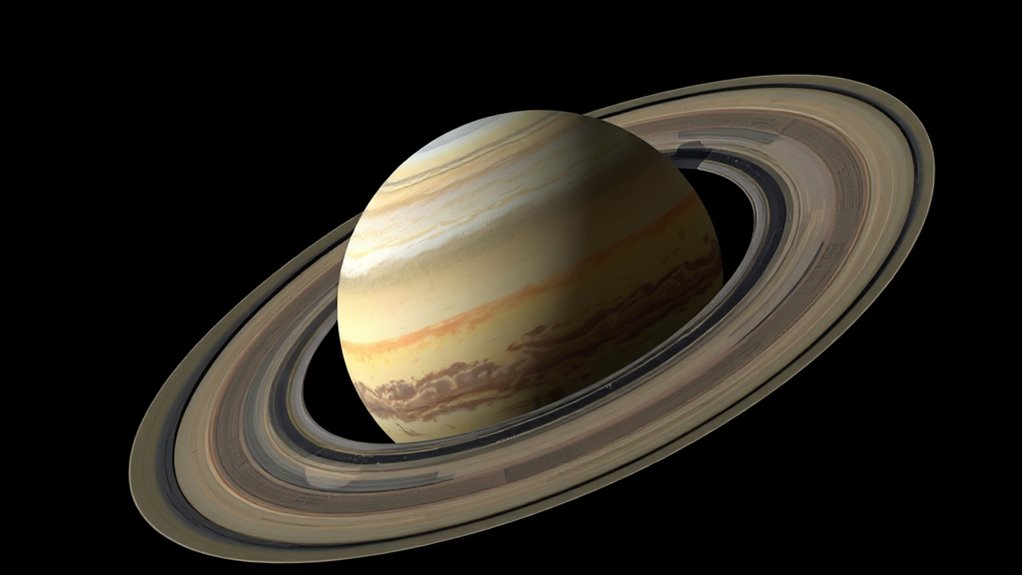
Observing Saturn at opposition offers an exceptional opportunity for amateur astronomers to capture detailed images of the planet. During this time, Saturn is closest to Earth, making its features more prominent and easier to observe through telescopes. As you aim your instrument at the planet, you’ll notice the intricate details of Saturn’s ring system and the diverse array of its moons. This is the perfect moment to study and photograph the complex ring dynamics that define Saturn’s appearance. The rings, composed of countless ice particles and rocky debris, display varying brightness and structure, which can shift subtly over time. Capturing these details helps reveal the ongoing interactions within the ring system, including wave patterns, ring gaps, and the shadows cast by the rings onto the planet’s surface. High resolution imaging can further enhance your ability to see fine details and improve your overall observational experience.
Saturn’s moons add another layer of fascination during opposition. You’ll see several of them orbiting close to the planet, with some bright enough to be distinguished even in modest telescopes. Observing Saturn’s moons provides insight into their diverse sizes, orbits, and surface features. You might notice the timing of their positions changing from night to night, offering an opportunity to document their orbital paths. This dynamic view enhances your understanding of how these moons influence and interact with Saturn’s ring system. For example, some of the larger moons, like Titan and Rhea, can cast shadows on the rings, creating striking visual effects worth capturing. These shadows change position as Saturn and its moons orbit, giving you real-time insight into the mechanics of the system.
high resolution telescope for Saturn imaging
As an affiliate, we earn on qualifying purchases.
As an affiliate, we earn on qualifying purchases.
Frequently Asked Questions
What Are the Best Filters for Capturing Saturn’s Atmospheric Details?
You should use infrared filters to capture Saturn’s atmospheric details, as they reveal features hidden in visible light. Color enhancement filters also help bring out subtle contrasts and cloud structures, making details clearer. Combining infrared imaging with color enhancement techniques gives you a thorough view of Saturn’s atmosphere, highlighting storms and banding patterns effectively. These filters are essential tools for capturing the planet’s dynamic atmosphere in stunning detail.
How Does Saturn’s Ring Tilt Affect Imaging Quality?
The ring tilt considerably affects your imaging quality of Saturn. When the rings are edge-on, they cast less shadow and reduce glare, making atmospheric details clearer. A more open ring tilt provides better contrast and easier focusing, but can cause glare or reflections. By understanding how ring tilt influences your view, you can optimize your camera angles and settings to capture sharper, more detailed images of Saturn’s atmosphere and rings.
What Equipment Is Recommended for Amateur Astronomers?
Think of your telescope as a magic window to the cosmos. To capture Saturn’s stunning beauty, you’ll want a sturdy camera mount that keeps your gear steady, preventing any blurry surprises. Pair it with essential telescope accessories like high-quality eyepieces and filters to enhance detail. These tools turn your amateur setup into a spacecraft, allowing you to snap breathtaking images of Saturn’s rings and swirling clouds with confidence and clarity.
When Is the Next Optimal Opposition for Saturn?
The next ideal opposition for Saturn occurs in late 2025, when Saturn’s seasonal changes make its rings more visible. During this time, the ring visibility cycles align, offering a spectacular view through your telescope. To catch this event, keep an eye on astronomical calendars, and plan your observing sessions around the opposition date. This is your best chance to witness Saturn’s rings in full detail, so don’t miss it!
How Can I Reduce Atmospheric Distortion in My Images?
To reduce atmospheric distortion in your images, use polarization filters to minimize glare and enhance contrast. Additionally, shoot when atmospheric turbulence is minimal, such as during stable weather conditions or at high altitudes. Employing a high-quality telescope with adaptive optics can also help, but quick, short exposure shots combined with stacking software effectively reduces the effects of atmospheric turbulence, resulting in clearer, sharper images of Saturn.
infrared filters for planetary photography
As an affiliate, we earn on qualifying purchases.
As an affiliate, we earn on qualifying purchases.
Conclusion
As you capture Saturn at opposition, you bring this distant world closer, like a painter revealing a masterpiece in vivid detail. Your images unveil the planet’s beauty, showcasing its rings and cloud patterns with stunning clarity. Just as a telescope brings the universe into focus, your efforts make Saturn’s majesty feel within reach. Keep exploring and experimenting—each shot is a step closer to revealing the secrets of this ringed giant.
amateur astronomer telescope for moon and planet observation
As an affiliate, we earn on qualifying purchases.
As an affiliate, we earn on qualifying purchases.
moon tracking mount for astrophotography
As an affiliate, we earn on qualifying purchases.
As an affiliate, we earn on qualifying purchases.
Fall Picks
fall essentials
As an affiliate, we earn on qualifying purchases.