To photograph a partial solar eclipse safely, always use a certified solar filter designed for cameras, and securely attach it before your shoot. Avoid looking through the viewfinder unless you have proper eye protection, and never rely on regular filters or sunglasses. Adjust your camera settings by lowering ISO to about 100-200, using a fast shutter speed like 1/1000 sec, and narrowing your aperture to f/8 or higher. Use a tripod for stability and consider capturing multiple exposures. If you stay cautious and prepared, you’ll improve your shots while staying safe—find out more tips below.

Prime made for students and young adults
- Fast, free delivery for dorm and study essentials
- Prime Video and Amazon Music included
- Member-only deals
Key Takeaways
- Always attach a properly rated solar filter to your camera lens before capturing the eclipse.
- Use a tripod and remote shutter release to prevent vibrations and ensure sharp images.
- Set your camera to manual mode, with low ISO (100-200), narrow aperture (f/8–f/16), and fast shutter speeds.
- Avoid looking through the viewfinder without eye protection; never remove the solar filter during the eclipse.
- Take multiple exposures at different settings to capture varying light levels and ensure safety throughout the event.
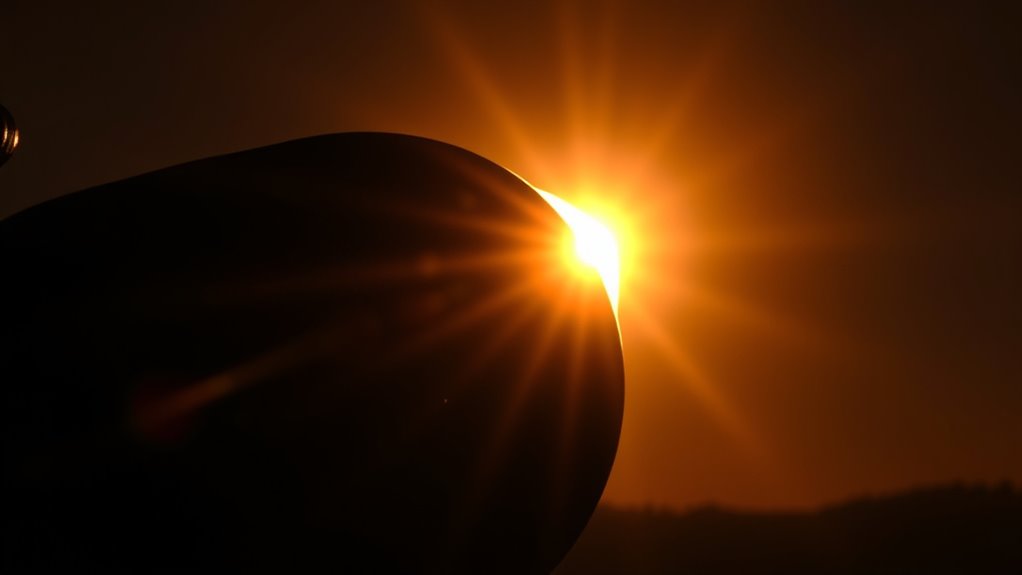
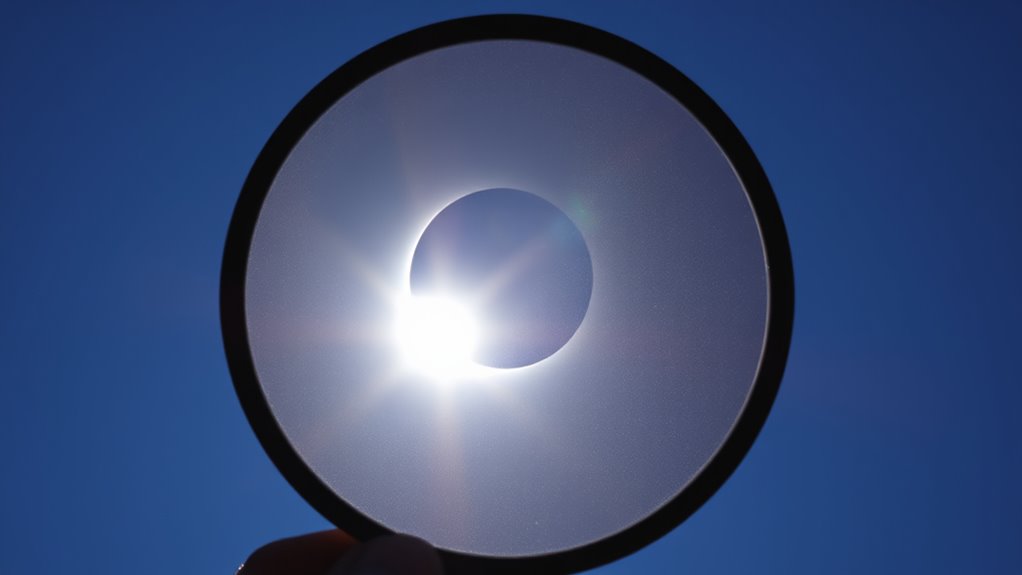
Have you ever wondered how to safely capture the mesmerizing sight of a partial solar eclipse? The key is to protect your eyes and camera while still getting clear, stunning images. Solar filters are essential for this task. These filters are specially designed to block out the harmful rays of the sun, allowing you to look directly at the eclipse without risking eye damage. When it comes to photographing the event, never attempt to shoot through your camera’s viewfinder without a solar filter—doing so can cause serious damage to your camera sensor. Instead, attach a solar filter securely to your camera lens before you start shooting. This guarantees the sunlight is reduced to safe levels, making it possible to capture detailed images without overexposing the sensor.
Once your solar filter is in place, it’s time to adjust your camera settings. Because the brightness of the sun during an eclipse is intense, you’ll want to lower your ISO to minimize noise—something around ISO 100 or 200 usually works well. Shutter speed is vital; use a fast shutter speed, such as 1/1000 or even faster, to prevent overexposure and to freeze the motion of the moon as it passes across the sun. Aperture settings should be narrow—around f/8 to f/16—to increase depth of field and improve sharpness. If your camera has a manual mode, switch to it so you can fine-tune these settings based on the changing light conditions during the eclipse. Using proper filters ensures safety and clarity in your photographs while capturing the event.
It’s also helpful to use a tripod for stability, especially when using longer focal lengths or shooting in low light conditions. This keeps your images sharp and steady, preventing blur caused by hand movement. If you’re using a telephoto lens, consider using a remote shutter release or your camera’s timer function to avoid vibrations when pressing the shutter button. During the eclipse, take multiple shots at different exposures to guarantee you capture the best possible image, as the light levels change rapidly.
Frequently Asked Questions
Can I Use Smartphone Cameras to Photograph the Eclipse Safely?
Yes, you can use smartphone cameras to photograph the eclipse, but be aware of smartphone limitations like small sensors and limited zoom. To capture better images, consider lens attachment options like telephoto or eclipse-specific filters designed for smartphones. Always use proper solar filters or indirect methods to protect your eyes and device. With the right accessories and safety precautions, you can safely get impressive eclipse photos with your smartphone.
What Are the Best Times During the Eclipse to Capture Images?
You should aim to capture images during the maximum eclipse, when 50% or more of the Sun is covered. Timing precision is essential, so plan to shoot during the peak, which typically lasts just a few minutes. Focus on ideal angles as the shadow moves across the Sun, creating dramatic lighting. This brief window offers the best opportunity to document the event’s intensity and beauty with clear, well-placed shots.
How Do Weather Conditions Affect Eclipse Photography?
Weather conditions considerably impact your eclipse photography, primarily through atmospheric interference and cloud cover effects. Clear skies are ideal, allowing you to capture sharp, detailed images without distortion. Clouds can obstruct your view or soften the image, so check the forecast beforehand. Humidity and pollution may also reduce clarity, so plan your shoot when the sky is least affected, ensuring you get the best possible shot of the eclipse.
Are There Specific Camera Settings Recommended for Eclipse Shots?
Ever wondered how to get the perfect eclipse shot? You should start with a narrow aperture and adjust your exposure to prevent overexposure. Use a telephoto lens with a long focal length to capture detail and a clear view of the eclipse. Make small exposure adjustments as the eclipse progresses, and keep your ISO low for sharp images. These settings help you safely and effectively photograph the celestial event.
Can I View the Eclipse Safely Without Filters Through Binoculars?
You should never view an eclipse through binoculars without proper filters, as binocular safety is essential. Regular binoculars can concentrate sunlight and cause serious eye damage. Always use eclipse-specific filters designed for binoculars to guarantee safe eclipse viewing. Without these filters, you risk permanent eye injury. Protect your vision by following safety guidelines and using appropriate filters, making your eclipse experience both safe and enjoyable.
Conclusion
Remember, capturing a partial solar eclipse is like catching a fleeting whisper from the universe—delicate and rare. Use proper filters, never look directly without protection, and stay patient as you frame your shot. With the right techniques, you’ll turn this celestial event into a stunning masterpiece. So, gear up and enjoy the cosmic dance, knowing your safety and skill will help you preserve this magical moment forever. Happy shooting!
Fall Picks
fall essentials
As an affiliate, we earn on qualifying purchases.