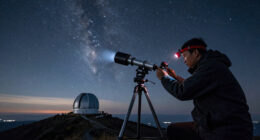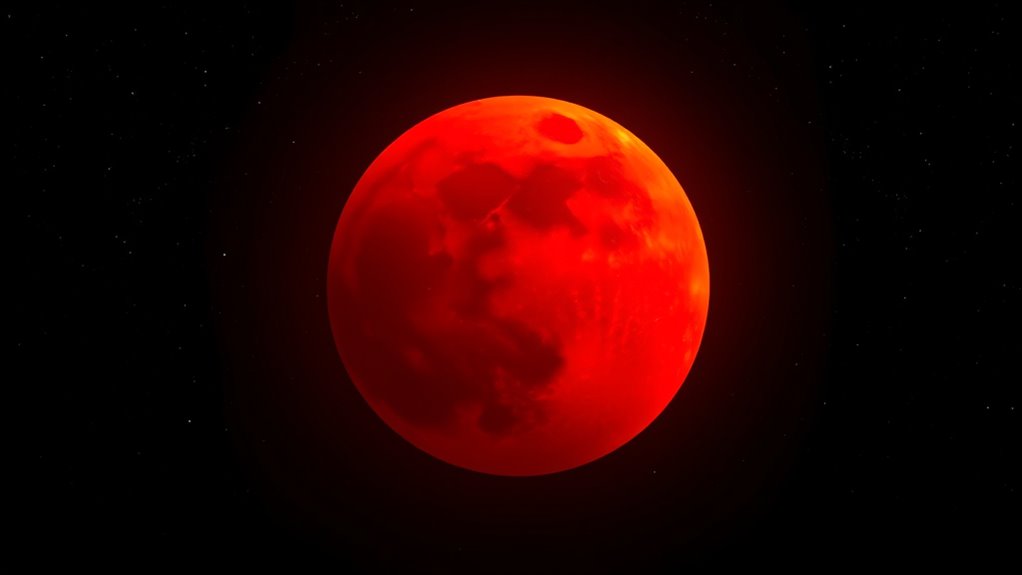

To process a total lunar eclipse from March 2025, start by capturing images at different stages with high-quality equipment and multiple exposures. Use software like Lightroom or Photoshop to adjust contrast, sharpness, and color balance, emphasizing surface details like craters and maria. Incorporate knowledge of lunar geology to highlight features and guarantee natural colors, especially during totality’s reddish hue. For more effective techniques and tips, continue exploring how to enhance your lunar eclipse images.

Prime made for students and young adults
- Fast, free delivery for dorm and study essentials
- Prime Video and Amazon Music included
- Member-only deals
Key Takeaways
- Use high-quality, varied exposures to capture lunar surface details and atmospheric color variations during totality.
- Enhance contrast and sharpness carefully to reveal crater rims, maria, and surface textures while maintaining natural appearance.
- Stack multiple images to reduce noise, improve clarity, and emphasize surface features and eclipse phenomena.
- Adjust color balance to accurately depict the reddish hue and atmospheric effects unique to the March 2025 event.
- Incorporate lunar geology knowledge to selectively highlight features like craters and highlands for both scientific and aesthetic impact.
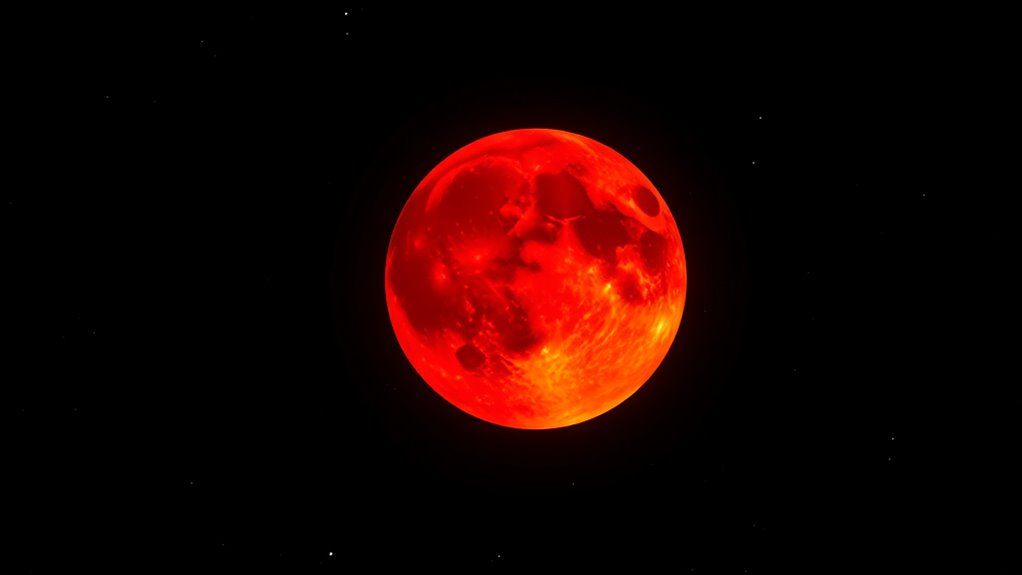
Have you ever wondered how to effectively process a total lunar eclipse? When it comes to capturing and enhancing these extraordinary celestial events, understanding lunar geology can considerably improve your results. The moon’s surface is a complex landscape of maria, highlands, and craters, each reacting differently to the eclipse’s shadow and the Earth’s atmosphere. Recognizing these features helps you create more accurate and visually compelling images. During the eclipse, subtle variations in color and brightness across the lunar surface can be better appreciated if you know where they originate. For instance, the reddish hue during totality is due to Earth’s atmosphere bending sunlight onto the moon, highlighting the importance of understanding lunar geology to interpret these color shifts correctly. This knowledge enables you to tailor your processing techniques to emphasize specific surface features, giving your images depth and context beyond just capturing a darkened moon.
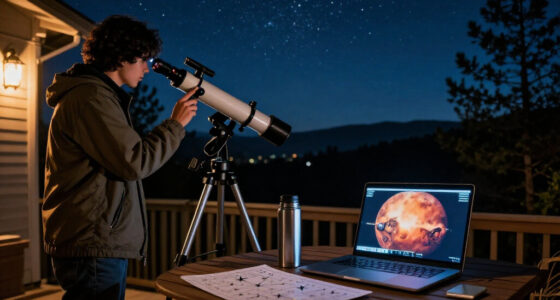
When it comes to eclipse photography, processing is key to transforming raw captures into stunning visuals. Begin by selecting high-quality images taken at various stages of the eclipse, ensuring you have a good range of exposures. Use software that allows precise adjustments—like Adobe Lightroom or Photoshop—to bring out details hidden in shadows or overexposed highlights. Stacking multiple images can help you reduce noise and enhance clarity, especially in low-light conditions typical of totality. Pay attention to color balance; the eclipse’s reddish tones can be exaggerated or muted depending on your processing choices. Carefully balancing contrast and sharpness will reveal lunar features that might otherwise be overlooked. Additionally, consider creating composite images—combining different exposures—to showcase both the darkened moon and the illuminated surroundings or starry backdrop, adding context to your eclipse photography.
As you process your images, keep in mind that understanding the lunar geology can guide your editing choices. Highlighting maria and highlands can add visual interest and scientific accuracy. Subtle details like crater rims and surface textures become more visible with careful sharpening and contrast adjustments. For eclipse photography, post-processing is not just about enhancing beauty but also about accurately representing the event. Be mindful of not over-processing; preserve the natural appearance of the lunar surface and the eclipse’s atmospheric effects. Incorporating knowledge of imaging techniques, such as proper filter usage and guiding, can significantly improve your results. Ultimately, effective processing involves a combination of technical skill and scientific awareness, allowing you to produce images that are both breathtaking and true to the event. With practice, you’ll develop a workflow that captures the moon’s true colors and intricate surface features, making each total lunar eclipse a memorable and scientifically meaningful experience.
Frequently Asked Questions
What Equipment Is Best for Capturing Lunar Eclipse Images?
You should use camera gear suited for low-light conditions, like a DSLR or mirrorless camera with manual controls. A telephoto lens, ideally 200mm or longer, helps capture the moon’s details. Use a sturdy tripod to keep your shots steady, and a remote shutter release to avoid camera shake. Adjust your lens selection and settings based on the eclipse phase, focusing on capturing the moon’s texture and color vividly.
How Can I Enhance Eclipse Photos With Post-Processing Techniques?
You can enhance your eclipse photos through digital editing by adjusting contrast and sharpness to highlight details. Use color correction to deepen the reds and oranges of the lunar surface, making the eclipse more striking. Fine-tune exposure and reduce noise for clarity. These post-processing techniques help you bring out the dramatic colors and textures, transforming your images into mesmerizing visuals that truly showcase the eclipse’s beauty.
What Safety Precautions Should I Take During Eclipse Observation?
During eclipse observation, prioritize eye safety by never looking directly at the Sun without proper viewer precautions, like certified eclipse glasses. Always inspect your glasses beforehand for damage, and avoid using regular sunglasses. Keep your glasses on at all times when viewing during partial phases, and remove them only during totality if it’s safe. These precautions protect your eyes and ensure a safe, enjoyable eclipse experience.
Can Amateur Astronomers Predict the Eclipse’s Exact Timing Accurately?
You can predict the eclipse’s exact timing with high accuracy, thanks to advanced eclipse prediction models and precise astronomical calculation techniques. These tools, developed over centuries, enable amateur astronomers to forecast eclipses within minutes. In fact, modern models now achieve accuracy within a few seconds, allowing you to plan your observation perfectly. With dedication and the right tools, you can confidently anticipate the exact moments of the eclipse.
How Does Lunar Eclipse Photography Differ From Solar Eclipse Photography?
Lunar eclipse photography differs from solar eclipse photography mainly in capturing the lunar shadow and Earth’s atmosphere, which creates the reddish hue during totality. You don’t need special filters, unlike solar eclipses where solar prominences require filters to protect your eyes and camera. During a lunar eclipse, you can use longer exposures to highlight the shadow’s depth and details, while solar eclipse shots focus on avoiding direct solar glare.
Conclusion
Now that you know the techniques for processing a total lunar eclipse, are you ready to capture its true beauty? With patience and the right tools, you can transform your photos into stunning masterpieces that showcase this celestial event. Don’t just watch it happen—document it vividly. So, next time the moon turns red, will you be prepared to capture its magic and share it with the world? The sky’s waiting for your creativity!
Halloween Picks
halloween
As an affiliate, we earn on qualifying purchases.