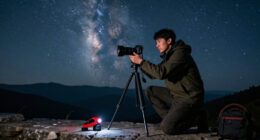
When planning your trip to a dark-sky reserve, check park regulations on campfires, drones, and lighting to safeguard the night environment. Pack essential gear like binoculars, a red flashlight, warm clothing, and comfortable seating, and arrive early after sunset for setup. Choose dates around the new moon for darker skies and make sure your vehicle is prepared for rugged roads. Respect noise levels and lighting rules to enhance your experience—stick with us to discover more helpful tips.

Get school and study supplies delivered free — and shop member deals
- Fast, free delivery on millions of items
- Access to Prime Big Deal Days deals on October 6–7
- Prime Video, Amazon Music and more included
Key Takeaways
- Research and select a designated dark-sky reserve, and review all park regulations on lighting, fires, and drones.
- Prepare appropriate stargazing gear, including binoculars, red flashlight, warm clothing, and star charts or apps.
- Plan your timing around new moon phases, arrive after sunset, and check weather conditions for clear, dark skies.
- Ensure vehicle readiness for remote roads, pack extra supplies, and bring printed maps or GPS due to limited cell service.
- Respect park rules, minimize light use, keep noise low, and practice patience to enhance your stargazing experience.
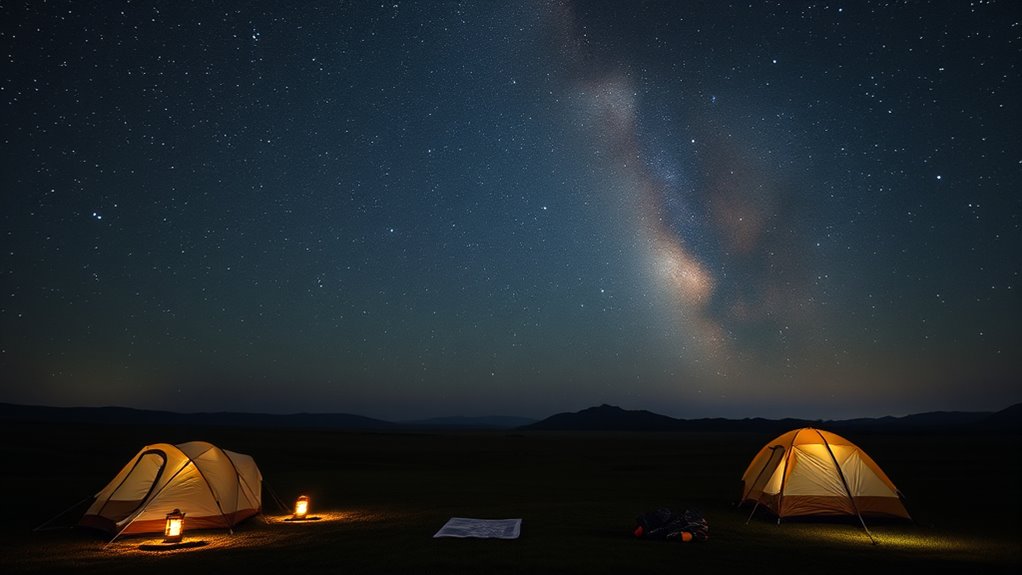
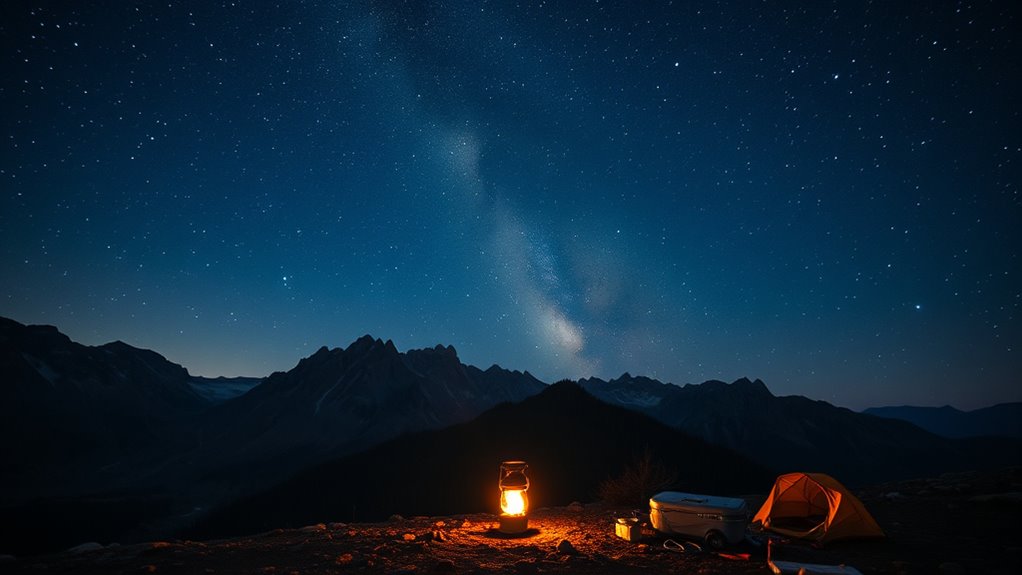
Planning a trip to a dark-sky reserve offers a rare chance to witness the night sky in its purest form, free from light pollution. To make the most of your experience, preparation is key. Start by researching the specific reserve you plan to visit, paying close attention to park regulations. These rules often outline restrictions on campfires, drone use, and sometimes even the types of lighting allowed. Respect these regulations to ensure a safe and enjoyable visit, and to help preserve the darkness that makes stargazing so extraordinary.
Next, consider your stargazing gear. A good pair of binoculars can enhance your viewing, but a quality telescope will let you see planets, star clusters, and even some galaxies in stunning detail. Remember to bring a red flashlight, which preserves your night vision and prevents light pollution from ruining your experience. Pack warm clothing, since nights can be unexpectedly cold even during summer, and bring comfortable seating to settle in for extended periods of observation.
Plan your arrival time carefully. Usually, the best stargazing happens after sunset, once the sky is fully dark. Arriving early allows you to set up your gear and get familiar with the surroundings while there’s still some residual light. Check the moon phase before you go; a new moon provides the darkest skies, while a full moon can wash out fainter stars. If possible, bring star charts or download astronomy apps to help identify constellations and celestial objects. These tools turn a simple night of stargazing into an engaging discovery experience.
Transportation is another important factor. Ensure your vehicle is ready for potentially remote and rugged access roads. Pack extra supplies like water, snacks, and a first aid kit. Cell service may be limited, so don’t rely on your phone for navigation or emergency calls. Instead, have a printed map or GPS device dedicated to off-grid travel. Arrive with enough time to set up before dark, giving yourself ample opportunity to settle in and adjust to the darkness.
Additionally, understanding the rustic lighting constraints in such protected areas can greatly enhance your experience and help maintain the pristine conditions necessary for optimal stargazing. Practice patience. The best stargazing moments often come after a little wait and quiet observation. Resist the temptation to use bright lights or your phone excessively, as these can interfere with your night vision and disturb others. Respect fellow stargazers by keeping noise down and following park regulations. With proper planning, your trip to a dark-sky reserve will be a memorable journey into the cosmos, filled with awe and wonder at the universe’s vast beauty.
stargazing binoculars for dark sky reserve
As an affiliate, we earn on qualifying purchases.
As an affiliate, we earn on qualifying purchases.
Frequently Asked Questions
What Are the Best Months to Visit a Dark-Sky Reserve?
You should visit during the best stargazing seasons, typically from late fall to early spring, to experience the ideal dark sky months. These times usually offer clearer skies and less atmospheric distortion, making your stargazing more rewarding. Avoid peak summer months, as humidity and weather can interfere. Planning your trip around the new moon phase also ensures minimal light pollution, giving you the clearest view of the night sky.
Are There Guided Night Sky Tours Available at Reserves?
Yes, guided night sky tours are often available at dark-sky reserves. You can participate in guided telescope rentals or join nighttime photography workshops to enhance your experience. These tours typically include expert astronomers who help you identify constellations, planets, and celestial events. You’ll get personalized insights and tips, making your stargazing truly unforgettable. Check the reserve’s schedule and book in advance to secure your spot.
How Do I Obtain Necessary Permits for Overnight Stays?
You should start by visiting the reserve’s official website to review their permit application and reservation processes. Many reserves require you to fill out an online form or contact their visitor center directly. Submit your permit application well in advance, providing necessary details like dates and group size. Once approved, follow any additional instructions for reservations and guarantee you carry your permit during your overnight stay.
What Safety Precautions Should I Take During Night Visits?
You should always stay alert during night visits, even if you’re tempted to moonwalk in awe. Keep an eye out for wildlife encounters—some animals aren’t as starstruck as you are. Carry a flashlight, have emergency preparedness plans, and avoid startling creatures. Stick to marked trails, wear appropriate gear, and don’t forget to inform someone of your whereabouts. Safety first, or you might end up as a star yourself!
Can I Bring My Own Telescope or Binoculars?
Yes, you can bring your own telescope or binoculars, but you should verify the equipment regulations of the reserve beforehand. Make sure your gear is portable and fits within transportation considerations, as some reserves have strict rules about what you can bring onto the site. Pack your equipment securely to prevent damage, and consider the weight and size to ensure easy setup during your night visit.
red flashlight for night sky viewing
As an affiliate, we earn on qualifying purchases.
As an affiliate, we earn on qualifying purchases.
Conclusion
Now that you’re armed with these tips, your trip to the dark-sky reserve will be unforgettable. Remember, this experience is like stepping into a universe of twinkling stars—something you’ll want to remember for a lifetime. Pack wisely, plan ahead, and embrace the quiet magic of the night sky. Get ready to witness a celestial spectacle so breathtaking, it’ll make even the most dazzling city lights seem dull in comparison. Happy stargazing!
portable star chart or astronomy app
As an affiliate, we earn on qualifying purchases.
As an affiliate, we earn on qualifying purchases.
compact camping chair for stargazing
As an affiliate, we earn on qualifying purchases.
As an affiliate, we earn on qualifying purchases.
Evergreen bestsellers Picks
bestsellers
As an affiliate, we earn on qualifying purchases.