Choosing between a filter wheel and a filter drawer depends on your workflow needs. Filter wheels offer quick, automated filter changes ideal for complex tasks, while filter drawers provide easy access for manual swaps, perfect for frequent adjustments. Consider factors like workspace, compatibility, and maintenance. If you want to achieve a balance of speed, convenience, and precision, understanding both options will help you make the best choice for your setup—something you’ll discover more about below.

Get school and study supplies delivered free — and shop member deals
- Fast, free delivery on millions of items
- Access to Prime Big Deal Days deals on October 6–7
- Prime Video, Amazon Music and more included
Key Takeaways
- Consider workflow speed and automation needs: filter wheels offer rapid, automated switching, while drawers are better for manual, frequent changes.
- Assess compatibility with filter sizes and mounting options to ensure seamless integration into your existing setup.
- Prioritize ease of access and maintenance: drawers provide quick, manual filter swaps; wheels enable precise, motorized control.
- Evaluate environmental factors and durability: choose robust materials for long-term stability and minimal upkeep.
- Balance initial costs against future scalability, maintenance, and imaging accuracy to select the most cost-effective solution.
filter wheel for optical systems
As an affiliate, we earn on qualifying purchases.
As an affiliate, we earn on qualifying purchases.
How Do Filter Wheels and Filter Drawers Differ in Design?

While both filter wheels and filter drawers serve the purpose of changing filters in optical systems, they differ markedly in their design. Filter wheels are circular, rotating mechanisms that hold multiple filters, allowing you to switch filters quickly through motorized operation. They enable precise filter alignment, ensuring each filter is accurately positioned for ideal performance. Conversely, filter drawers slide in and out like a drawer in a cabinet, typically offering fewer filters but providing easier manual access. They often rely on manual operation, though some models incorporate motorized movement. The key difference lies in their approach to filter change—filter wheels rotate for rapid, automated switching, while filter drawers favor straightforward, accessible filter management. Your choice depends on your workflow’s automation needs and the importance of filter alignment. Understanding these digital concepts can enhance your decision-making process.
manual filter drawer for cameras
As an affiliate, we earn on qualifying purchases.
As an affiliate, we earn on qualifying purchases.
What Are the Pros and Cons of Filter Wheels?
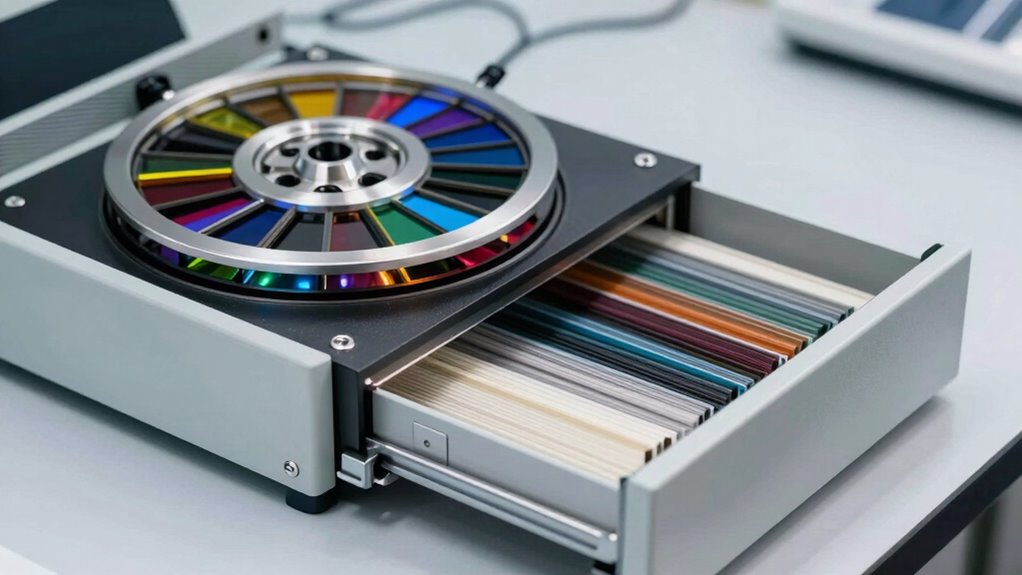
Filter wheels offer quick change capability, helping you switch filters efficiently during your workflow. However, their mechanical complexity can introduce risks of misalignment or failure over time. Weighing these pros and cons can help you decide if a filter wheel fits your needs. Additionally, consider how natural filtration systems can enhance your overall workflow efficiency.
Quick Change Capability
Quick change capability is one of the main advantages of filter wheels, allowing you to switch filters rapidly during your workflow. This speed helps maintain your focus and efficiency, especially when capturing multiple images with different filters. With quick swaps, you minimize disruptions, which can improve overall color accuracy by reducing exposure inconsistencies. It also helps you respond swiftly to changing conditions, such as light pollution, by switching to filters optimized for specific scenarios. However, this flexibility can sometimes lead to accidental misalignment or contamination if you’re not careful. The convenience of quick changes makes filter wheels ideal for dynamic sessions, but it also requires diligent handling to avoid damage or dirt buildup.
- Fast filter swapping saves time and keeps your workflow smooth
- Reduces exposure inconsistencies, improving color accuracy
- Enables quick response to changing light pollution conditions
- May risk misalignment if not handled carefully
- Frequent handling can introduce dust or dirt onto filters
Mechanical Complexity Risks
Although filter wheels offer unmatched flexibility and speed, their mechanical complexity introduces certain risks that can impact your setup’s reliability. The intricate moving parts increase the chance of mechanical failure, especially with frequent use. Alignment issues may also arise, causing inaccurate positioning of filters and affecting data quality. Regular maintenance can mitigate these risks, but they remain a concern depending on your workload. You must consider whether the benefits outweigh the potential for mechanical problems.
| Pros | Cons | Mitigation |
|---|---|---|
| Fast filter switching | Mechanical failure risk | Regular maintenance |
| High flexibility in filter choices | Alignment issues | Precise calibration |
| Suitable for dynamic workflows | Complexity increases chances of failure | Use high-quality components |
As an affiliate, we earn on qualifying purchases.
What Are the Benefits and Limitations of Filter Drawers?
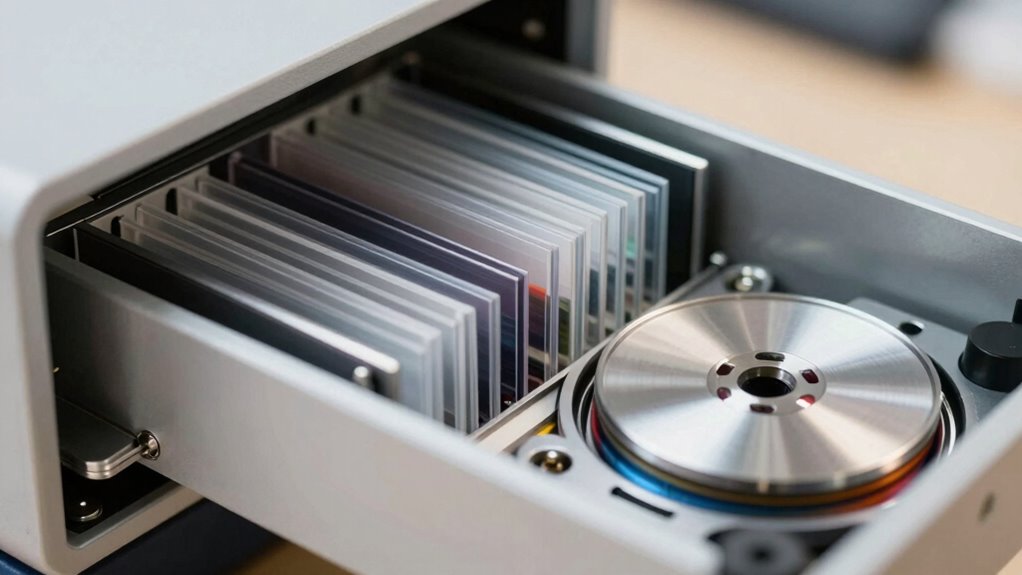
Filter drawers make it easy to access and swap filters quickly, saving you time during setup or adjustments. However, they often have limited compatibility options, which might restrict your choices. Understanding these benefits and limitations helps you decide if they fit your workflow needs. Additionally, incorporating evidence-driven explainers can enhance your decision-making process when selecting the right system for your needs.
Easy Access and Swap
A key advantage of filter drawers is their easy access, allowing you to quickly swap filters without removing the entire system. This design enhances filter accessibility and makes your workflow more efficient. With a filter drawer, you can:
- Save time by avoiding full system disassembly
- Instantly change filters during critical moments
- Maintain stability with secure, straightforward mounting
- Reduce the risk of damaging filters during swaps
- Improve overall convenience in busy environments
This setup streamlines your process, making it simple to switch filters on the fly. The swap convenience guarantees you spend less time fiddling and more time focusing on your work. Overall, filter drawers promote a smoother, more accessible workflow, especially when frequent filter changes are necessary.
Limited Compatibility Options
While filter drawers offer convenient access, their limited compatibility can pose challenges for your setup. Compatibility issues often restrict the types and sizes of filters you can use, which might limit your flexibility. Unlike filter wheels, which accommodate a wide range of filter sizes and accessories, drawers are typically designed for specific systems, leading to accessory limitations. If you need to upgrade or change filters frequently, this can become frustrating, as not all filters will fit or work seamlessly. Additionally, some filter drawers may lack compatibility with certain mounts or accessories, restricting your options for customization. This can slow down your workflow and force you to invest in additional adapters or equipment, which adds complexity and cost. Ultimately, compatibility issues may limit your ability to adapt your system as your needs evolve.
As an affiliate, we earn on qualifying purchases.
Which System Is Best for Your Imaging or Photography Needs?
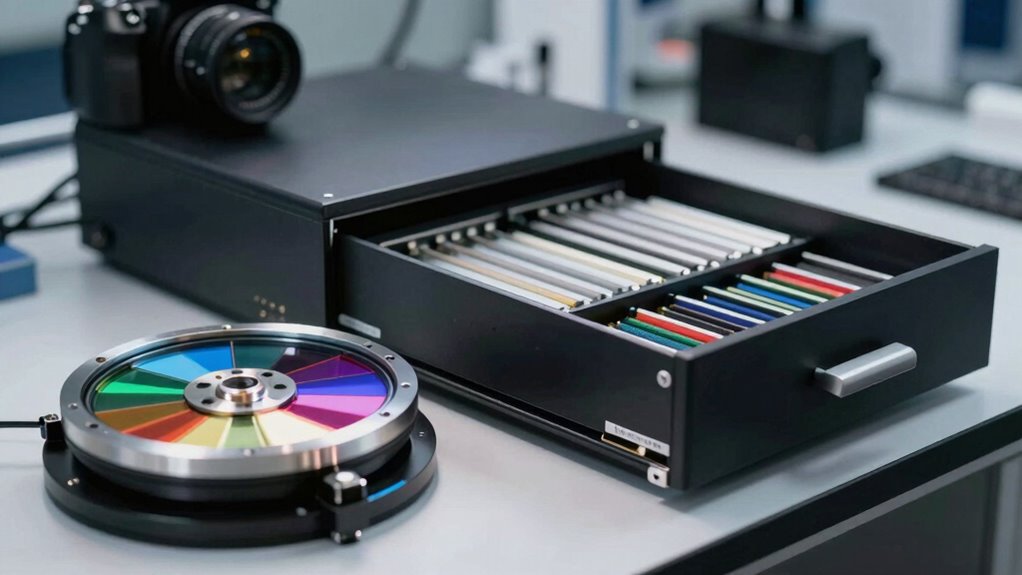
Choosing the right system for your imaging or photography needs depends on how you prioritize flexibility, speed, and ease of use. If you need quick filter changes and minimal light pollution effects, a filter drawer offers convenience. For detailed color correction, a filter wheel provides precise control. Consider your environment: bright lights or light pollution might require rapid filter swaps, favoring a drawer, while complex imaging tasks benefit from the wheel’s versatility. Additionally, understanding light pollution management can enhance your photographic outcomes by ensuring optimal filter use in various conditions. A faith-driven approach to your equipment choices can also inspire creativity and purpose in your work. Furthermore, leveraging a trusted directory can help you discover reliable vendors for quality filters and accessories.
Moreover, investing in secure storage solutions for your filters can prolong their lifespan and maintain their effectiveness.
- Quick filter swaps for light pollution management
- Precise color correction adjustments
- Ease of use in cluttered or tight spaces
- Flexibility for multi-filter setups
- Handling delicate filters without damage
What Factors Should You Consider When Choosing a Filter Management System?
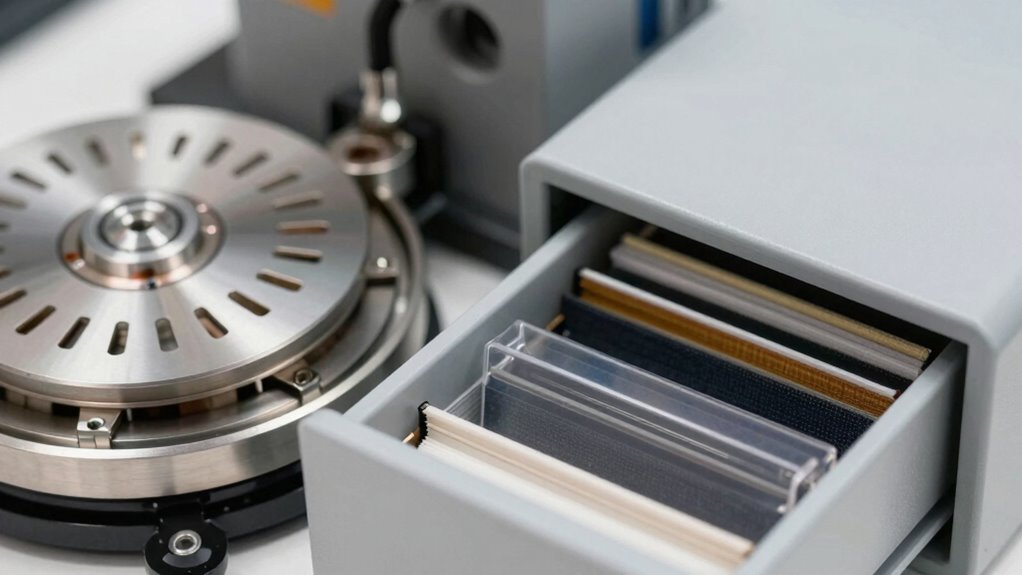
When selecting a filter management system, you need to evaluate how well it fits your specific imaging or photography workflow. Consider the filter material—whether glass, gelatin, or specialty filters—as it affects image quality and handling. Also, examine the mounting options; compatibility with your existing setup ensures ease of use and quick transitions. Think about your workflow’s speed and flexibility: do you need rapid filter changes or precise positioning? Additionally, consider how color accuracy can significantly impact the quality of your images. To compare, review the table below:
| Factor | Filter Wheel | Filter Drawer |
|---|---|---|
| Filter Material | Compatible with various materials | Supports diverse materials |
| Mounting Options | Multiple mounting configurations | Fixed or adjustable mounts |
| Ease of Access | Quick, one-click changes | Manual or motorized access |
Balance these factors to find the system that best suits your needs.
How Do Maintenance and Durability Influence Your Choice?
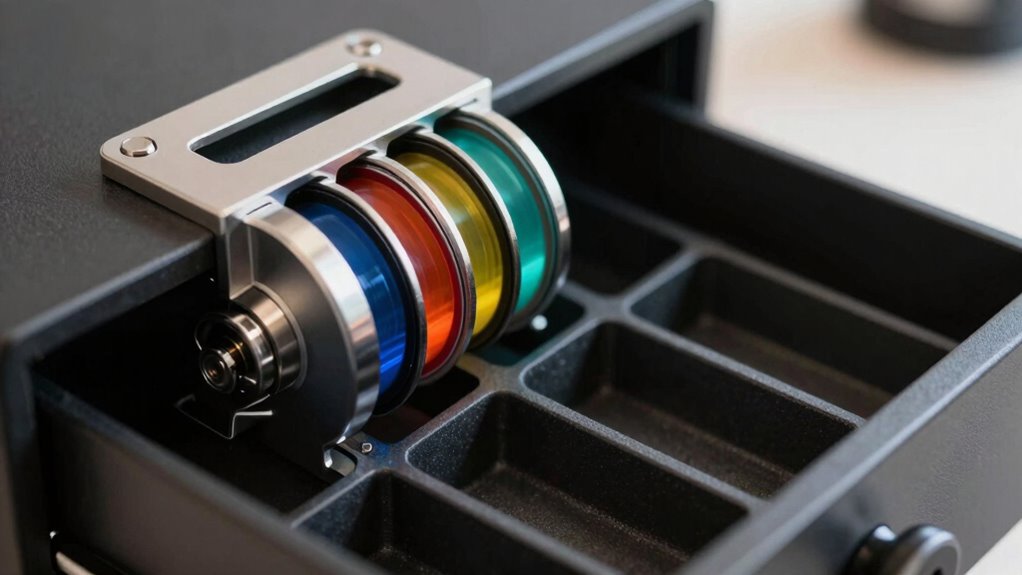
Maintenance and durability are essential factors because they directly impact the longevity and reliable performance of your filter system. A system with low lubrication requirements minimizes downtime and maintenance efforts, saving you time and costs. Durability depends heavily on corrosion resistance, especially if your environment exposes equipment to moisture or chemicals. Consider how easy it is to sustain and clean each option:
- How often lubrication is needed
- Resistance to corrosion over time
- Ease of replacing worn parts
- Build quality and material resilience
- Long-term operational stability
Choosing a system with robust durability reduces frequent repairs and replacements. This ensures your workflow remains uninterrupted, and your investment lasts longer. Prioritizing these factors helps you select a filter management system that stands up to your operational demands.
What’s the Cost Difference Between Filter Wheels and Drawers?

While filter wheels often come with a higher initial investment, they tend to be more cost-effective in the long run due to their quick swapping capabilities and durability. The cost comparison between filter wheels and drawers varies mainly based on the filter material and system complexity. Filter wheels generally have a higher upfront price because of their precision manufacturing and motorized components, but their durability reduces replacement costs over time. Necessary cookies can enhance the efficiency of your workflow by ensuring that essential features are always functional. Filter material quality also impacts cost, with premium glass or specialized filters adding to expenses. Filter drawers are usually less expensive initially but may incur higher maintenance or replacement costs if they are less durable. Ultimately, your choice depends on balancing the initial investment with long-term operational costs. Additionally, understanding testing accuracy is crucial for ensuring that your chosen system meets the specific demands of your workflow.
How to Pick the Right Filter System for Your Setup

Choosing the right filter system for your setup depends on understanding your specific workflow needs and budget. Consider how often you’ll change filters and the types of imaging challenges you face. For example, if you frequently deal with light pollution, a filter drawer with quick-switch capabilities can save time. If precise color correction is critical, a filter wheel offers better control and more filter slots. Think about your target objects and environment, as well as your budget constraints.
- Prioritize filters that address your main challenges, like light pollution or color correction
- Decide if you need quick filter swaps or more filter options
- Consider the size and compatibility with your mount
- Evaluate your budget for higher-end systems or basic models
- Think about future upgrades and expanding your filter collection
Frequently Asked Questions
Can Filter Systems Be Easily Upgraded or Expanded Later?
Yes, filter systems can often be upgraded or expanded later, but you should consider filter maintenance and compatibility concerns first. Some systems allow easy addition or replacement of filters, making upgrades straightforward. However, check if your current setup supports new filter sizes or types without compatibility issues. Planning ahead ensures smoother upgrades and minimizes downtime, helping you maintain peak performance and flexibility as your workflow evolves.
Which System Offers Faster Filter Switching During Imaging?
Imagine your imaging setup as a racecar—speed matters. A filter wheel offers lightning-fast filter switching, making it ideal when quick filter changes are essential. Its superior switching efficiency keeps your workflow smooth and uninterrupted, especially during high-speed imaging sessions. So, if you need rapid filter speed to capture fleeting moments, a filter wheel is your turbocharged choice, ensuring you stay ahead in precision and efficiency.
Are There Compatibility Issues With Specific Filter Sizes?
Yes, there can be compatibility issues with specific filter sizes. You need to take into account filter size compatibility to guarantee your system works smoothly. Optical alignment is vital; if filters don’t fit properly, it can affect image quality and cause misalignment. Always double-check your filter dimensions against the system’s specifications, whether you choose a filter wheel or drawer, to prevent any compatibility problems during your imaging sessions.
How Do Environmental Factors Affect Filter System Choices?
Environmental factors like dust accumulation and temperature stability greatly influence your filter system choice. Dust buildup can clog filters and reduce performance, so opt for a system with sealed or enclosed mechanisms. Temperature fluctuations can affect filter stability and calibration; in such cases, a filter drawer with better temperature control might be ideal. Consider your workspace environment carefully to guarantee your filter system remains reliable and efficient.
What Are the Common Troubleshooting Tips for Filter Mechanisms?
Oh, the joys of dealing with filter mechanisms! To troubleshoot, start by checking filter alignment—misalignment causes more trouble than it’s worth. Inspect for debris or jamming, and guarantee the mechanism’s durability isn’t compromised. Lubricate moving parts gently, and verify proper installation. If issues persist, recalibrate or replace worn components. Remember, a well-maintained system saves you headaches and keeps your workflow smooth and efficient.
Conclusion
Choosing between a filter wheel and a filter drawer depends on your specific needs, workflow, and budget. Consider ease of use, maintenance, and cost to find the best fit. Are you prepared to compromise on convenience for a more streamlined setup, or do you prefer quick swaps and flexibility? Ultimately, understanding your priorities will help you select the right system to optimize your imaging or photography experience. Isn’t it worth investing in the system that works best for you?
Fall Picks
fall essentials
As an affiliate, we earn on qualifying purchases.