TL;DR

Prime made for students and young adults
- Fast, free delivery for dorm and study essentials
- Prime Video and Amazon Music included
- Member-only deals
Asteroid Torifune has a rare double-lobed shape, revealing it likely formed from two objects gently colliding. Its study helps us understand asteroid origins and evolution, with no impact threat to Earth.
Imagine a space rock that looks like a peanut, or perhaps two spheres fused together. That’s exactly what makes asteroid Torifune so intriguing. Its distinctive double-lobed form isn’t just a visual curiosity; it’s a clue to the quiet, gentle collisions that shape our solar system’s tiny worlds.
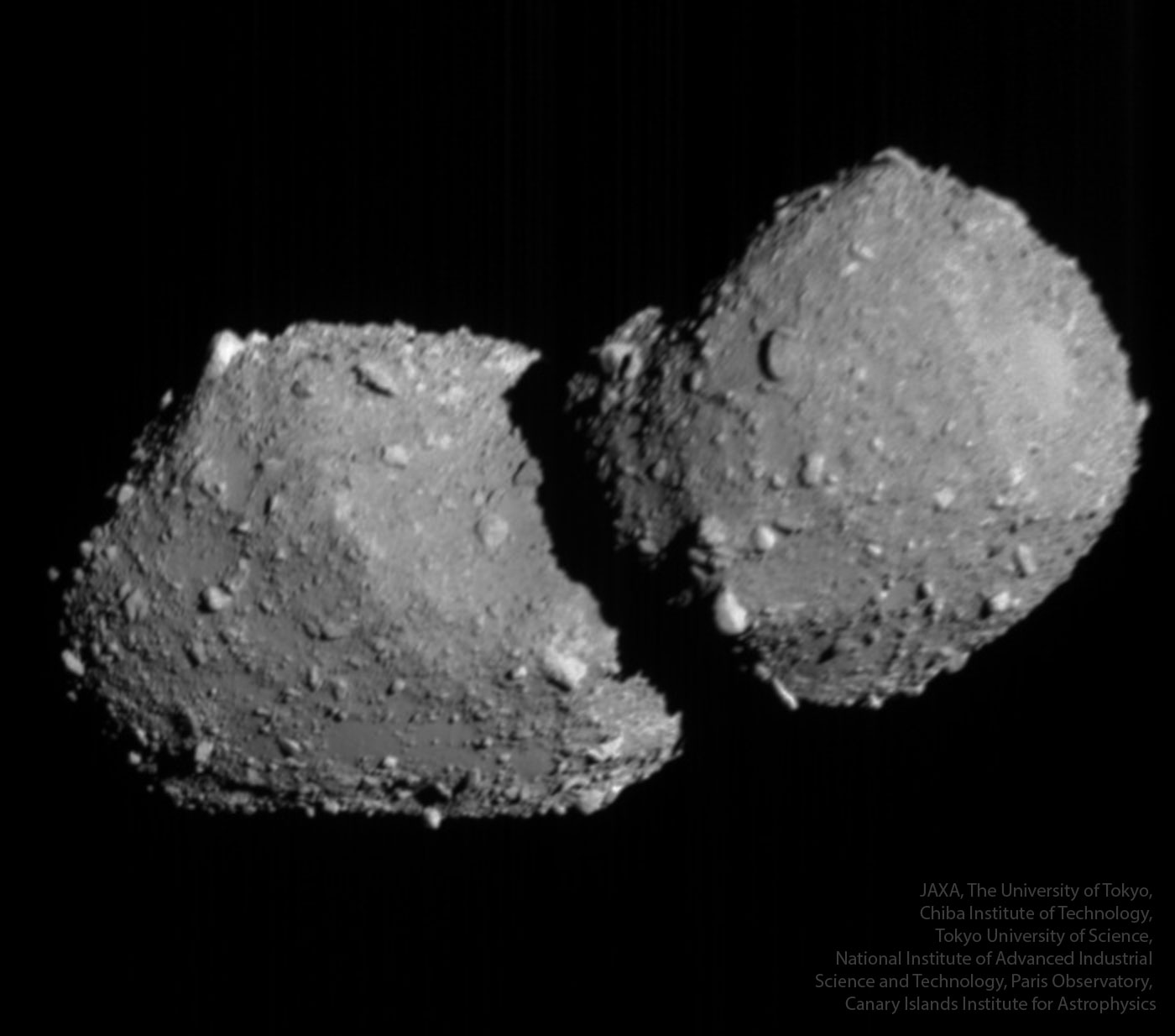
Recent observations, including a close-up from the Japanese spacecraft Hayabusa2, reveal that Torifune is a contact binary — two objects that came together, probably in a gentle embrace, millions of years ago. Understanding this asteroid isn’t just about its shape; it’s about unlocking the story of how small bodies grow, collide, and sometimes merge in space.
Torifune’s double-lobed shape confirms it’s a contact binary formed from two objects gently merging.
Its rubble-covered surface and lack of craters suggest a gentle, reaccumulated history rather than violent impacts.
Studying objects like Torifune helps us understand how small bodies grow and evolve in the asteroid belt and near-Earth space.
Future missions could target contact binaries like Torifune for detailed exploration, providing insights into asteroid composition and structure.
While too small for naked-eye viewing, advanced telescopes and imaging techniques can reveal Torifune’s shape during close approaches.
What Makes Torifune’s Shape So Unique (And Why Should You Care?)
Torifune’s shape is a perfect example of a contact binary — two lobes joined like a peanut or a pair of grapes. This isn’t common among all asteroids. Scientists estimate that roughly 15% of near-Earth objects and small main-belt asteroids are contact binaries, making Torifune a fascinating case study.
Think of it like two snowballs rolling into each other, then sticking together. For example, imagine two marbles gently bumping into each other on a smooth table and then merging into a single object. The recent Hayabusa2 images show two rounded lobes about four soccer fields long combined, with many large boulders scattered across the surface. Interestingly, no obvious craters are visible, which suggests its surface is a loose pile of rubble rather than solid rock.
For astronomers, this shape offers direct clues about how such objects form. It supports the idea that gentle collisions, not violent impacts, often create contact binaries. This process indicates a relatively calm environment in the asteroid’s past, which is significant because it challenges the traditional view that space objects primarily grow through violent collisions. Understanding these gentle processes helps scientists piece together the timeline of solar system evolution, revealing a more nuanced picture of how small bodies can grow slowly over time. This knowledge also influences how we assess potential asteroid threats—knowing that many contact binaries are formed gently suggests they are less structurally fragile than once thought, which impacts deflection strategies if they ever pose a risk to Earth.
telescope for asteroid observation
As an affiliate, we earn on qualifying purchases.
As an affiliate, we earn on qualifying purchases.
How Did Torifune Become a Double-Lobed Wonder? (The Formation Story)
Torifune likely formed from two separate objects, each shaped by billions of years of collisions, coming together in a gentle collision. Imagine two marbles slowly drifting toward each other in space, like two ice cubes in a freezer that eventually touch and stick together. This process—called ‘merging via low-energy impacts’—is a key mechanism in the formation of contact binaries. For example, think of two snowballs rolling down a hill and gently colliding at the bottom, sticking together without shattering. It’s similar to how two pebbles might gradually fuse into a bigger stone over long periods.
Recent observations support this: the lobes appear to have formed independently, then collided and became stuck. This suggests a calm, low-velocity environment where objects can gently coalesce without catastrophic disruption. Such conditions are common in the asteroid belt and near-Earth space, where relative velocities are often low enough for gentle mergers to occur. For instance, in a quiet pond, two small leaves might drift close enough to gently touch and stay together, forming a new shape over time. Recognizing that many contact binaries form this way helps scientists develop more accurate models of asteroid evolution, which is vital for predicting how these objects might behave over millions of years, including how they might fragment or remain stable.
Understanding this process also has practical implications: if we know that many contact binaries are the result of slow, gentle mergers, it suggests they may be more structurally resilient than previously thought. This insight can inform future asteroid exploration and deflection strategies, emphasizing the importance of studying these objects up close to understand their internal cohesion and response to external forces.
As an affiliate, we earn on qualifying purchases.
Comparison Table: Contact Binary vs. Single-Shape Asteroids
| Feature | Contact Binary (like Torifune) | Single-Shape Asteroid |
|---|---|---|
| Shape | Two lobes joined together | More uniform, often spherical or elongated |
| Formation | Formed from gentle collision/merger | Formed by accretion or collisional reshaping |
| Surface features | Often boulder-strewn, rubble piles, no craters | Varies; can have craters, smoother areas |
| Implication for evolution | Shows gentle merging process | Indicates different formation history |
astronomy binoculars for celestial viewing
As an affiliate, we earn on qualifying purchases.
As an affiliate, we earn on qualifying purchases.
Why Torifune’s Shape Matters for Future Missions
Knowing that Torifune is a contact binary makes it a prime candidate for future exploration. Its shape and rubble surface suggest it’s a gentle, low-gravity environment, perfect for testing how spacecraft land on and analyze small bodies.
This understanding is critical because it impacts mission design: landing on a rubble pile is like trying to place a delicate puzzle piece on a jigsaw. Imagine trying to set down a fragile glass on a pile of loose sand—stability is tricky. For example, if a spacecraft tries to land on Torifune, it might bounce or destabilize due to its loose surface, similar to trying to walk on a trampoline. But this also offers a chance to study how such objects hold together, store water ice, or even serve as stepping stones for asteroid mining. These insights could inform the development of more sophisticated landing and sampling technologies, making future missions safer and more effective. Moreover, studying contact binaries like Torifune helps us understand the diversity of asteroid structures, which is essential for planetary defense and resource utilization planning.
For now, NASA and other space agencies are eyeing contact binaries like Torifune as potential targets for missions that aim to understand the building blocks of planets and the history of our solar system.
As an affiliate, we earn on qualifying purchases.
How to Spot Torifune in Tonight’s Sky (And What Gear You Need)
While Torifune itself is too small to see with the naked eye, its orbit brings it near Earth at times, making it a target for telescopes. To catch a glimpse, you’ll want a good telescope with a long focal length and stable mount.
Set your gear for high magnification and steady tracking. A narrow-field eyepiece will help you focus on its shape, especially if you’re using radar or imaging techniques for detailed data. Clear, dark skies away from city lights will make the rock’s subtle features easier to spot.
Pro tip: Take multiple images over several nights to see how the asteroid’s brightness varies — that variation hints at its shape and rotation. For example, if you observe the asteroid over a few nights and notice its brightness fluctuates like a heartbeat, that indicates it’s elongated or binary in shape. These brightness variations can help astronomers infer the asteroid’s shape, rotation period, and even internal structure, which are vital for understanding its evolution and potential threat level.
Understanding how to observe these objects not only enhances amateur astronomy but also provides valuable data that complements professional studies, helping to refine models of asteroid behavior and characteristics.
Frequently Asked Questions
Can I see Torifune with a backyard telescope?
Not directly. Torifune is too small and faint for amateur telescopes, but during close approaches, professional-grade telescopes can capture detailed images and shape models.Why do some asteroids have double shapes while others are single?
Double shapes usually form from gentle merging events, whereas single-shape asteroids often grow through accretion or are remnants of larger bodies broken apart by impacts.Is Torifune a threat to Earth?
No, current data shows Torifune orbits the Sun in a way that keeps it safely distant from Earth, with no impact risk predicted.What can studying Torifune tell us about the early solar system?
It reveals how small bodies formed and evolved through low-energy collisions, helping us reconstruct the processes that led to planet formation.Conclusion
Torifune isn’t just a space rock; it’s a storybook of cosmic patience. Its shape tells us about the gentle dances of objects in the solar system, where slow, low-energy impacts craft worlds over eons.
As we develop better tools and missions, these contact binaries will become our living classrooms, teaching us how planets and moons might have formed. Keep an eye on the sky — tonight’s view might just inspire the next big discovery.
Halloween Picks
halloween
As an affiliate, we earn on qualifying purchases.