
TL;DR

Prime made for students and young adults
- Fast, free delivery for dorm and study essentials
- Prime Video and Amazon Music included
- Member-only deals
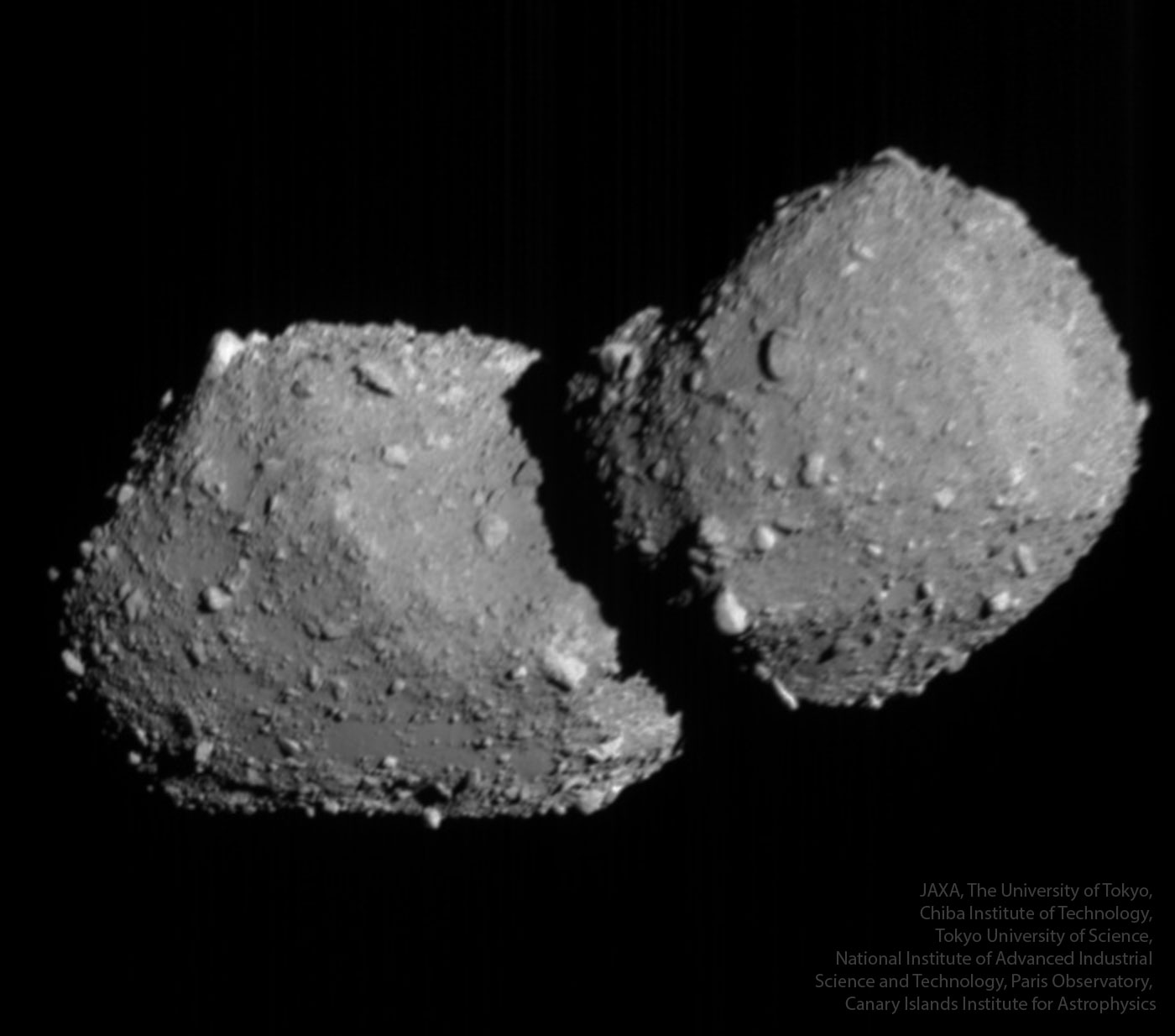
Asteroid Torifune sports a striking double-lobed shape, formed from two bodies gently merging. Recent imaging reveals it as a contact binary, offering clues about asteroid evolution and collision history.
Imagine a space rock that looks like a flying boat, with two rounded lobes fused together. That’s Torifune, a small asteroid recently imaged by a Japanese spacecraft, revealing a double-lobed, contact binary shape. Its unusual form isn’t just eye-catching — it’s a window into how these tiny worlds form and evolve.
From Earth, capturing such detail is a challenge. But recent advances in telescopic imaging and radar technology now allow us to see these complex shapes up close, even from millions of miles away. This story isn’t just about a pretty picture; it’s about understanding the building blocks of our solar system, one lobed asteroid at a time.
Torifune’s shape is a rare example of a contact binary, formed by two bodies gently merging, offering clues about asteroid origins.
Recent imaging confirms its lobed structure and rubble-pile surface, helping scientists model asteroid formation processes.
Observing contact binaries requires high-powered telescopes, dark skies, and patience—amateur astronomers can contribute with the right gear.
Studying these objects sheds light on how the building blocks of planets collide, stick, or shatter, revealing the solar system’s early history.
Future missions aim to analyze similar asteroids, bringing us closer to understanding and possibly utilizing these cosmic building blocks.
What Makes Torifune’s Shape So Special?
Torifune’s shape is a rare gem among asteroids — it’s a double-lobed contact binary. Imagine two spheres gently fused, like a flying boat with a rounded hull and a tail. Its lobes are about the size of two soccer fields placed side by side, connected by a narrow neck.
This shape hints at its origin: it likely formed from two separate bodies that collided softly and stuck together, rather than smashing into each other at high speed. This process creates a contact binary, a common but fascinating form in the asteroid belt.
Understanding this formation is crucial because it reveals the gentle processes that can assemble small bodies without destroying them. Such processes suggest a relatively calm environment in the early solar system where small objects could accrete through low-velocity collisions, leading to the diverse shapes we observe today. Recognizing contact binaries helps scientists reconstruct the collision history and dynamics of the primordial solar system, shedding light on how planets and other larger bodies might have assembled from these building blocks.
telescopic astrophotography camera
As an affiliate, we earn on qualifying purchases.
As an affiliate, we earn on qualifying purchases.
How Do We Know It’s a Contact Binary?
Scientists determine an asteroid’s shape through a mix of radar imaging, light curves, and spacecraft photos. For Torifune, recent images from Hayabusa2, a Japanese spacecraft, captured its lobed structure clearly. Radar observations bounce signals off its surface, revealing a two-part shape and surface features.
Unlike a simple, elongated asteroid, Torifune shows two rounded lobes connected by a narrow waist. Its surface is a jumble of large boulders, with no obvious craters, suggesting a rubble pile—an asteroid made of loose rocks held together by gravity.
This combination of data points to a contact binary rather than a monolithic chunk of rock.
Recognizing a contact binary is significant because it indicates a gentle formation process, which in turn influences our understanding of the collisional environment and material properties of small bodies. It suggests that some asteroids can form through slow accretion rather than violent impacts, impacting how we model their internal structure, potential for resource extraction, and vulnerability to disruption. These insights are vital for future asteroid deflection strategies and space resource utilization plans.
As an affiliate, we earn on qualifying purchases.
Why Do Contact Binaries Matter for Space Science?
Contact binaries like Torifune are cosmic breadcrumbs. They tell us how small bodies collide and stick together, shaping our entire solar system. Studying these shapes helps scientists understand whether asteroids grew by gentle mergers or violent collisions.
For example, recent models suggest that many contact binaries formed from rubble piles reassembled after gentle impacts, rather than catastrophic shattering. This process preserves clues about the early solar system’s quiet, slow-paced growth.
Furthermore, understanding contact binaries informs us about the internal structure and mechanical properties of these objects. For instance, rubble-pile asteroids are more prone to break apart under stress, influencing how we plan deflection missions or asteroid mining operations. They also help us understand the distribution of materials—like metals or ice—within small bodies, which is essential for resource utilization and understanding the distribution of water and organics in the early solar system. Ultimately, studying contact binaries offers a window into the delicate balance of forces that shaped the small bodies, and by extension, the planets themselves.
astronomy binoculars for stargazing
As an affiliate, we earn on qualifying purchases.
As an affiliate, we earn on qualifying purchases.
What’s New With Torifune in 2026?
Recent imaging advances have given us unprecedented detail of Torifune’s lobes and surface features. The Japanese Hayabusa2 spacecraft, which previously visited asteroid Ryugu, captured high-resolution images revealing its double-lobed form.
Scientists now believe Torifune formed from two separate bodies that collided gently long ago. Its surface shows large boulders and a rubble pile texture, indicating a history of reaccumulation rather than a single, solid chunk.
In addition, upcoming missions are eyeing similar contact binary asteroids, aiming to collect samples and analyze their composition to better understand the building blocks of planets.
These discoveries are significant because they suggest a common formation pathway for many small bodies, emphasizing the importance of gentle accretion processes in the early solar system. Future missions will focus on collecting samples from such objects, which could reveal the primordial materials that contributed to planet formation. This ongoing research helps refine our models of solar system evolution, highlighting the role of low-velocity collisions and surface reaccumulation in shaping small bodies.
As an affiliate, we earn on qualifying purchases.
How Can You Observe and Photograph Such a Shape?
Capturing a double-lobed asteroid like Torifune from Earth requires a telescope with a long focal length—think of a high-powered, 10-20 inch telescope with a good camera attachment. Clear, dark skies are essential, preferably away from city lights, to see faint details.
Timing matters. Torifune’s closest approach makes it brighter and easier to spot. Use a tracking mount to follow its slow movement across the sky, and take multiple long exposures to bring out surface details.
For example, during its recent close pass, amateur astronomers used digital cameras with telephoto lenses to catch its shape. Even with modest gear, you can capture a hint of its lobes if conditions are right.
Remember, patience and preparation are key. Learning to process your images can reveal subtle features that hint at its lobed structure, connecting your observations to the scientific understanding of such objects. While capturing the full detail of a contact binary is challenging without professional equipment, amateur astronomers can still contribute valuable data and enjoy the process of exploring our solar system’s smaller neighbors.
How Does Studying Torifune Help Us Understand the Solar System?
Every contact binary like Torifune holds a chapter in the story of how our solar system was built. Their shapes reveal whether small bodies grew through gentle sticking or violent shattering. This insight helps refine models of planetary formation.
Since these asteroids are remnants from the early solar system, studying their surfaces and structures offers clues about the environment that existed billions of years ago. For example, the rubble pile nature of Torifune suggests a history of reaccumulation after collisions, similar to processes that formed the planets’ building blocks.
Understanding these processes is fundamental because it influences how we interpret the distribution of materials in the solar system, the likelihood of asteroid breakups, and the potential for future resource utilization. It also helps us assess the risks and develop mitigation strategies for hazardous objects. In essence, each contact binary is a natural laboratory, helping scientists piece together the puzzle of planetary origins and evolution.
Frequently Asked Questions
How often does asteroid Torifune come close enough to observe?
Torifune’s orbit takes it near Earth at regular intervals, but the best viewing opportunities depend on its position relative to us. Its upcoming close approach allows amateur astronomers to get a glimpse of its lobed shape with the right equipment.Can I see the shape of Torifune with a backyard telescope?
While a large amateur telescope with a good camera can capture hints of its lobed structure during its closest approach, detailed imaging like space telescopes or spacecraft photos is still out of reach for most. However, you can participate in observing campaigns or track it with software.Why is studying contact binary asteroids important for planetary defense?
Understanding their structure and composition helps predict how these objects might break apart or change course if they pose a threat. Contact binaries often have loose, rubble-pile surfaces, which can influence strategies for deflection or mitigation.Are asteroids like Torifune candidates for mining?
Yes, contact binary asteroids are interesting for resource extraction because they may contain water, metals, or other materials that could support future space industries. Their loose, rubble-pile nature could make extraction easier compared to solid rocks.What future missions are planned to study contact binary asteroids?
NASA and other space agencies are considering missions to study similar objects, including sample-return missions. These efforts aim to analyze composition, surface features, and internal structure to unlock secrets of early solar system formation.Conclusion
Torifune isn’t just a striking space rock; it’s a snapshot of cosmic history, frozen in time. Its double-lobed form tells a story of gentle mergers and rubble piles, echoing the quiet chaos that built our solar system.
Next time you gaze at the night sky, remember: every asteroid has a story, and with better tools and curiosity, we’re finally learning to read them. What might the next shape tell us about our cosmic origins?
Halloween Picks
halloween
As an affiliate, we earn on qualifying purchases.