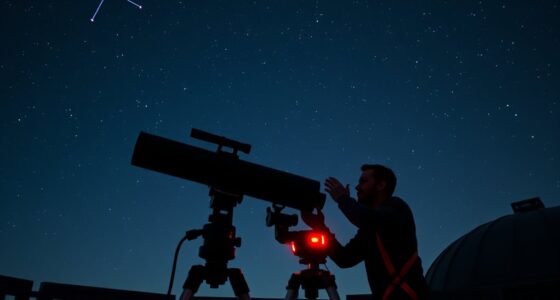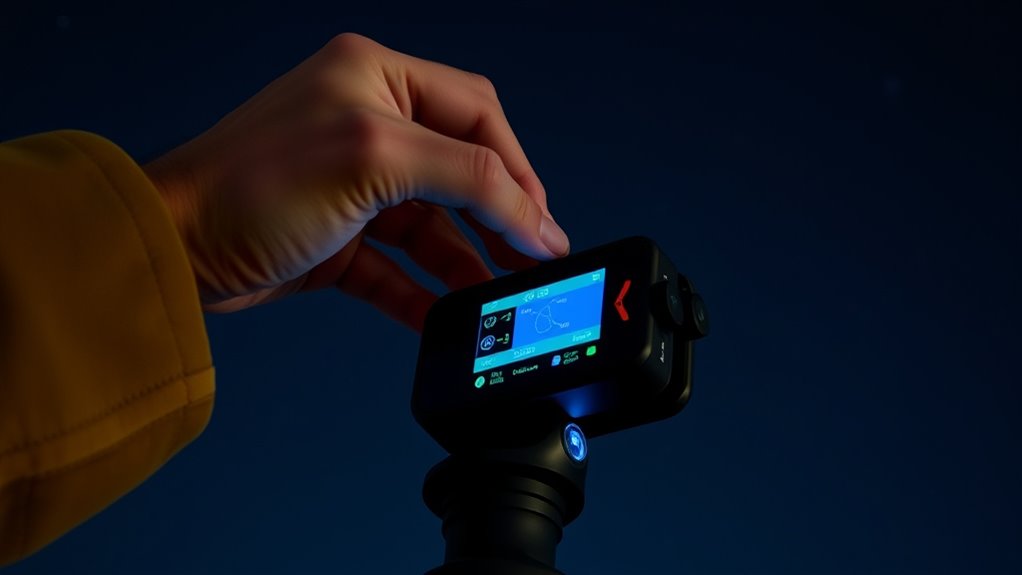

Using electronic polar alignment tools makes aligning your telescope mount to the celestial pole much easier and more accurate. You start by inputting your location, date, and time into the device, then perform a calibration using a known star or Polaris. The device provides real-time guidance to adjust azimuth and altitude controls, ensuring precise alignment. This process reduces setup time, improves tracking accuracy, and enhances your astrophotography results. If you continue exploring, you’ll discover detailed steps to get the best results.

Prime made for students and young adults
- Fast, free delivery for dorm and study essentials
- Prime Video and Amazon Music included
- Member-only deals
Key Takeaways
- Input your location, date, and time into the device for accurate calibration.
- Perform calibration using a known star or Polaris to establish a reliable reference point.
- Follow device prompts to adjust azimuth and altitude controls for precise mount alignment.
- Use real-time guidance from the electronic tool to make small, incremental adjustments.
- Confirm the alignment falls within acceptable tolerances to ensure accurate celestial tracking.
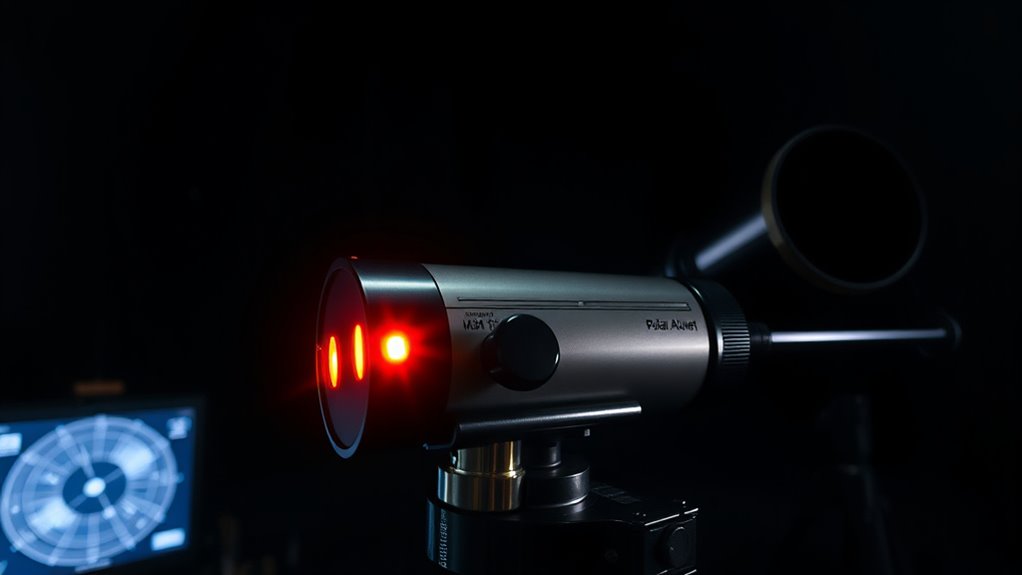
Electronic polar alignment tools have revolutionized the way amateur and professional astronomers align their telescopes. Instead of relying on manual methods or approximate guesses, these devices provide precise, quick, and reliable alignment, saving you time and reducing frustration. When you’re setting up your telescope for astrophotography or detailed celestial observation, proper mount alignment is vital. The core of this process involves calibration procedures that verify your electronic device accurately detects the position of Polaris or the celestial pole, depending on your location and setup.
The first step in utilizing an electronic polar alignment tool is to perform thorough calibration procedures. This typically involves inputting your geographic location, date, and time into the device, which helps it calculate the celestial pole’s position accurately. Many tools require you to perform a quick calibration with a known star or Polaris itself, aligning the device’s sensors with the star’s location. During calibration, you’ll often need to center a reticle or crosshairs on the star in the device’s viewfinder or display, ensuring the system has an accurate reference point. This calibration process is essential because it accounts for any slight misalignments or sensor inaccuracies, making subsequent polar alignment adjustments much more precise. Additionally, proper calibration is guided by the device’s internal guidelines to ensure accurate sensor detection.
Once calibrated, you’ll use the electronic polar alignment tool to perform mount alignment. This typically involves adjusting your mount’s azimuth and altitude controls until the device indicates your polar alignment is accurate. Many modern tools feature real-time feedback, guiding you step-by-step through the process. You might see prompts to make small adjustments, and the device will confirm once your alignment is within acceptable tolerances. This feedback loop simplifies what used to be a complex, trial-and-error process, especially for beginners. The goal is to match the mount’s axis with the celestial pole as closely as possible, ensuring your telescope tracks objects smoothly across the sky.
The combination of proper calibration procedures and mount alignment is essential for successful astrophotography. When your mount is accurately aligned, your star images stay sharp and pinpoint, avoiding streaks caused by tracking errors. Electronic polar alignment tools make this achievable in a fraction of the time traditional methods take, providing consistent results night after night. As you gain experience, you’ll appreciate how these tools streamline setup, allowing more time to focus on capturing stunning images or exploring the night sky. Proper calibration and mount alignment, facilitated by these electronic tools, are the foundation of precise, reliable astronomical observations.
As an affiliate, we earn on qualifying purchases.
Frequently Asked Questions
How Do Electronic Polar Alignment Tools Improve Accuracy Over Manual Methods?
Electronic polar alignment tools improve your accuracy by providing precise calibration, diminishing human error. They feature an intuitive user interface that guides you step-by-step, making the process faster and more reliable. With real-time feedback, you can fine-tune your mount more accurately than manual methods. This technology ensures your telescope is aligned correctly, resulting in sharper images and easier tracking, even for beginners.
Are Electronic Tools Compatible With All Types of Telescopes?
Electronic polar alignment tools are generally compatible with most telescopes, but you should check equipment compatibility before purchasing. They often feature user-friendly interfaces that make setup easier, regardless of your telescope type. However, some models may require adapters or specific mount types. Always review the specifications and compatibility details to guarantee smooth operation and accurate alignment. This way, you can enjoy precise polar alignment with minimal hassle.
What Maintenance Is Required for Electronic Polar Alignment Devices?
You might think maintenance is complicated, but it’s straightforward. Regularly perform calibration procedures to guarantee your device stays accurate, especially after traveling or rough handling. Keep an eye on battery management by replacing or recharging batteries before long sessions. Clean the sensors gently with a soft cloth and store the device in a protective case when not in use. This simple routine keeps your electronic polar alignment tool reliable and precise.
Can Electronic Polar Alignment Tools Be Used in Remote or Outdoor Locations?
Yes, electronic polar alignment tools are great for remote setups and outdoor use. You can easily set up and operate them in various outdoor conditions, making your stargazing experience more convenient. These devices are designed to handle outdoor usability, so you don’t need to worry about complex manual adjustments. Just guarantee your equipment is weather-resistant and properly powered, and you’re ready to align accurately even in remote locations.
How Do Weather Conditions Affect the Performance of Electronic Alignment Tools?
Weather conditions can really impact your electronic polar alignment tools. Atmospheric turbulence causes instability in the star positions, making your readings less accurate, especially during windy or stormy nights. Temperature fluctuations can affect the sensors and mechanics, leading to misalignments. When you’re outdoors in variable weather, it’s best to wait for calmer, stable conditions to guarantee your alignment remains precise and reliable, giving you a smoother stargazing experience.
astronomy mount alignment device
As an affiliate, we earn on qualifying purchases.
As an affiliate, we earn on qualifying purchases.
Conclusion
Don’t let concerns about complexity hold you back. Electronic polar alignment tools make the process quick and accurate, even if you’re new to astrophotography. With just a little practice, you’ll enjoy perfectly aligned stars and sharper images. So, give these tools a try—you might find they save you time and frustration. Once you see how easy and reliable they are, you’ll wonder how you ever managed without them. Happy stargazing!
As an affiliate, we earn on qualifying purchases.
astrophotography mount calibration tool
As an affiliate, we earn on qualifying purchases.
As an affiliate, we earn on qualifying purchases.
Fall Picks
fall essentials
As an affiliate, we earn on qualifying purchases.