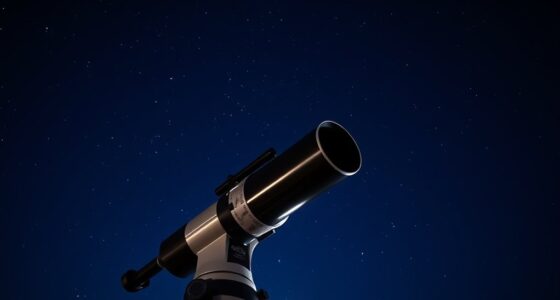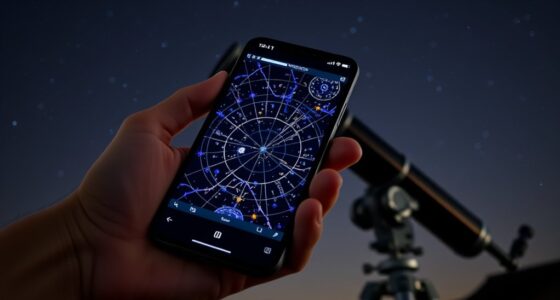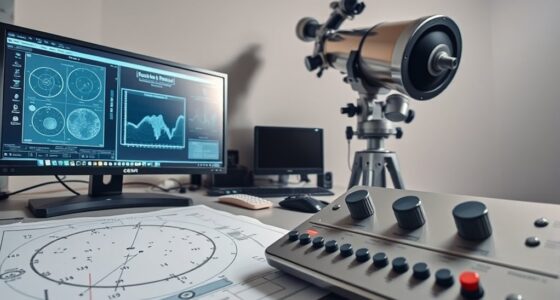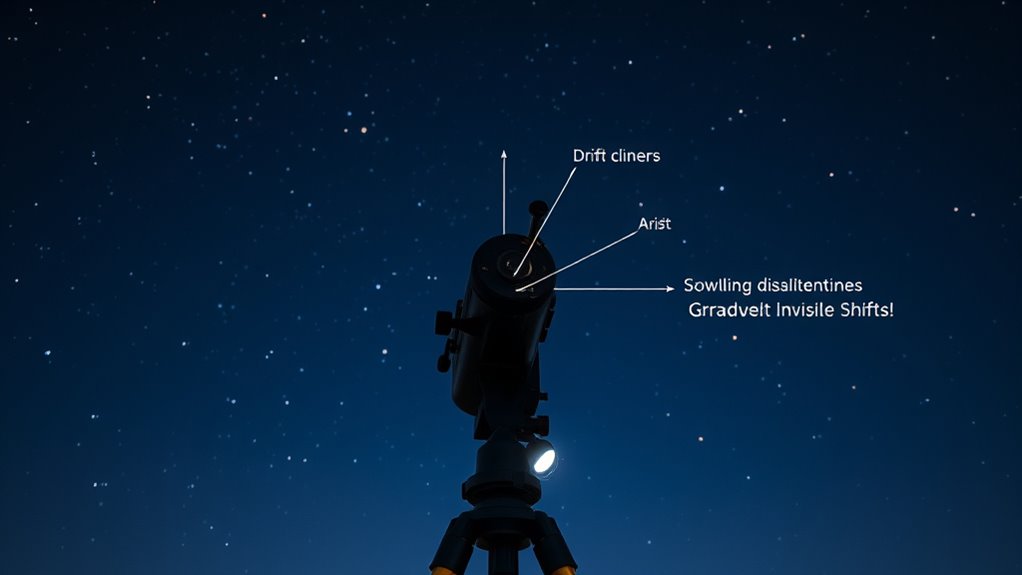
To diagnose polar alignment errors, observe star drift patterns during tracking tests. RA drift indicates a misaligned polar axis, while DEC drift points to calibration issues or mechanical slippage. Use star drift analysis by capturing images with sidereal tracking to see which way stars are moving. Small adjustments based on these observations can improve your setup. Keep exploring to learn more about fine-tuning your mount for precise astrophotos.

Prime made for students and young adults
- Fast, free delivery for dorm and study essentials
- Prime Video and Amazon Music included
- Member-only deals
Key Takeaways
- RA drift typically indicates polar misalignment or issues with RA motor calibration, while DEC drift suggests calibration errors or mechanical slippage.
- Analyzing star movement direction and speed during long exposures helps identify whether drift stems from misalignment or calibration problems.
- Regular star drift analysis can reveal subtle mechanical issues affecting tracking accuracy, guiding necessary adjustments.
- Ensuring proper polar scope alignment and level tripod setup reduces initial alignment errors contributing to RA and DEC drift.
- Adjusting mount calibration, checking gear slippage, and verifying mechanical components are essential steps to diagnose and correct drift issues.
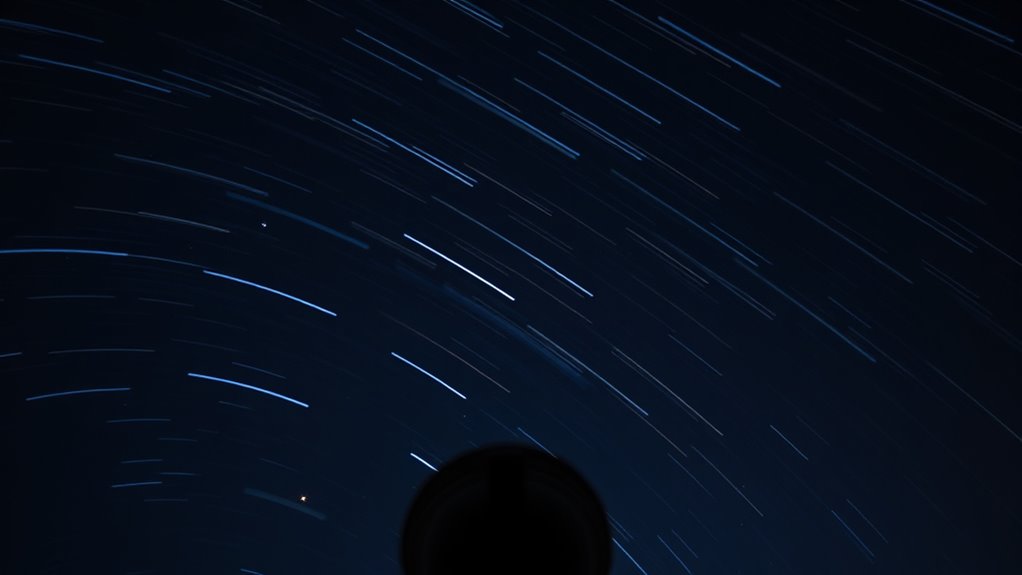
Proper polar alignment is vital for accurate astrophotography and celestial tracking, but even small errors can cause star trails and blurred images. When your mount isn’t properly aligned, it can lead to drift in the Right Ascension (RA) and Declination (DEC) axes, making it difficult to capture sharp, pinpoint stars. To diagnose these issues, you need to perform a thorough mount calibration, focusing on how your mount responds to tracking commands and whether it maintains steady alignment over time. One effective way to identify the root of the problem is star drift analysis—carefully observing how stars move across your camera’s field of view during an exposure.
Proper polar alignment ensures precise tracking and sharp astrophotos by minimizing star drift.
During star drift analysis, you start by capturing a series of images with your mount tracking in the sidereal mode. If stars drift in a consistent direction or speed, it signals a misalignment or calibration issue. For example, if stars drift in RA, it indicates that your mount’s polar alignment is off or that the RA motor isn’t functioning correctly. Similarly, DEC drift can point to issues with mount calibration or mechanical slippage. By analyzing these drifts frame by frame, you can determine whether the problem stems from improper mount calibration or a misalignment that needs correction. This process helps you pinpoint whether the drift is due to an unbalanced mount, backlash, or other mechanical factors that affect tracking accuracy. Additionally, understanding the importance of high-quality tracking motors can help improve your calibration results.
To improve your polar alignment, you should revisit the calibration process of your mount. Ensure your mount’s polar scope is properly aligned with the mount’s axis, and verify that your tripod is level. Small misalignments during setup can cause significant drift over time. Regularly performing star drift analysis after calibration allows you to verify if your adjustments have improved tracking. If you notice persistent drift, consider refining your mount’s calibration—adjust the polar scope, check for mechanical slippage, and ensure that your mount’s gears are properly aligned and lubricated. Sometimes, updating firmware or performing periodic maintenance can also enhance tracking accuracy.
In essence, diagnosing polar alignment errors through star drift analysis paired with diligent mount calibration is vital for astrophotographers aiming for sharp images. Consistently monitoring star movement helps you identify subtle misalignments before they ruin a long exposure. Taking the time to calibrate your mount meticulously and analyzing star drift regularly ensures your celestial tracking stays precise, allowing you to enjoy clear, trail-free astrophotos. Remember, small adjustments can make a big difference in your imaging results, so stay attentive to the signs your stars give during each session.
As an affiliate, we earn on qualifying purchases.
Frequently Asked Questions
How Often Should I Realign My Polar Scope During Imaging Sessions?
You should realign your polar scope at least once every few hours during imaging sessions. Regularly check your polar scope calibration and use drift monitoring techniques to spot any misalignments early. If you notice significant RA or DEC drift, recheck your alignment sooner. Frequent realignments help maintain accuracy, especially on longer nights or when temperature changes might affect your mount’s stability.
What Tools Can Help Me Precisely Measure RA and DEC Drift?
You can use drift measurement tools, like specialized software or an autocollimator alignment tool, to precisely measure RA and DEC drift. An autocollimator helps you check and refine your polar scope alignment, ensuring minimal drift during imaging. Additionally, star trail analysis or dedicated mount alignment software provides accurate readings of drift over time, allowing you to make necessary adjustments for better accuracy in your astrophotography.
Can Software Corrections Fully Compensate for Polar Alignment Errors?
Software corrections can’t fully compensate for polar alignment errors due to limitations in calibration procedures and inherent inaccuracies. While modern software can minimize drift, it relies on initial precise calibration and real-time adjustments, which can still leave residual errors. You should regularly perform calibration procedures and fine-tune your mount manually for the best results, as software alone can’t entirely eliminate the impact of polar misalignment.
How Do Temperature Fluctuations Affect Polar Alignment Accuracy?
Temperature fluctuations can considerably impact your polar alignment accuracy, causing your mount to drift due to thermal expansion. Studies show even a 10°C change can alter telescope components enough to affect precision. To minimize this, you should prioritize temperature stabilization by allowing your equipment to acclimate before observing. This helps prevent thermal expansion from disturbing your alignment, ensuring more consistent and accurate tracking during your astrophotography sessions.
Is There a Quick Method to Check Polar Alignment Before Each Session?
Yes, you can quickly check your polar alignment before each session using a drift check method. First, center a star using your polar scope, then observe its position over 10-15 minutes. If it drifts, adjust your mount accordingly. This method is fast, effective, and uses your polar scope for initial alignment, ensuring minimal setup time and accurate tracking for your imaging or observing session.
astrophotography star tracker mount
As an affiliate, we earn on qualifying purchases.
As an affiliate, we earn on qualifying purchases.
Conclusion
Think of your polar alignment as tuning a delicate instrument. When RA and Dec drift occur, it’s like a slightly off string causing dissonance. By diagnosing these drifts, you’re fine-tuning your mount, restoring harmony to your astrophotography. Fixing alignment errors guarantees your stars stay sharp and steady, turning chaos into a symphony of clear, crisp images. Keep adjusting and listening closely—your celestial orchestra will perform perfectly every time.
equatorial mount calibration tools
As an affiliate, we earn on qualifying purchases.
As an affiliate, we earn on qualifying purchases.
As an affiliate, we earn on qualifying purchases.
Fall Picks
fall essentials
As an affiliate, we earn on qualifying purchases.