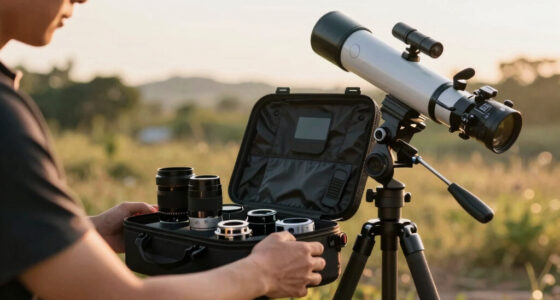
The best telescope star charts pair clear sky maps with practical guidance on what to observe and how to find it. My best overall pick is Observer’s Sky Atlas, which combines charts with a focused selection of deep-sky targets; The Night Sky 30°-40° North Latitude stands out for location-specific orientation, while Cosmic Shards Stargazing Cards offer a compact way to learn Messier objects. The main tradeoffs are map detail versus beginner-friendly explanations, and a fixed atlas versus a reusable rotating chart. Read on for the full breakdown of all 11 options and how to choose one for your telescope, location, and observing habits.

Get school and study supplies delivered free — and shop member deals
- Fast, free delivery on millions of items
- Access to Prime Big Deal Days deals on October 6–7
- Prime Video, Amazon Music and more included
Key Takeaways
Object-focused references and general sky maps serve different jobs: Observer’s Sky Atlas centers on deep-sky targets, while rotating charts help orient you to the sky at a given time.
Latitude matters: The Night Sky 30°-40° North Latitude is tailored to a specific band, so buyers outside that range should favor a more adaptable reference.
Lists and flashcards encourage session planning, not precise navigation: Cosmic Shards and the 100 Things and 110 Things guides help select targets, but are not substitutes for detailed charts.
Beginner support varies widely: Step-by-step and backyard guides explain the sky in accessible terms, while an atlas is better for readers ready to work from maps and object references.
Several products overlap in format but not purpose: The two rotating charts emphasize reusable orientation, while the books and cards offer more explanation, target ideas, or reference material.
| Cosmic Shards Stargazing Cards: Messier Catalog, 110 Astronomy Flashcards |  | Best for Telescope Object-Hopping | Brand: COSMIC SHARDS | Card count: 110 | Catalog coverage: Messier Catalog | VIEW LATEST PRICE | See Our Full Breakdown |
| Rotating Star Chart for Stargazing and Planet Discovery |  | Best for Quick Sky Orientation | Product type: Rotating star chart | Intended latitude range: 30° to 50° north | Celestial objects shown: 100 star clusters and galaxies | VIEW LATEST PRICE | See Our Full Breakdown |
| Guide to the Stars | 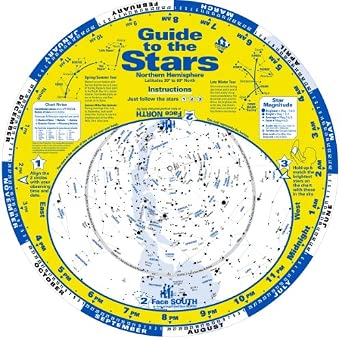 | Best for a Simple Star-Guide Format | Title: Guide to the Stars | ASIN: 1928771017 | Stated type: Guide to the stars | VIEW LATEST PRICE | See Our Full Breakdown |
| Observer’s Sky Atlas: The 500 Best Deep-Sky Objects With Charts and Images |  | Best for Deep-Sky Planning | Content type: Book/atlas | Subject: Astronomy | Deep-sky objects: 500 | VIEW LATEST PRICE | See Our Full Breakdown |
| National Geographic Backyard Guide to the Night Sky, 2nd Edition |  | Best for Beginner-Friendly All-Sky Learning | Edition: 2nd | Guide focus: Backyard night-sky observing | Topics: Constellations, planets, and celestial events | VIEW LATEST PRICE | See Our Full Breakdown |
| The Night Sky 30°-40° North Latitude (Large) |  | Best Large-Format Latitude-Specific Chart | Format: Star chart | Size: Large | Latitude range: 30°–40° North | VIEW LATEST PRICE | See Our Full Breakdown |
| Star Finder! A Step-by-Step Guide to the Night Sky | 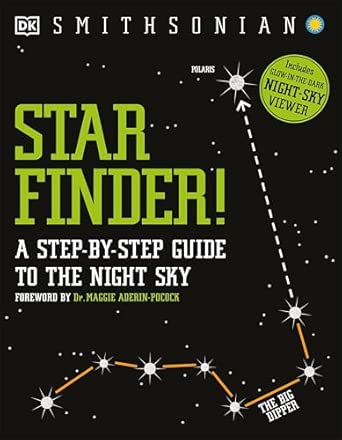 | Best for Learning the Sky Step by Step | Format: Illustrated guide | Instruction style: Step-by-step chapters | Chart content: Star charts paired with observing tips | VIEW LATEST PRICE | See Our Full Breakdown |
| Rotating Star Chart Map for Astronomy Enthusiasts |  | Best for Adjustable Date-and-Time Viewing | Material: Cardboard | Size: 22 × 22 cm (8.66 × 8.66 inches) | Weight: 4.6 ounces | VIEW LATEST PRICE | See Our Full Breakdown |
| 100 Things to See in the Night Sky (Expanded Edition) | 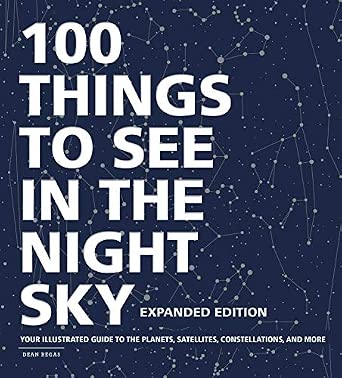 | Best Illustrated Guide for Planning Observing Sessions | Edition: Expanded edition | Format: Illustrated guide | Target count: 100 things to see | VIEW LATEST PRICE | See Our Full Breakdown |
| Famous Star and Planet Locator and Star Guide (Single Pack) |  | Best for Telescope-Side Object Location | Map type: Rotating horizon map | Objects listed: Over 500 stars, constellations, and planets | Map settings: Date, time, and horizon | VIEW LATEST PRICE | See Our Full Breakdown |
| 110 Things to See with a Telescope: The World’s Most Famous Stargazing List |  | Best Target-List Companion | Title: 110 Things to See with a Telescope: The World’s Most Famous Stargazing List | ASIN: 172829231X | Stated target count: 110 | VIEW LATEST PRICE | See Our Full Breakdown |
More Details on Our Top Picks
Cosmic Shards Stargazing Cards: Messier Catalog, 110 Astronomy Flashcards
For planning a telescope session around specific targets, these 110 Messier cards offer more object-by-object guidance than the broad sky orientation in Rotating Star Chart for Stargazing and Planet Discovery. Each card combines a star map and Telrad rings with an eyepiece-view simulation, giving observers a practical route from finding an object to knowing what its view may resemble. The compact card format is easier to consult at the observing site than a substantial atlas, and matte lamination supports reading under red light. The tradeoff is scope: the set focuses on the Messier Catalog, and its concise facts are not a substitute for a detailed observing reference. I’d choose it for hands-on target planning, not for a complete introduction to constellations or the whole sky.
Pros:- Star maps and Telrad rings help connect a target to a telescope-finding approach
- Eyepiece-view simulations give a useful preview of what an object may look like
- Matte lamination is suited to reading under red light
- A storage box keeps the 110 cards organized between sessions
Cons:- Coverage is centered on the Messier Catalog rather than a wider range of celestial targets
- Concise facts provide less depth than a full observing guide or atlas
Best for: Telescope owners who want portable finder guidance and visual previews for Messier objects during observing sessions
Not ideal for: Readers seeking a broad night-sky atlas, extensive object descriptions, or targets beyond the Messier Catalog
- Brand:COSMIC SHARDS
- Card count:110
- Catalog coverage:Messier Catalog
- Card material:Thick cardstock with matte lamination
- Included components:110 flashcards and 1 storage box
- Item weight:2 pounds
- Recommended age:8 years and up
- Educational objective:Science
Our verdict“Choose these cards if you want portable, telescope-oriented guidance for finding and previewing Messier objects rather than a broad sky chart.”
Rotating Star Chart for Stargazing and Planet Discovery
When I want a quick guide to what is above the horizon, a rotating chart is more direct than the object-by-object cards in Cosmic Shards Stargazing Cards. Aligning the chart to the date and time gives beginners a way to identify constellations and bright stars before aiming a telescope, while its 100 marked clusters and galaxies add targets for binocular or telescope sessions. It is designed for year-round use, but only from 30° to 50° north latitude; outside that band, the sky shown will not match the observer’s location. Manual date-and-time alignment also makes it less immediate than a digital sky display. This is a practical orientation tool, not a detailed atlas: choose the Observer’s Sky Atlas instead if chart depth and object-specific observing information matter more.
Pros:- Date-and-time alignment offers a straightforward way to identify the visible sky
- Shows constellations and bright stars as well as 100 clusters and galaxies
- Can guide naked-eye, binocular, and telescope observing
- Designed for use throughout the year within its latitude range
Cons:- Intended only for observers between 30° and 50° north latitude
- Requires manual alignment with the date and time
- Offers less object-specific detail than the Observer’s Sky Atlas
Best for: Beginners and casual telescope users observing from northern latitudes between 30° and 50° who want to identify the current sky
Not ideal for: Observers outside the stated latitude range or buyers who want detailed charts for individual deep-sky targets
- Product type:Rotating star chart
- Intended latitude range:30° to 50° north
- Celestial objects shown:100 star clusters and galaxies
- Compatible viewing methods:Naked eye, binoculars, and telescopes
- Year-round use:Yes
- Alignment method:Manual alignment with date and time
Our verdict“Pick this rotating chart for fast, location-specific sky orientation if you observe within its northern latitude range.”
Guide to the Stars
Guide to the Stars is the least defined choice in this lineup: the available product information identifies it as a star guide but provides no details about its charts, coverage, format, or observing features. That makes it hard to recommend for a specific telescope task, especially beside the clearly described National Geographic Backyard Guide to the Night Sky, 2nd Edition, which specifies seasonal tips, updated charts, and photographs. It may appeal to a buyer who wants a straightforward star-guide title, but I can’t confirm whether it offers telescope-finding aids, deep-sky targets, or beginner instruction. The main tradeoff is uncertainty rather than a known limitation in the guide itself. I’d choose it only after checking a contents page or sample, rather than relying on the title alone to plan an observing session.
Pros:- The title indicates a guide focused on stars
- May suit readers looking for a dedicated star-guide format
- Could serve as a straightforward alternative to a deep-sky-specific atlas
Cons:- Available product information does not specify chart format or sky coverage
- No confirmed telescope-finding features or deep-sky object list are provided
- Buyers have less information to compare against the National Geographic guide
Best for: Buyers who are specifically seeking this titled star guide and can check its contents or a sample before choosing
Not ideal for: Telescope owners who need confirmed chart detail, object coverage, or telescope-specific locating guidance
- Title:Guide to the Stars
- ASIN:1928771017
- Stated type:Guide to the stars
- Chart format:Not specified
- Object coverage:Not specified
- Telescope features:Not specified
Our verdict“Consider this guide only if its contents meet your charting needs, since the available details do not establish how useful it is for telescope observing.”
Observer’s Sky Atlas: The 500 Best Deep-Sky Objects With Charts and Images
For observers who want a substantial set of deep-sky targets, this atlas offers more focused chart-and-image coverage than the broad backyard orientation of the National Geographic Backyard Guide to the Night Sky, 2nd Edition. Its curated selection of 500 objects helps narrow the field when planning a telescope session, while charts and images give readers visual material for locating and recognizing targets. That object-first approach is also more expansive than the 110 Messier cards from Cosmic Shards, though the two differ in format and the cards add Telrad-ring guidance. The atlas’s limit is its specialization: it may not be the best starting point for learning seasonal constellations, and how useful its charts are depends partly on the observer’s telescope equipment. Choose it for deep-sky planning, not as an all-purpose introduction to the night sky.
Pros:- Covers a curated set of 500 deep-sky objects
- Charts and images support locating and recognizing targets
- More extensive deep-sky coverage than the 110-object Messier card set
- A focused selection helps narrow down observing plans
Cons:- Coverage is limited to the selected 500 objects
- Usefulness of the charts can depend on the observer’s telescope equipment
- Less oriented toward general constellation learning than the National Geographic backyard guide
Best for: Amateur astronomers who already know basic sky orientation and want charts and images for planning deep-sky observing
Not ideal for: New stargazers who need a simple seasonal guide, or buyers seeking coverage beyond the selected 500 objects
- Content type:Book/atlas
- Subject:Astronomy
- Deep-sky objects:500
- Features:Charts and images
- ASIN:0228104106
- Intended audience:Amateur astronomers
Our verdict“Choose this atlas if deep-sky targets and chart-and-image support matter more to you than broad, beginner-friendly sky orientation.”
National Geographic Backyard Guide to the Night Sky, 2nd Edition
For backyard observers learning what to look for across the whole sky, this guide takes a broader, more introductory approach than the deep-sky-focused Observer’s Sky Atlas. Its star charts, seasonal viewing tips, photographs, and illustrations connect chart reading with the constellations, planets, and celestial events visible from home. The second edition’s updated charts and event information make it a useful general reference for planning around the seasons, while the clear presentation is more approachable than a dense object atlas. That breadth comes with a tradeoff: advanced telescope users may want more specialized target detail, such as the 500-object coverage in the Observer’s Sky Atlas or the Telrad rings and eyepiece-view simulations in Cosmic Shards Stargazing Cards. I’d pick this as a starting guide, not as a substitute for a dedicated telescope atlas.
Pros:- Covers constellations, planets, and celestial events visible from home
- Includes seasonal viewing tips for planning observations
- Updated star charts are included in the second edition
- Photographs and illustrations support a beginner-friendly presentation
Cons:- May be too basic for advanced amateur astronomers
- Less specialized for deep-sky telescope planning than the Observer’s Sky Atlas
- Does not list telescope-finding aids comparable to the Telrad rings in Cosmic Shards cards
Best for: Backyard beginners and families who want seasonal charts and accessible guidance on constellations, planets, and sky events
Not ideal for: Advanced amateur astronomers seeking detailed deep-sky target charts or telescope-specific finding aids
- Edition:2nd
- Guide focus:Backyard night-sky observing
- Topics:Constellations, planets, and celestial events
- Chart content:Updated star charts
- Viewing guidance:Seasonal viewing tips
- Visual content:Photographs and illustrations
- ASIN:1426220154
Our verdict“Choose this guide if you want an accessible, seasonal introduction to the night sky, but pair it with a specialized atlas for detailed telescope targeting.”
The Night Sky 30°-40° North Latitude (Large)
The large-format layout makes this a practical choice for telescope users who want to scan a fixed sky map outdoors without relying on a small page. Its coverage is tailored to 30°–40° North, so the chart is most useful when your observing location falls within that band; it is less flexible than the Rotating Star Chart Map for Astronomy Enthusiasts, which covers a wider northern range and can be set to date and time. The simpler fixed-chart approach may suit readers who prefer a broad, readable reference over a rotating mechanism. Its main tradeoffs are geographic limits and the need for a red flashlight to preserve night vision while reading. I’d choose it for quick constellation orientation, not as a detailed deep-sky observing atlas.
Pros:- Large format is easier to read outdoors than a compact chart
- Star positions are tailored to 30°–40° North
- Useful as a quick reference for stars and constellations
- Designed for outdoor observing
Cons:- Geographic coverage is limited to a specific northern latitude band
- A red flashlight is needed for night reading
- A fixed chart is less adaptable to date and time than a rotating map
Best for: Telescope owners observing from 30°–40° North who want a large, easy-to-read chart for outdoor orientation.
Not ideal for: Observers outside the stated latitude band or anyone seeking a date-and-time-adjustable map or detailed deep-sky target listings.
- Format:Star chart
- Size:Large
- Latitude range:30°–40° North
- Intended use:Outdoor stargazing
- Chart focus:Stars, constellations, and other celestial objects
- Night-reading aid:Red flashlight recommended
Our verdict“Choose this large chart if you observe from 30°–40° North and want a readable outdoor reference, but skip it if you need broader latitude coverage.”
Star Finder! A Step-by-Step Guide to the Night Sky
Step-by-step instruction is the defining advantage here: instead of serving only as a map, this illustrated guide walks newcomers through identifying constellations, planets, and selected deep-sky objects. That makes it a more instructional starting point than The Night Sky 30°-40° North Latitude (Large), which offers a latitude-specific chart but not the same guided learning approach. The chapters pair star charts with observing tips, helping readers connect a map to what they can seek in the sky from different locations. This format is a good fit for casual observers who want to build confidence before choosing targets on their own. The tradeoff is that a book is less convenient than a quick-reference rotating map at the telescope, and its coverage does not extend far into advanced astrophotography.
Pros:- Step-by-step chapters help beginners learn sky identification
- Illustrations and star charts support visual recognition
- Includes guidance on constellations, planets, and notable deep-sky objects
- Tips are intended for observing from different locations
Cons:- A book is less convenient for rapid reference at the telescope than a rotating map
- Advanced astrophotography techniques receive limited coverage
- Guided introductions may feel basic to experienced observers
Best for: New telescope owners and casual observers who want guided practice identifying constellations, planets, and selected deep-sky objects.
Not ideal for: Experienced observers seeking a compact field chart, exhaustive target catalog, or advanced astrophotography instruction.
- Format:Illustrated guide
- Instruction style:Step-by-step chapters
- Chart content:Star charts paired with observing tips
- Objects covered:Constellations, planets, and notable deep-sky objects
- Intended audience:Beginners and intermediate observers
- Location guidance:Tips for observing from any location
Our verdict“Pick this guide if you want structured lessons alongside charts, rather than a standalone map for quick telescope-side lookup.”
Rotating Star Chart Map for Astronomy Enthusiasts
Date-and-time adjustment is what sets this rotating chart apart: align the map to your observing session and it shows the overhead sky for its supported latitude band. Compared with The Night Sky 30°-40° North Latitude (Large), it covers a wider range, 30°–50° North, and adapts to different observing times rather than presenting a fixed view. The stated inclusion of 100 star clusters and galaxies also gives telescope users targets beyond bright constellations. At 22 × 22 cm and 4.6 ounces, it is easy to carry to an observing site. The compromises are its northern-latitude limit and cardboard construction, which may be less durable in damp or rough field conditions. I’d favor it for portability and quick sky orientation, not rugged long-term field use.
Pros:- Rotating design aligns the map with date and time
- Covers a wider northern latitude band than the 30°–40° North large chart
- Identifies 100 star clusters and galaxies
- Lightweight, compact format is easy to carry
Cons:- Limited to latitudes between 30° and 50° North
- Cardboard construction may wear or suffer in damp conditions
- Small format may be less comfortable to read than a large chart
Best for: Beginning or experienced observers at 30°–50° North who want a lightweight, reusable chart they can set for a session.
Not ideal for: Observers outside 30°–50° North or those who need a weather-resistant chart for frequent rugged field use.
- Material:Cardboard
- Size:22 × 22 cm (8.66 × 8.66 inches)
- Weight:4.6 ounces
- Latitude range:30°–50° North
- Map type:Rotating star guide map
- Objects identified:100 star clusters and galaxies
- Time setting:Aligns date and time to show overhead celestial objects
- Package dimensions:8.5 × 8.46 × 0.71 inches
Our verdict“Choose this rotating map for portable, date-and-time-adjustable sky orientation within 30°–50° North, but not for wet or rough observing conditions.”
100 Things to See in the Night Sky (Expanded Edition)
Organized coverage of 100 sky targets makes this expanded guide a planning tool rather than just a chart for checking directions. Its full-color illustrations and topic-based layout can help readers choose what to look for before setting up, while Star Finder! A Step-by-Step Guide to the Night Sky is the stronger fit for readers who want guided lessons in identifying objects. This book covers planets, satellites, constellations, and other night-sky subjects, giving it a broader topic mix than a latitude-specific star chart. That breadth can help telescope owners build an observing list, but the volume of information may feel crowded to absolute beginners. It is also a book rather than an adjustable field map, so readers wanting a quick date-and-time sky view may prefer the Rotating Star Chart Map for Astronomy Enthusiasts.
Pros:- Full-color illustrations aid visual identification
- Covers planets, satellites, constellations, and other sky subjects
- Topic-based organization supports observing-session planning
- Expanded edition includes new images and updated information
Cons:- Dense coverage may overwhelm absolute beginners
- Book format is less immediate than a rotating field chart
- Broad subject coverage may not replace a specialized deep-sky atlas
Best for: Telescope owners who want an illustrated, topic-organized reference for selecting a variety of night-sky targets before an observing session.
Not ideal for: Absolute beginners who prefer a simple first chart or observers who need an adjustable map for quick telescope-side orientation.
- Edition:Expanded edition
- Format:Illustrated guide
- Target count:100 things to see
- Illustrations:Full-color images
- Organization:Topic-based
- Subjects:Planets, satellites, constellations, and other night-sky objects
- Edition updates:New images and updated information
Our verdict“Choose this expanded guide to plan varied observing sessions with illustrated references, but select a simpler chart if you are just learning the sky.”
Famous Star and Planet Locator and Star Guide (Single Pack)
A rotating horizon map makes this a direct-use locator: set the date, time, and horizon view to find the positions of stars, constellations, and planets. It lists over 500 objects, giving it a broader stated count than the 100 clusters and galaxies on the Rotating Star Chart Map for Astronomy Enthusiasts, though the two products differ in format and target emphasis. The included 16-page booklet adds operating guidance, and compatibility with many popular telescopes makes it a practical companion for owners who want to match a map to what their instrument can point toward. Its main limitation is that a count of about 500 may still leave advanced deep-sky observers wanting more specialized coverage. Choose it for straightforward orientation, not as a full deep-sky atlas.
Pros:- Rotating map adjusts for date, time, and horizon setting
- Locates over 500 stars, constellations, and planets
- Includes a compact 16-page instruction booklet
- Designed for compatibility with many popular telescopes
Cons:- Coverage may not include all deep-sky targets
- Object range centers on stars, constellations, and planets rather than exhaustive deep-sky detail
- Requires setting the map to match the observing session
Best for: Telescope owners who want a rotating locator for stars, constellations, and planets, plus a short instruction booklet.
Not ideal for: Advanced deep-sky observers who need extensive faint-object coverage or a specialized atlas of observing targets.
- Map type:Rotating horizon map
- Objects listed:Over 500 stars, constellations, and planets
- Map settings:Date, time, and horizon
- Instruction booklet:16 pages
- Telescope compatibility:Works with many popular telescopes, including Astroscan and Meade
- Graphic designer:Astronomer George Lovi
- Pack format:Single pack
Our verdict“Pick this locator for telescope-side positioning of familiar sky objects, but choose a dedicated deep-sky atlas if faint-target coverage is your priority.”
110 Things to See with a Telescope: The World’s Most Famous Stargazing List
I’d choose this book as a target checklist for telescope sessions, rather than as a star chart for finding objects. Its stated focus is 110 astronomical objects and sights, giving readers a defined set of viewing goals. That makes it a different kind of aid from the rotating maps, such as Rotating Star Chart for Stargazing and Planet Discovery, which are designed to show where to look in the sky. Compared with Observer’s Sky Atlas, whose title specifies charts and images for deep-sky objects, this book’s available product information does not confirm charting, images, observing instructions, or a particular format. That lack of detail limits how confidently I can recommend it as a standalone guide. It makes most sense alongside a separate sky map, with the tradeoff that buyers should not assume the list itself provides directions to each target.
Pros:- Provides a defined list of 110 astronomical objects and sights to pursue.
- Can give telescope sessions a clear set of observing goals.
- Pairs naturally with a rotating star chart or atlas used for locating targets.
Cons:- Available product details do not confirm that it includes star charts or locating instructions.
- The book’s format and level of observing guidance are unspecified.
- Less suitable as a standalone navigation aid than a dedicated star chart or sky atlas.
Best for: Telescope owners who want a finite list of 110 observing targets to pair with a separate star chart or sky atlas.
Not ideal for: Beginners seeking a self-contained finder with confirmed charts, maps, or step-by-step directions for locating objects.
- Title:110 Things to See with a Telescope: The World’s Most Famous Stargazing List
- ASIN:172829231X
- Stated target count:110
- Subject:Astronomical objects and sights
- Intended use:Telescope observing
- Format:Not specified in the available product data
- Chart or map inclusion:Not specified in the available product data
Our verdict“Choose it as a target-list companion if you already have a chart for locating objects, but skip it if you need a confirmed, self-contained telescope finder.”

How We Picked
I compared these telescope star charts and observing references by how directly they help a reader move from looking up at the sky to choosing and locating an object. The main criteria were chart clarity and practical usefulness, guidance for beginners, target-selection support, suitability for different observing sessions, and how much the format can adapt to a reader’s location and routine. I also weighed whether a product works as a quick field reference or asks the reader to sit down and study first.
The ranking favors tools with a clear role in telescope observing and useful guidance beyond a list of celestial objects. Observer’s Sky Atlas leads for its chart-and-target focus; the latitude-specific chart and Messier cards follow for readers with narrower needs. Beginner guides and broad observing lists remain valuable, but rank lower for precise chart work when their main strength is explanation or inspiration rather than navigation. Since the lineup includes books, cards, and rotating charts, the best choice depends on whether you need orientation, target ideas, or a detailed reference.
Factors to Consider When Choosing Telescope Star Charts
Before choosing a chart, decide what problem you want it to solve during an observing session. A map that is easy to read indoors may be awkward to use at the telescope, and a long target list may inspire a plan without helping you locate those targets. These factors can help you match a reference to your observing conditions rather than buying by title alone.
Match the chart to your latitude
Sky charts reflect what is visible from particular parts of Earth, so latitude affects which stars rise high enough to observe and how familiar constellations appear. A chart designed for a latitude band can make orientation more intuitive when you observe within that range. Buyers outside it may find some targets poorly placed or absent, even if the book or chart is otherwise useful. Check whether a product names a latitude, offers multiple regional versions, or presents broadly useful sky information. A common mistake is assuming a general title means every chart works equally well everywhere. If you travel or observe from more than one region, prioritize flexibility over a tightly localized map.
Separate finding aids from target lists
A target list tells you what is worth observing; a chart helps you work out where to point. Some references combine both, but many lean heavily toward one role. If you already know how to star-hop, a curated list can keep a session focused and introduce objects you might otherwise miss. If you are still learning the sky, a list without useful location cues can leave you searching without a clear next step. Think through your usual session: do you spend more time choosing objects or finding them? For many telescope owners, pairing a simple sky-orientation tool with a target guide is more useful than expecting one book to do everything.
Choose a format you can use in the dark
Books can offer context and detailed references, while cards and rotating charts may be quicker to consult at the telescope. The best format depends on whether you prefer reading before a session or checking information outside under the sky. Small or loose pieces can be convenient to carry, but may be easier to misplace or harder to keep organized. Larger print and page layouts can improve legibility, though they take up more space at the observing site. Also think about how you will protect paper from dew and handling. A useful chart is one you can consult comfortably without interrupting your observing flow.
Be realistic about chart detail and telescope limits
A detailed atlas can support more deliberate object searches, but it may take time to learn its symbols and map conventions. A beginner-friendly guide can explain what to look for, yet provide less navigational detail for faint objects. Your telescope, sky darkness, and observing conditions also affect which targets are practical; a printed chart cannot make a faint object visible from a bright location. Look for guidance that fits the objects you expect to observe and the level of map-reading you are ready to do. Avoid buying the densest atlas simply because it appears more advanced. The right detail level is the one that helps you locate targets without turning each session into a decoding exercise.
Decide whether you need reusable orientation or lasting reference
A rotating chart is designed to show which parts of the sky are up at a chosen time and date, making it useful for orientation across observing sessions. It is not the same as a detailed atlas for locating a specific deep-sky object. Books and object guides can provide richer explanations and longer-term reference, but they may not show the changing sky as quickly. Buyers sometimes expect a planisphere-style chart to replace an atlas, or expect a book to function like a live sky display. Choose the tool that fits the moment when you get stuck. If you want both quick orientation and detailed object-finding help, a two-tool setup may be more practical than a single compromise.
Pay for guidance that matches your experience
Beginners often gain more from clear explanations, simple steps, and approachable targets than from the largest possible catalog. More experienced observers may value dense charts, deeper target coverage, or a concise reference they can consult while planning. A guide aimed at newcomers can remain useful as a way to share observing with family, but it may feel limited as your skills grow. Conversely, a technical atlas can be frustrating if you have not yet learned basic constellation patterns. Consider who will use the chart and whether their main need is learning, planning, or locating. Paying for more information makes sense only when that information answers questions you actually face at the telescope.
Frequently Asked Questions
Can a rotating star chart help me locate deep-sky objects through a telescope?
A rotating chart is most useful for identifying which constellations and broad sky regions are visible at a given time. It usually does not provide the detailed star patterns needed to guide a telescope to a faint galaxy or nebula. Use it to get oriented, then consult an atlas or another reference with more precise object-finding information. This distinction can prevent a common disappointment: buying a simple sky wheel expecting it to function as a detailed observing atlas. If deep-sky hunting is your main goal, prioritize chart detail and target guidance.
Should I choose an atlas or a beginner night-sky guide first?
Choose a beginner guide if you are still learning constellation names, basic sky motion, and what to observe; choose an atlas if you can already recognize some reference stars and want to find specific targets. An atlas can be more useful for telescope sessions, but its symbols and charts may take practice. A guide can make early nights more rewarding by explaining what you are seeing, though it may not offer enough detail for precise star-hopping. Think about the point where you currently lose time: understanding the sky or locating objects. If both are obstacles, start with a guide that includes charts, then add a more detailed atlas as your skills grow.
Does a latitude-specific chart work if I observe while traveling?
It can remain useful when you travel within its stated latitude range, but a chart tied to one band may be less helpful farther north or south. The sky’s visible stars and their height above the horizon change with location, so a familiar local map does not always transfer cleanly. Before buying, check whether the chart names a latitude range and whether it is intended for one region or wider use. For frequent travel, a more adaptable reference is usually a safer primary choice. Keep a local chart as a supplement if most of your observing happens at home.
Are observing lists like ‘100 Things’ enough to use with a telescope?
An observing list can help you choose targets and set a manageable goal for a night, but a list is not automatically a navigation tool. Check whether it includes charts, locating instructions, or only descriptions of what each object is like. Beginners may need a separate sky map or atlas to turn a target name into a telescope pointing plan. Lists are especially useful when you want variety or a structured progression through the sky. They work best alongside an orientation reference rather than as a replacement for one.
Is it better to buy one detailed reference or pair two simpler tools?
One detailed reference makes sense if you already know what kind of help you need and are comfortable learning its chart system. Two simpler tools can be easier to use when you need both quick sky orientation and approachable target suggestions. For example, a rotating chart can answer what is visible now, while a guide or target list can help you decide what to observe. The tradeoff is carrying and organizing more material. Consider whether your observing sessions are planned in advance or improvised at the telescope, then choose the setup that fits that routine.
Conclusion
For the strongest all-around balance of charts and deep-sky target guidance, I recommend Observer’s Sky Atlas as the best overall pick. Cosmic Shards Stargazing Cards are the best value-style choice for readers who want a portable, focused way to explore Messier objects, while The Night Sky 30°-40° North Latitude is the best specialized reference for observers in its stated region. Beginners are better served by Star Finder! or the National Geographic Backyard Guide to the Night Sky, where accessible explanations matter more than dense mapping. For a premium, more reference-oriented choice, select the atlas if detailed deep-sky coverage is your priority; for quick orientation, choose one of the rotating charts. If your main challenge is deciding what to observe, look to the 100 Things or 110 Things guides, and if you want a targeted Messier learning aid, choose the cards. Match the format to the task you face most often, and the right chart will earn its place beside your telescope.
Fall Picks
fall essentials
As an affiliate, we earn on qualifying purchases.