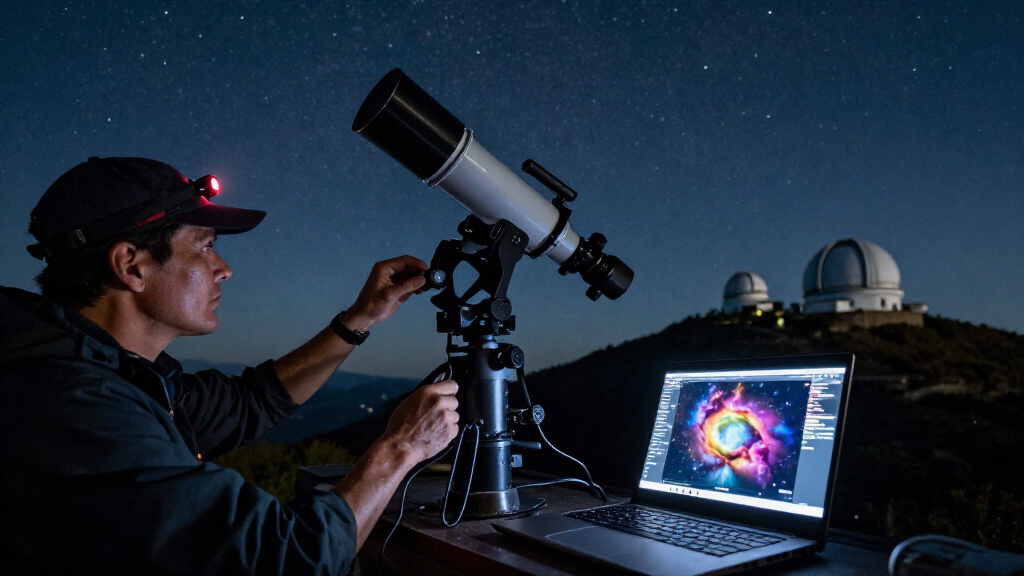

The best deep sky astrophotography camera for most dedicated imaging setups is the SVBONY SV605CC, whose cooled IMX533 sensor balances manageable file sizes with a square field of view. For a larger sensor and wider framing, the SVBONY SC571CC is a stronger step-up choice, while the ZWO ASI585MC Air combines imaging, guiding, and control in one unit. These cameras serve different priorities: cooling and sensor area can improve long-exposure workflows, but they also add cost, setup needs, or data demands. Smart telescopes such as the Dwarf 3 and Seestar S30 Pro simplify operation but offer less flexibility than a camera paired with a separate mount and optics. Read on for the full comparison and guidance on choosing around your telescope, targets, and experience.

Prime made for students and young adults
- Fast, free delivery for dorm and study essentials
- Prime Video and Amazon Music included
- Member-only deals
Key Takeaways
- The SV605CC is the most balanced dedicated-camera pick: its cooled IMX533 sensor suits long-exposure deep-sky work without the larger framing and file-management demands of an APS-C camera.
- The SC571CC is the clearest upgrade for sensor area: its IMX571 APS-C format can frame larger targets more comfortably, but it calls for optics that can illuminate the larger sensor well.
- Cooling is a workflow choice, not a shortcut: the SV605CC, SV405CC, and SC571CC support temperature-managed imaging, while compact uncooled models trade that control for simpler setup.
- All-in-one convenience changes the comparison: the ASI585MC Air adds guiding and control functions, while the Dwarf and Seestar models bundle the telescope and imaging workflow rather than serving as interchangeable camera bodies.
- Entry-level USB cameras have narrower deep-sky roles: the SV105, SV305C, ASI662MC, and FIBONAX Nova200 can fit basic or budget-conscious setups, but buyers should not expect the same long-exposure flexibility as cooled dedicated cameras.
| SVBONY SV605CC Cooled Color Astrophotography Camera with IMX533 Sensor |  | Best Square-Sensor Pick | Sensor: IMX533 color, 1-inch | Resolution: 9 MP; 3008 × 3008 | Pixel size: 3.76 μm | VIEW LATEST PRICE | See Our Full Breakdown |
| ZWO ASI585MC Air Cooled Color Astronomy Camera with Built-In Guide Camera and Smart Controller |  | Best Integrated Imaging System | Main imaging sensor: Sony IMX585 color, 1/1.2 inch | Main image resolution: 3840 × 2160 | Main pixel size: 2.9 μm | VIEW LATEST PRICE | See Our Full Breakdown |
| FIBONAX Nova200 1080p USB Telescope Camera |  | Best Entry-Level Lunar and Planetary Camera | Sensor: 2MP CMOS | Video resolution: 1920 × 1080 | Maximum frame rate: 30 fps | VIEW LATEST PRICE | See Our Full Breakdown |
| DWARFLAB Dwarf 3 Smart Telescope |  | Best Portable All-in-One Option | Mount: Altazimuth | Objective lens diameter: 35 mm | Focus type: Autofocus | VIEW LATEST PRICE | See Our Full Breakdown |
| SVBONY SV405CC Cooled Astrophotography Camera with IMX294 Sensor |  | Best for Larger Sensor Coverage | Sensor: Back-illuminated 4/3-inch IMX294 color CMOS | Resolution: 11.7MP; 4144 × 2822 | Pixel size: 4.63 μm | VIEW LATEST PRICE | See Our Full Breakdown |
| DWARFLAB Dwarf Mini Smart Telescope |  | Best Portable All-in-One for Deep-Sky Beginners | Sensor: Sony IMX662, 1/2.8-inch, 2.9 μm pixels | Objective lens: 30 mm | Focal length: 150 mm | VIEW LATEST PRICE | See Our Full Breakdown |
| SVBONY SV705C IMX585 USB 3.0 Astronomy Telescope Camera |  | Best Entry-Level Dedicated Camera for Deep-Sky Experiments | Sensor: Sony IMX585 | Sensor size: 1/1.2 inches | Resolution: 3856 × 2180 | VIEW LATEST PRICE | See Our Full Breakdown |
| SVBONY SC571CC Cooled Color Astronomy Camera with IMX571 APS-C Sensor |  | Best for High-Detail Dedicated Deep-Sky Imaging | Sensor: IMX571 APS-C BSI CMOS | Resolution: 26 MP | Sensor area: 23.4 × 15.7 mm | VIEW LATEST PRICE | See Our Full Breakdown |
| SVBONY SV105 1.25-Inch Telescope Camera with IMX307 CMOS Sensor |  | Best Starter Camera for Moon and Planetary Capture | Sensor: 1/2.8-inch IMX307 color CMOS | Maximum resolution: 1920 × 1080 | Maximum frame rate: 30 fps | VIEW LATEST PRICE | See Our Full Breakdown |
| SVBONY SV305C 2.1MP Color Astrophotography Camera |  | Best for EAA and Bright-Target Deep-Sky Practice | Sensor: Sony IMX662, 1/2.8-inch back-illuminated CMOS | Resolution: 2.1 MP | Pixel size: 2.9 μm | VIEW LATEST PRICE | See Our Full Breakdown |
| ZWO ASI662MC 2.1 Megapixel USB 3.0 Color Astronomy Camera for Astrophotography |  | Best for Planetary-First Buyers | Sensor: Sony IMX662 CMOS | Resolution: 1920 × 1080 (2.1 MP) | Pixel size: 2.9 µm | VIEW LATEST PRICE | See Our Full Breakdown |
| ZWO Seestar S30 Pro Smart Telescope |  | Best Beginner-Friendly Smart Setup | Mount: Alt-azimuth; supports equatorial mode | Focal length: 160 mm | Field of view: 4.6 degrees | VIEW LATEST PRICE | See Our Full Breakdown |
| deep sky astrophotography camera | Sensor | Weight | Resolution |
|---|---|---|---|
| SVBONY SV605CC Cooled Color As | IMX533 color, 1-inch | 1.6 kg | 9 MP; 3008 × 3008 |
| ZWO ASI585MC Air Cooled Color | — | 635g | — |
| FIBONAX Nova200 1080p USB Tele | 2MP CMOS | 110 g | — |
| DWARFLAB Dwarf 3 Smart Telesco | — | — | — |
| SVBONY SV405CC Cooled Astropho | Back-illuminated 4/3-inch IMX294 color CMOS | 3.08 pounds | 11.7MP; 4144 × 2822 |
| DWARFLAB Dwarf Mini Smart Tele | Sony IMX662, 1/2.8-inch, 2.9 μm pixels | 1.85 lbs (840 g) | — |
| SVBONY SV705C IMX585 USB 3.0 A | Sony IMX585 | — | 3856 × 2180 |
| SVBONY SC571CC Cooled Color As | IMX571 APS-C BSI CMOS | — | 26 MP |
| SVBONY SV105 1.25-Inch Telesco | 1/2.8-inch IMX307 color CMOS | 0.29 kg | — |
| SVBONY SV305C 2.1MP Color Astr | Sony IMX662, 1/2.8-inch back-illuminated CMOS | — | 2.1 MP |
| ZWO ASI662MC 2.1 Megapixel USB | Sony IMX662 CMOS | 15.36 oz | 1920 × 1080 (2.1 MP) |
| ZWO Seestar S30 Pro Smart Tele | — | 3.64 lb | — |
More Details on Our Top Picks
SVBONY SV605CC Cooled Color Astrophotography Camera with IMX533 Sensor
The SV605CC is a strong fit for deep-sky imagers who want a cooled color camera with a square field, rather than the wider rectangular framing of the SV405CC. Its 9MP IMX533 sensor records 3008 × 3008 images, giving you room to frame compact targets without favoring one axis. Cooling to as much as 30°C below ambient helps control sensor heat during long exposures, while USB 3.0 supports capture-data transfer. The tradeoff is a smaller sensor and lower resolution than the SV405CC’s 4/3-inch, 11.7MP chip, so it is less suited to buyers prioritizing a larger imaging area. At 1.6 kg, it also adds substantial mass to a telescope train. I’d choose it for square framing and cooled imaging, not for a lightweight setup.
Pros:- Square 3008 × 3008 IMX533 sensor offers balanced framing in both dimensions.
- Cooling reaches up to 30°C below ambient to help manage sensor heat during long exposures.
- USB 3.0 provides a direct high-speed connection for image capture.
- Designed for deep-sky imaging as well as other astronomy applications.
Cons:- The 1.6 kg listed weight can place a noticeable load on the focuser and mount.
- The 9MP, 1-inch sensor captures a smaller imaging area than the SV405CC’s 4/3-inch sensor.
- Requires a compatible telescope and optical setup; it is not a standalone imaging system.
Best for: Deep-sky astrophotographers who prefer square framing for compact galaxies and nebulae and want a cooled color camera.
Not ideal for: Imagers who need a larger sensor or are balancing a lightweight telescope setup; the SV405CC has a larger sensor, and this camera weighs 1.6 kg.
- Sensor:IMX533 color, 1-inch
- Resolution:9 MP; 3008 × 3008
- Pixel size:3.76 μm
- Cooling:Double-layer semiconductor refrigeration; up to 30°C below ambient
- Connectivity:USB 3.0
- Weight:1.6 kg
- Dimensions:6.5 × 6.3 × 8.46 inches
Our verdict“Choose the SV605CC if you want cooled, square-format deep-sky images and can accommodate its weight.”
ZWO ASI585MC Air Cooled Color Astronomy Camera with Built-In Guide Camera and Smart Controller
The ASI585MC Air combines a cooled color imager, monochrome guide camera, and smart controller, making it the most integrated deep-sky option here. Its built-in guide sensor and four USB 2.0 hub ports can reduce the number of separate devices and cables around a mount. The 256GB internal storage and dual-band Wi-Fi also support a less computer-dependent capture setup, unlike the more conventional SV605CC and SV405CC cameras. Cooling to 30–35°C below ambient helps limit sensor noise in extended exposures. Its main imaging sensor is a 1/1.2-inch, 3840 × 2160 chip, so it offers less sensor area than the SV405CC’s 4/3-inch format. I’d favor it for streamlined control, but not for buyers seeking the largest field or a low-power rig.
Pros:- Combines a color imaging camera, monochrome guide camera, and smart controller.
- Built-in 256GB eMMC storage with support for external storage up to 1TB.
- Cooling can lower sensor temperature 30–35°C below ambient.
- Four USB 2.0 ports, Wi-Fi, Bluetooth, and DC outputs support connected equipment.
Cons:- The 1/1.2-inch main sensor is smaller than the SV405CC’s 4/3-inch sensor.
- Cooling and attached accessories can call for substantial power.
- Requires a telescope and mount; its integrated controls do not make it a standalone telescope.
Best for: Astrophotographers building a compact, connected imaging rig who want guiding, storage, and camera control integrated into one unit.
Not ideal for: Buyers seeking a large sensor or minimal power draw; the SV405CC has a larger sensor, and this unit can dissipate up to 24.6W.
- Main imaging sensor:Sony IMX585 color, 1/1.2 inch
- Main image resolution:3840 × 2160
- Main pixel size:2.9 μm
- Guide camera:Monochrome, 2.07 MP (1920 × 1080)
- Cooling:Up to 30–35°C below ambient
- Storage:256GB eMMC; supports up to 1TB external storage
- Ports:1 × USB-C, 4 × USB 2.0, 3 × DC 12V
- Weight:635g
Our verdict“Pick the ASI585MC Air if reducing separate imaging and guiding gear matters more to you than sensor size.”
FIBONAX Nova200 1080p USB Telescope Camera
The FIBONAX Nova200 is the outlier in this deep-sky lineup: a simple 2MP USB eyepiece camera better suited to the Moon, planets, and bright targets than faint nebulae or galaxies. Its 1080p video at up to 30 fps supports recording short sequences, while UVC plug-and-play compatibility avoids the more involved cooled-camera workflow used by the SV605CC. The removable UV/IR cut filter and 1.25-inch fit add practical flexibility for compatible telescopes. But it has no listed sensor cooling, and its 2MP resolution and bright-target focus make it a poor substitute for the cooled, higher-resolution SV405CC in long-exposure deep-sky imaging. I’d treat it as an accessible video camera for observing and bright-object capture, not as a dedicated deep-sky camera.
Pros:- Records 1920 × 1080 video at up to 30 fps.
- UVC plug-and-play support works with compatible Windows, macOS, and Linux systems.
- Removable UV/IR cut filter provides flexibility for different capture needs.
- Lightweight 110g aluminum body fits a 1.25-inch telescope eyepiece holder.
Cons:- Its 2MP sensor and bright-target focus limit its suitability for faint deep-sky imaging.
- No sensor cooling is listed for reducing heat-related noise in long exposures.
- Optional ASCOM driver support is limited to Windows.
Best for: Telescope owners who want straightforward USB video capture of the Moon, planets, and other bright targets.
Not ideal for: Deep-sky imagers targeting faint nebulae or galaxies; it lacks listed cooling and has only a 2MP sensor.
- Sensor:2MP CMOS
- Video resolution:1920 × 1080
- Maximum frame rate:30 fps
- Connection:USB
- Telescope mount:1.25-inch eyepiece holder
- Filter:Removable UV/IR cut filter
- Weight:110 g
- Field of view:2.3 degrees
Our verdict“Choose the Nova200 for simple lunar and planetary video, but choose a cooled camera such as the SV605CC for serious deep-sky exposures.”
DWARFLAB Dwarf 3 Smart Telescope
The DWARFLAB Dwarf 3 takes a different route from the separate cooled cameras in this roundup: it is a portable smart telescope with its own optics, tracking, autofocus, and app-based processing. That makes it easier to start capturing the sky without pairing a camera such as the SV405CC with a telescope and mount. Its 4K tracking, EQ mode, and dual imaging system also make it more versatile for wildlife and landscape use than a dedicated astronomy camera. The tradeoff is that its 35mm objective and integrated design do not offer the same camera-and-optics flexibility as a larger deep-sky imaging rig. App control requires a smartphone or computer, and the listed weight is 2.28 kg, despite a conflicting lighter figure in the description. I’d pick it for portability and convenience, not maximum imaging-system flexibility.
Pros:- Integrated optics, tracking, autofocus, and image processing simplify getting started.
- Dual imaging system supports telephoto and wide-angle photography.
- EQ mode provides an alternative to its altazimuth setup for sky imaging.
- Portable design includes a carrying bag and accessories.
Cons:- The 35mm objective and all-in-one design offer less optical flexibility than a separate camera and telescope, such as the SV405CC setup.
- App control requires a smartphone or computer.
- Listed weight is 2.28 kg, while the description gives a conflicting 1.35 kg figure.
Best for: Beginners and traveling observers who want an app-controlled telescope for casual astrophotography plus daytime subjects.
Not ideal for: Experienced deep-sky imagers who want to select a separate camera, telescope, and mount or need a larger objective than 35mm.
- Mount:Altazimuth
- Objective lens diameter:35 mm
- Focus type:Autofocus
- Imaging and control:4K tracking, Auto GOTO, EQ mode, built-in image processing
- Item weight:2.28 kg
- Dimensions:2.56 × 8.74 × 5.59 inches (D × W × H)
- Compatible devices:Smartphone, laptop, personal computer
- Warranty:2 years
Our verdict“Choose the Dwarf 3 if you value a portable, self-contained app-driven telescope more than modular deep-sky imaging gear.”
SVBONY SV405CC Cooled Astrophotography Camera with IMX294 Sensor
For buyers who want more sensor area than the square-format SV605CC, the SV405CC is the stronger deep-sky fit. Its back-illuminated 4/3-inch IMX294 sensor records 11.7MP images at 4144 × 2822, giving a wider rectangular frame for extended nebulae and larger targets. Two-stage TEC cooling reaches up to 30°C below ambient, while 14-bit output and HCG mode support tonal capture with reduced read noise at higher gain. Those advantages come with a heavier camera body: at 3.08 pounds, it can challenge smaller focusers or mounts more than the 635g ASI585MC Air. It also needs compatible capture software and a complete telescope setup. I’d favor it when sensor area and detail matter more than keeping the imaging train light.
Pros:- Back-illuminated 4/3-inch IMX294 sensor offers more imaging area than the SV605CC’s 1-inch sensor.
- 11.7MP resolution and 14-bit output support detailed image capture and tonal range.
- Two-stage TEC cooling reaches up to 30°C below ambient.
- HCG mode helps reduce read noise at gain settings of 120 or higher.
Cons:- At 3.08 pounds, it adds substantial weight to a telescope and focuser.
- Requires compatible capture software and a configured telescope setup.
- Full-resolution frame rates are limited to 19 fps in RAW8 or 16 fps in RAW16.
Best for: Deep-sky imagers with a sturdy mount who want a cooled 4/3-inch color sensor for larger targets and detailed framing.
Not ideal for: Traveling or lightweight-rig users; at 3.08 pounds it is much heavier than the ASI585MC Air.
- Sensor:Back-illuminated 4/3-inch IMX294 color CMOS
- Resolution:11.7MP; 4144 × 2822
- Pixel size:4.63 μm
- Full well capacity:63 ke-
- ADC output:14-bit
- Cooling:Two-stage TEC; up to 30°C below ambient
- Interface and buffer:USB 3.0, 5Gbps; 256MB DDRIII
- Weight:3.08 pounds
Our verdict“Choose the SV405CC if you want a larger cooled sensor and your mount can handle its weight.”
DWARFLAB Dwarf Mini Smart Telescope
The DWARFLAB Dwarf Mini is a self-contained route into deep-sky imaging: its app, automated target finding, and included light-pollution filter reduce the need to assemble a separate camera-and-telescope setup. At 1.85 pounds, it is easier to pack for a darker observing site than the SVBONY SC571CC, which is a dedicated cooled camera requiring compatible telescope gear. The Dwarf Mini also offers equatorial mode and exposures up to 90 seconds, giving beginners tools to explore longer integrations rather than only short snapshots.
That convenience comes with limits. Its 30 mm objective and 150 mm focal length give it a different imaging ceiling from the larger-sensor SC571CC, and app control depends on a smartphone. Focus can also call for user adjustment. Choose it for portability and guided operation, not maximum detail or a modular imaging rig.
Pros:- Compact 840 g design is convenient for travel and quick observing sessions.
- App control and Auto GOTO simplify locating celestial targets.
- Equatorial mode and exposures up to 90 seconds support longer deep-sky captures.
- Built-in light-pollution filtering and cloud processing reduce setup steps.
Cons:- The 30 mm objective and small sensor are less suited to capturing fine detail than a dedicated APS-C camera such as the SVBONY SC571CC.
- App-based operation requires a compatible smartphone.
- Manual and automatic focus options may still require user adjustment.
Best for: Beginners who want a lightweight, phone-controlled telescope for casual deep-sky imaging and travel to darker skies.
Not ideal for: Astrophotographers building a modular, high-resolution setup or anyone who wants a camera that works without smartphone control.
- Sensor:Sony IMX662, 1/2.8-inch, 2.9 μm pixels
- Objective lens:30 mm
- Focal length:150 mm
- Field of view:2.45 degrees
- Maximum single-frame exposure:90 seconds
- Mount modes:Altazimuth and equatorial
- Weight:1.85 lbs (840 g)
- Features:App control, Auto GOTO, 360° pivot, light-pollution filter, cloud processing
Our verdict“Choose the Dwarf Mini if portability and guided operation matter more than the resolution and flexibility of a separate cooled-camera setup.”
SVBONY SV705C IMX585 USB 3.0 Astronomy Telescope Camera
The SVBONY SV705C is a sensible step for an observer who already owns a telescope and wants a dedicated camera for planetary work, EAA, and early deep-sky attempts. Its 1/1.2-inch IMX585 sensor is larger than the 1/2.8-inch sensor in the SVBONY SV305C, while USB 3.0 helps move its 8.4-megapixel frames to a computer quickly. Dual-gain HCG is intended to lower read noise without giving up as much dynamic range, useful when experimenting with faint targets.
Compared with the cooled SVBONY SC571CC, though, the SV705C is a simpler, uncooled camera positioned for entry-level deep-sky imaging rather than long, demanding sessions. It needs a telescope or compatible lens, capture software, and a computer-based workflow; it is not an all-in-one smart scope like the DWARFLAB Dwarf Mini. Its appeal is a capable sensor in a conventional camera format, not turnkey operation.
Pros:- The 1/1.2-inch IMX585 sensor and 3856 × 2180 resolution provide more image area than the SV305C.
- USB 3.0 supports faster image transfer during capture.
- Dual-gain HCG helps reduce read noise while retaining dynamic range.
- Included C-CS adapter supports C-mount and CS-mount lenses.
Cons:- Deep-sky use is entry-level; it lacks the cooling features of the SVBONY SC571CC.
- Requires a compatible telescope or lens and separate capture equipment.
- The camera workflow depends on external software and a connected computer.
Best for: Telescope owners who want one USB camera for planetary imaging, EAA, and introductory deep-sky capture.
Not ideal for: Buyers seeking a cooled camera for extended deep-sky integration or a complete smart telescope that finds and frames targets automatically.
- Sensor:Sony IMX585
- Sensor size:1/1.2 inches
- Resolution:3856 × 2180
- Image area:11.2 × 6.3 mm
- Interface:USB 3.0
- Peak quantum efficiency:About 90%
- Full well capacity:38 ke−
- Mount:CS port; C-CS adapter included
Our verdict“Pick the SV705C if you already have imaging gear and want a versatile, uncooled camera to learn deep-sky capture alongside planetary imaging.”
SVBONY SC571CC Cooled Color Astronomy Camera with IMX571 APS-C Sensor
For a dedicated deep-sky rig, the SVBONY SC571CC offers the most ambitious sensor package in this group. Its 26 MP APS-C IMX571 sensor covers a much larger image area than the small sensors in the SVBONY SV305C and SV105, making it a stronger fit for wide nebulae and detailed galaxy framing when paired with suitable optics. Dual-stage TEC cooling, rated to lower sensor temperature by up to 35°C below ambient, helps manage sensor heat during long sessions; the 16-bit ADC and up to 14 stops of dynamic range are aimed at retaining subtle tonal differences.
This is not a portable, ready-to-go telescope like the DWARFLAB Dwarf Mini. It is a camera for someone assembling a telescope-based imaging system, configuring software, and handling power and data connections. Cooling and heater controls add capability but also setup complexity. Choose it for sensor area and long-session features, not simplicity.
Pros:- 26 MP APS-C sensor captures a larger field than the SV705C and SV305C sensors.
- Dual-stage TEC cooling supports more controlled long-exposure sessions.
- 16-bit ADC and up to 14 stops of dynamic range help preserve faint tonal detail.
- Zero-amp-glow design, front-window heater, and 512 MB buffer support extended capture workflows.
Cons:- Requires a compatible telescope and a more involved astrophotography setup than the Dwarf Mini.
- Cooling and heater functions may require software configuration and additional power planning.
- Its larger sensor can require optics and field correction suited to APS-C coverage.
Best for: Experienced deep-sky imagers assembling a telescope-based rig who want an APS-C color sensor, active cooling, and broad tonal capture.
Not ideal for: Beginners seeking an all-in-one portable telescope or buyers without compatible optics, power, and imaging software.
- Sensor:IMX571 APS-C BSI CMOS
- Resolution:26 MP
- Sensor area:23.4 × 15.7 mm
- Pixel size:3.76 µm
- Cooling:Dual-stage TEC, up to 35°C below ambient
- ADC:16-bit
- Dynamic range:Up to 14 stops
- Connectivity and buffer:USB 3.0 Type-C; 512 MB DDR3
Our verdict“Choose the SC571CC if you are building a dedicated deep-sky rig and value APS-C coverage and cooling over a simple, portable setup.”
SVBONY SV105 1.25-Inch Telescope Camera with IMX307 CMOS Sensor
The SVBONY SV105 is the most basic camera here, and its strongest case is learning telescope capture on the Moon and planets—not pursuing faint deep-sky targets. Its 1.25-inch barrel fits a common telescope format, while Full HD recording at up to 30 fps gives beginners a straightforward way to capture lunar or planetary video for later processing. That makes it a lower-complexity starting point than the cooled SVBONY SC571CC, which is built for more demanding deep-sky work and a dedicated imaging system.
For deep-sky use, the SV105’s 1/2.8-inch IMX307 sensor, USB 2.0 connection, and manual focus are limiting compared with the larger, higher-resolution SV705C. It also depends on compatible capture software and a supported device; iPhones and iPads are not supported. Buy it as an economical learning tool for bright targets, not as a camera for serious long-exposure imaging.
Pros:- Standard 1.25-inch barrel fits many telescopes and accepts compatible accessories.
- Records up to 1920 × 1080 at 30 fps for lunar and planetary video.
- Can also capture terrestrial targets, giving beginners practice beyond astronomy.
- Manual camera format offers a basic entry into computer-based telescope imaging.
Cons:- The small 1/2.8-inch sensor and Full HD resolution are less suited to faint deep-sky detail than the SV705C.
- USB 2.0 and 30 fps limit capture throughput compared with the SV705C’s USB 3.0 interface.
- Requires capture software and does not support iOS devices.
Best for: New telescope owners who want to practice capturing the Moon, planets, or terrestrial subjects with a standard 1.25-inch connection.
Not ideal for: Deep-sky imagers seeking high-resolution faint-target capture, or iPhone and iPad users who need a supported capture workflow.
- Sensor:1/2.8-inch IMX307 color CMOS
- Maximum resolution:1920 × 1080
- Maximum frame rate:30 fps
- Barrel size:1.25 inches (31.75 mm)
- Connection:USB 2.0
- Field of view:1.5 degrees
- Weight:0.29 kg
- Supported systems:Windows, Linux, Android, macOS; not iOS
Our verdict“Choose the SV105 to learn lunar and planetary imaging on a modest setup, but skip it if deep-sky capture is your main goal.”
SVBONY SV305C 2.1MP Color Astrophotography Camera
The SVBONY SV305C suits observers who want to try electronically assisted astronomy and bright deep-sky targets with a compact, conventional camera. Its back-illuminated IMX662 sensor, 2.9 μm pixels, and low readout noise are useful when gathering short exposures, while ROI and 2×2 binning let users trade image area for capture speed or sensitivity. Compared with the SVBONY SV105, it offers more capture controls and a sensor designed with astronomy imaging in mind; the SV105 is a simpler Full HD option for lunar and planetary practice.
The SV305C remains a specialized entry-level choice, not a cooled deep-sky camera like the SVBONY SC571CC. Its USB 2.0 interface and 2.1 MP resolution keep expectations in check for fine detail and large fields. The built-in UV/IR cut filter also cannot be removed, which narrows flexibility for some imaging workflows. It makes sense for EAA and bright targets, not ambitious long-exposure projects.
Pros:- Back-illuminated IMX662 sensor and low readout noise suit short-exposure EAA.
- ROI and 2×2 binning offer ways to adjust capture speed and sensitivity.
- 128 MB image buffer helps manage interruptions during USB transfers.
- 1.25-inch interface and included CS-C adapter ring provide connection options.
Cons:- The 2.1 MP sensor offers less resolution than the SV705C’s 3856 × 2180 sensor.
- USB 2.0 is less suited to high-volume data transfer than USB 3.0 cameras.
- The built-in UV/IR cut filter is not removable, limiting filter flexibility.
Best for: EAA users and beginners who want to practice on the Moon, planets, and brighter deep-sky objects using a 1.25-inch telescope connection.
Not ideal for: Imagers pursuing faint targets, large fields, or flexible filter workflows who would benefit more from a cooled camera such as the SC571CC.
- Sensor:Sony IMX662, 1/2.8-inch back-illuminated CMOS
- Resolution:2.1 MP
- Pixel size:2.9 μm
- Image buffer:128 MB DDRIII
- Interface:USB 2.0
- Mount compatibility:1.25-inch astronomical interface; CS mount with included CS-C adapter ring
- Capture functions:ROI, 2×2 binning, planetary high-speed mode, long-exposure mode
- Filter:Built-in UV/IR cut filter
Our verdict“Pick the SV305C for EAA and bright-target practice with useful capture controls, but choose a cooled, higher-resolution camera for serious deep-sky imaging.”
ZWO ASI662MC 2.1 Megapixel USB 3.0 Color Astronomy Camera for Astrophotography
The ZWO ASI662MC is the clearest specialist in this group, but its strengths lean toward planetary video rather than long-exposure deep-sky imaging. Its 102.6 fps capture and USB 3.0 connection help record fast sequences of bright targets, while infrared sensitivity and a zero-amp-glow design are useful extras. Compared with the cooled SVBONY SV605CC, however, its small 1/2.8-inch sensor and lack of cooling make it a less suitable choice for gathering faint nebula detail over long exposures. The 2.1 MP resolution also limits framing and cropping flexibility. I’d choose it when planetary work is the priority and deep-sky imaging is occasional; buyers focused on faint objects should favor a cooled camera with a larger sensor.
Pros:- Captures video at up to 102.6 fps for detailed planetary sequences.
- USB 3.0 supports fast transfer of high-frame-rate footage.
- Zero-amp-glow design helps reduce a common source of image artifacts.
- Infrared sensitivity adds flexibility for planetary imaging.
Cons:- Small 1/2.8-inch sensor and 2.1 MP resolution limit faint-object detail and framing options.
- No built-in cooling, making long-exposure thermal-noise control less capable than with the SVBONY SV605CC.
- Color-only capture does not offer the filter flexibility of a monochrome camera.
Best for: Amateur astronomers who mainly capture planetary video and want a compact color camera that can also attempt brighter deep-sky targets.
Not ideal for: Deep-sky imagers prioritizing faint nebulae, long exposures, or flexible cropping; its small sensor and lack of built-in cooling are limiting.
- Sensor:Sony IMX662 CMOS
- Resolution:1920 × 1080 (2.1 MP)
- Pixel size:2.9 µm
- Maximum frame rate:102.6 fps
- Interface:USB 3.0
- Weight:15.36 oz
- Video:1080p MP4
- Mount compatibility:Micro Four Thirds
Our verdict“Choose the ASI662MC for planetary-first imaging and occasional bright deep-sky targets, not as a main camera for faint, long-exposure work.”
ZWO Seestar S30 Pro Smart Telescope
The ZWO Seestar S30 Pro takes a different route from standalone cameras: it combines optics, tracking, and app-based control in one portable system. Automatic GoTo targeting and tracking lower the setup burden, while light-pollution filters, autofocus, and automatic mosaic stitching help beginners get from target selection to a finished wide-field image. Unlike the camera-only ZWO ASI662MC, it does not depend on pairing a camera with a separate telescope and mount, but that convenience means less control over individual imaging components. Its 160 mm focal length and 4.6-degree field favor broad deep-sky scenes rather than small galaxies, and the product is not intended for planetary observation. I’d pick it for accessible wide-field imaging, provided the user can keep it stationary during deep-sky sessions.
Pros:- Automatic GoTo targeting and tracking simplify finding and following deep-sky objects.
- App control, autofocus, and plan mode reduce manual setup and focusing work.
- Light-pollution filters and apochromatic optics are suited to clearer wide-field images.
- Automatic mosaic stitching expands the coverage of large targets.
Cons:- Integrated design offers less flexibility than choosing a separate camera, telescope, and mount.
- The 160 mm focal length and 4.6-degree field are better suited to broad scenes than small targets.
- Must remain stationary during deep-sky imaging, and it is not intended for planetary observation.
Best for: Beginners and casual imagers who want an app-controlled, portable system for wide-field deep-sky targets without assembling a separate camera, telescope, and mount.
Not ideal for: Experienced imagers seeking interchangeable camera-and-mount components, detailed close-ups of small galaxies, or planetary imaging.
- Mount:Alt-azimuth; supports equatorial mode
- Focal length:160 mm
- Field of view:4.6 degrees
- Imaging:Dual-camera, 4K-quality imaging
- Focus:Autofocus and manual focus
- Controls:App control with automatic tracking and GoTo targeting
- Power:Battery powered; one included nonstandard battery
- Weight:3.64 lb
- Additional features:Light-pollution filters, automatic mosaic stitching, and anti-dew protection
Our verdict“Choose the Seestar S30 Pro for guided, portable wide-field deep-sky imaging, but skip it if you want component-level flexibility or planetary close-ups.”
How We Picked
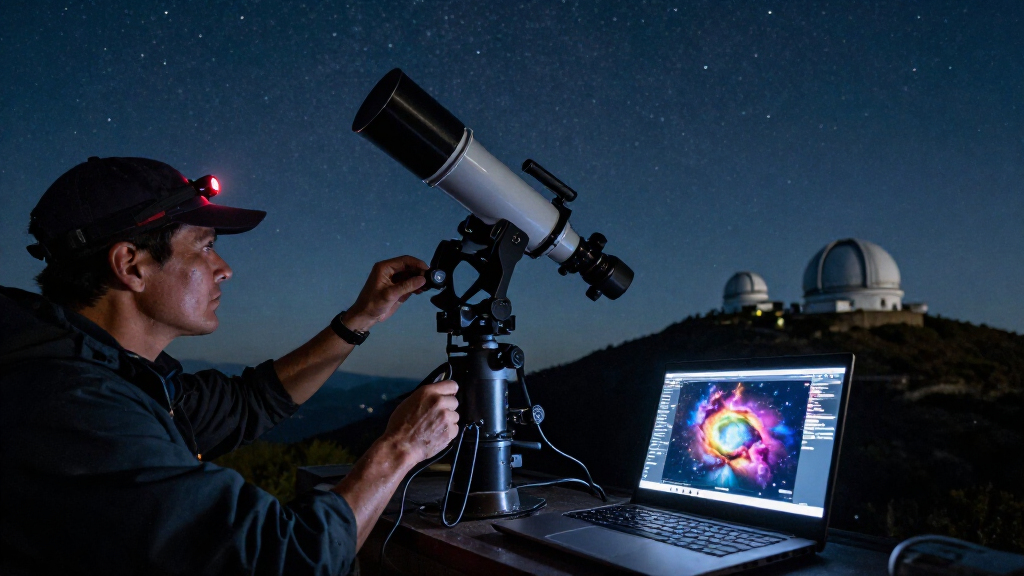
I ranked these options by how well they serve deep-sky imaging specifically, rather than treating every astronomy camera or smart telescope as an equal substitute. My main criteria were sensor format and likely framing flexibility, cooling for sustained exposures, connection and control needs, and how readily each product fits a separate telescope-and-mount setup. I also weighed setup simplicity, the amount of additional equipment a buyer may need, and whether the device is best understood as a camera or a complete imaging system.
The dedicated cooled cameras rank highest for buyers building a flexible long-exposure rig; within that group, sensor size and the balance between capability and system demands shape their order. Integrated products rank on the convenience they add, not on camera-body specifications alone. Smaller or simpler USB cameras sit lower because their narrower role makes them less adaptable for sustained deep-sky projects, though they may still suit learning, basic imaging, or specific compact setups. Product names and features identify the models being compared; buyers should confirm current compatibility and included accessories before purchase.
Factors to Consider When Choosing Deep Sky Astrophotography Cameras
Choosing among these deep sky astrophotography cameras starts with the imaging system around the camera. A sensor that looks like a clear upgrade on paper may be a poor fit for your telescope, mount, computer, or target list. Use these broader tradeoffs to narrow the field before choosing a model.
Match Sensor Size to Your Telescope and Targets
A larger sensor captures a wider area of sky only when the telescope’s corrected image circle can cover it. With APS-C models such as the SC571CC, check whether your optics can illuminate the sensor without dark corners or distorted stars. Smaller sensors can frame compact galaxies and nebulae tightly, but may require mosaics for expansive targets. Use a field-of-view calculator with your telescope’s focal length and the camera’s sensor dimensions before buying. A common mistake is choosing the biggest sensor available, then discovering that the telescope or focuser limits its usable field. Target size, not sensor prestige, should drive this choice.
Decide Whether Cooling Fits Your Imaging Routine
Cooling helps maintain a more consistent sensor temperature across long sessions, which makes calibration frames and repeatable workflows easier to manage. It does not remove the need for dark frames, good sky conditions, accurate focus, or careful tracking. A cooled camera also needs power, temperature control, and extra setup space, so it makes less sense for quick portable sessions. Before paying for cooling, ask whether you plan to collect long exposures regularly and whether your computer and capture software can support the workflow. Buyers who image from a fixed setup may benefit more than those who prioritize grab-and-go simplicity. The best choice is the one whose operating routine you will actually use.
Check Pixel Scale Alongside Pixel Count
Megapixels alone do not tell you whether a camera will pair well with your telescope. Pixel size and focal length together determine image scale, which affects how finely stars and target detail are sampled. A small-pixel sensor can oversample under average seeing or with a long focal length, producing larger files without revealing more useful detail. A larger pixel scale may suit shorter focal lengths or typical atmospheric conditions better. Use an image-scale calculator and compare the result with your local seeing and intended targets. This check can prevent an expensive mismatch that no camera specification sheet makes obvious.
Budget for the Whole Imaging Chain
The camera is only one part of a deep-sky rig: tracking mount, telescope, corrector, filters, power, cables, and capture computer can shape results just as strongly. A camera with a larger sensor may expose limitations in a telescope’s field correction or a mount’s tracking accuracy. Integrated choices such as the ASI585MC Air and smart telescopes reduce some separate-control demands, but they do not offer the same mix-and-match freedom as a camera body. Write down the equipment you already own and identify which component is the actual bottleneck. Paying for a more capable sensor before improving tracking may yield little practical gain. Compare complete-system needs, not camera bodies in isolation.
Choose Between a Camera Body and an All-in-One Telescope
A dedicated camera is suited to buyers who want to choose their own optics, mount, filters, and capture software. A smart telescope combines much of that system into one product, reducing setup decisions and making automated imaging more accessible. That convenience comes with less control over the optical configuration and fewer upgrade paths than a modular rig. Before choosing, ask whether you want to learn the separate stages of acquisition and processing or would rather keep the workflow contained. Also check how the product handles file access, target selection, power, and operation without a network connection if those matter to your observing location. Neither approach is inherently better; they serve different definitions of flexibility.
Plan for Filters, Software, and Data Handling
Color cameras simplify capture by recording color information in one exposure sequence, but light pollution and target type can still make filter choices relevant. Check whether the camera accepts the filters and adapters your optical train requires, and confirm that your preferred capture software supports its control features. Larger sensors and higher-resolution files can increase storage use and processing time, especially across many nights of data. Buyers often focus on the first session and overlook the ongoing work of calibration, file organization, and stacking. A modest camera that fits an established software workflow can be more useful than a capable model that complicates every session. Plan the post-capture process as carefully as the hardware setup.
Frequently Asked Questions
Should I choose a cooled camera or a simpler uncooled model for my first deep-sky setup?
Choose a cooled camera if you expect to collect long sessions regularly and want repeatable sensor temperatures for calibration. A model such as the SV605CC gives a more dedicated long-exposure path than a basic uncooled USB camera, but it also adds power and setup requirements. An uncooled camera can be a sensible way to learn capture, focusing, and stacking without building a more involved system. Your mount and tracking accuracy may matter more than cooling at the start. If you already own a stable rig and plan to image frequently, cooling is easier to justify.
Is an APS-C camera a safe upgrade if my telescope currently uses a smaller sensor?
Not automatically: a larger sensor needs a telescope and corrector that provide a sufficiently large, well-corrected image circle. The SC571CC can frame broader areas than smaller-format options, but the edges may show vignetting or star distortion if the optics are not suited to APS-C. Check the telescope maker’s coverage guidance and calculate the resulting field of view before switching. You may also need to account for adapters, back focus, and larger data files. If your main targets are small, a larger sensor may add little practical value.
Can a smart telescope replace a dedicated astrophotography camera?
It can replace the need to assemble a separate camera, telescope, and control workflow for buyers who value an integrated system. The Dwarf models and Seestar S30 Pro are better compared as complete imaging products than as direct camera-body alternatives. A modular dedicated camera offers more choice of optics and mount, and usually gives the owner more freedom to shape the rig. Smart telescopes reduce setup decisions but limit component upgrades and optical customization. Pick based on whether convenience or system flexibility matters more to you.
Do I need a guiding camera if I already have a camera for imaging?
A guiding camera monitors star movement so a mount can correct tracking errors during longer exposures; it serves a different job from the main imaging camera. The ASI585MC Air combines guiding and control functions, which can reduce the number of separate devices in a compatible setup. That integration does not make guiding mandatory for every rig: exposure length, mount behavior, focal length, and tolerance for tracking errors all matter. Check how the guide camera connects to your scope and control software before relying on an all-in-one arrangement. A simpler wide-field setup may not need the same guiding workflow as a long-focal-length system.
Are low-resolution cameras suitable for photographing galaxies and nebulae?
They can capture bright targets and help a new imager learn framing, focus, exposure, and processing, but limited resolution narrows how much fine detail and cropping room the final image can support. Models such as the SV105, SV305C, and ASI662MC fit more constrained or introductory roles than the cooled larger-sensor cameras in this roundup. The telescope’s focal length and target size also affect whether a small sensor’s framing is useful. For faint, extended targets, tracking and total integration time remain important regardless of pixel count. Choose a basic camera for learning or a specific compact setup, not simply because a low megapixel number guarantees an easier result.
Conclusion
For a dedicated rig that balances cooling and a manageable sensor format, I recommend the SVBONY SV605CC as best overall. The SVBONY SV405CC is the value-minded cooled alternative for buyers whose setup suits its sensor, while the SVBONY SC571CC is my best premium-style choice for those who can use APS-C coverage and handle its optical and data demands. Beginners who prefer a guided, integrated workflow should look at the Dwarf 3 or Seestar S30 Pro; choose between them by comparing the complete system and controls you want. For a compact combination of imaging, guiding, and control, the ZWO ASI585MC Air has a distinct role. If your main goal is basic entry-level experimentation, consider the simpler SV105, SV305C, or ASI662MC, but move up to a cooled camera when long-exposure flexibility becomes your priority.