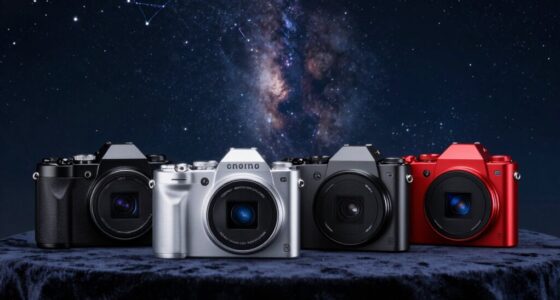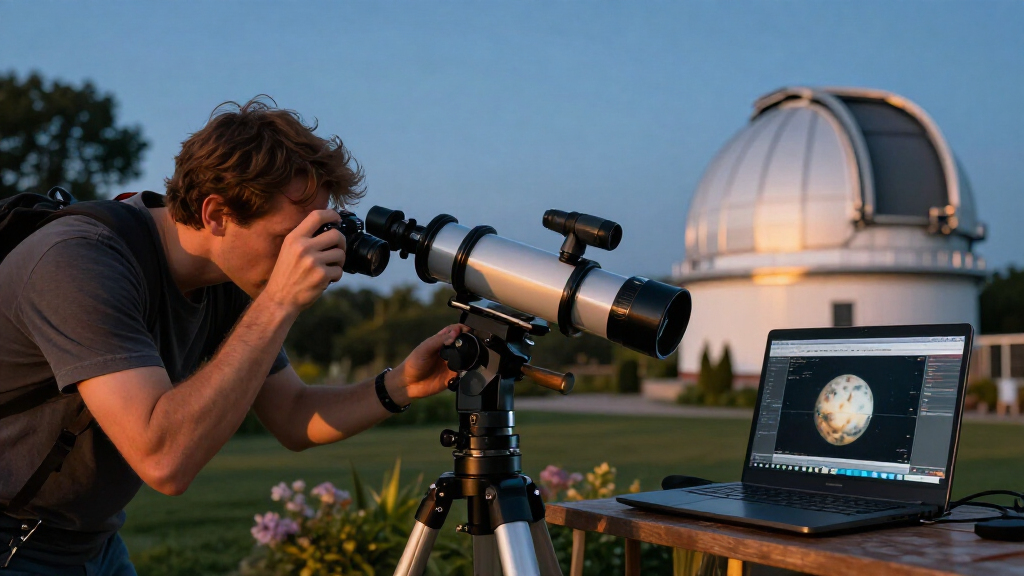
Choosing the right planetary astrophotography cameras requires balancing sensor sensitivity, frame rate, and resolution against your telescope’s focal length and seeing conditions. My top recommendation for most enthusiasts is the ZWO ASI662MC, which offers an exceptional balance of high sensitivity and low noise for capturing Jupiter and Saturn details. For those on a tighter budget, the SVBONY SV705C provides impressive 4K resolution and USB 3.0 speed, making it a strong contender for detailed lunar work. The main tradeoff in this category is between pixel size and resolution: larger pixels gather more light but may oversample in poor atmospheric conditions, while smaller pixels offer higher resolution but require excellent seeing. Continue reading to see how these twelve models stack up against each other in real-world performance.

Prime made for students and young adults
- Fast, free delivery for dorm and study essentials
- Prime Video and Amazon Music included
- Member-only deals
Key Takeaways
- USB 3.0 connectivity has become the baseline for serious planetary imaging, as USB 2.0 models like the older SV305C struggle to deliver high frame rates needed for lucky imaging.
- Small pixel sizes (under 3.0 microns) on cameras like the SC715C and ASI662MC are ideal for long-focal-length telescopes (2000mm+) but require excellent atmospheric stability to avoid blurry results.
- Cooled cameras, such as the SV605CC, offer negligible benefits for planetary imaging compared to deep-sky work, making them an expensive choice for users focused solely on planets and the moon.
- Dedicated planetary cameras with global or rolling shutters optimized for high-speed capture outperform generic 4K webcam-style eyepiece cameras in dynamic range and bit-depth fidelity.
- The ZWO ASI662MC stands out as the best all-rounder due to its Sony IMX662 sensor, which provides a sweet spot of 2.9-micron pixels that work well with f/10 to f/15 systems without needing extreme seeing conditions.
| 1.25-Inch USB Digital Telescope Eyepiece Camera |  | Best Entry-Level Starter | Sensor Resolution: 640 x 480 pixels | Sensor Type: Color CMOS | Interface: USB 2.0 | VIEW LATEST PRICE | See Our Full Breakdown |
| SVBONY SV705C IMX585 USB 3.0 Astronomy Telescope Camera |  | Best Overall Performance | Sensor: Sony IMX585 | Resolution: 3856 x 2180 | Interface: USB 3.0 | VIEW LATEST PRICE | See Our Full Breakdown |
| SVBONY SV105 1.25-Inch Telescope Camera with IMX307 CMOS Sensor |  | Best Value for Beginners | Sensor: IMX307 Color CMOS | Resolution: 1920 x 1080 | Interface: USB 2.0 | VIEW LATEST PRICE | See Our Full Breakdown |
| ZWO ASI662MC 2.1MP USB 3.0 Color Astronomy Camera |  | Best for High-Speed Planetary Imaging | Sensor: Sony IMX662 | Resolution: 1920 x 1080 | Frame Rate: 102.6 fps | VIEW LATEST PRICE | See Our Full Breakdown |
| SVBONY SC715C Telescope Planetary Camera – 1.45µm Micro Pixel IMX715 Color | 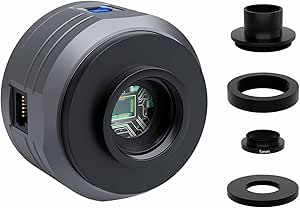 | Best Compact High-Resolution | Sensor: IMX715 | Resolution: 4K (3840 x 2160 approx) | Pixel Size: 1.45 µm | VIEW LATEST PRICE | See Our Full Breakdown |
| Celestron NexImage 20 Solar System Imager |  | Best High-Resolution Planetary Sensor | Sensor Resolution: 20 MP | Pixel Size: 1.4 microns | Max Frame Rate: 90 fps | VIEW LATEST PRICE | See Our Full Breakdown |
| Telonixium 4K Wireless Telescope Eyepiece Camera | 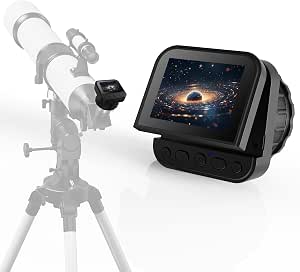 | Best Standalone Visual Observer | Sensor Type: 8MP CMOS | Video Resolution: 4K | Display: 2.8-inch IPS | VIEW LATEST PRICE | See Our Full Breakdown |
| SVBONY SV605CC Cooled Color Astrophotography Camera |  | Best Cooled Hybrid Option | Sensor: Sony IMX533 Color | Resolution: 9 MP (3008 x 3008) | Pixel Size: 3.76 μm | VIEW LATEST PRICE | See Our Full Breakdown |
| SVBONY SV305C 2.1MP Color Astrophotography Camera |  | Best Entry-Level Planetary Camera | Sensor: IMX662 CMOS | Resolution: 2.1 MP | Pixel Size: 2.9 µm | VIEW LATEST PRICE | See Our Full Breakdown |
| FIBONAX 4K 8MP USB Telescope Camera |  | Best Budget 4K Video Option | Sensor: 8MP CMOS | Video: Up to 4K | Mount: 1.25-inch | VIEW LATEST PRICE | See Our Full Breakdown |
| Yunir 4K Telescope Eyepiece Camera with 3-Inch Color Display |  | Best Standalone Display Option | Resolution: 4K | Display: 3-inch color screen | Storage: Memory cards up to 128 GB | VIEW LATEST PRICE | See Our Full Breakdown |
| SVBONY SV305C Pro 2MP Telescope Camera with IMX662 Sensor |  | Best High-Speed Planetary Camera | Sensor: IMX662 CMOS | Resolution: 2 MP; 1920 × 1080 | Max Frame Rate: 107 fps | VIEW LATEST PRICE | See Our Full Breakdown |
| planetary astrophotography camera | Sensor | Resolution | Interface | Weight |
|---|---|---|---|---|
| 1.25-Inch USB Digital Telescop | — | — | USB 2.0 | 150 g |
| SVBONY SV705C IMX585 USB 3.0 A | Sony IMX585 | 3856 x 2180 | USB 3.0 | — |
| SVBONY SV105 1.25-Inch Telesco | IMX307 Color CMOS | 1920 x 1080 | USB 2.0 | 0.29 kg |
| ZWO ASI662MC 2.1MP USB 3.0 Col | Sony IMX662 | 1920 x 1080 | USB 3.0 | — |
| SVBONY SC715C Telescope Planet | IMX715 | 4K (3840 x 2160 approx) | USB 3.0 | 147 g |
| Celestron NexImage 20 Solar Sy | — | — | — | — |
| Telonixium 4K Wireless Telesco | — | — | — | — |
| SVBONY SV605CC Cooled Color As | Sony IMX533 Color | 9 MP (3008 x 3008) | — | 1.6 kg |
| SVBONY SV305C 2.1MP Color Astr | IMX662 CMOS | 2.1 MP | USB 2.0 | — |
| FIBONAX 4K 8MP USB Telescope C | 8MP CMOS | — | — | Approx. 110 g |
| Yunir 4K Telescope Eyepiece Ca | — | 4K | — | 240 g |
| SVBONY SV305C Pro 2MP Telescop | IMX662 CMOS | 2 MP; 1920 × 1080 | USB 3.0; ST4 guiding | — |
More Details on Our Top Picks
1.25-Inch USB Digital Telescope Eyepiece Camera
This camera serves as a low-barrier entry point for beginners who want to see what planetary imaging involves without a significant financial commitment. It connects directly to a standard 1.25-inch focuser, offering plug-and-play simplicity that contrasts sharply with the more complex setup required by the SVBONY SV705C. While the 300,000-pixel sensor limits detail and dynamic range compared to modern CMOS options, it is sufficient for capturing basic lunar features and bright planets like Jupiter. The USB 2.0 interface restricts frame rates, making it less effective for lucky imaging where high-speed bursts are necessary to freeze atmospheric turbulence. It is strictly a learning tool; serious amateurs will quickly outgrow its capabilities, but it provides a tangible understanding of how eyepiece projection works before investing in dedicated hardware.Pros:- Extremely affordable entry price for testing eyepiece projection
- No drivers required for basic PC connectivity
- Compact and lightweight form factor fits most focusers
Cons:- Very low resolution results in soft, pixelated images
- USB 2.0 bandwidth limits frame rates and causes lag
- Lacks the dynamic range needed for high-contrast planetary work
Best for: Absolute beginners who want a cheap, simple way to test their telescope’s optical performance and try basic lunar imaging.
Not ideal for: Serious planetary imagers who need high frame rates for lucky imaging or anyone seeking sharp, detailed planetary surfaces.
- Sensor Resolution:640 x 480 pixels
- Sensor Type:Color CMOS
- Interface:USB 2.0
- Mount Size:1.25 inch
- Max Frame Rate:15 fps (full res)
- Weight:150 g
Our verdict“A disposable-quality starter kit that teaches the basics but lacks the resolution for serious results.”
SVBONY SV705C IMX585 USB 3.0 Astronomy Telescope Camera
The SVBONY SV705C stands out as the most versatile option in this lineup due to its Sony IMX585 sensor and dual-gain High Conversion Gain (HCG) technology. Unlike the ZWO ASI662MC, which is strictly a planetary camera, the SV705C offers enough sensitivity and dynamic range to handle entry-level deep-sky imaging alongside planetary work. The USB 3.0 interface ensures rapid data transfer, critical for capturing long sequences of high-resolution frames without dropping frames. Its CS-mount compatibility allows users to swap lenses for telephoto astro-photography, a feature absent in fixed-focus eyepiece cameras like the SVBONY SV105. While it requires more technical know-how to configure than simpler USB 2.0 models, the payoff in image quality and flexibility makes it the superior choice for the dedicated enthusiast.Pros:- High near-infrared sensitivity improves planetary detail in hazy conditions
- Dual-gain HCG reduces read noise while maintaining wide dynamic range
- USB 3.0 enables fast, high-resolution video capture for lucky imaging
- CS-mount adapter allows for interchangeable lens photography
Cons:- Larger sensor size requires careful back-focus calculation for eyepiece projection
- More expensive than basic eyepiece cameras
- Not cooled, limiting its potential for long-exposure deep-sky work
Best for: Enthusiasts who want a single camera capable of both high-detail planetary lucky imaging and entry-level deep-sky targets.
Not ideal for: Users looking for a strictly plug-and-play experience with no learning curve regarding gain settings and stacking software.
- Sensor:Sony IMX585
- Resolution:3856 x 2180
- Interface:USB 3.0
- Pixel Size:2.9 µm
- Peak QE:~90%
- Mount:CS with C-CS adapter
Our verdict“The most balanced camera here, offering professional-grade sensor features at a mid-range price point.”
SVBONY SV105 1.25-Inch Telescope Camera with IMX307 CMOS Sensor
This model fills the gap between toy-grade sensors and professional CMOS cameras, offering a 1/2.8-inch IMX307 sensor that delivers genuine Full HD 1080p video. Compared to the 1.25-Inch USB Digital Telescope Eyepiece Camera, the SV105 provides significantly sharper lunar and planetary details thanks to its higher pixel count and better low-light compensation. It remains a USB 2.0 device, which restricts frame rates compared to the ZWO ASI662MC, but this is acceptable for beginners who prioritize resolution over speed. The plug-and-play nature eliminates driver hassles, making it ideal for those frustrated by the configuration complexity of the SVBONY SV705C. It is a robust, straightforward tool for capturing clear videos and stills of bright targets without breaking the bank.Pros:- Full HD 1080p resolution provides clear, detailed lunar images
- Works across Windows, Linux, macOS, and Android platforms
- Plug-and-play USB connection requires no additional driver installation
- Low-light compensation helps bright up dim planetary features
Cons:- USB 2.0 interface limits frame rates to 30 fps at full resolution
- Not optimized for deep-sky imaging due to sensor sensitivity limits
- Lacks the infrared sensitivity found in newer ZWO models
Best for: Hobbyists who want reliable 1080p lunar and planetary imaging without the cost or complexity of USB 3.0 systems.
Not ideal for: Imagers targeting fast-moving planets who need high frame rates to overcome atmospheric seeing conditions.
- Sensor:IMX307 Color CMOS
- Resolution:1920 x 1080
- Interface:USB 2.0
- Max Frame Rate:30 fps
- Mount Size:1.25 inch
- Weight:0.29 kg
Our verdict“A solid, cost-effective upgrade from basic eyepiece cameras that delivers reliable HD results.”
ZWO ASI662MC 2.1MP USB 3.0 Color Astronomy Camera
The ZWO ASI662MC is engineered specifically for lucky imaging, boasting a frame rate of 102.6 fps at full resolution. This speed is its primary advantage over the SVBONY SV105, allowing users to capture thousands of frames in seconds to freeze atmospheric turbulence effectively. The zero amp glow feature ensures cleaner images, particularly in the corners, which is a common flaw in older CMOS sensors. While it lacks the larger sensor area of the SVBONY SV705C, making it less versatile for deep-sky wide-field shots, it excels in its niche: sharp, high-contrast planetary details. The 2.9 µm pixels are well-matched to typical telescope focal lengths, minimizing the need for expensive barlow lenses to achieve optimal sampling.Pros:- Extremely high frame rate (100+ fps) ideal for lucky imaging
- Zero amp glow produces cleaner images without corner artifacts
- USB 3.0 interface prevents data bottlenecks during high-speed capture
- Infrared sensitivity helps penetrate atmospheric haze for better detail
Cons:- Smaller 1/2.8-inch sensor limits field of view for wide targets
- Primarily designed for planetary use, not deep-sky long exposures
- Requires specific ZWO-compatible software for optimal performance
Best for: Dedicated planetary imagers who need high frame rates to capture sharp details on Jupiter, Saturn, and Mars.
Not ideal for: Users interested in wide-field deep-sky imaging or those who prefer the larger sensor format of the SV705C.
- Sensor:Sony IMX662
- Resolution:1920 x 1080
- Frame Rate:102.6 fps
- Pixel Size:2.9 µm
- Interface:USB 3.0
- Amp Glow:Zero
Our verdict“The definitive choice for pure planetary imaging where speed and clarity matter most.”
SVBONY SC715C Telescope Planetary Camera – 1.45µm Micro Pixel IMX715 Color
This camera offers 4K resolution in an incredibly lightweight aluminum body weighing just 147 grams, making it easier to balance on small telescopes than the bulkier SVBONY SV705C. The IMX715 sensor with 1.45 µm pixels is designed for high sampling rates, allowing users to capture fine planetary details with shorter focal length telescopes. However, the USB 3.0 frame rate of 45.5 fps is lower than the ZWO ASI662MC, which may hinder lucky imaging efficiency on planets with rapid rotation. It includes an ST4 autoguider port, a feature useful for hybrid setups, though less critical for pure planetary work. This model suits those who prioritize high resolution and portability over raw capture speed.Pros:- High 4K resolution captures fine planetary surface details
- Ultra-lightweight design reduces load on focuser mechanisms
- Includes ST4 autoguider port for hybrid imaging setups
- Aluminum alloy body aids in heat dissipation during long sessions
Cons:- Lower frame rate compared to the ZWO ASI662MC
- Tiny 1.45 µm pixels may require longer focal lengths for optimal sampling
- Requires specific software installation for full functionality
Best for: Astrophotographers with smaller telescopes who want high-resolution 4K capability in a lightweight package.
Not ideal for: Users with large focal lengths who need extremely high frame rates to avoid undersampling or motion blur.
- Sensor:IMX715
- Resolution:4K (3840 x 2160 approx)
- Pixel Size:1.45 µm
- Interface:USB 3.0
- Weight:147 g
- Autoguider Port:ST4
Our verdict“A high-resolution, lightweight option ideal for small telescopes where weight and detail are priorities.”
Celestron NexImage 20 Solar System Imager
The Celestron NexImage 20 stands out for its 20 MP BSI CMOS sensor, offering significantly higher pixel density than entry-level options like the SVBONY SV305C. This resolution is critical for planetary work, as it allows for aggressive cropping of the central region without losing fine detail in the final stack. The inclusion of autoguiding support is a unique feature for a planetary camera, though its primary strength remains in high-frame-rate imaging of the Moon and planets. Compared to the FIBONAX 4K, the NexImage 20 provides better noise performance thanks to the BSI architecture, making it superior for capturing subtle atmospheric details. However, the 1.4 micron pixel size demands a telescope with longer focal length; using it on fast scopes may result in undersampled images. It is a serious tool for those who prioritize resolution over ease of use.Pros:- 20 MP resolution allows for extreme cropping and detail retention
- BSI CMOS architecture improves sensitivity and reduces noise
- USB-C connectivity ensures stable data transfer for high frame rates
Cons:- Small 1.4µm pixels require longer focal lengths for optimal sampling
- Solar imaging requires purchasing a separate, dedicated solar filter
Best for: Serious planetary imagers with long-focal-length telescopes who need high pixel count for detailed lunar and planetary work.
Not ideal for: Beginners with short-focus scopes, as the small pixels may require undersampling or result in poor image quality without extensive post-processing.
- Sensor Resolution:20 MP
- Pixel Size:1.4 microns
- Max Frame Rate:90 fps
- Connectivity:USB-C
- Mount Type:1.25-inch or C-thread
- Software:iCap included
Our verdict“This camera is the best choice for advanced users who want maximum resolution from a planetary camera and have the optics to support it.”
Telonixium 4K Wireless Telescope Eyepiece Camera
Unlike the Celestron NexImage 20 or SVBONY SV305C, which rely entirely on a computer for display and processing, the Telonixium 4K Wireless Telescope Eyepiece Camera operates independently with its 2.8-inch rotatable IPS screen. This makes it ideal for visual observers who want to capture images or video without carrying a laptop to the eyepiece. The WiFi app control adds convenience for remote viewing, though the 32ft range limits flexibility in large observatories. While it records 4K video, the image quality is generally lower than dedicated planetary cameras like the FIBONAX 4K due to the smaller 8MP sensor and compression algorithms. It is not designed for high-precision scientific imaging or stacking long sequences. Instead, it excels at quick documentation and sharing live views with friends or family, offering a user-friendly alternative to complex digital imaging setups.Pros:- Built-in 2.8-inch rotatable screen allows standalone operation
- WiFi connectivity enables remote viewing and control via smartphone
- Records 4K video and up to 64MP interpolated images
Cons:- Image quality is inferior to dedicated USB planetary cameras
- WiFi range is limited to approximately 32 feet
Best for: Visual observers and educators who want a portable, screen-based solution for quick lunar and planetary captures without a computer.
Not ideal for: Astrophotographers seeking high-dynamic-range stacking or deep-sky capabilities, as it lacks the raw data fidelity for serious processing.
- Sensor Type:8MP CMOS
- Video Resolution:4K
- Display:2.8-inch IPS
- Connectivity:WiFi
- Storage:microSD up to 512GB
- Battery:2000mAh rechargeable
Our verdict“Choose this for its convenience and standalone capability if you prioritize quick sharing and visual assistance over raw imaging performance.”
SVBONY SV605CC Cooled Color Astrophotography Camera
The SVBONY SV605CC occupies a unique niche between dedicated planetary cameras and deep-sky tools. Its dual-layer cooling reduces sensor glow, a feature absent in the SVBONY SV305C and FIBONAX 4K, making it suitable for both lucky imaging and shorter deep-sky exposures. The 3.76 µm pixels offer a better balance for small planets compared to the large-pixel deep-sky sensors, yet they are too large for high-resolution planetary detail on fast scopes. Compared to the Celestron NexImage 20, the SV605CC trades resolution for thermal stability, which is beneficial for longer lucky imaging sessions where heat-induced noise can degrade data. This camera is a versatile compromise for users who want to dabble in both planetary and wide-field nebulae without buying two separate systems. However, its size and weight make it less ideal for portable setups compared to lighter USB-C models.Pros:- Dual-layer cooling reduces thermal noise for cleaner images
- Square 9 MP sensor offers versatile framing for planets and nebulae
- High quantum efficiency supports faster exposure times
Cons:- Larger pixels limit resolution on small planetary targets
- Heavier and bulkier than standard planetary cameras
Best for: Hybrid imagers who want one camera for both planetary lucky imaging and short-exposure deep-sky objects, valuing cooling for noise reduction.
Not ideal for: Pure planetary enthusiasts who need maximum resolution and frame rates, as the pixel size limits fine detail capture on small targets.
- Sensor:Sony IMX533 Color
- Resolution:9 MP (3008 x 3008)
- Pixel Size:3.76 μm
- Cooling:Up to 30°C below ambient
- Connectivity:USB 3.0
- Weight:1.6 kg
Our verdict“This is the best choice for multi-purpose users who need cooled performance for both planetary and limited deep-sky work.”
SVBONY SV305C 2.1MP Color Astrophotography Camera
The SVBONY SV305C is a reliable entry point into digital planetary imaging, offering a 2.1 MP IMX662 sensor with low readout noise. Compared to the FIBONAX 4K, the SV305C uses a more modern sensor architecture that handles high frame rates more efficiently, reducing the risk of dropped frames during long captures. The built-in 128 MB buffer is a critical feature for beginners, as it prevents data loss if the computer struggles to keep up with the data stream. While it lacks the cooling of the SVBONY SV605CC, its price point and ease of use make it far more accessible. The 2.9 µm pixels are well-suited for average focal lengths, offering a good balance between field of view and resolution for Moon and Jupiter imaging. It is not ideal for high-end scientific work, but for learning the basics of lucky imaging, it provides a stable and forgiving platform.Pros:- IMX662 sensor offers low noise and good red sensitivity
- 128 MB buffer prevents frame drops during capture
- Supports ROI and binning for flexible workflow management
Cons:- Built-in UV/IR cut filter is not removable for specialized imaging
- USB 2.0 interface limits maximum sustained frame rates compared to USB 3.0
Best for: Beginners starting their first planetary imaging project who need a reliable, buffered camera with modern sensor technology.
Not ideal for: Users with very short focal ratio scopes, as the pixel size may undersample the image, requiring additional barlow lenses.
- Sensor:IMX662 CMOS
- Resolution:2.1 MP
- Pixel Size:2.9 µm
- Buffer:128 MB DDRIII
- Interface:USB 2.0
- Mount:1.25-inch
Our verdict“This camera is the ideal starter kit for planetary imaging, balancing modern sensor performance with beginner-friendly features.”
FIBONAX 4K 8MP USB Telescope Camera
The FIBONAX 4K is a straightforward 8MP camera designed for users who prioritize high-resolution stills and 4K video over high-speed planetary stacking. Compared to the SVBONY SV305C, it offers more pixels for lunar mapping but lacks the sophisticated buffer management and modern BSI sensor advantages. Its removable IR-cut filter is a valuable feature for those who want to experiment with near-infrared lunar imaging, a capability not found on the Telonixium or basic NexImage models. The camera relies on UVC compatibility, meaning it works with many standard webcam software packages, simplifying the driver installation process for beginners. However, the USB 2.0 interface and lack of dedicated astronomy software support mean it is less optimized for high-frame-rate lucky imaging than the SVBONY SV305C. It is best suited for casual lunar observers and those wanting a simple plug-and-play experience for bright targets.Pros:- 8MP resolution provides detailed lunar and planetary stills
- Removable IR-cut filter allows for near-infrared experimentation
- UVC compatibility enables use with standard webcam software
Cons:- USB 2.0 interface limits data throughput for high frame rates
- Lacks dedicated astronomy software support found in specialized cameras
Best for: Casual observers and lunar mappers who want high-resolution stills and 4K video without complex software setups.
Not ideal for: Planetary imagers targeting fast-moving planets like Jupiter, as the interface and sensor speed are not optimized for high-frame-rate stacking.
- Sensor:8MP CMOS
- Video:Up to 4K
- Mount:1.25-inch
- Filter:Removable IR-cut
- Compatibility:Windows, macOS, Linux
- Weight:Approx. 110 g
Our verdict“Choose this for its high pixel count and simple UVC compatibility if your primary interest is lunar photography and casual video.”
Yunir 4K Telescope Eyepiece Camera with 3-Inch Color Display
This camera stands out because it eliminates the need for a laptop by integrating a 3-inch color display directly into the eyepiece housing. Unlike the SVBONY SV305C Pro, which requires a computer connection to view images, this unit lets you frame and record planetary details or lunar craters on the spot. It records in 4K resolution, offering higher pixel counts than many dedicated planetary cameras, though it lacks the high frame rates needed for lucky imaging of fast-moving objects. The manual focus can be tricky when magnification is high, requiring steady hands or a motorized focuser. It is ideal for visual observers who want to capture memories without setting up a full imaging rig, but serious astrophotographers will find the lack of software control limiting for stacking and processing.
Pros:- Built-in screen allows for standalone operation
- 4K recording captures high-resolution detail
- Compact and lightweight for portable setups
- Compatible with standard 1.25-inch eyepieces
Cons:- Manual focus is difficult at high magnifications
- No software control for exposure or gain
- Memory card is not included in the package
Best for: Casual observers who want to view and record celestial events without carrying a laptop
Not ideal for: Serious planetary imagers who need high frame rates and raw data for lucky imaging
- Resolution:4K
- Display:3-inch color screen
- Storage:Memory cards up to 128 GB
- Weight:240 g
- Dimensions:5.11 × 3.14 × 2.36 inches
- Focus Type:Manual
- Compatibility:Telescopes and microscopes
Our verdict“This is the right choice for visual astronomers who prioritize convenience and immediate playback over deep-sky processing capabilities.”
SVBONY SV305C Pro 2MP Telescope Camera with IMX662 Sensor
This model is engineered for lucky imaging, leveraging the IMX662 sensor to achieve 107 frames per second at full resolution. This speed is critical for freezing atmospheric turbulence, a task where the Yunir 4K Eyepiece Camera struggles due to its lower frame rate and lack of high-speed buffering. The low readout noise of 0.7e- ensures clean data even in short exposures, making it far superior for capturing fine details on Jupiter or Saturn. However, it requires a computer for operation, meaning you cannot use it as a standalone viewer. The ST4 guiding interface adds versatility for autoguiding, but the lack of iPad compatibility limits mobile workflows. It is a dedicated tool for those ready to invest time in software processing like AutoStakkert!
Pros:- High frame rate freezes atmospheric blur
- Low readout noise produces cleaner images
- 128MB buffer prevents dropped frames
- USB 3.0 ensures fast data transfer
Cons:- Requires a computer to operate
- No iPad or mobile device support
- Lacks built-in cooling for deep-sky work
Best for: Enthusiasts focused on planetary imaging who use PC-based stacking software
Not ideal for: Users who want a plug-and-play experience without a computer or tablet
- Sensor:IMX662 CMOS
- Resolution:2 MP; 1920 × 1080
- Max Frame Rate:107 fps
- Readout Noise:0.7e-
- Interface:USB 3.0; ST4 guiding
- Buffer:128MB DDR
- Video Format:MP4
Our verdict“Choose this camera if your primary goal is capturing high-quality planetary images and you are comfortable with computer-based processing workflows.”

How We Picked
I evaluated these cameras based on their sensor specifications, specifically focusing on pixel size, quantum efficiency, and full well capacity, which directly impact the ability to capture fine planetary details during short exposure windows. I also prioritized models with USB 3.0 interfaces, as high frame rates are essential for the “lucky imaging” technique, where hundreds of frames are stacked to overcome atmospheric turbulence. Connectivity and software compatibility were also key factors; I favored cameras with robust driver support for popular software like FireCapture and SharpCap, ensuring a smoother workflow for the user.
I ranked the products by weighing performance against price and usability. High-end cooled cameras were penalized for their lack of necessity in planetary work, while budget eyepiece cameras were assessed for their ability to produce sharp, usable images despite lower build quality. The final list reflects a hierarchy of utility, placing cameras that offer the best balance of resolution, sensitivity, and speed for typical amateur telescopes at the top.
| planetary astrophotography camera | Interface |
|---|---|
| 1.25-Inch USB Digital Telescop | USB 2.0 |
| SVBONY SV705C IMX585 USB 3.0 A | USB 3.0 |
| SVBONY SV105 1.25-Inch Telesco | USB 2.0 |
| ZWO ASI662MC 2.1MP USB 3.0 Col | USB 3.0 |
| SVBONY SC715C Telescope Planet | USB 3.0 |
| Celestron NexImage 20 Solar Sy | — |
| Telonixium 4K Wireless Telesco | — |
| SVBONY SV605CC Cooled Color As | — |
| SVBONY SV305C 2.1MP Color Astr | USB 2.0 |
| FIBONAX 4K 8MP USB Telescope C | — |
| Yunir 4K Telescope Eyepiece Ca | — |
| SVBONY SV305C Pro 2MP Telescop | USB 3.0; ST4 guiding |
Factors to Consider When Choosing Planetary Astrophotography Cameras
Selecting a camera for planetary imaging is distinct from choosing one for deep-sky objects. The short exposure times and high frame rates required to freeze atmospheric distortion mean that sensor technology and data transfer speed are far more critical than long-exposure noise characteristics. Here are the key factors to weigh before making your purchase.
Pixel Size and Telescope Focal Length
The relationship between pixel size and your telescope’s focal length determines whether you are undersampling or oversampling the image. Smaller pixels (2.0-3.0 microns) are ideal for long-focal-length telescopes (over 2000mm) because they can resolve finer details like cloud belts on Jupiter. However, if you have a shorter focal length (under 1500mm), larger pixels (3.75 microns or more) are better because they gather light more efficiently and prevent the image from becoming too soft due to oversampling. Matching your pixel size to your optics is the single most important technical decision in this category.
USB Interface Speed and Frame Rates
Planetary imaging relies on capturing thousands of frames in seconds to select the sharpest ones. USB 3.0 is mandatory for modern high-resolution sensors like the IMX585 or IMX662. A USB 2.0 connection will bottleneck the data transfer, forcing the camera to reduce frame rates or resolution, which severely limits your ability to “lucky image” during moments of good seeing. If you plan to shoot at 4K resolution, ensure the camera explicitly supports high frame rates at that resolution over USB 3.0, not just a theoretical maximum.
Cooling Systems: Necessity vs. Luxury
While cooled cameras like the SV605CC are excellent for deep-sky imaging where exposures last minutes, they are often overkill for planetary work. Planetary exposures are typically milliseconds long, meaning thermal noise is negligible. Paying extra for a Peltier cooling system rarely improves planetary image quality unless you are imaging in extremely hot environments. Unless you also intend to do deep-sky photography, your money is better spent on a better sensor or a higher-quality filter wheel.
Sensor Technology: Global vs. Rolling Shutter
Most dedicated astronomy cameras use rolling shutters, which are generally fine for static planets. However, some advanced users prefer global shutter sensors for high-speed lunar imaging to avoid skewing during rapid tracking adjustments. For the vast majority of users, the quantum efficiency (QE) and noise floor of the sensor matter more than the shutter type. Look for Sony Exmor R sensors (like the IMX662 or IMX585), which currently offer the best balance of sensitivity and low read noise for this application.
Software Compatibility and Driver Support
A great camera is useless if it doesn’t integrate well with your imaging software. ASCOM and DirectShow compatibility are standard requirements. I recommend checking that the camera is fully supported in FireCapture, SharpCap, and AutoStakkert, the industry-standard tools for planetary stacking. Some budget Chinese-brand cameras may have generic drivers that cause crashes or lack features like gain control and exposure adjustments in third-party apps. Always verify community feedback on software integration before buying.
Frequently Asked Questions
Do I need a cooled camera for planetary astrophotography?
No, you generally do not need a cooled camera for planetary imaging. Planetary exposures are very short, often lasting only milliseconds, which means the sensor does not have enough time to accumulate significant thermal noise. Cooling systems add cost, weight, and power consumption without providing a meaningful improvement in image quality for planets and the moon. You should only consider cooled models if you plan to switch frequently between planetary and deep-sky imaging, where long exposures require thermal stability.
Is a 4K camera better than a dedicated planetary camera?
Not necessarily. While 4K cameras offer higher resolution, many generic 4K eyepiece cameras use consumer-grade sensors with poor low-light performance and limited bit-depth. Dedicated planetary cameras, even those with lower megapixel counts like the ZWO ASI662MC, often feature higher quantum efficiency and better dynamic range, which is critical for capturing subtle color variations in planetary atmospheres. A 2MP dedicated camera will frequently outperform a 4K webcam-style camera in image fidelity and software control.
How does pixel size affect my choice of camera?
Pixel size dictates how well your camera matches your telescope’s focal length. If you use a fast telescope or a short focal length, larger pixels (3.75 microns or more) are better because they gather light efficiently and prevent oversampling, which can make images look soft. If you have a long focal length telescope (over 2000mm), smaller pixels (2.0-3.0 microns) are preferred because they can resolve finer details. Buying the wrong pixel size for your optics is a common mistake that leads to blurry or noisy images regardless of camera quality.
Why is USB 3.0 important for planetary cameras?
USB 3.0 is essential because planetary imaging relies on capturing high frame rates to record short bursts of video. Atmospheric turbulence changes rapidly, so you need to capture as many frames as possible in a short window to increase the chance of catching a moment of stable air. USB 2.0 has a limited bandwidth that forces the camera to drop frame rates or resolution, severely hampering your ability to stack frames effectively. Without USB 3.0, you cannot fully utilize the high-speed capabilities of modern sensors.
Can I use a webcam for planetary astrophotography?
You can use a modified webcam, but dedicated astronomy cameras offer significant advantages. Webcams often have compression algorithms that degrade image quality and lack the precise gain and exposure controls needed for planetary work. Dedicated cameras provide uncompressed RAW data, higher bit-depth, and better sensitivity, which translates to cleaner images with more detail. While a webcam is a cheap entry point, investing in a dedicated camera like the SVBONY SV305C Pro or ZWO ASI662MC will yield much better results with less frustration.
Conclusion
Choosing the best planetary astrophotography camera depends largely on your existing telescope and your budget. For the best overall balance of performance and price, the ZWO ASI662MC is the clear winner, offering a sensor that excels in both sensitivity and resolution for typical amateur setups. If you are just starting out and want a capable entry-level option, the SVBONY SV305C Pro delivers excellent value with its IMX662 sensor and USB 3.0 speed. For those with long focal length telescopes seeking maximum detail, the SVBONY SC715C with its tiny 1.45-micron pixels is the specialized tool you need, provided you have the atmospheric stability to support it. Avoid paying a premium for cooling unless you also shoot deep-sky objects, as it adds little benefit to planetary work.
Fall Picks
fall essentials
As an affiliate, we earn on qualifying purchases.