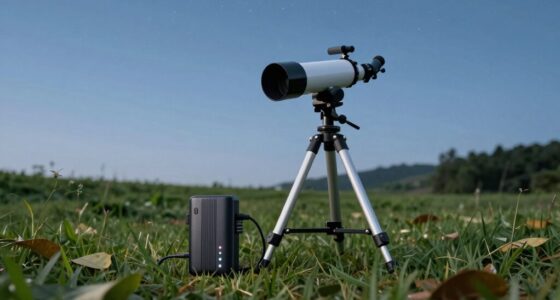

Astrophotography camera accessories fall into a few distinct camps — adapters that connect your camera to a telescope, planetary cameras that replace an eyepiece, and guide cameras that keep long exposures locked on target — and picking the wrong type is the most common mistake new astrophotographers make. My best overall pick is the SVBONY T2 T Ring for Canon EOS/DSLR, because a reliable T-ring is the one accessory almost every setup needs and this one balances price and machining quality well. The Celestron SCT T-Adapter stands out for Schmidt-Cassegrain owners who want solid metal construction without vignetting, while the SVBONY SV105 is the easiest entry point for anyone who wants live-view planetary imaging on a laptop without touching their DSLR. The main tradeoff in this category is versatility versus specialization: cheap ring-and-adapter kits cover many telescopes but nothing deeply, while dedicated cameras and guide sensors do one job far better. Read on for the full breakdown of how these six accessories compare.

Prime made for students and young adults
- Fast, free delivery for dorm and study essentials
- Prime Video and Amazon Music included
- Member-only deals
Key Takeaways
- The SVBONY T2 T Ring earns best overall because a Canon T-ring is the single highest-leverage purchase for DSLR astrophotography, and its threading and fit quality beat the near-identical Astromania unit by a small but real margin.
- Two products in this lineup look almost interchangeable — the SVBONY and Astromania T-rings — but the difference comes down to thread tolerances and price, which makes the Astromania the value pick and the SVBONY the safer long-term buy.
- The Celestron SCT T-Adapter is the only accessory here tied to a specific telescope type; buyers with refractors or Newtonians should skip it entirely rather than pay a premium for compatibility they cannot use.
- The SV105 and SV905C both use small CMOS sensors and 1.25-inch barrels, but they solve different problems: the SV105 is for capturing lunar and planetary images, while the SV905C exists to feed a guiding scope — buying one when you need the other is a common and costly error.
- The Astromania Variable Extension Projection Adapter is the only pick aimed at high-magnification planetary work through eyepiece projection, which makes it the most niche product here — great for Saturn and Jupiter detail, unnecessary for wide-field nebula work.
| SVBONY T2 T Ring Camera Adapter for Canon EOS DSLR |  | Best Overall Prime Focus Starter | Compatibility: Canon EOS and Rebel DSLR (EF mount) | Material: Metal | Accessory Diameter: 1.25 inches | VIEW LATEST PRICE | See Our Full Breakdown |
| SVBONY SV105 Telescope Camera, 1.25″ IMX307 CMOS Eyepiece Camera |  | Best for Beginners | Sensor: IMX307 CMOS color | Resolution: 1920 x 1080 | Frame Rate: 30 fps | VIEW LATEST PRICE | See Our Full Breakdown |
| Celestron SCT T-Adapter for Schmidt-Cassegrain Astrophotography |  | Best for SCT Owners | Compatibility: Schmidt-Cassegrain telescopes | Function: Attaches SLR/DSLR for prime focus imaging | Thread Type: T-threads (M42x0.75) | VIEW LATEST PRICE | See Our Full Breakdown |
| Astromania T2 T Ring and T Adapter Set for Canon EOS |  | Best Value Kit | Compatibility: Canon EOS SLR/DSLR (EF mount) | Material: Aluminum | Thread: M42x0.75 T/T2 | VIEW LATEST PRICE | See Our Full Breakdown |
| Astromania Variable Extension Projection Adapter 1.25″ |  | Best for Planetary Magnification | Type: Variable eyepiece projection adapter | Material: Anodized aluminum | Extension Scale: 34mm graduated | VIEW LATEST PRICE | See Our Full Breakdown |
| SVBONY SV905C Guide Camera Telescope Eyepiece, 1.23MP CMOS Sensor, 1.25-Inch |  | Best Dedicated Autoguiding Camera | Sensor: 1/3 inch CMOS, 1280×960 resolution | Resolution: 1.23 megapixels | Pixel Size: 3.75 microns | VIEW LATEST PRICE | See Our Full Breakdown |
| astrophotography camera accessorie | Compatibility | Material |
|---|---|---|
| SVBONY T2 T Ring Camera Adapte | Canon EOS and Rebel DSLR (EF mount) | Metal |
| SVBONY SV105 Telescope Camera | — | — |
| Celestron SCT T-Adapter for Sc | Schmidt-Cassegrain telescopes | — |
| Astromania T2 T Ring and T Ada | Canon EOS SLR/DSLR (EF mount) | Aluminum |
| Astromania Variable Extension | — | Anodized aluminum |
| SVBONY SV905C Guide Camera Tel | — | — |
More Details on Our Top Picks
SVBONY T2 T Ring Camera Adapter for Canon EOS DSLR
For a Canon DSLR owner stepping into prime focus astrophotography, this T-ring is the simplest, most reliable entry point. The all-metal build gives a rigid camera-to-scope connection with zero wobble, which matters when exposures run into minutes and any flex ruins star shapes. Compared with the Astromania T2 set, it costs less up front because it skips the included 1.25″ adapter — a smart move if your telescope has a 2″ focuser or a threaded rear cell like a Schmidt-Cassegrain, where you’d pair it with the Celestron SCT T-Adapter. The tradeoff is real, though: achieving focus on some refractors and Newtonians requires extension tubes, and there are no electrical contacts, so focusing and aperture are fully manual.
Pros:- Solid metal construction with a secure, wobble-free lock
- Direct prime focus connection for sharp, wide-field shots
- Cheaper than buying a bundled set when you only need the ring
- Works with any T-threaded accessory or T-adapter
Cons:- May not reach focus without separately purchased extension tubes
- No electrical contacts, so everything is manual
- Excludes Canon’s mirrorless EOS-M lineup
Best for: Canon EOS DSLR owners with telescopes that have plenty of inward focus travel or threaded rear cells
Not ideal for: EOS-M or mirrorless Canon shooters — the EF bayonet mount simply won’t fit
- Compatibility:Canon EOS and Rebel DSLR (EF mount)
- Material:Metal
- Accessory Diameter:1.25 inches
- Thread Standard:T2 (M42x0.75)
- Focusing:Manual
- EOS-M Compatible:No
Our verdict“The best-value first purchase for Canon DSLR shooters who already own or plan to buy the telescope-side adapter separately.”
SVBONY SV105 Telescope Camera, 1.25″ IMX307 CMOS Eyepiece Camera
Rather than adapting a DSLR, the SV105 slides straight into any 1.25″ focuser and shows a live view on your laptop or Android device within seconds — no drivers, no focus guessing. That instant feedback is why this stands out as the friendliest on-ramp to astrophotography, especially for kids or anyone sharing views at a star party. Where the T-ring adapters in this lineup demand manual focus and long exposures, the SV105 plays to the IMX307’s strength: fast frame rates for lunar and planetary stacking, with dark-light compensation brightening the preview. The ceiling is low, though. Its sensor can’t touch a DSLR’s for deep-sky work, and iPhone and iPad users are locked out entirely since no iOS support exists.
Pros:- True plug-and-play with no driver installation
- Live real-time viewing makes focusing and framing painless
- 2K high-speed recording suits planetary stacking software
- Works across Windows, Linux, and Android
Cons:- Small sensor limits you to bright solar system targets
- No iOS compatibility at all
- Some systems still require third-party software downloads to record
Best for: First-time astrophotographers and families wanting live lunar and planetary views on a computer or Android phone
Not ideal for: Deep-sky imagers or anyone in the Apple ecosystem — the small sensor and missing iOS support rule it out
- Sensor:IMX307 CMOS color
- Resolution:1920 x 1080
- Frame Rate:30 fps
- Barrel Size:1.25 inches
- Thread:M28.5×0.6
- Video Recording:2K high speed
- OS Support:Windows, Linux, Android, macOS (no iOS)
Our verdict“The easiest way to see the Moon and planets on a screen tonight, as long as you’re not on an iPhone and don’t expect nebula shots.”
Celestron SCT T-Adapter for Schmidt-Cassegrain Astrophotography
Unlike the SVBONY T-ring, which only handles the camera side, this adapter solves the telescope side for Schmidt-Cassegrain owners by threading directly onto the rear cell. That threaded connection is stiffer and more stable than slipping a barrel into a focuser — exactly what you want when a heavy DSLR hangs off the back during long exposures. It also preserves the SCT’s generous back-focus, so reaching focus is rarely a problem, a common headache with the T-ring-plus-extension-tube route on other scope designs. The catch is that it’s useless without a separate T-ring for your camera brand, and it fits essentially nothing outside the SCT world. If you own a refractor or a Dobsonian, skip this and look at the Astromania sets instead.
Pros:- Rigid rear-cell threading eliminates focuser flex with heavy cameras
- Reliable focus travel on SCT optical designs
- Pairs with any camera brand via standard T-rings
- Simple, durable one-piece construction
Cons:- T-ring sold separately, adding cost
- Only fits Schmidt-Cassegrain-style rear cells
Best for: Schmidt-Cassegrain (or compatible rear-cell) telescope owners doing DSLR prime focus imaging
Not ideal for: Refractor, reflector, or Dobsonian owners — the rear-cell threading has no matching surface on those scopes
- Compatibility:Schmidt-Cassegrain telescopes
- Function:Attaches SLR/DSLR for prime focus imaging
- Thread Type:T-threads (M42x0.75)
- Mounting:Threads onto telescope rear cell
- T-Ring Included:No, required separately
- Connection Style:Direct prime focus
Our verdict“If you own a Celestron or Meade SCT, this is the correct — really the only — telescope-side adapter to buy, budgeting for a T-ring on top.”
Astromania T2 T Ring and T Adapter Set for Canon EOS
This set bundles what the SVBONY T-ring sells alone: a Canon EF T-ring plus a 1.25″ nosepiece adapter and a hex wrench, all in machined aluminum. That completeness is the whole argument — with a standard 1.25″ focuser on a refractor or Dobsonian, you’re imaging the same night with one purchase instead of two. The aluminum build holds collimation well and the M42x0.75 threading is the universal standard, so the ring works with the Celestron SCT T-Adapter later if you change scopes. Be realistic about what it isn’t: no electrical contacts means stop-down metering and manual everything, and its 1.25″ nosepiece restricts you to smaller light paths than a 2″ system allows. As a value proposition against buying parts separately, though, it wins on price.
Pros:- Complete kit costs less than buying ring and adapter separately
- Universal M42 T-thread ring works with future T-adapters
- Machined aluminum construction with included hex wrench for secure fitting
- Fits any standard 1.25″ focuser
Cons:- No electrical contacts — manual focus and aperture only
- Canon EOS compatibility excludes other camera brands
- 1.25″ nosepiece limits field of view on larger focusers
Best for: Budget-conscious Canon DSLR owners with 1.25″ focusers who want everything included in one box
Not ideal for: Owners of 2″ focusers or Nikon/Sony shooters — the nosepiece is undersized and the mount is Canon-only
- Compatibility:Canon EOS SLR/DSLR (EF mount)
- Material:Aluminum
- Thread:M42x0.75 T/T2
- Adapter Size:1.25 inches
- Included:T-ring, 1.25″ T-adapter, hex wrench
- Electrical Contacts:None — manual control only
Our verdict“The smartest single purchase for Canon shooters with basic 1.25" scopes who want a complete, low-cost prime focus setup.”
Astromania Variable Extension Projection Adapter 1.25″
Everything else in this roundup does prime focus — camera at the scope’s native focal length. This adapter takes the opposite approach, mounting an eyepiece inside the light path for eyepiece projection, dramatically boosting magnification for lunar craters, planetary bands, and lunar detail. Its party trick is the 34mm graduated extension scale: you dial in exact magnification changes repeatably instead of guessing, which the fixed-length Astromania T2 set simply can’t do. The anodized aluminum body keeps the optical axis stable at high power, where any tilt shows up as smeared detail. Tradeoffs follow from the design: projection multiplies aberrations from cheap eyepieces, so your eyepiece quality matters as much as the adapter, some telescopes still need extra spacers to reach focus, and the 1.25″ barrel caps the field of view.
Pros:- Variable 34mm scale gives repeatable, precise magnification control
- Works with any 1.25″ eyepiece you already own
- Sturdy anodized aluminum keeps alignment stable at high power
- Beginner-friendly twist-to-adjust operation
Cons:- Image quality depends heavily on the eyepiece used
- May need additional adapters or spacers for focus on some scopes
- Limited to 1.25″ connections
Best for: Planetary and lunar imagers who want adjustable high magnification beyond what prime focus provides
Not ideal for: Deep-sky or wide-field shooters — projection narrows the field and adds exposure time a small scope can’t afford
- Type:Variable eyepiece projection adapter
- Material:Anodized aluminum
- Extension Scale:34mm graduated
- Connection Size:1.25 inches
- Thread Type:Full extinction thread
- Eyepiece Compatibility:Any 1.25″ eyepiece
- Best Use:Lunar and planetary high-magnification imaging
Our verdict“The right pick when prime focus frames the planets too small and you want dial-in magnification instead of buying longer eyepieces.”
SVBONY SV905C Guide Camera Telescope Eyepiece, 1.23MP CMOS Sensor, 1.25-Inch
This option stands out for one job the other accessories in this lineup simply can’t do: autoguiding. While the SVBONY SV105 is a fun entry-level eyepiece camera for grabbing quick lunar and planetary clips, the SV905C is built to lock onto a guide star and feed corrections to your mount all night long. Its 80% peak quantum efficiency means it finds usable guide stars even in light-polluted skies, which translates directly into rounder stars and longer exposures.
The tradeoffs are real, though. Unlike the T-rings and T-adapters in this roundup, which are passive optical connectors requiring no software, the SV905C needs a driver download and guiding software setup before it does anything. And it won’t talk to ASI AIR, so ZWO ecosystem users should look elsewhere. Compared with using a main imaging camera for guiding, this dedicated unit frees your primary sensor, but it’s a specialist tool, not a general-purpose imager.
Pros:- High 80% peak QE pulls guide stars out of light-polluted skies
- Works with popular guiding software like PHD2
- ST4 port plus CS/C-mount lens support adds flexibility
- Compact, lightweight 1.25-inch barrel fits any guide scope
Cons:- Not compatible with ASI AIR, limiting ZWO ecosystem users
- Requires driver download and software configuration before first use
- Too limited for deep-sky imaging — guiding and planetary only
Best for: Astrophotographers with a guide scope who want longer deep-sky exposures without paying for a premium mono guide camera
Not ideal for: ZWO ASI AIR users or anyone wanting a main imaging camera — it lacks ASI AIR support and its resolution caps out at planetary work
- Sensor:1/3 inch CMOS, 1280×960 resolution
- Resolution:1.23 megapixels
- Pixel Size:3.75 microns
- Peak QE:80%
- Interface:USB 2.0
- Guide Star Interface:ST4
- Lens Compatibility:CS and C-mount lenses
- Barrel Diameter:1.25 inches
Our verdict“If long-exposure deep-sky imaging is your goal, this is the affordable dedicated guider that upgrades your mount’s tracking without a premium price tag.”
How We Picked
I evaluated each accessory against four criteria: fit and machining precision (thread tolerances matter enormously when you are hanging a camera off a focuser), compatibility range across common camera mounts and telescope designs, ease of setup for beginners who have never collimated or back-focused a system, and value relative to job performance. An accessory that costs a third as much but does 90 percent of the same job ranks above a premium option whose extra cost buys features most buyers will never use.
The ranking order also reflects purchase priority — which accessory delivers the most imaging capability per dollar for the largest group of buyers. Connectors come first because nothing works without them, then telescope-specific adapters, then purpose-built cameras, with the most specialized tool last. This is why two humble T-rings outrank flashier cameras in this lineup, and why the guide camera sits below the beginner planetary camera despite being the more technically capable device.
| astrophotography camera accessorie | Compatibility | Material |
|---|---|---|
| SVBONY T2 T Ring Camera Adapte | Canon EOS and Rebel DSLR (EF mount) | Metal |
| SVBONY SV105 Telescope Camera | — | — |
| Celestron SCT T-Adapter for Sc | Schmidt-Cassegrain telescopes | — |
| Astromania T2 T Ring and T Ada | Canon EOS SLR/DSLR (EF mount) | Aluminum |
| Astromania Variable Extension | — | Anodized aluminum |
| SVBONY SV905C Guide Camera Tel | — | — |
Factors to Consider When Choosing Astrophotography Camera Accessories
Before buying any astrophotography camera accessory, you need to know what job you are actually hiring it to do — and that depends on your camera, your telescope, and the kind of targets you want to shoot.Match the Accessory to Your Camera Mount First
The single most common purchasing error in this category is buying an accessory threaded for the wrong camera system. A Canon EF T-ring will not fit a Nikon F body, and neither will work on a mirrorless camera without a different flange entirely. Before anything else, identify your camera’s actual mount — not the brand, the mount — and filter every purchase against it. This matters doubly for the T-ring and T-adapter pairs in this lineup, because they are sold in mount-specific versions that look identical in product photos. Buyers with plans to upgrade bodies later should think about whether a cheap ring for a current DSLR is worth it, or whether a mirrorless-ready adapter future-proofs the purchase. Getting this one decision right eliminates the most common return-and-rebuy cycle in amateur astrophotography.
Know Your Telescope’s Back End Before Buying Adapters
The telescope side of the connection is just as decisive as the camera side. Schmidt-Cassegrain telescopes move their primary mirror for focusing, which lets them accept a direct-thread T-adapter like the Celestron pick — a clean, rigid, low-vignette connection. Refractors and Newtonians, by contrast, reach focus through the focuser drawtube, so they need different spacing and often additional extension tubes to achieve the ~55mm of back-focus a DSLR requires. Many beginners discover their new camera cannot reach focus at all on a Newtonian, a limitation no adapter in this roundup fixes. Check your telescope’s rear thread or focuser travel distance before ordering, and remember that a premium adapter for the wrong telescope type is worth nothing. The telescope, not the accessory budget, should drive these purchases.
Dedicated Cameras Versus Using Your DSLR
A real strategic question sits behind accessory choice: should you adapt a camera you already own, or buy a small dedicated astro camera? Adapting a DSLR costs tens of dollars and delivers large-sensor field coverage for nebulae and wide Milky Way fields, but DSLRs add weight, lack cooling, and their sensors were designed for daylight. Small CMOS eyepiece cameras like the ones in this lineup flip the tradeoff: tiny sensors that excel at planetary and lunar imaging through fast frame capture, at a fraction of the weight and cost. Neither approach replaces the other. A reasonable path many imagers take is starting with a T-ring and DSLR to learn framing and tracking, then adding a dedicated planetary camera later. Spending on both simultaneously before knowing which targets excite you usually wastes money.
Planetary Imaging Needs Speed, Not Sensor Size
Buyers often assume bigger specs mean better astrophotography, but planetary work inverts that logic. Capturing sharp detail on Jupiter or Mars depends on shooting hundreds or thousands of frames per second, then stacking the moments of best atmospheric seeing in software like AutoStakkert or Registax. Sensor size barely matters because planets are tiny; frame rate and sensitivity at short exposures matter enormously. This is why modest-resolution 1.25-inch cameras remain the standard tool for lunar and planetary imaging even in 2026. It also explains why eyepiece-projection adapters, which multiply magnification using an ordinary eyepiece, still have a place for squeezing extra scale out of a short focal length telescope. Skip megapixel counts and compare frame rates at full resolution instead.
Guiding Is the Gateway to Deep-Sky Exposure Length
If your goal is galaxies and nebulae rather than planets, the limiting factor quickly becomes tracking accuracy, not optics. A guide camera paired with a small guidescope watches a star and corrects the mount in real time, stretching usable exposures from seconds into minutes. This is a distinct accessory category from imaging cameras, and confusing the two is an expensive mistake — a guide camera’s job is precision centroid measurement, not pretty pictures. Budget realistically: the guide camera itself is often the cheaper half once you add a guidescope, brackets, and guiding software time to learn. But for deep-sky ambitions, no other accessory purchase unlocks as much image quality per dollar.
Where Cheap Accessories Fail and Where They Don’t
Not every budget accessory is a bargain, but not every premium one earns its price either. Passive metal parts — T-rings, simple adapters, extension tubes — are largely commoditized, and a well-reviewed budget brand performs within a hair of premium versions as long as the machining is clean and threads are smooth. Where money genuinely buys performance is in optical and electronic accessories: sensor quality, sensor cooling, and mechanical tolerances in variable-projection adapters that must hold an eyepiece perfectly centered. My rule of thumb: spend minimally on passive connectors, and concentrate the budget on anything with a sensor or moving optics. That philosophy shapes this entire ranking, and it should shape your shopping list too.
Frequently Asked Questions
Can I use the SVBONY or Astromania T-ring with a mirrorless camera instead of a DSLR?
No — both of these T-rings are machined for the Canon EOS EF/EF-S DSLR mount specifically, and a mirrorless body like an EOS R series camera has a shorter flange distance and a different bayonet. Attempting to force fit or loosely adapting one risks a camera dropping off the focuser under gravity, which is how sensors and mirrors get damaged. The good news is that both brands sell mirrorless-specific T-rings at nearly identical prices, so the solution is simply ordering the correct variant rather than a different product class. If you own both a DSLR and a mirrorless body, buy a ring for each, since they are cheap compared to any camera repair. Double-check the exact mount name in the listing before checkout, because product photos rarely distinguish between them.
Is the Celestron SCT T-Adapter worth it if I might change telescopes later?
That depends on how committed you are to the Schmidt-Cassegrain design. This adapter threads directly into the rear cell of SCTs from Celestron and most Meade models, which gives it excellent rigidity and zero vignetting — but that same specificity makes it useless on a refractor or Newtonian. If a telescope change is realistically a year or more away, the adapter will pay for itself many times over in image stability during that period, so I would not let hypothetical future gear block a useful purchase. However, if you are actively shopping for a different telescope design, hold off, because a universal T-adapter and nosepiece combination will cover more scenarios for similar money. The expensive mistake is buying SCT-specific accessories after you have already decided to move to a refractor.
What is the actual difference between the SV105 imaging camera and the SV905C guide camera?
Despite looking nearly identical as 1.25-inch CMOS cameras, they are tuned for opposite jobs. The SV105 is built to capture lunar, planetary, and some bright deep-sky images for you to keep, prioritizing color rendering and resolution in the final frame. The SV905C is built to be a guide camera, meaning its job is feeding star positions to guiding software dozens of times per second so your mount can make corrections — the images it produces are working data, not output. Both can technically do the other’s job in a pinch at a basic level, which is why the confusion persists. If you own neither, buy the one matching your actual goal: pretty pictures means the SV105, longer deep-sky exposures means the SV905C plus a guidescope.
Do I really need eyepiece projection for planetary photos, or is prime focus enough?
Prime focus — connecting the camera directly to the telescope with just a T-ring — works beautifully for the Moon and larger targets, and many imagers never need more. Eyepiece projection, using a variable adapter like the Astromania model, comes into play when your telescope’s focal length is too short to render planets at satisfying scale, effectively multiplying magnification through an ordinary eyepiece. The tradeoffs are real: projection gathers less light, demands precise focusing, introduces another optical surface that can degrade contrast, and is highly sensitive to alignment. A good rule is to master prime focus first, and only add projection once you find yourself cropping planetary images until they fall apart. If your telescope already has a long focal length, skip projection entirely.
What should I buy first if I can only afford one accessory right now?
Buy the T-ring that matches your camera, full stop — assuming you already own a DSLR and a telescope. It is the cheapest item in this entire category and it alone turns your existing gear into an astrophotography rig capable of Moon shots, planetary captures, and even short tracked exposures if your mount has a tracking motor. Every other accessory in this roundup either builds on that connection or serves a specialized need you cannot yet define. The exception is if you do not own a DSLR at all, in which case a beginner camera like the SV105 becomes the smarter single purchase since it works with just a laptop and your telescope. Resist the urge to buy an adapter collection upfront; purchase each piece when a specific imaging problem demands it.
Conclusion
Choosing between these six accessories comes down to where you are in the hobby and what your telescope can accept. For best overall, the SVBONY T2 T Ring for Canon EOS takes it — it is the accessory nearly every DSLR imager needs first, and its fit quality justifies the top spot. The Astromania T2 T Ring and T Adapter set is the best value, bundling what the SVBONY offers at a lower price for buyers who want to spend the savings on a session under darker skies. For beginners, the SVBONY SV105 is the friendliest entry point, turning a laptop and any telescope into a live planetary imaging station with no camera-modification knowledge required. The Celestron SCT T-Adapter is the best premium choice — not because it costs the most, but because its solid threading and optical cleanliness are worth paying for, provided you own a Schmidt-Cassegrain. Two picks serve specific needs: the Astromania Variable Projection Adapter for planetary imagers chasing maximum magnification, and the SVBONY SV905C for deep-sky shooters ready to add guiding and stretch their exposures. Buy for the targets you shoot tonight, not the rig you imagine owning someday, and every one of these accessories will earn its place in your kit.
Fall Picks
fall essentials
As an affiliate, we earn on qualifying purchases.