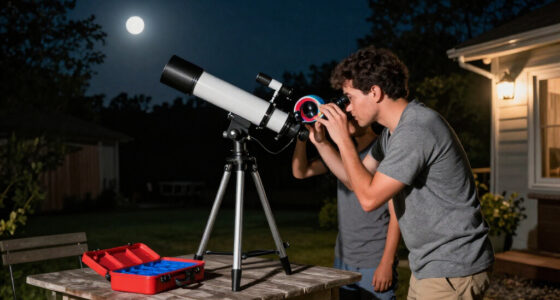
Computerized reflecting telescopes make it easier to locate celestial targets, but the six options here use different approaches: motorized GoTo mounts, Wi-Fi control, or smartphone-guided pointing. I rank the Celestron NexStar 130SLT best overall for its combination of 130mm aperture and automated GoTo operation. The StarSense Explorer 150AZ stands out for its larger mirror and tabletop format, while the Astro Fi 130 suits buyers who prefer wireless control from a phone. The main tradeoffs are tracking automation versus simpler setup, and larger optics versus portability and mount convenience. Read on for the full comparison and a guide to choosing the right system for your observing habits.

Prime made for students and young adults
- Fast, free delivery for dorm and study essentials
- Prime Video and Amazon Music included
- Member-only deals
Key Takeaways
- The NexStar 130SLT is the strongest all-around match for shoppers who specifically want a computerized reflector with a motorized GoTo mount, rather than phone-assisted pointing.
- Smartphone guidance is not the same as GoTo tracking. The StarSense Explorer models help locate targets, but their manual mounts do not automatically slew to or track objects.
- Aperture alone does not determine the best fit. The 150AZ offers the largest mirror in this group, but its tabletop Dobsonian design calls for a stable support and manual movement.
- The Astro Fi 130 and 114LCM represent different automation choices: Wi-Fi app control versus a dedicated computerized mount with a beginner-oriented package.
- Portability and setup can outweigh extra features. The compact LT 114AZ is easier to carry, while larger-aperture models ask buyers to accommodate bulkier tubes, mount hardware, or a sturdy surface.
| Celestron NexStar 130SLT Newtonian Reflector Telescope – Computerized GoTo |  | Best Overall Computerized Reflector | Optical design: Newtonian reflector | Aperture: 130 mm | Focal length: 650 mm | VIEW LATEST PRICE | See Our Full Breakdown |
| Celestron StarSense Explorer LT 114AZ Smartphone-Guided Newtonian Telescope |  | Best for Smartphone-Guided Beginners | Optical design: 114 mm Newtonian reflector | Focal length: 1,000 mm | Mount: Manual altazimuth with altitude slow-motion adjustment | VIEW LATEST PRICE | See Our Full Breakdown |
| Celestron 114LCM Computerized Reflector Telescope for Beginners |  | Best Compact GoTo Starter | Optical design: Newtonian reflector | Aperture: 114 mm | Mount: Motorized altazimuth computerized GoTo | VIEW LATEST PRICE | See Our Full Breakdown |
| Celestron StarSense Explorer DX 130AZ Smartphone-Guided Newtonian Telescope |  | Best Manual 130 mm Guided Pick | Optical design: Newtonian reflector | Aperture: 130 mm | Focal length: 650 mm | VIEW LATEST PRICE | See Our Full Breakdown |
| Celestron StarSense Explorer 150AZ 150mm App-Enabled Tabletop Dobsonian Telescope | 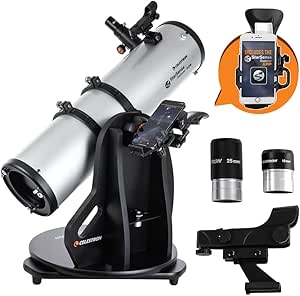 | Best Compact High-Aperture Tabletop Pick | Optical design: 150 mm Newtonian reflector | Focal length: 650 mm | Mount: Manual altazimuth tabletop Dobsonian base | VIEW LATEST PRICE | See Our Full Breakdown |
| Celestron Astro Fi 130 WiFi Reflector Telescope |  | Best for Wireless App Control | Optical design: Newtonian reflector | Aperture: 130 mm | Focal length: 650 mm | VIEW LATEST PRICE | See Our Full Breakdown |
| computerized reflecting telescope | Optical design | Mount | Eyepieces | Focal length |
|---|---|---|---|---|
| Celestron NexStar 130SLT Newto | Newtonian reflector | Computerized altazimuth GoTo | 20 mm and 9 mm | 650 mm |
| Celestron StarSense Explorer L | 114 mm Newtonian reflector | Manual altazimuth with altitude slow-motion adjustment | 10 mm and 25 mm | 1,000 mm |
| Celestron 114LCM Computerized | Newtonian reflector | Motorized altazimuth computerized GoTo | 25 mm and 9 mm | — |
| Celestron StarSense Explorer D | Newtonian reflector | Manual altazimuth with dual-axis slow-motion controls | 10 mm and 25 mm | 650 mm |
| Celestron StarSense Explorer 1 | 150 mm Newtonian reflector | Manual altazimuth tabletop Dobsonian base | 10 mm and 25 mm Kellner | 650 mm |
| Celestron Astro Fi 130 WiFi Re | Newtonian reflector | Computerized altitude-azimuth, single fork arm | Two Kellner eyepieces | 650 mm |
More Details on Our Top Picks
Celestron NexStar 130SLT Newtonian Reflector Telescope – Computerized GoTo
The NexStar 130SLT is my strongest choice for buyers who want a reflector that finds and tracks targets for them. Its 130 mm aperture gathers more light than the 114 mm Celestron 114LCM, giving it an advantage on dimmer deep-sky objects while still showing the Moon and planets. The GoTo database of more than 4,000 objects and SkyAlign reduce the guesswork of finding targets, a useful contrast with the manual, smartphone-guided StarSense Explorer DX 130AZ. The tradeoff is that this help depends on power: the mount needs eight AA batteries, which are not included. Its altazimuth mount also suits visual observing better than long-exposure photography, and focusing remains manual. I’d pick it over the 150AZ when automated pointing matters more than a larger mirror or a simpler tabletop base.
Pros:- GoTo database of more than 4,000 objects helps locate and track targets.
- 130 mm aperture offers more light-gathering capacity than the 114LCM.
- Portable design includes a pre-assembled steel tripod.
- SkyAlign, a red-dot finderscope, and Starry Night Basic software support setup and learning.
Cons:- Requires eight AA batteries, which are not included.
- Manual focus means target sharpness must be adjusted by hand.
- Altazimuth tracking is not well suited to long-exposure astrophotography.
Best for: Visual observers who want a portable 130 mm reflector with motorized GoTo locating and tracking instead of manual smartphone-guided positioning.
Not ideal for: Astrophotographers seeking long-exposure tracking, or observers who want to avoid carrying and replacing eight AA batteries.
- Optical design:Newtonian reflector
- Aperture:130 mm
- Focal length:650 mm
- Mount:Computerized altazimuth GoTo
- Object database:More than 4,000 celestial objects
- Eyepieces:20 mm and 9 mm
- Power:12 VDC; eight AA batteries required, not included
- Finderscope:StarPointer red-dot finderscope
Our verdict“Choose the NexStar 130SLT if you want a 130 mm reflector with automated target locating and can accommodate its battery needs.”
Celestron StarSense Explorer LT 114AZ Smartphone-Guided Newtonian Telescope
The StarSense Explorer LT 114AZ suits a beginner who wants help identifying where to point without relying on a motorized mount. Its app uses sky recognition and smartphone guidance, while the manual altazimuth mount keeps operation straightforward and avoids the GoTo power demands of the NexStar 130SLT. The 114 mm mirror is smaller than the DX 130AZ’s 130 mm reflector, so the DX is the stronger pick for gathering light; the LT counters with a 1,000 mm focal length and altitude slow-motion control for measured adjustments. That control can make following a target less abrupt, but the telescope still needs hands-on positioning and tracking. A compatible phone is also central to its guided navigation, so this is a poor fit for buyers who want the telescope to locate and follow targets automatically.
Pros:- Sky-recognition app guides users toward celestial targets.
- Altitude slow-motion adjustment allows more controlled manual tracking.
- Includes a smartphone dock, full-height tripod, two eyepieces, and red-dot finderscope.
- Coated 114 mm Newtonian optics support views of the Moon, planets, and selected deep-sky objects.
Cons:- Requires a compatible smartphone to use guided navigation.
- Manual mount means users must position and track targets themselves.
- Smaller 114 mm aperture gathers less light than the 130 mm NexStar 130SLT and DX 130AZ.
Best for: New observers with a compatible smartphone who want app-led sky guidance and prefer a manual telescope over a motorized GoTo mount.
Not ideal for: Buyers seeking automatic target slewing and tracking, or those who want the brighter views offered by a 130 mm reflector.
- Optical design:114 mm Newtonian reflector
- Focal length:1,000 mm
- Mount:Manual altazimuth with altitude slow-motion adjustment
- Eyepieces:10 mm and 25 mm
- Field of view:2.04 degrees
- Finderscope:Reflex red-dot
- Smartphone compatibility:Android 12 and later; iOS 18 and newer, including iPhone XR and newer
- Included accessories:Smartphone dock, full-height tripod, red-dot finderscope, and two eyepieces
Our verdict“Choose the LT 114AZ if app guidance and hands-on learning matter more to you than a larger mirror or automatic GoTo tracking.”
Celestron 114LCM Computerized Reflector Telescope for Beginners
The 114LCM brings computerized pointing to a smaller, lighter Newtonian setup, making it a reasonable entry into GoTo observing when portability matters more than aperture. Its motorized altazimuth mount can locate more than 4,000 objects, unlike the manual StarSense Explorer LT 114AZ, which uses a phone for guidance but leaves pointing and tracking to the observer. The tradeoff is the 114LCM’s 114 mm aperture: the NexStar 130SLT and StarSense Explorer DX 130AZ gather more light and are better choices for observers prioritizing brighter views. This model also uses manual focus, so the computer handles pointing rather than every adjustment. I’d choose it for backyard sessions or trips where an automated target search is appealing, but not for long-exposure imaging or anyone expecting a fully hands-off observing experience.
Pros:- GoTo mount can locate more than 4,000 celestial objects.
- Lightweight design is suited to backyard use, camping, and star parties.
- Includes two eyepieces, a built-in red-dot finderscope, and an adjustable tripod.
- SkyAlign, SkyPortal app compatibility, and Starry Night Basic software support learning and navigation.
Cons:- Its 114 mm aperture gathers less light than the 130 mm NexStar 130SLT and DX 130AZ.
- Manual focus requires hands-on adjustment even when the mount locates targets.
- Altazimuth tracking is limited for long-exposure astrophotography.
Best for: Beginners seeking a relatively lightweight computerized reflector for visual observing, with GoTo object locating in a compact setup.
Not ideal for: Observers prioritizing greater light gathering, long-exposure astrophotography, or completely automated focusing.
- Optical design:Newtonian reflector
- Aperture:114 mm
- Mount:Motorized altazimuth computerized GoTo
- Object database:More than 4,000 objects
- Eyepieces:25 mm and 9 mm
- Field of view:1.44 degrees
- Finderscope:Built-in StarPointer red-dot finderscope
- Focus:Manual
Our verdict“Choose the 114LCM if you want a portable, entry-level reflector with GoTo pointing and accept less aperture than the 130 mm alternatives.”
Celestron StarSense Explorer DX 130AZ Smartphone-Guided Newtonian Telescope
The StarSense Explorer DX 130AZ is for buyers who want the light-gathering capacity of a 130 mm reflector but would rather guide the telescope manually than manage a motorized GoTo mount. Its StarSense sky recognition points the user toward targets through a compatible phone, while dual-axis slow-motion controls allow deliberate adjustments. Compared with the NexStar 130SLT, it gives up automatic slewing and tracking but avoids depending on a powered GoTo mount; compared with the LT 114AZ, its larger mirror offers more light-gathering capacity. That combination makes the DX a balanced choice for visual exploration, not a hands-free one. The phone app is central to finding targets, and both positioning and focusing remain manual. I’d skip it if automated tracking is the main reason for buying a computerized telescope.
Pros:- 130 mm aperture gathers more light than the 114 mm StarSense Explorer LT 114AZ.
- StarSense sky recognition provides guided target finding through a compatible smartphone.
- Dual-axis slow-motion controls support measured manual adjustments and tracking.
- Includes a full-height tripod, smartphone dock, two eyepieces, and red-dot finderscope.
Cons:- Manual altazimuth mount does not automatically locate or track objects like the NexStar 130SLT.
- Guided navigation requires a compatible smartphone.
- Manual focusing and tracking require ongoing hands-on adjustments.
Best for: Visual observers who want 130 mm aperture, app-guided target finding, and manual control without a computerized GoTo mount.
Not ideal for: Buyers who want automatic slewing and tracking, or those without a compatible smartphone for StarSense guidance.
- Optical design:Newtonian reflector
- Aperture:130 mm
- Focal length:650 mm
- Mount:Manual altazimuth with dual-axis slow-motion controls
- Eyepieces:10 mm and 25 mm
- Field of view:2 degrees
- Smartphone compatibility:Android 12 and later; iOS 18 and newer, including iPhone XR and newer
- Included accessories:Full-height tripod, smartphone dock, two eyepieces, and red-dot finderscope
Our verdict“Choose the DX 130AZ if you want a 130 mm visual reflector with phone-guided discovery and prefer manual control to GoTo operation.”
Celestron StarSense Explorer 150AZ 150mm App-Enabled Tabletop Dobsonian Telescope
The StarSense Explorer 150AZ puts the largest aperture in this group into a tabletop Dobsonian format, making it a distinctive choice for observers who can provide a steady surface. Its 150 mm mirror gathers more light than the 130 mm DX 130AZ, while the compact base is easier to transport than a full-height tripod setup. StarSense app guidance helps locate targets, but the mount remains manual: unlike the NexStar 130SLT, it will not automatically slew to or track an object. That is the central compromise behind this pick. You get a larger reflector without a computerized drive, but you must move it by hand as targets cross the sky, and a stable table or platform is required. I’d favor it for portable visual observing where aperture takes priority over motorized tracking.
Pros:- 150 mm aperture is larger than the 130 mm reflectors in this roundup.
- Tabletop Dobsonian base offers a compact alternative to a full-height tripod.
- StarSense app uses sky recognition to guide users toward targets.
- Includes two eyepieces, a red-dot finderscope, and a smartphone dock.
Cons:- Manual base requires the observer to reposition the telescope to track targets.
- Needs a stable tabletop or platform for use.
- StarSense guidance depends on a compatible smartphone and does not provide motorized GoTo operation.
Best for: Visual observers who want the largest aperture here in a portable tabletop format and have a firm, level surface for setup.
Not ideal for: Buyers without a stable observing surface, or anyone who expects motorized GoTo locating and automatic tracking.
- Optical design:150 mm Newtonian reflector
- Focal length:650 mm
- Mount:Manual altazimuth tabletop Dobsonian base
- Eyepieces:10 mm and 25 mm Kellner
- Field of view:1.15 degrees
- Finderscope:StarPointer red-dot finderscope
- Coating:Aluminum with SiO₂ overcoat
- Smartphone compatibility:Android 12 and later; iOS 18 and newer, including iPhone XR and newer
Our verdict“Choose the 150AZ if aperture and compact transport matter more to you than automatic tracking or a self-supporting tripod.”
Celestron Astro Fi 130 WiFi Reflector Telescope
I’d choose the Astro Fi 130 for buyers who want computerized object finding without a hand controller: its built-in WiFi links a phone or tablet to the free SkyPortal app for alignment, slewing, and guided sky tours. The 130 mm aperture also gives it more light-gathering capacity than the 114 mm StarSense Explorer LT 114AZ, making it a stronger fit for viewing a broader range of celestial targets. SkyAlign uses three bright objects to simplify setup, while the single-fork-arm alt-azimuth mount keeps tracking straightforward.
The tradeoff is dependence on a compatible mobile device; unlike a telescope with a dedicated controller, app-based operation is central to this model. Its manual focusing also means the computer can locate an object, but cannot sharpen the image for you. I’d favor the Astro Fi over the StarSense Explorer DX 130AZ when motorized GoTo movement matters, but skip it if you want to observe without a phone or tablet.
Pros:- 130 mm aperture and coated glass optics support bright views across lunar, planetary, and deep-sky targets.
- Integrated WiFi enables wireless alignment and telescope control through the free SkyPortal app.
- SkyAlign simplifies alignment using three bright objects.
- Accessory tray has a rubber-lined area for a phone or small tablet.
Cons:- A compatible smartphone or tablet is required for app-based wireless control.
- Manual focusing leaves image adjustment to the observer.
- The alt-azimuth single-fork-arm mount is less suited to long-exposure astrophotography than an equatorial mount.
Best for: Beginners and casual observers with a compatible smartphone or tablet who want app-guided alignment and automatic slewing, along with a 130 mm aperture for Moon, planet, and deep-sky viewing.
Not ideal for: Observers who prefer a dedicated hand controller, do not want a phone or tablet involved at the telescope, or expect computerized focusing.
- Optical design:Newtonian reflector
- Aperture:130 mm
- Focal length:650 mm
- Field of view:1.15 degrees
- Mount:Computerized altitude-azimuth, single fork arm
- Alignment technology:SkyAlign
- Connectivity:Integrated WiFi
- Eyepieces:Two Kellner eyepieces
- Power source:12V DC, 1A, tip positive
Our verdict“Pick the Astro Fi 130 if you want 130 mm optics and app-based computerized slewing, but choose a less phone-dependent setup if you want telescope control without a mobile device.”
How We Picked
I compared these six reflectors by how well their locating systems match the promise of a computerized telescope. The ranking gives the most weight to useful aperture, the distinction between automatic GoTo and phone-guided manual pointing, ease of setup and alignment, mount practicality, and how well each package suits a clear buyer type. I also weighed portability, support requirements, and the amount of control a newcomer needs to learn.
The NexStar 130SLT ranks first because it pairs a 130mm reflector with motorized GoTo operation, making it the most direct fit for someone seeking computerized target selection. The Astro Fi 130 and 114LCM follow for shoppers who want automated control, with different app and mount approaches. The StarSense models rank by their distinct strengths in guided finding, aperture, and portability, but I distinguish them from true GoTo scopes: the user still moves the telescope by hand. The 150AZ can gather more light than the smaller models, yet its tabletop mount and manual operation make it less universally convenient.
| computerized reflecting telescope | Mount | Finderscope |
|---|---|---|
| Celestron NexStar 130SLT Newto | Computerized altazimuth GoTo | StarPointer red-dot finderscope |
| Celestron StarSense Explorer L | Manual altazimuth with altitude slow-motion adjustment | Reflex red-dot |
| Celestron 114LCM Computerized | Motorized altazimuth computerized GoTo | Built-in StarPointer red-dot finderscope |
| Celestron StarSense Explorer D | Manual altazimuth with dual-axis slow-motion controls | — |
| Celestron StarSense Explorer 1 | Manual altazimuth tabletop Dobsonian base | StarPointer red-dot finderscope |
| Celestron Astro Fi 130 WiFi Re | Computerized altitude-azimuth, single fork arm | — |
Factors to Consider When Choosing Computerized Reflecting Telescopes
Before choosing, decide what you expect the word computerized to mean in actual use. A telescope can help identify and point toward targets without moving or tracking on its own. The following factors clarify which compromises matter most for your observing location and routine.
Know the difference between GoTo and phone-guided pointing
GoTo systems use motors to slew the telescope toward selected objects after alignment; some also track targets as Earth rotates. Smartphone-guided systems use an app and the observer’s hand movements to aim the telescope, so they can simplify finding targets without providing motorized movement. That difference affects more than convenience: manual aiming may be quieter and involve fewer powered components, while GoTo can reduce the time spent searching and help keep a target centered. Check the product’s mount description rather than assuming that app compatibility means automatic movement. Buyers who mainly want help identifying bright objects may be content with guidance, while those who want hands-off slewing should choose a motorized system.
Match aperture to what you can carry and set up
A larger primary mirror collects more light, which can help reveal dimmer objects and show more detail under suitable skies. The gain is only useful if the telescope is practical to bring outside, assemble, and store. A compact tube may see more observing sessions simply because it is easier to carry, while a larger reflector can demand more room and a steadier mount or surface. Avoid choosing by mirror size alone: compare the complete assembled setup, including tripod, mount, accessories, and any table or stand the design needs. If you observe from a balcony or travel to dark sites, portability and a stable viewing position may matter as much as aperture.
Plan for alignment, power, and phone use
Computerized mounts need setup before their pointing features can help, and the alignment process varies by system. Make sure you have a clear view of the sky needed for alignment and allow time to learn the controls before an observing session. Phone-dependent systems add another practical question: whether your device is compatible, whether its battery will last through the session, and whether the screen remains usable in darkness. Motorized models also need a dependable power plan, so check what batteries or external power options the package supports. A feature-rich system can be less satisfying if its setup demands do not fit the way you observe.
Choose a mount for your observing setting
The mount determines how the telescope feels to aim and how steady the view remains, not just how the tube is held. Tripod-mounted scopes are easier to position at different heights, but a lightweight or poorly braced setup can transmit vibration when touched. Tabletop Dobsonian designs can offer a simple, compact base, provided you have a rigid, level surface at a comfortable height. Think about where you will place the telescope before buying: a picnic table, outdoor step, or uneven ground may not work equally well for every design. A stable mount can make modest optics more enjoyable than a larger mirror on an awkward support.
Set realistic expectations for reflector maintenance
Reflectors use mirrors, so optical alignment, or collimation, may need attention to keep views sharp, especially after transport or handling. This is normal maintenance rather than a defect, but first-time buyers should be willing to learn the basic check and adjustment process. Dust protection and careful storage also matter because the tube’s open optical path is more exposed than a sealed design. Do not assume that a computerized mount removes the need to maintain the optics; automation helps point the telescope, not keep its mirrors aligned. If low-maintenance storage is your priority, weigh that preference against the light-gathering potential and value of a reflector.
Spend extra for the feature you will actually use
Paying more for automation makes sense when finding targets is your main obstacle or when you want motorized tracking during longer observations. A larger mirror is a better reason to spend more if you have suitably dark skies, room for the instrument, and patience for setup and maintenance. App-based guidance can be a sensible middle ground for buyers who want help locating objects but prefer a simpler manual mount. Avoid paying for multiple control features if you would rather learn the sky or only observe a short list of bright targets. The best fit is the scope whose locating method, support needs, and size suit your regular routine—not the one with the longest feature list.
Frequently Asked Questions
Does a smartphone-guided telescope automatically move to and track an object?
No. Smartphone-guided StarSense Explorer models use the phone and app to help you aim, but the observer still moves the telescope manually. They do not provide the same motorized slewing and tracking as a GoTo mount. This can mean less dependence on powered mount controls, but you may need to reposition the telescope as an object moves across the sky. Choose a motorized GoTo option if automatic movement is a must-have rather than a way to find targets more easily.
Which of these telescopes is the best choice if I want a true GoTo reflector?
The NexStar 130SLT is the clearest all-around fit in this group for buyers seeking a reflector with a motorized GoTo mount. The 114LCM and Astro Fi 130 also offer computerized control, but their control approaches differ: the 114LCM uses a dedicated computerized mount, while the Astro Fi 130 centers on Wi-Fi and app control. The StarSense Explorer LT 114AZ, DX 130AZ, and 150AZ guide manual aiming rather than moving the scope automatically. Before deciding, check whether you want automatic pointing, automatic tracking, or only assistance locating objects, since those are separate capabilities.
Is the 150mm StarSense Explorer 150AZ a better choice than the 130mm models?
Its larger mirror gives the 150AZ an aperture advantage, which can help with faint targets under dark skies. That does not make it the better choice for every buyer: it uses a tabletop Dobsonian format and manual aiming, so it needs a firm support and does not offer motorized GoTo operation. A 130mm model may suit you better if a tripod mount, automated movement, or easier positioning matters more. Compare the entire setup and observing location, not just the mirror diameter.
What should I choose if this is my first telescope?
Start by deciding whether learning to aim manually sounds appealing or frustrating. The StarSense Explorer LT 114AZ keeps the setup comparatively portable and adds app-assisted target finding, while the 114LCM offers computerized mount control for someone who wants more automation. The NexStar 130SLT is a stronger all-around option if you are comfortable learning alignment in exchange for GoTo operation and 130mm aperture. Whichever route you choose, allow time to learn setup and basic reflector care; a simple observing plan can matter more than adding advanced features.
Will a computerized reflector work well from a city or balcony?
A computer can help locate targets, but it cannot remove light pollution or create a clear view of the sky. From a city, bright objects such as the Moon and planets are often more practical targets than faint galaxies and nebulae. A balcony also limits the directions and angles available for alignment and observing, and nearby walls can obstruct the sky. Check that the mount can sit securely in your available space and that your alignment routine has an unobstructed view. If you can sometimes travel to darker skies, portability may deserve more weight in your choice.
Conclusion
Best overall: I recommend the Celestron NexStar 130SLT for buyers who want a 130mm reflector with motorized GoTo operation. Best value for guided finding: the StarSense Explorer LT 114AZ suits shoppers who want a portable, phone-guided manual scope without expecting automatic tracking. Best premium-style choice: the StarSense Explorer 150AZ is the aperture pick for observers who can provide a solid tabletop support and accept manual movement. Best for beginners seeking automation: the 114LCM offers a computerized mount, while the Astro Fi 130 is the better match for buyers who favor Wi-Fi app control. For a tripod-based, app-guided option with a 130mm mirror, choose the StarSense Explorer DX 130AZ; skip it if automatic GoTo movement is your priority. The right choice comes down to whether you value motorized control, guided manual aiming, or a larger mirror most.