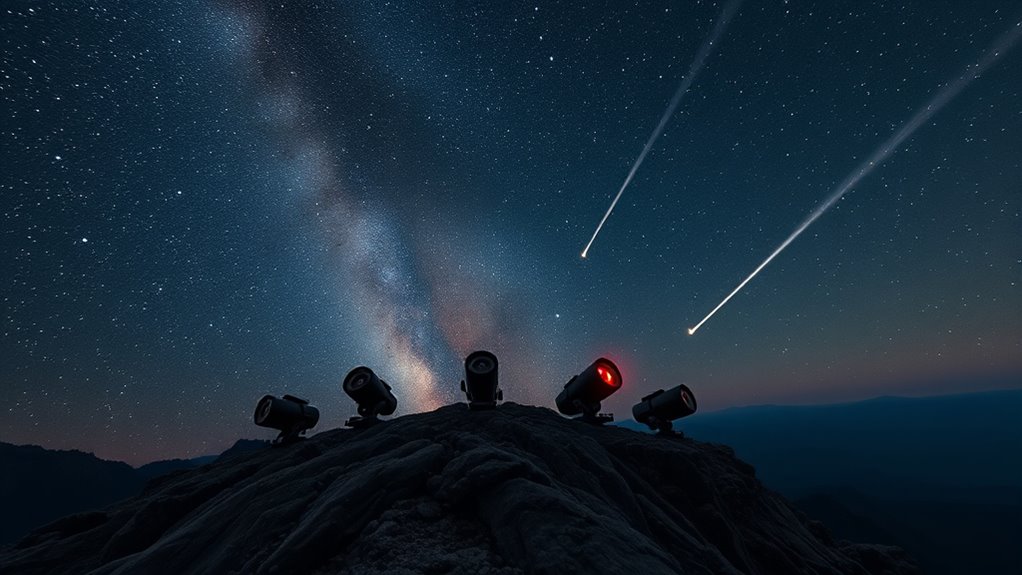
Choosing the right CMOS astro camera for comet observation depends on your specific needs—whether you’re after high resolution, fast frame rates, or low noise for capturing fleeting comet tails. The ZWO ASI183MC Pro stands out for its high-resolution sensor ideal for detailed deep-sky images, but it requires a dedicated power supply and accessories. The SVBONY SV305C Pro offers excellent speed and sensitivity for planetary and comet imaging at a more accessible price point, though it demands a computer connection and isn’t suited for mobile setups. Meanwhile, the ZWO ASI2600MM PRO delivers professional-grade image quality with advanced cooling and high dynamic range but comes with a steeper learning curve and higher cost. These three models illustrate the key tradeoffs: resolution versus speed, complexity versus simplicity, and price versus performance, helping you decide based on what matters most for your comet chasing pursuits.

Prime made for students and young adults
- Fast, free delivery for dorm and study essentials
- Prime Video and Amazon Music included
- Member-only deals
Key Takeaways
- High-resolution sensors like the ZWO ASI183MC Pro excel for capturing detailed images of comet nuclei and tails.
- Fast frame rates, as seen in the SVBONY SV305C Pro, are essential for tracking rapidly moving comets and capturing short-lived features.
- Cooling and low noise are critical for long-exposure imaging, especially in dark sky conditions, making the ZWO ASI2600MM PRO a strong choice for serious astrophotographers.
- Compact and lightweight cameras like the ASI174MM-MINI suit fieldwork and guiding, but may lack the raw resolution needed for detailed comet imaging.
- Price and complexity vary widely; beginners may prefer simpler, more affordable options, while advanced users should consider models with broader dynamic range and cooling.
| ZWO ASI183MC Pro 20.18 MP CMOS Color Astronomy Camera |  | Best Overall for High-Resolution Comet Imaging | Resolution: 5496×3672 (20.1 MP) | Pixel Size: 2.4 microns | Cooling: TEC cooling to 40-45°C below ambient | VIEW ON AMAZON | See Our Full Breakdown |
| SVBONY SV305C Pro Telescope Camera, USB 3.0 High-Speed, 2MP IMX662 Sensor |  | Best for Speed and Versatility in Comet Imaging | Sensor Type: CMOS | Sensor Resolution: 2 MP | Frame Rate: 107 FPS | VIEW ON AMAZON | See Our Full Breakdown |
| ZWO ASI174MM-MINI Monochrome Astronomy Camera with USB 2.0 |  | Best Compact Guiding and Planetary Camera | Sensor Resolution: 1936×1216 | Sensor Size: 11.3mm x 7.1mm | Pixel Size: 5.86 microns | VIEW ON AMAZON | See Our Full Breakdown |
| ZWO ASI2600MM PRO USB 3.0 Cooled Monochrome Astronomy Imaging Camera |  | Best for High-Resolution and Deep-Sky Comet Imaging | Sensor: Sony IMX571 CMOS | Resolution: 6248 x 4176 | Pixel Size: 3.76 microns | VIEW ON AMAZON | See Our Full Breakdown |
| ZWO ASI678MM 8.29 MP CMOS Monochrome Astronomy Camera with USB 3.0 |  | Best for Near-Infrared Sensitive Planetary and Solar Imaging | Sensor: 1 / 1.8″ CMOS IMX678 | Peak QE: 83% | Resolution: 3840×2160 | VIEW ON AMAZON | See Our Full Breakdown |
| cmos astro camera for comet | Frame Rate | Pixel Size | Resolution |
|---|---|---|---|
| ZWO ASI183MC Pro 20.18 MP CMOS | Up to 19 fps | 2.4 microns | 5496×3672 (20.1 MP) |
| SVBONY SV305C Pro Telescope Ca | 107 FPS | — | — |
| ZWO ASI174MM-MINI Monochrome A | up to 18.4 fps | 5.86 microns | — |
| ZWO ASI2600MM PRO USB 3.0 Cool | 3.51 fps at full resolution | 3.76 microns | 6248 x 4176 |
| ZWO ASI678MM 8.29 MP CMOS Mono | 47.5 fps | 2 µm | 3840×2160 |
More Details on Our Top Picks
ZWO ASI183MC Pro 20.18 MP CMOS Color Astronomy Camera
The ZWO ASI183MC Pro stands out for its high-resolution 20.1 MP CMOS sensor, which captures intricate details of comet structures, making it ideal for enthusiasts who want detailed images of the nucleus and tail. Its TEC cooling significantly reduces sensor noise during long exposures, essential for faint comet features. Compared with faster, lower-resolution options, it offers superior detail, but the need for a separate power supply and additional accessories can complicate setup. This camera is best suited for users with a stable, dedicated astrophotography setup aiming for the finest detail.
Pros:- High-resolution 20.1 MP sensor captures fine comet details
- TEC cooling reduces image noise significantly
- Fast USB 3.0 data transfer speeds up workflow
- Durable CNC aluminum body ensures longevity
Cons:- Requires a separate 12V power supply (not included)
- Additional accessories needed for optimal use
- Higher price point for detailed imaging capabilities
Best for: Astrophotographers seeking the highest resolution for detailed comet images
Not ideal for: Mobile observers or those preferring quick setup, due to extra accessory requirements
- Resolution:5496×3672 (20.1 MP)
- Pixel Size:2.4 microns
- Cooling:TEC cooling to 40-45°C below ambient
- Frame Rate:Up to 19 fps
- Connectivity:USB 3.0
- Body Material:CNC aluminum
Our verdict“This camera excels for detailed comet imaging but demands a more complex, stable setup.”
SVBONY SV305C Pro Telescope Camera, USB 3.0 High-Speed, 2MP IMX662 Sensor
The SVBONY SV305C Pro offers a compelling balance of high sensitivity and rapid data transfer, making it suitable for capturing swift comet movements and bright features. Its 2MP IMX662 sensor provides excellent low-noise images with support for HDR, which helps in recording bright comets against dark backgrounds. While its lower resolution compared to high-end models limits the finest detail, its simplicity and affordability make it ideal for users focused on quick, quality captures of bright comets or planetary features. Its reliance on a computer makes it less suitable for mobile setups or those seeking standalone operation.
Pros:- Fast USB 3.0 transfer speeds support high frame rate imaging
- High sensitivity with low noise for bright features
- Supports HDR imaging and region capture
- Compatible with guiding software like PHD2
Cons:- Lacks standalone operation, requiring a computer
- Limited resolution for ultra-fine detail
- No support for iPad or mobile devices
Best for: Enthusiasts needing fast, reliable imaging of bright comets and planetary features
Not ideal for: Field observers without a dedicated computer or those wanting ultra-high resolution
- Sensor Type:CMOS
- Sensor Resolution:2 MP
- Frame Rate:107 FPS
- Interface:USB 3.0
- Guiding Interface:ST4
- HDR:Yes
Our verdict“A versatile, fast camera that excels for bright comet and planetary imaging but isn’t designed for high-resolution deep-sky detail.”
ZWO ASI174MM-MINI Monochrome Astronomy Camera with USB 2.0
The ZWO ASI174MM-MINI is a compact, lightweight monochrome camera optimized for guiding and planetary imaging. Its 2.1 MP CMOS sensor offers high sensitivity and low noise, making it suitable for tracking fast-moving comets or capturing planetary detail. Its small form factor makes it perfect for fieldwork, guiding, or quick setups, but its monochrome design limits imaging to black-and-white unless paired with filters. The USB 2.0 interface may limit data transfer speeds compared to newer models, but for quick captures and guiding, it provides excellent value.
Pros:- Compact and lightweight for portability
- High sensitivity and low noise for guiding and planetary detail
- Compatible with Mac and Windows with available drivers
- Affordable and straightforward to use
Cons:- Requires external filters for color imaging
- Limited to monochrome unless filters are added
- USB 2.0 limits maximum data rates
Best for: Field guides and planetary observers seeking a lightweight, reliable guide camera
Not ideal for: Users needing high-resolution color images or long-exposure deep-sky imaging
- Sensor Resolution:1936×1216
- Sensor Size:11.3mm x 7.1mm
- Pixel Size:5.86 microns
- Frame Rate:up to 18.4 fps
- Interface:USB 2.0
- Connection:ST4 port
Our verdict“Ideal for guiding and planetary imaging with a focus on portability and ease of use, but not suited for detailed color comet imaging.”
ZWO ASI2600MM PRO USB 3.0 Cooled Monochrome Astronomy Imaging Camera
The ZWO ASI2600MM PRO redefines monochrome astrophotography with its 26.1 MP Sony IMX571 sensor, delivering exceptional detail in comet imaging. Its advanced cooling system maintains low noise levels during long exposures, essential for faint features. The camera’s wide dynamic range and 16-bit output support capturing subtle variations in comet brightness and structure. While setup can be complex, this model provides unparalleled image quality for serious astrophotographers dedicated to high-resolution comet studies, especially when imaging faint features or detailed nucleus structures.
Pros:- High-resolution 26.1 MP sensor captures fine comet details
- Effective cooling reduces noise in long exposures
- Wide dynamic range enhances subtle features
- Supports high-quality monochrome imaging
Cons:- Requires technical knowledge for setup
- Higher cost and complexity
- Primarily designed for advanced users
Best for: Experienced astrophotographers focused on high-res, deep-sky comet imaging
Not ideal for: Beginners or those seeking a plug-and-play experience due to setup complexity
- Sensor:Sony IMX571 CMOS
- Resolution:6248 x 4176
- Pixel Size:3.76 microns
- Cooling:Advanced cooling, 30-35°C below ambient
- Frame Rate:3.51 fps at full resolution
- Bit Depth:16-bit
Our verdict“A high-end choice for professionals or serious amateurs aiming for detailed, low-noise comet images.”
ZWO ASI678MM 8.29 MP CMOS Monochrome Astronomy Camera with USB 3.0
The ZWO ASI678MM specializes in near-infrared, high-sensitivity imaging, making it excellent for capturing detailed planetary, lunar, and solar features, especially during long exposures. Its 8.3 MP CMOS sensor delivers sharp monochrome images with minimal noise and a high dynamic range, while its USB 3.0 interface ensures stable, fast data transfer. While primarily geared toward planetary and solar imaging, its high sensitivity makes it a valuable tool for comet imaging, especially in capturing near-infrared features or faint structures. However, it requires compatible filters for infrared imaging and isn’t optimized for broad deep-sky comet imaging.
Pros:- Excellent near-infrared response for specialized imaging
- Low readout noise and high dynamic range
- Fast data transfer with USB 3.0
- Stable and reliable for planetary and lunar imaging
Cons:- Requires filters for infrared imaging
- Limited to monochrome unless filters are used
- Specialized for planetary imaging, less for deep-sky features
Best for: Planetary and solar observers wanting high sensitivity and near-infrared imaging capability
Not ideal for: General deep-sky comet imaging or users without compatible filters
- Sensor:1 / 1.8″ CMOS IMX678
- Peak QE:83%
- Resolution:3840×2160
- Frame Rate:47.5 fps
- Shutter:Rolling
- Pixel Size:2 µm
Our verdict“A specialized tool for near-infrared and planetary imaging that can complement comet studies, but not a primary deep-sky camera.”

How We Picked
Our selection process focused on CMOS cameras that balance resolution, sensitivity, speed, and usability specifically for imaging comets. We prioritized models with high-quality sensors capable of capturing fine detail and fast frame rates to track moving objects. Durability, cooling capabilities, and compatibility with common astrophotography software also played key roles. We avoided overly specialized or outdated models, emphasizing options that serve both amateur and semi-professional needs, with transparent specs and clear tradeoffs.
Factors to Consider When Choosing Cmos Astro Camera For Comets
When selecting a CMOS astro camera for comet imaging, it’s vital to consider your target details, observing conditions, and technical skill level. Resolution impacts the fineness of visible features, while frame rate affects your ability to capture fast-moving comets without motion blur. Cooling systems help reduce noise during long exposures, especially in light-polluted environments or when photographing faint features. Compatibility with your telescope and guiding setup, along with ease of use and budget, will guide your choice among these options.Resolution and Sensor Size
High-resolution sensors, like the 20 MP CMOS in the ZWO ASI183MC Pro, are best for capturing detailed images of comet nuclei and intricate tail structures. Larger sensors with more pixels can reveal subtle features but often require more processing power and storage. For fast-moving comets, a balance between resolution and frame rate is essential to avoid missing fleeting details.
Speed and Frame Rate
Fast frame rates, such as the 107 fps of the SVBONY SV305C Pro, allow you to freeze motion and capture bright, rapidly moving comets effectively. Higher frame rates facilitate lucky imaging techniques, which can improve image clarity by stacking the sharpest frames. However, faster cameras may have lower resolution or increased noise, so consider your primary imaging goals.
Cooling and Noise Control
Effective cooling, as in the ZWO ASI2600MM PRO, significantly reduces sensor noise during long exposures, which is crucial for faint comet features. Without cooling, noise can obscure delicate structures, especially in low-light conditions. More advanced cooling systems tend to add complexity but produce cleaner images in challenging environments.
Compatibility and Ease of Use
Ensure your chosen camera works with your telescope and guiding software. Monochrome cameras require filters for color imaging, adding another step to processing. For beginners, cameras with simple connectivity and minimal setup—like the ASI174MM-MINI—can streamline your workflow. For more experienced users, advanced models offer extensive control and customization.
Frequently Asked Questions
What resolution is best for comet imaging?
Higher resolution sensors provide more detail, which is valuable for capturing the fine structure of comet tails and nuclei. The ZWO ASI183MC Pro, with its 20 MP sensor, offers exceptional detail but requires a powerful computer and storage. For quick captures or brighter comets, mid-range resolutions like the 2 MP in the SVBONY SV305C Pro can be more practical, especially if speed is prioritized over resolution.
How important is cooling in comet imaging?
Cooling is very important when long exposures are necessary to reveal faint comet features, as it helps suppress sensor noise that can obscure delicate structures. The ZWO ASI2600MM PRO’s advanced cooling system makes it a top choice for serious astrophotographers aiming for high-quality, low-noise images. If you plan short exposures or bright comets, cooling may be less critical, and simpler cameras can suffice.
Can I use these cameras for guiding as well as imaging?
Many of these cameras, like the ZWO ASI174MM-MINI, are designed for guiding and planetary imaging, providing a good balance of sensitivity and speed. For comet imaging, especially with high-resolution models, guiding can be integrated into your setup to improve tracking accuracy. However, dedicated guiding cameras are usually monochrome and optimized for tracking rather than detailed imaging.
Are monochrome cameras better for comet imaging?
Monochrome cameras, such as the ZWO ASI174MM-MINI and ASI2600MM PRO, typically produce sharper images with less noise and higher sensitivity. They excel at capturing faint details and are often used in combination with filters to produce detailed composite images. Color cameras like the ASI183MC Pro are more straightforward but may lack the same level of detail and noise control, especially in low-light conditions.
What additional accessories do I need for imaging comets?
Depending on your camera choice, you may need filters (e.g., infrared or UV/IR cut filters), a dedicated power supply, and a stable mount or tracking system. For monochrome cameras, filters are essential for color imaging or specific wavelength capture. Cooling systems sometimes require additional hardware, and a good guiding setup can improve tracking accuracy during long exposures. Planning for these accessories ensures optimal results.
Conclusion
For casual observers or beginners interested in quick, bright comet captures, the SVBONY SV305C Pro offers excellent speed and simplicity. Serious astrophotographers seeking detailed, low-noise images of faint or complex comet features should consider the ZWO ASI2600MM PRO, despite its higher price and setup complexity. Those focused on high-resolution imaging of comet nuclei and tails, especially in dark skies, will find the ZWO ASI183MC Pro a compelling choice. Meanwhile, field guides and planetary enthusiasts can benefit from compact monochrome options like the ASI174MM-MINI, which excel in guiding and planetary detail but are less suited for deep-sky comet imaging. Ultimately, your choice hinges on your imaging goals, environment, and technical comfort level.
Halloween Picks
halloween
As an affiliate, we earn on qualifying purchases.