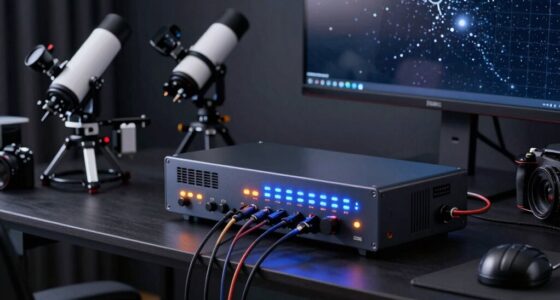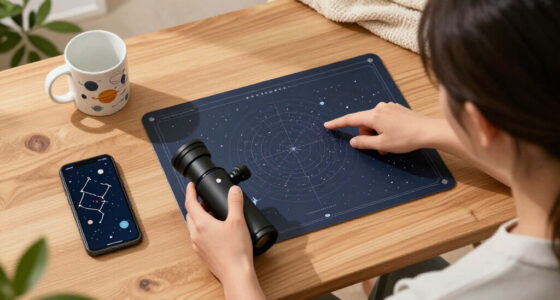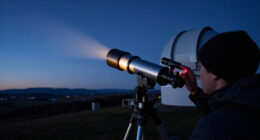
If you’re searching for a CMOS astro camera for widefield imaging, sensor size and intended use matter more than headline megapixels alone. My strongest deep-sky pick is the SVBONY SC571CC, whose APS-C sensor covers a generous field while cooling and a window heater support longer imaging sessions. The SVBONY SV405CC is a more compact-sensor alternative for cooled deep-sky work, while the ZWO ASI676MC suits square-frame all-sky and meteor capture. The tradeoff is clear: larger sensors suit broad telescope fields, but smaller pixels, square formats, and fast planetary cameras serve different targets and may not deliver the same widefield experience.

Prime made for students and young adults
- Fast, free delivery for dorm and study essentials
- Prime Video and Amazon Music included
- Member-only deals
Key Takeaways
Best deep-sky widefield match: The SVBONY SC571CC pairs a 23.4 × 15.7 mm APS-C sensor with cooling, making it the broadest conventional telescope-imaging choice here.
Choose by telescope and target: The SV405CC’s 4/3-inch sensor is smaller than APS-C but offers cooled, sensitive long-exposure imaging; field width still depends on focal length.
Square is a specialist advantage: The ASI676MC’s 3552 × 3552 format can simplify all-sky coverage and mosaics, but it is not a direct substitute for a large rectangular deep-sky sensor.
Small pixels do not mean wider framing: The ASI183MC-Pro’s 2.4-micron pixels can sample detail finely, while its sensor is smaller than the SC571CC’s APS-C area.
Planetary video is a different job: The SV305C Pro’s 107 FPS and included 0.5× reducer support video and a wider framing option, but it is not a cooled long-exposure deep-sky camera.
| SVBONY SC571CC Cooled Color Astronomy Camera – IMX571 APS-C Sensor |  | Best Overall for Telescope Widefield | Sensor: IMX571 APS-C BSI | Sensor size: 23.4 × 15.7 mm | Resolution: 26 MP | VIEW ON AMAZON | See Our Full Breakdown |
| SVBONY SV405CC Astrophotography Camera, Cooled Telescope Eyepiece, IMX294 Sensor |  | Best Cooled Mid-Size Deep-Sky Option | Sensor: Back-illuminated IMX294, 4/3-inch | Resolution: 11.7 MP; 4144 × 2822 | Pixel size: 4.63 µm | VIEW ON AMAZON | See Our Full Breakdown |
| ZWO ASI676MC 12.6 MP CMOS Color Astronomy Camera |  | Best Square-Format All-Sky Specialist | Sensor: IMX676, 1/1.6-inch | Resolution: 12.6 MP; 3552 × 3552 | Pixel size: 2 µm | VIEW ON AMAZON | See Our Full Breakdown |
| ZWO ASI183MC-Pro 20.1 MP Cooled Color Astronomy Camera |  | Best for Fine Sampling on Compact Fields | Resolution: 20.1 MP; 5496 × 3672 | Pixel size: 2.4 µm | Cooling: TEC, 40–45°C below ambient | VIEW ON AMAZON | See Our Full Breakdown |
| SVBONY SV305C Pro Telescope Camera with 0.5X Focal Reducer |  | Best for Wide-View Planetary Video | Sensor: IMX662 CMOS | Resolution: 1920 × 1080 | Frame rate: 107 FPS | VIEW ON AMAZON | See Our Full Breakdown |
| cmos astro camera for widefield | Resolution | Sensor | Pixel size | Cooling |
|---|---|---|---|---|
| SVBONY SC571CC Cooled Color As | 26 MP | IMX571 APS-C BSI | 3.76 µm | Dual-stage TEC, up to 35°C below ambient |
| SVBONY SV405CC Astrophotograph | 11.7 MP; 4144 × 2822 | Back-illuminated IMX294, 4/3-inch | 4.63 µm | Two-stage TEC, up to 30°C below ambient |
| ZWO ASI676MC 12.6 MP CMOS Colo | 12.6 MP; 3552 × 3552 | IMX676, 1/1.6-inch | 2 µm | — |
| ZWO ASI183MC-Pro 20.1 MP Coole | 20.1 MP; 5496 × 3672 | — | 2.4 µm | TEC, 40–45°C below ambient |
| SVBONY SV305C Pro Telescope Ca | 1920 × 1080 | IMX662 CMOS | — | — |
More Details on Our Top Picks
SVBONY SC571CC Cooled Color Astronomy Camera – IMX571 APS-C Sensor
The SC571CC is my first choice for a buyer whose main aim is broad deep-sky framing. Its 23.4 × 15.7 mm APS-C sensor is the largest conventional rectangular format in this lineup, giving it a stronger starting point for fitting extended nebulae and star fields than the 4/3-inch SV405CC or the smaller ASI183MC-Pro. Its 26 MP IMX571 sensor also gives a detailed frame, though the actual sky coverage still depends on telescope focal length and any reducer used.
Cooling is part of its widefield appeal because longer exposures of faint targets benefit from lower sensor temperature. The listed dual-stage TEC cooling reaches up to 35°C below ambient, and the software-controlled front-window heater addresses dew on the camera window without giving up a cooled imaging setup. USB 3.0 and a 512 MB buffer support data handling, while the external power requirement adds another item to plan around. Compared with the SV405CC, the SC571CC is the more compelling pick when sensor area and resolution lead the decision; the SV405CC may be easier to justify if a smaller 4/3-inch field suits the optical setup.
This is not the lightest or simplest way into astronomy imaging. Cooling and heating call for external power, and an APS-C sensor can expose telescope field-curvature or vignetting issues that a smaller sensor may avoid. I’d choose it for a setup designed to illuminate a large sensor, not just because its resolution is highest here. The ASI676MC’s square layout may be handier for all-sky work, but it does not replace this camera’s rectangular APS-C framing for telescope-based deep-sky targets.
Pros:- APS-C sensor provides the broadest conventional rectangular field in this group.
- 26 MP resolution and a back-illuminated IMX571 sensor suit detailed deep-sky frames.
- Dual-stage cooling and a front-window heater support long sessions in changing conditions.
- 512 MB buffer and USB 3.0 support stable, fast data transfer.
Cons:- Cooling and window heating require external power, adding cables and setup planning.
- A large sensor may reveal optical vignetting or edge-quality limitations in the telescope.
Best for: Deep-sky imagers seeking a large rectangular field for nebulae and star fields, with a telescope and accessories that can illuminate APS-C.
Not ideal for: Buyers prioritizing a lightweight, simple setup, or owners whose telescope cannot cover an APS-C sensor cleanly.
- Sensor:IMX571 APS-C BSI
- Sensor size:23.4 × 15.7 mm
- Resolution:26 MP
- Pixel size:3.76 µm
- Cooling:Dual-stage TEC, up to 35°C below ambient
- Dynamic range:16-bit ADC, up to 14 stops
- Interface and buffer:USB 3.0; 512 MB DDR3
- Window heater:Front-window heater with software control
Our verdict“I’d choose the SC571CC first for cooled, telescope-based widefield deep-sky imaging when APS-C coverage is useful and the optical train can support it.”
SVBONY SV405CC Astrophotography Camera, Cooled Telescope Eyepiece, IMX294 Sensor
The SV405CC earns its place as a cooled deep-sky camera with a 4/3-inch sensor, positioned between the APS-C SC571CC and the more specialized video-oriented choices. Its 11.7 MP IMX294 sensor measures 4144 × 2822 pixels, so it gives up sensor area and resolution compared with the SC571CC. That smaller frame can be a better fit for telescopes or reducers that do not illuminate APS-C evenly, while still offering a useful field for many deep-sky subjects.
The 4.63 µm pixels and back-illuminated sensor are presented as a sensitivity-focused combination, and two-stage TEC cooling can lower temperature by up to 30°C below ambient. Smart HCG mode is listed to reduce read noise while retaining dynamic range. Against the ASI183MC-Pro, the SV405CC has larger pixels and a larger sensor format, while the ZWO camera offers more pixels and finer sampling. Which is preferable depends on the telescope’s focal length and the target scale, not simply on resolution.
Its 256 MB buffer and USB 3.0 support capture, and broad operating-system compatibility may appeal to users building varied imaging systems. However, the camera weighs more than three pounds, making it a less attractive choice for a compact travel rig than the smaller options. It also relies on external software and drivers for full functionality. I’d choose it over the SC571CC when 4/3-inch framing is a better optical match; I would not choose it if maximum field width is the only goal.
Pros:- Back-illuminated IMX294 sensor and cooling suit long-exposure deep-sky imaging.
- 4/3-inch format can be a more manageable match than APS-C for some optical systems.
- Smart HCG mode is listed to reduce read noise while maintaining dynamic range.
- Compatibility includes Windows, macOS, Linux, Chrome OS, and Raspberry Pi.
Cons:- Sensor area and resolution are below the SC571CC’s APS-C, 26 MP configuration.
- Its listed weight of 3.08 pounds may burden portable telescope setups.
- Full functionality depends on external software and drivers.
Best for: Deep-sky imagers who want TEC cooling and a sensitive 4/3-inch sensor without moving up to APS-C coverage.
Not ideal for: Travel-focused users sensitive to camera weight, or buyers who specifically need the widest rectangular field in this lineup.
- Sensor:Back-illuminated IMX294, 4/3-inch
- Resolution:11.7 MP; 4144 × 2822
- Pixel size:4.63 µm
- Cooling:Two-stage TEC, up to 30°C below ambient
- Interface:USB 3.0, 5 Gbps
- Buffer:256 MB DDRIII
- Weight:3.08 lb
- Compatibility:Windows, macOS, Linux, Chrome OS, Raspberry Pi
Our verdict“I’d select the SV405CC when cooled deep-sky imaging matters more than APS-C coverage and its weight fits the mount.”
ZWO ASI676MC 12.6 MP CMOS Color Astronomy Camera
The ASI676MC is the lineup’s clearest specialist rather than a general-purpose deep-sky leader. Its 3552 × 3552 square sensor lends itself to meteor monitoring and all-sky surveillance, where a square frame can simplify coverage and mosaic planning. For widefield telescope imaging, the format can also be useful in a particular optical setup, but its 1/1.6-inch sensor is much smaller than the APS-C sensor in the SC571CC. The square shape changes composition; it does not create a larger field by itself.
Its 12.6 MP IMX676 sensor combines 2 µm pixels with a stated 83% quantum efficiency and 0.56 e read noise. Those figures are attractive for short-exposure capture and recording activity across a broad patch of sky. USB 3.0 and a 256 MB cache support sustained transfer, and the product description lists low dark current and no amp glow. Compared with the SV305C Pro, it offers a square, higher-resolution capture format for all-sky use; compared with cooled cameras such as the SC571CC and SV405CC, it is not described as a TEC-cooled long-exposure deep-sky model.
The sensor window has a UV/IR-cut coating, and its listed frame rate is 31.2 fps. Those features point toward monitoring and bright-target work more than faint nebulae with long exposures. Its lack of water resistance also matters if the camera will face an exposed outdoor environment. I’d put it ahead of the planetary camera for square all-sky capture, but behind the cooled APS-C and 4/3-inch options for conventional deep-sky widefield work.
Pros:- Square sensor is well suited to all-sky framing and mosaic planning.
- Listed 0.56 e read noise and low dark current support short-exposure capture.
- USB 3.0 and a 256 MB cache support data transfer during recording.
- UV/IR-cut coated sensor window is included.
Cons:- Its 1/1.6-inch sensor is substantially smaller than the SC571CC’s APS-C format.
- Not listed as a cooled camera for long-exposure faint deep-sky imaging.
- Not water resistant, which limits exposed outdoor use.
Best for: All-sky and meteor observers who want square framing, compact pixel sampling, and a camera designed around monitoring tasks.
Not ideal for: Deep-sky buyers seeking a cooled large-format sensor, or anyone who needs water-resistant outdoor equipment.
- Sensor:IMX676, 1/1.6-inch
- Resolution:12.6 MP; 3552 × 3552
- Pixel size:2 µm
- ADC:12-bit
- Quantum efficiency:83%
- Read noise:0.56 e
- Frame rate:31.2 fps
- Interface and cache:USB 3.0; 256 MB DDR3
Our verdict“I’d pick the ASI676MC for square-frame all-sky and meteor monitoring, not as a replacement for a cooled APS-C deep-sky camera.”
ZWO ASI183MC-Pro 20.1 MP Cooled Color Astronomy Camera
The ASI183MC-Pro appeals to buyers who care about fine image sampling more than maximum sensor area. Its 20.1 MP sensor and 2.4 µm pixels pack detail into a smaller format than the SC571CC’s APS-C sensor. On a suitable telescope, that can help record small structures at a fine image scale, but it does not give the broadest field on the same optical system. For an extended nebula or a wide star field, the SC571CC’s larger sensor is the more direct match.
TEC cooling, a 40–45°C-below-ambient cooling specification, and a 256 MB DDR3 buffer make this a genuine long-exposure option rather than just a video camera. It also supports a stated maximum 19 fps at full resolution, which adds flexibility for brighter or faster-moving targets. Its compact aluminum body and included 1.25-inch nosepiece and 2-inch adapter simplify attachment, though the camera still requires a separate 12V/3A supply for cooling. The SC571CC has a larger sensor and greater buffer capacity; the ASI183MC-Pro counters with smaller pixels and a fine-detail emphasis.
For widefield use, the sensor’s physical size is the key compromise: high pixel count should not be confused with wide framing. The listed compatibility covers Windows and Mac OS X, and the accessory hub can help organize a setup, but the cooler’s power supply is not included. Solar imaging also requires a suitable solar filter, which is not supplied. I’d choose this model when the telescope and target favor detailed sampling on a smaller field, and skip it if broad APS-C coverage is the primary requirement.
Pros:- 20.1 MP resolution and 2.4 µm pixels support fine sampling of small structures.
- TEC cooling is specified to reach 40–45°C below ambient.
- USB 3.0 and a 256 MB buffer support imaging data transfer.
- Includes 1.25-inch and 2-inch telescope adapters.
Cons:- The smaller sensor gives less physical field coverage than the SC571CC’s APS-C sensor.
- A separate 12V/3A supply for the cooler is required and not included.
- Solar imaging requires a filter that is not included.
Best for: Imagers using a shorter or moderate focal length who want cooled capture and fine pixel sampling on a compact sensor field.
Not ideal for: Buyers whose main goal is the widest deep-sky frame, or those who want cooling without a separate power supply.
- Resolution:20.1 MP; 5496 × 3672
- Pixel size:2.4 µm
- Cooling:TEC, 40–45°C below ambient
- Maximum frame rate:19 fps at maximum resolution
- Buffer:256 MB DDR3
- Connectivity:USB 3.0; separate USB 2.0 accessory hub
- Power:Separate 12V/3A supply required for cooler
- Adapters:Threaded 1.25-inch nosepiece and 2-inch adapter
Our verdict“I’d choose the ASI183MC-Pro for cooled, finely sampled imaging on a compact field, but not when the widest framing is the priority.”
SVBONY SV305C Pro Telescope Camera with 0.5X Focal Reducer
The SV305C Pro is the outlier in this roundup: it is a planetary camera with a bundled 0.5× focal reducer, not a cooled deep-sky camera built around long exposures. The reducer can broaden the view compared with the camera’s unreduced framing, making it more relevant to a buyer trying to fit a larger lunar or planetary scene into a video frame. Its 1920 × 1080 sensor and 107 FPS capture rate put fast video ahead of the large-sensor, low-noise deep-sky approach represented by the SC571CC and SV405CC.
Its IMX662 sensor is listed with very low 0.7 e readout noise and high sensitivity, features that support clear video capture under low-light conditions. The 0.5× reducer is the main widefield hook, but it does not make this camera equivalent to a large APS-C camera: its field remains bounded by the sensor format and the telescope. Compared with the ASI676MC, it has a much faster stated frame rate and a more explicit planetary-video role; the ZWO’s square sensor is better aligned with all-sky monitoring.
This camera makes sense for someone prioritizing video of the Moon, planets, or similarly bright targets and wanting a reducer in the package. It is a poor fit for a buyer who means widefield nebula imaging, since no TEC cooling is listed and its video-oriented resolution is far below the other deep-sky options. A compatible mount and additional adapters may be needed, and imaging software is not bundled. I’d treat it as a specialist complement rather than the main camera for deep-sky widefield work.
Pros:- 107 FPS capture suits fast planetary and lunar video.
- Listed 0.7 e read noise and sensitive IMX662 sensor support low-light video.
- Included 0.5× focal reducer widens framing compared with use without a reducer.
- Anti-reflection coating is listed to help control unwanted reflections.
Cons:- 1920 × 1080 format is not comparable to the higher-resolution deep-sky cameras here.
- No TEC cooling is listed for long-exposure faint-object imaging.
- Imaging software is not bundled, and adapters may be needed.
Best for: Planetary and lunar video imagers who want high frame rates and a supplied focal reducer to widen framing.
Not ideal for: Long-exposure deep-sky imagers seeking TEC cooling, a large sensor, or high-resolution nebula frames.
- Sensor:IMX662 CMOS
- Resolution:1920 × 1080
- Frame rate:107 FPS
- Readout noise:0.7 e
- ADC:12-bit
- Buffer:128 MB DDR
- Focal reducer:0.5× included
- Coatings:Anti-reflection coating listed
Our verdict“I’d choose the SV305C Pro for fast planetary video with a wider framing option, not as my primary widefield deep-sky camera.”

How We Picked
I ranked these cameras for the specific goal in the title: getting a useful, broad field through a telescope, with particular attention to deep-sky imaging. My first comparison point was sensor dimensions, since physical sensor area and telescope focal length determine how much sky fits in a frame. I then weighed cooling and sensor characteristics for long exposures, as well as transfer and buffer details that can matter during capture. Finally, I accounted for each model’s stated role: a planetary camera or square-format all-sky camera can be a sound choice for its niche without being the strongest conventional widefield deep-sky pick.
The lineup spans different formats, so I did not treat megapixel count as a proxy for field of view. A smaller pixel can change image sampling, but it does not make a physically smaller sensor cover more sky on the same telescope. I also considered setup implications, including separate power requirements, weight, accessories, and the need to match camera framing to the telescope. Product descriptions and listed specifications inform these comparisons; I do not claim hands-on testing. Rankings favor broad telescope framing and practical deep-sky capability, with specialist cameras placed according to the kinds of wide-area imaging they actually suit.
| cmos astro camera for widefield | Sensor | Cooling |
|---|---|---|
| SVBONY SC571CC Cooled Color As | IMX571 APS-C BSI | Dual-stage TEC, up to 35°C below ambient |
| SVBONY SV405CC Astrophotograph | Back-illuminated IMX294, 4/3-inch | Two-stage TEC, up to 30°C below ambient |
| ZWO ASI676MC 12.6 MP CMOS Colo | IMX676, 1/1.6-inch | — |
| ZWO ASI183MC-Pro 20.1 MP Coole | — | TEC, 40–45°C below ambient |
| SVBONY SV305C Pro Telescope Ca | IMX662 CMOS | — |
Factors to Consider When Choosing Cmos Astro Camera For Widefield
I’d start with the target and telescope, then compare sensor format, cooling, and the practical demands of the rig. A camera’s megapixel count alone cannot tell you how much sky fits in your frame.Sensor size sets the framing
For the same telescope and focal length, a physically larger sensor captures a wider patch of sky. That is why the SC571CC’s APS-C sensor leads this group for conventional widefield telescope framing, with the SV405CC’s 4/3-inch format following as a smaller alternative. A square sensor changes the shape of the frame, not automatically its width, while the ASI183MC-Pro’s high pixel count does not compensate for its smaller physical format. Check a field-of-view calculator using your telescope’s focal length and the camera’s sensor dimensions before choosing.
Match the camera to the telescope
A large sensor can show more of a telescope’s optical field, but it may also expose corner vignetting, field curvature, or other edge defects. The SC571CC’s APS-C area is most useful when the telescope and any corrector or reducer can illuminate it adequately. The SV405CC’s 4/3-inch sensor may be a better fit for a narrower corrected image circle. I’d compare the camera format with the telescope’s stated image circle and back-focus requirements, and allow for adapters that can affect spacing.
Cooling helps with long exposures
For faint nebulae and galaxies, cooled cameras can reduce thermal signal during long exposures. The SC571CC, SV405CC, and ASI183MC-Pro list TEC cooling, but cooling capacity is only part of the setup: the camera needs appropriate external power, and temperature control adds cables and software settings. The ASI183MC-Pro specifically requires a separate 12V/3A cooler supply. The SV305C Pro is designed around fast video and does not list TEC cooling, so I would not treat it as an equivalent long-exposure option.
Pixels and resolution are not field of view
Pixel size affects image sampling alongside telescope focal length, while sensor dimensions determine the overall field. The ASI183MC-Pro’s 2.4 µm pixels and 20.1 MP resolution suit fine sampling on a compact field; the SC571CC’s 3.76 µm pixels sit on a larger APS-C sensor for broader framing. Neither combination is automatically right for every telescope. I’d match sampling to the intended target and seeing conditions, rather than picking the smallest pixels or highest megapixel figure without checking the full imaging setup.
Choose specialist formats for specialist jobs
The ASI676MC’s square format is a genuine advantage for some all-sky and meteor-monitoring workflows, while its smaller sensor and lack of listed cooling make it a different choice from a cooled deep-sky camera. The SV305C Pro takes a separate path: high-speed video and a 0.5× reducer favor lunar and planetary capture. These cameras can help with wide-area viewing in their own ways, but for extended faint deep-sky targets I’d favor the cooled SC571CC or SV405CC.
Plan for power, weight, and accessories
Widefield imaging often involves a camera, telescope, reducer or corrector, mount, cables, and capture computer. Add cooling power where required, and account for the SV405CC’s listed 3.08-pound weight when balancing a portable rig. The ASI183MC-Pro includes telescope adapters but not the cooler’s separate power supply; the SV305C Pro may need adapters and software. I’d check what is included against the connections and power available at the imaging site before choosing.
Frequently Asked Questions
Which camera here has the widest sensor for telescope widefield imaging?
The SVBONY SC571CC has the largest stated conventional rectangular sensor in this group, at 23.4 × 15.7 mm APS-C. That gives it the strongest starting point for broad framing on a telescope, although the actual field also depends on focal length and the optics’ corrected image circle. The SV405CC’s 4/3-inch sensor is smaller but may suit systems that do not illuminate APS-C evenly.
Does a higher megapixel count mean a wider field of view?
No. Field of view depends primarily on sensor dimensions and telescope focal length. More pixels can provide a more detailed image or finer sampling, but pixel count by itself does not make a physically smaller sensor cover more sky. For example, the ASI183MC-Pro has 20.1 MP and small pixels, while the SC571CC’s larger APS-C sensor is better positioned for wide rectangular framing.
Which of these is best for cooled deep-sky exposures?
The SC571CC is my leading choice when broad APS-C coverage is the priority, while the SV405CC is a cooled 4/3-inch alternative. The ASI183MC-Pro also lists TEC cooling and may suit fine sampling on a smaller field. The right match depends on your telescope’s focal length, image circle, power setup, and target; the SV305C Pro is primarily a fast-video planetary camera rather than a cooled long-exposure option.
Is the ASI676MC a good choice for widefield nebula imaging?
It can frame a wide area in a suitable optical setup, but its main distinction here is the square format for all-sky and meteor monitoring, not large-sensor deep-sky coverage. Its 1/1.6-inch sensor is smaller than the SC571CC’s APS-C and the SV405CC’s 4/3-inch format, and it is not listed as TEC-cooled. I’d favor it when square framing or monitoring is central to the job.
What should I check before buying a camera for my telescope?
Check the camera’s sensor dimensions against your telescope’s focal length to estimate framing, then confirm the telescope or corrector can illuminate the full sensor without unacceptable edge problems. Also verify adapter fit and back-focus spacing, available power for TEC cooling, mount payload and balance, and capture-software compatibility. If the main target is planetary video rather than faint deep-sky objects, compare frame rate and sensor format as well as cooling.
Conclusion
For most buyers specifically seeking cooled widefield deep-sky imaging, I’d start with the SVBONY SC571CC: its APS-C format gives the broadest conventional telescope framing here, with cooling and a front-window heater for longer sessions. Choose the SV405CC if 4/3-inch coverage is a better optical and weight compromise and you still want cooled capture. The ASI183MC-Pro suits fine sampling on a smaller field when its separate cooler power supply is acceptable. For square all-sky or meteor work, I’d pick the ASI676MC; for high-speed lunar and planetary video, choose the SV305C Pro. Before ordering, match sensor size to your telescope’s image circle and focal length—those determine whether a camera’s widefield strengths will pay off in your setup.
Fall Picks
fall essentials
As an affiliate, we earn on qualifying purchases.