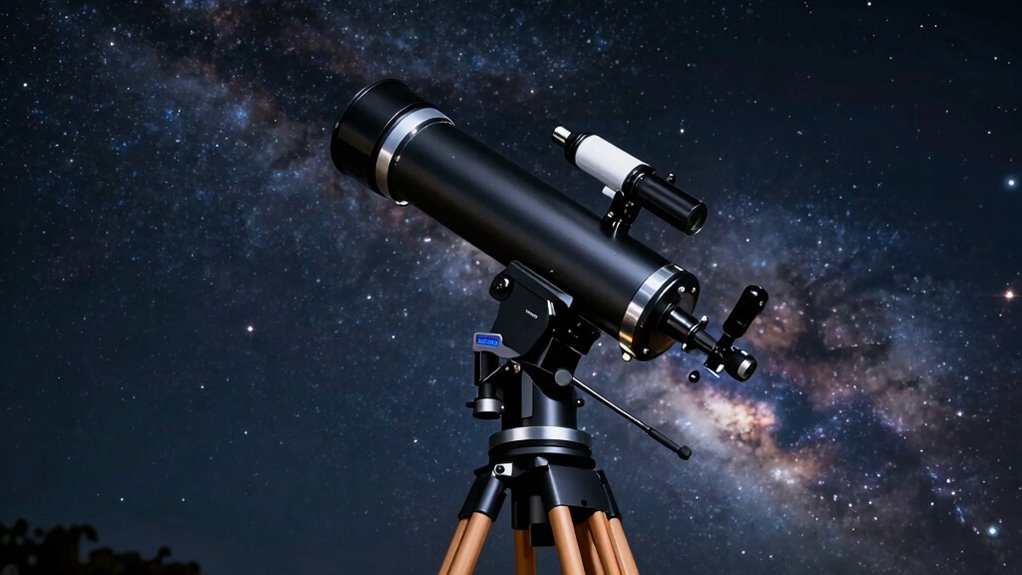

If you’re searching for a smart telescope under 1000, you’re looking for a device that combines ease of use with advanced features. The Celestron NexStar 130SLT stands out as the best overall choice, offering a solid mix of automation and affordability. The ZWO Seestar S30 Pro impresses with 4K astrophotography capabilities, making it ideal for imaging enthusiasts. Meanwhile, the DWARFLAB Dwarf Mini appeals to those who need portability without sacrificing smart features. However, buyers face tradeoffs such as balancing advanced imaging options against user-friendly operation or portability. Continue reading for a detailed breakdown of each option and what makes them unique.

Prime made for students and young adults
- Fast, free delivery for dorm and study essentials
- Prime Video and Amazon Music included
- Member-only deals
Key Takeaways
- The top picks balance imaging quality, ease of use, and portability within the $1000 budget.
- Smart features like app control and automatic tracking significantly enhance user experience.
- Buyers should prioritize the level of automation based on their experience—beginners benefit from guided models, while advanced users may prefer more control.
- Portability often comes at the cost of larger apertures or complex features, so consider your primary use case.
- Pricing varies based on integrated cameras and control systems; higher-end models tend to offer better imaging but may be more complex to operate.
| Celestron 114LCM Computerized Reflector Telescope for Beginners |  | Best Overall for Entry-Level Enthusiasts | Type: Reflector Telescope | Model: 114LCM | Optics: All glass optics | VIEW ON AMAZON | See Our Full Breakdown |
| ZWO Seestar S30 Pro Smart Telescope, 4K Ultra HD, All-in-One Astrophotography, Smartphone Control, 128GB Storage |  | Best for Smartphone-Driven Astrophotography | Resolution: 4K Ultra HD | Storage: 128GB | Battery Life: up to 6 hours | VIEW ON AMAZON | See Our Full Breakdown |
| Celestron StarSense Explorer LT 80AZ Smartphone Guided Refractor Telescope |  | Best for Smartphone-Guided Amateur Viewing | Aperture: 80mm | Mount Type: Altazimuth | Included Technology: StarSense Explorer app | VIEW ON AMAZON | See Our Full Breakdown |
| DWARFLAB Dwarf Mini Smart Telescope – Portable Astronomy Telescope |  | Best Compact Travel Telescope | Weight: 1.85 lbs | Sensor: Sony IMX662 (1/2.8-inch, 2.9μm pixels) | Auto GOTO: Yes | VIEW ON AMAZON | See Our Full Breakdown |
| Celestron Astro Fi 130 Reflector Telescope for Beginners with Built-in WiFi |  | Best for Wireless Control and Bright Views | Aperture: 130mm | Optics: Fully coated glass | Included accessories: Star Pointer, 2 Kellner eyepieces, mirror star diagonal | VIEW ON AMAZON | See Our Full Breakdown |
| ZWO Seestar S30 Pro Smart Telescope, App-Controlled Astrophotography |  | Best Overall for High-Quality Portable Imaging | Weight: 3.64 lbs | Imaging: Dual-camera 4K | Features: Automatic GOTO, AI smart imaging, light pollution filters, anti-dew protection | VIEW ON AMAZON | See Our Full Breakdown |
| Celestron StarSense Explorer 114AZ App-Enabled Tabletop Dobsonian Telescope |  | Best for Easy Sky Navigation and Beginner Observation | Aperture: 114mm | Type: Reflector | Mount: Altazimuth tabletop Dobsonian | VIEW ON AMAZON | See Our Full Breakdown |
| Celestron StarSense Explorer LT 114AZ Newtonian Smartphone Guided Telescope |  | Best Budget-Friendly Beginner Telescope | Aperture: 114mm | Type: Newtonian reflector | Mount: Manual altazimuth | VIEW ON AMAZON | See Our Full Breakdown |
| Celestron NexStar 130SLT Newtonian Reflector Telescope – Computerized GoTo |  | Best for Advanced Beginners and Versatile Observation | Aperture: 130mm | Optical Design: Newtonian Reflector | Computerized: Yes | VIEW ON AMAZON | See Our Full Breakdown |
| Smart Telescope with 4K Astrophotography Camera and Dual Screens |  | Best for Real-Time Viewing and Beginners Wanting Rich Features | Focal Length: 300mm (f/8.89) | Aperture: 78mm | Magnification: Up to 350X | VIEW ON AMAZON | See Our Full Breakdown |
| Celestron NexStar 90SLT Maksutov-Cassegrain Portable Telescope for Planets |  | Best Overall for Compact Planet Observation | Aperture: 90mm | Optical Design: Maksutov-Cassegrain | Features: Computerized star locating, SkyAlign, portable design | VIEW ON AMAZON | See Our Full Breakdown |
| Celestron StarSense Explorer DX 130AZ Smartphone Guided Newtonian Telescope |  | Best Value for Smartphone-Guided Bright Views | Aperture: 130mm | Type: Newtonian reflector | Mount: Manual altazimuth | VIEW ON AMAZON | See Our Full Breakdown |
| DWARFLAB Dwarf 3 Smart Telescope, App-Controlled Astrophotography Camera |  | Best for Versatile Photography and Outdoor Use | Weight: 3 lb / 1.35 kg | Lens System: Dual Lens (Telephoto and Wide-Angle) | Auto-Tracking: Yes | VIEW ON AMAZON | See Our Full Breakdown |
More Details on Our Top Picks
Celestron 114LCM Computerized Reflector Telescope for Beginners
This model stands out for its fully automated GoTo mount that can locate over 4,000 celestial objects, making it a comprehensive choice for beginners eager to explore the night sky with minimal fuss. Compared with the Celestron StarSense Explorer LT 80AZ, the 114LCM offers more objects and software support, but requires setup and alignment, which may challenge absolute newcomers. Its included software, star finder, and multiple eyepieces enhance versatility, yet the computerized system may seem complex for those unfamiliar with telescope setup. The sturdy construction and 2-year warranty add reassurance for new stargazers seeking reliable equipment.
Pros:- Automated object location with a large database of celestial targets
- Includes multiple eyepieces and star finder for flexible viewing
- Free sky simulation software for planning observations
- Two-year US warranty and support
Cons:- Setup and alignment can be complex for absolute beginners
- Limited to beginner-level features, not suitable for advanced astrophotography
Best for: Beginners with some patience who want a versatile, automated system for exploring a wide range of objects.
Not ideal for: Complete novices preferring ultra-simple, manual telescopes or those seeking portable astrophotography features.
- Type:Reflector Telescope
- Model:114LCM
- Optics:All glass optics
- Mount:Computerized GoTo mount
- Objects Located:4,000+ celestial objects
- Eyepieces:25mm & 9mm
- Included Software:Starry Night (free download)
- Warranty:2-year US warranty
Our verdict“This telescope offers a well-rounded package for newcomers ready to learn and explore with automation and software support, despite a somewhat involved setup process.”
ZWO Seestar S30 Pro Smart Telescope, 4K Ultra HD, All-in-One Astrophotography, Smartphone Control, 128GB Storage
This pick stands out for its compact design and high-resolution imaging capabilities, making it ideal for users who want to document celestial objects in stunning detail without the bulk of traditional telescopes. Unlike the Celestron Astro Fi 130, which relies on WiFi control and a larger aperture, the Seestar S30 Pro emphasizes portability and image quality, though it sacrifices some viewing versatility—particularly for planetary observation. Its built-in storage and social sharing features cater to hobbyists aiming to showcase their images easily, but it’s not suited for serious planetary or deep-sky viewing due to its fixed imaging focus and limited optical zoom.
Pros:- High-resolution 4K imaging with built-in storage
- Compact and portable for travel and outdoor use
- Easy smartphone app control simplifies operation
- Multiple imaging modes and social sharing features
Cons:- Not suitable for detailed planetary viewing or visual observing
- Eyepieces are not compatible with this system
- Dependent on smartphone or tablet for control and operation
Best for: Amateur astronomers interested in astrophotography, sharing images, and casual sky viewing with a mobile device.
Not ideal for: Observers wanting detailed planetary views or those seeking traditional eyepiece-based observing experiences.
- Resolution:4K Ultra HD
- Storage:128GB
- Battery Life:up to 6 hours
- Weight:3.6 lbs
- Compatibility:Smartphone or tablet with Seestar app
- Includes:Tripod, carry case, solar filter, USB-C cable, quick guide, sticker pack
Our verdict“This telescope excels for users aiming to capture high-quality images and share their astrophotography via mobile devices, but it’s less suited for traditional visual observation.”
Celestron StarSense Explorer LT 80AZ Smartphone Guided Refractor Telescope
This model makes the star-hopping process accessible through its innovative StarSense Explorer app, which helps locate objects with minimal manual effort. Compared with the Celestron Astro Fi 130, it offers a smaller aperture but more straightforward smartphone integration and easier setup. Its sharp, vivid views of the Moon, planets, and some deep-sky objects make it suitable for casual stargazing, though it lacks the power and stability needed for serious astrophotography or detailed planetary work. The manual mount requires a steady hand for tracking, which could challenge those seeking precise, long-duration observations.
Pros:- Smartphone-guided setup with the StarSense app
- Vivid, sharp views of Moon and planets
- Simple manual tracking with smooth controls
- Two-year warranty and US-based support
Cons:- Manual mount needs steady handling for precise tracking
- Limited to basic amateur astronomy
- Not suitable for advanced astrophotography
Best for: Beginner astronomers who want guided object location and clear views without complexity or heavy equipment.
Not ideal for: Advanced users or those interested in astrophotography, given its manual mount and limited tracking capabilities.
- Aperture:80mm
- Mount Type:Altazimuth
- Included Technology:StarSense Explorer app
- Warranty:2 years
Our verdict“This telescope offers accessible, smartphone-guided views for casual sky watchers who want ease of use over high-power or astrophotography features.”
DWARFLAB Dwarf Mini Smart Telescope – Portable Astronomy Telescope
This ultra-lightweight telescope, weighing just 1.85 lbs, appeals to travelers and outdoor enthusiasts seeking a portable solution with decent imaging capabilities. It’s a significant departure from bulkier models like the Celestron Astro Fi 130, focusing on mobility and ease of use. Its app-controlled automated tracking and advanced imaging features, including long exposure support, make it suitable for beginners and seasoned users alike. However, its optical performance details are limited, and its learning curve can be steep for complete beginners unfamiliar with astrophotography or app-based controls. Still, its size and features make it a compelling choice for on-the-go astronomy.
Pros:- Extremely lightweight and portable for outdoor adventures
- User-friendly app control with star map navigation
- Supports long exposure and cloud processing for imaging
- Includes essential accessories like filters and cleaning cloth
Cons:- Requires smartphone or app for full functionality
- Limited detailed optical specifications available
- Potentially challenging for complete beginners unfamiliar with app controls
Best for: Travelers, campers, and outdoor explorers who want a portable, app-controlled telescope with advanced imaging features.
Not ideal for: Users seeking high-power planetary observation or those preferring traditional manual telescopes with detailed optical specs.
- Weight:1.85 lbs
- Sensor:Sony IMX662 (1/2.8-inch, 2.9μm pixels)
- Auto GOTO:Yes
- Pivot Rotation:360°
- Exposure Support:Up to 90 seconds
- Includes:Filter, USB-C cable, cleaning cloth
Our verdict“This compact, app-controlled telescope is ideal for mobile astronomy enthusiasts who prioritize portability and imaging over traditional observing features.”
Celestron Astro Fi 130 Reflector Telescope for Beginners with Built-in WiFi
This telescope combines a sizable 130mm aperture with built-in WiFi, enabling wireless control via the Sky Portal app, simplifying the experience for beginners. Compared to the Celestron StarSense Explorer LT 80AZ, it offers a larger aperture for brighter, more detailed views of the Moon, planets, and nebulae. Its fully coated glass optics ensure clear images, and the included accessories support basic viewing needs. However, it requires a compatible smartphone or tablet to operate, which could pose a learning curve for absolute novices unfamiliar with WiFi controls or app interfaces. Its weight and size are manageable but less portable than ultra-light models like the Dwarf Mini.
Pros:- Wireless WiFi control with compatible devices
- Large 130mm aperture for bright, detailed images
- Includes essential accessories like star pointer and eyepieces
- Easy to set up for beginners
Cons:- Dependent on a smartphone or tablet for control
- Learning curve for fully mastering WiFi features
- Less portable than smaller, app-only models
Best for: Beginners who want a larger aperture and WiFi control for easy, remote operation and detailed visual views.
Not ideal for: Those seeking a portable or purely manual telescope without dependence on WiFi or digital apps.
- Aperture:130mm
- Optics:Fully coated glass
- Included accessories:Star Pointer, 2 Kellner eyepieces, mirror star diagonal
- Connectivity:WiFi
Our verdict“This telescope offers a solid balance of bright views and wireless convenience for newcomers willing to learn app-based operation, despite its slightly larger size.”
ZWO Seestar S30 Pro Smart Telescope, App-Controlled Astrophotography
The ZWO Seestar S30 Pro stands out as a comprehensive portable option for astrophotographers who want high-resolution images without bulky equipment. Its dual-camera 4K imaging and AI-enhanced photo quality make it ideal for capturing detailed celestial shots, especially in urban environments with light pollution. Compared with the Celestron NexStar 130SLT, which offers more extensive celestial object tracking but less emphasis on astrophotography, the Seestar S30 Pro prioritizes image quality and ease of use. The main tradeoff is its dependence on a smartphone for operation, which could be inconvenient for some users, and it has limited detailed specs on mount quality. This pick makes the most sense for beginner astrophotographers seeking a compact, high-quality imaging tool for night sky captures, especially in light-polluted areas.
Pros:- Easy to operate with automatic GOTO targeting and app control
- High-resolution 4K imaging for detailed astrophotography
- Compact, lightweight design ideal for outdoor and urban use
Cons:- Limited details on mount and optics quality, which may affect long-exposure photography
- Requires a smartphone to operate, potentially inconvenient for some users
- Manual adjustments needed for deep-sky imaging in more advanced setups
Best for: Beginners and urban astronomers who want portable, high-quality astrophotography capabilities.
Not ideal for: Advanced astrophotographers who require extensive mount stability and manual control for deep-sky imaging.
- Weight:3.64 lbs
- Imaging:Dual-camera 4K
- Features:Automatic GOTO, AI smart imaging, light pollution filters, anti-dew protection
- Connectivity:App-controlled
Our verdict“This is a top choice for beginners seeking a portable, high-quality astrophotography device for urban environments.”
Celestron StarSense Explorer 114AZ App-Enabled Tabletop Dobsonian Telescope
The Celestron StarSense Explorer 114AZ excels as a user-friendly, tabletop reflector for newcomers who want sharp views of the Moon, planets, and some deep-sky objects. Its smartphone-powered sky recognition with the StarSense Explorer app simplifies object location, making it accessible for those new to astronomy. Compared to the Celestron NexStar 130SLT, which has a larger aperture and more advanced tracking, the 114AZ is more compact and easier to set up, though it relies on manual tracking. The main limitation is its tabletop design, which restricts astrophotography capabilities and makes it less suitable for extended observing sessions. This telescope makes a lot of sense for beginners who prioritize portability and ease of use over advanced features or deep-sky imaging.
Pros:- Simple to use with smartphone app and sky recognition technology
- Bright, sharp views of planets, Moon, and some deep-sky objects
- Compact, tabletop design for easy transport and setup
Cons:- Manual tracking may require adjustments during longer sessions
- Limited to tabletop use, less suitable for astrophotography
- Requires a smartphone for operation, which may be inconvenient for some
Best for: Beginners seeking an easy, portable way to explore the night sky with smartphone assistance.
Not ideal for: Intermediate or advanced users interested in astrophotography or long-term, stable viewing setups.
- Aperture:114mm
- Type:Reflector
- Mount:Altazimuth tabletop Dobsonian
- Connectivity:App-enabled with StarSense Explorer
Our verdict“Ideal for beginners wanting quick, easy access to celestial objects with smartphone guidance, especially in small spaces.”
Celestron StarSense Explorer LT 114AZ Newtonian Smartphone Guided Telescope
The Celestron StarSense Explorer LT 114AZ offers a straightforward, budget-friendly entry point for beginners interested in celestial observation. Its 114mm aperture provides bright views of planets, nebulae, and some deep-sky objects, similar to the StarSense Explorer 114AZ. The main difference is that the LT version is designed for more simplified, basic use with a standard altazimuth mount, making it easy to set up and operate. However, its manual mount requires adjustments for precise tracking, which can be frustrating during longer viewing sessions. Unlike the NexStar 130SLT, it lacks computerized tracking, but it remains a solid choice for casual viewers on a budget. This telescope is best suited for beginners who want a simple, guided experience without complex features or astrophotography capabilities.
Pros:- Affordable price point for entry-level astronomy
- Easy to operate with smartphone-guided sky navigation
- Good image quality for planets and brighter deep-sky objects
Cons:- Manual mount needs adjustments for precise tracking
- Limited to basic observation, no computerized object database
- Less suitable for astrophotography or advanced viewing
Best for: Casual beginner astronomers looking for an affordable, guided observation experience.
Not ideal for: Users wanting advanced tracking or astrophotography, as it relies on manual movement and limited features.
- Aperture:114mm
- Type:Newtonian reflector
- Mount:Manual altazimuth
- Connectivity:Smartphone app
Our verdict“Best for beginners seeking a straightforward, affordable telescope with smartphone guidance for casual sky watching.”
Celestron NexStar 130SLT Newtonian Reflector Telescope – Computerized GoTo
The Celestron NexStar 130SLT provides a step up in sophistication with its computerized GoTo system, making it suitable for those who want more than manual star hopping. Its 130mm aperture allows detailed views of planets, stars, and some deep-sky objects, and the included software like Starry Night enhances the experience. Compared with simpler, app-guided models like the StarSense Explorer LT 114AZ, the NexStar SLT offers more extensive object tracking and a larger database, but it requires more setup and some familiarity with software. While it’s portable, its assembly can be time-consuming, and the software downloads might pose a barrier in areas with limited internet. This model is ideal for beginners eager to develop their skills with a reliable, computer-controlled telescope that grows with their interest in astronomy.
Pros:- Portable and easy to transport for outdoor use
- Large 130mm aperture for clear, detailed views
- Includes a database of over 4,000 celestial objects with automatic tracking
Cons:- Requires assembly and some initial setup time
- Software installation may require internet access
- Limited to beginner and intermediate skill levels
Best for: Beginner to intermediate users wanting a versatile, computerized telescope with extensive object database.
Not ideal for: Users seeking a lightweight, quick-setup telescope or primarily interested in astrophotography, due to its limited mount stability and setup time.
- Aperture:130mm
- Optical Design:Newtonian Reflector
- Computerized:Yes
- Software Included:Starry Night
Our verdict“Great for beginners wanting a reliable, computer-controlled telescope with extensive object tracking and software support.”
Smart Telescope with 4K Astrophotography Camera and Dual Screens
This Smart Telescope with 4K camera and dual screens offers a unique experience with real-time observation on dual displays, appealing to beginners, kids, and casual enthusiasts. Its 350X magnification combined with 4K imaging enables detailed astrophotography and video recording, making it stand out among simpler models like the Celestron StarSense Explorer 114AZ. Despite its impressive features, the system’s bulkiness and dual screens make it less portable, and the maximum magnification might not satisfy more advanced astronomers. The need for an external power source can also limit outdoor convenience. This option makes the most sense for users seeking a multimedia-rich, engaging introduction to astronomy but less so for those prioritizing portability or deep-sky astrophotography.
Pros:- Dual-screen display for easy real-time observation
- High magnification and 4K imaging for detailed photos and videos
- Suitable for beginners and younger users with multimedia features
Cons:- Relatively bulky and less portable with dual screens
- Limited to 350X magnification, possibly insufficient for advanced use
- External power needed, reducing portability
Best for: Beginners, kids, and casual users interested in real-time observation, video, and astrophotography in a feature-rich package.
Not ideal for: Users looking for a lightweight, portable telescope or those engaged in serious deep-sky astrophotography, due to bulk and power requirements.
- Focal Length:300mm (f/8.89)
- Aperture:78mm
- Magnification:Up to 350X
- Camera Resolution:4K
- Storage Support:Up to 512GB external
- Included Storage:64GB card
- Diopter Adjustment:+/-6
Our verdict“Best suited for beginners and families seeking a multimedia-focused telescope with real-time viewing and recording capabilities.”
Celestron NexStar 90SLT Maksutov-Cassegrain Portable Telescope for Planets
The Celestron NexStar 90SLT stands out for its portability combined with solid planetary views, making it a versatile choice for those who want a compact, go-anywhere telescope. Compared to the DWARFLAB Dwarf 3, which excels in astrophotography, the NexStar offers a more traditional observing experience with a 90mm aperture that provides detailed planetary images. Its quick setup via SkyAlign simplifies star locating, but the limited aperture means it can’t gather as much light as larger models, reducing its effectiveness for faint deep-sky objects. The included astronomy software enhances the experience, although some users might find the optical power somewhat modest for serious deep-sky exploration. Overall, this pick makes the most sense for amateur astronomers who prioritize portability and planetary detail over deep-sky brightness, but those seeking deep-sky imaging should consider larger apertures or dedicated astrophotography tools.
Pros:- Compact and lightweight for easy transport and quick setup
- Fast SkyAlign technology simplifies star alignment process
- Includes astronomy software for sky simulation and learning
- High-quality optics provide detailed planetary views
Cons:- Limited 90mm aperture restricts viewing of faint objects
- May require additional accessories for advanced astrophotography
Best for: Beginners or casual astronomers who want a portable, easy-to-use telescope focused on planets and the Moon.
Not ideal for: Deep-sky enthusiasts seeking to explore faint galaxies or nebulae, as the 90mm aperture limits light-gathering capability.
- Aperture:90mm
- Optical Design:Maksutov-Cassegrain
- Features:Computerized star locating, SkyAlign, portable design
- Warranty:2 years
Our verdict“This telescope is ideal for beginners and casual users who want portable, detailed planetary observations without the complexity of larger scopes.”
Celestron StarSense Explorer DX 130AZ Smartphone Guided Newtonian Telescope
The Celestron StarSense Explorer DX 130AZ offers a compelling balance of size, ease of use, and bright, detailed views, making it well-suited for beginners and intermediate users. Unlike the Celestron NexStar 90SLT, which relies on automatic star alignment, the DX 130AZ uses smartphone-guided StarSense technology to simplify star and object location, providing a more interactive experience. Its 130mm aperture gathers more light, revealing fainter deep-sky objects and sharper planetary details, making it a good step up for those wanting more than basic views. The manual altazimuth mount, however, means tracking moving objects isn’t automated, which could frustrate some users. It’s best for those who want an affordable, straightforward, and larger aperture telescope that leverages smartphone technology, but not for those seeking fully motorized tracking or astrophotography features.
Pros:- Easy smartphone-guided setup with StarSense technology
- Larger 130mm aperture for brighter, more detailed views
- Affordable price point for increased aperture
- Suitable for both planets and deep-sky objects
Cons:- Manual mount requires adjustments for tracking objects
- Limited to altazimuth, so no automated tracking or long exposure astrophotography
Best for: Beginners and casual astronomers who want a larger aperture and smartphone-guided setup for bright object viewing.
Not ideal for: Users interested in automated tracking or astrophotography, as the mount is manual and lacks motorized follow-up.
- Aperture:130mm
- Type:Newtonian reflector
- Mount:Manual altazimuth
- Technology:StarSense Explorer
- Warranty:2-year US warranty
Our verdict“This telescope offers excellent value for those wanting a bigger aperture and smartphone guidance without the complexity of motorized mounts.”
DWARFLAB Dwarf 3 Smart Telescope, App-Controlled Astrophotography Camera
The DWARFLAB Dwarf 3 introduces a different approach with its ultra-light, portable design paired with dual lenses for daytime and nighttime photography, making it ideal for outdoor enthusiasts and photographers. Unlike the previous two telescopes focused mainly on observation, this model emphasizes astrophotography and scenery capture with a 4K resolution camera and smart auto-tracking. The app-controlled operation simplifies capturing sharp images, but its reliance on a smartphone app and limited battery info might be a concern for extended outdoor sessions. While not a traditional telescope for planetary or deep-sky viewing, the Dwarf 3 broadens the definition of a smart telescope, especially for users who want to combine casual astronomy with high-quality photography on the go. Its lightweight design and dual lens system make it suited for those who value portability and multi-purpose use, though it may be expensive for purely amateur stargazing.
Pros:- Ultra-lightweight and portable for outdoor adventures
- Dual lens system supports daytime and nighttime photography
- 4K auto-tracking delivers sharp, professional-quality images
- User-friendly app makes operation accessible to all skill levels
Cons:- Requires smartphone app for full functionality
- Limited info on battery life during extended use
- Higher cost may deter casual stargazers
Best for: Outdoor enthusiasts and photographers seeking a lightweight, versatile device for astrophotography and daytime imaging.
Not ideal for: Pure astronomers or those seeking traditional telescopic observation, as this focuses more on photography and portability than detailed celestial views.
- Weight:3 lb / 1.35 kg
- Lens System:Dual Lens (Telephoto and Wide-Angle)
- Auto-Tracking:Yes
- Resolution:4K
- Connectivity:USB-C
- Included Accessories:Carrying Bag, Magnetic Filters, Pouch, Wipe Cloth, USB-C Cable
Our verdict“This smart telescope excels for outdoor photography and versatile imaging, appealing to those who want a portable, multi-use device beyond traditional astronomy.”

How We Picked
To determine the best smart telescopes under 1000, I focused on models that offer integrated smart features, such as app control, automatic tracking, and astrophotography capabilities, all within a competitive price point. Performance metrics included optical quality, ease of use, build quality, and versatility for different user levels. I also considered user interface intuitiveness and the availability of helpful accessories or upgrades. The ranking reflects a balance between value for money and feature set, with a slight preference for models that suit both beginners and intermediate enthusiasts. Products with reliable build quality, good customer support, and positive user reviews earned higher positions in the lineup.Factors to Consider When Choosing Smart Telescope Under 1000
Choosing a smart telescope under 1000 involves evaluating several key factors that influence usability, image quality, and long-term satisfaction. While price is a primary consideration, understanding how features align with your experience level and goals helps ensure you select the most suitable device. From optical performance to smart functionalities, each aspect impacts your overall experience and investment value. Below are the main factors to consider when making your decision.Optical Quality and Aperture
The optical quality and aperture size determine how much detail you can see and how bright your images will be. Larger apertures gather more light, making them better suited for faint deep-sky objects, but they often increase the size and weight of the telescope. For under 1000, look for a balance—models with 80-130mm apertures are common and offer good versatility. Keep in mind that higher optical quality can significantly improve viewing, but it may come with a steeper learning curve or higher cost.
Smart Features and Automation
Smart features like app control, automatic object tracking, and guided setup simplify the experience and make astrophotography more accessible. Consider whether you want a telescope with integrated cameras or compatibility with smartphones; some models offer both. Automation can reduce the learning curve, but it may limit manual control for advanced users. Think about your comfort level with tech—beginners often benefit from guided features, while experienced users might prioritize manual controls.
Portability and Size
If you plan to transport your telescope frequently, portability becomes a key factor. Compact designs like mini or tabletop models are easier to carry but may compromise on aperture size or advanced features. Conversely, larger models with built-in wheels or ergonomic handles can be moved more easily but still require space for storage. Define your primary use—home viewing or on-the-go astrophotography—and choose accordingly.
Ease of Use and Learning Curve
The user interface and setup process impact how quickly you can start observing. Some smart telescopes feature intuitive apps and step-by-step guides, making them ideal for beginners. Others offer more manual controls, which can be more challenging but rewarding for those wanting to learn the basics. Reading user reviews about setup and daily operation helps gauge whether the model matches your experience level.
Build Quality and Support
Durability and manufacturer support matter for long-term satisfaction. Well-built models with quality materials tend to last longer and withstand travel or outdoor conditions. Consider brands with good customer service, warranty options, and active user communities. Investing in a reputable brand often translates into easier troubleshooting and access to upgrades or accessories.
Frequently Asked Questions
Can I use a smart telescope for astrophotography?
Yes, many smart telescopes under 1000 are equipped with astrophotography capabilities, especially models with integrated cameras or smartphone control. However, the level of detail and image quality can vary, so consider what kind of astrophotography you want to pursue. For detailed deep-sky imaging, higher-end models with larger apertures and better sensors are preferable, but many affordable options still produce impressive results for beginner and intermediate levels.
Are smart telescopes suitable for beginners?
Absolutely. Many smart telescopes are designed with beginner users in mind, featuring automatic setup, smartphone apps, and guided controls that simplify the learning process. These models reduce the need for prior knowledge of astronomy or manual adjustments, helping new users start observing quickly. Look for units with clear instructions, user-friendly interfaces, and good online support to maximize your experience.
What should I prioritize—portability or optical power?
This depends on your primary use case. If you plan to travel often or attend star parties, portability might be more important, even if it means sacrificing some optical power. Conversely, if your main goal is detailed viewing from home, a larger aperture with a stable mount can provide better images, though it may be less portable. Balancing these factors ensures you get the most value without compromising your main interests.
How important is app control for a smart telescope?
App control significantly enhances usability by simplifying object selection, tracking, and image capture. It also makes setup and operation more intuitive, particularly for users less familiar with traditional telescope controls. That said, reliance on apps can introduce compatibility issues or bugs, so choosing models with well-supported, regularly updated apps is advisable. Consider whether app control aligns with your comfort level and preferred observing style.
Should I worry about future upgrades or accessories?
Yes, selecting a model with expandable features and good accessory support can extend the lifespan and versatility of your telescope. Check if the telescope supports additional cameras, filters, or mounts, and whether the manufacturer offers upgrade options. Investing in a reputable brand with a strong community or customer support can also help you find compatible accessories and troubleshoot issues more easily.
Conclusion
For general use and those new to astronomy, the Celestron NexStar 130SLT offers a reliable, easy-to-use experience with solid automation. The ZWO Seestar S30 Pro is ideal for astrophotographers seeking high-resolution images without complexity, though it may require a learning curve. The DWARFLAB Dwarf Mini suits travelers and casual observers who prioritize portability. Advanced users or those with a specific imaging focus should weigh the tradeoffs between aperture size and feature set. Ultimately, your choice depends on whether you prioritize ease of use, imaging quality, portability, or a balance of all three.
As an affiliate, we earn on qualifying purchases.Evergreen bestsellers Picks

TCL 55-Inch F7D Series QLED 4K UHD Smart Fire TV (2026)

TCL 85-Inch QM6K QLED Mini LED 4K HDR Smart Google TV, 144Hz

De'Longhi Magnifica Duo Fully Automatic Espresso Machine with Milk Frother, Silver