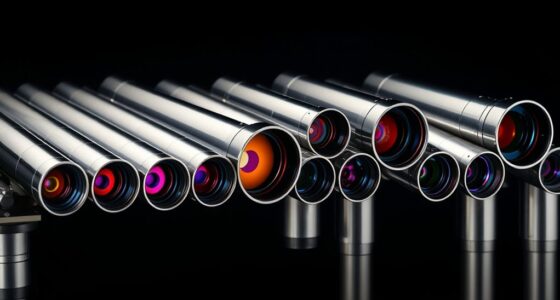
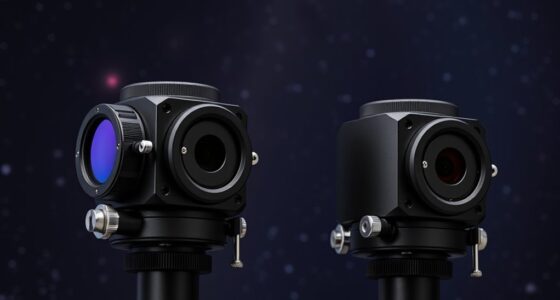
Finding the right smart telescope with built-in image stacking in 2026 means balancing ease of use, image quality, and portability. The ZWO Seestar S30 Pro stands out for its AI-enhanced astrophotography and urban-friendly features, making it ideal for beginners who want quick results. Meanwhile, the Vaonis Vespera 3 offers a more sophisticated experience with automatic multi-night stacking and high-end optics, suited for dedicated star enthusiasts willing to invest more. Both models simplify astrophotography through automation but differ significantly in complexity, price, and target users. Here’s a detailed comparison to help you decide which fits your stargazing goals best.

Prime made for students and young adults
- Fast, free delivery for dorm and study essentials
- Prime Video and Amazon Music included
- Member-only deals
Key Takeaways
- The ZWO Seestar S30 Pro excels in portability and urban astrophotography with AI enhancement and app control.
- The Vaonis Vespera 3 offers longer battery life, multi-night stacking, and high-quality optics for dedicated astrophotographers.
- Both models automate many processes but differ in complexity, price, and intended user experience.
- The Seestar S30 Pro is more beginner-friendly, while the Vespera 3 suits users seeking advanced stacking and detailed imaging.
- Tradeoffs include device dependency (smartphone control) for both, and higher cost for the Vespera 3.
| ZWO Seestar S30 Pro Smart Telescope, App-Controlled Astrophotography |  | Best for Beginners and Urban Use | Weight: 3.64 lbs | Optics: Apochromatic | Imaging: Dual-camera 4K | VIEW ON AMAZON | See Our Full Breakdown |
| Vaonis Vespera 3 Smart Telescope for Beginners and Adults |  | Best for Serious Star Enthusiasts and Multi-Night Imaging | Optics: Flat-field apochromatic quadruplet | Sensor: Sony IMX585 | Battery Life: 11 hours | VIEW ON AMAZON | See Our Full Breakdown |
| smart telescope with built in image stacking | Optics | Weight | Imaging | Connectivity |
|---|---|---|---|---|
| ZWO Seestar S30 Pro Smart Tele | Apochromatic | 3.64 lbs | Dual-camera 4K | App-controlled |
| Vaonis Vespera 3 Smart Telesco | Flat-field apochromatic quadruplet | — | — | — |
More Details on Our Top Picks
ZWO Seestar S30 Pro Smart Telescope, App-Controlled Astrophotography
The ZWO Seestar S30 Pro is designed to bring astrophotography within reach for newcomers and city dwellers, thanks to its compact design and user-friendly app control. Its automatic GOTO targeting and AI noise reduction simplify capturing stunning images, especially in light-polluted environments where traditional telescopes struggle. Compared to the Vespera 3, it offers a more straightforward setup but sacrifices some imaging finesse and multi-night stacking capabilities. Its dual 4K cameras produce detailed astrophotos quickly, making it a compelling choice for those new to astrophotography who want immediate results without complex configurations.
Pros:- Easy to operate with automatic targeting and app control
- Compact, lightweight, ideal for outdoor adventures
- High-quality 4K imaging with AI enhancement
- Ideal for urban environments with built-in light pollution filters
Cons:- Limited to smartphone control, which may restrict flexibility
- Requires a stable platform for deep-sky imaging
- Battery life details are unclear, limiting extended sessions
Best for: Beginners and urban astronomers looking for portable, easy-to-use astrophotography.
Not ideal for: Advanced astronomers or those wanting long-exposure, multi-night stacking without smartphone dependency.
- Weight:3.64 lbs
- Optics:Apochromatic
- Imaging:Dual-camera 4K
- Connectivity:App-controlled
- Features:Automatic GOTO, AI noise reduction, light pollution filters, anti-dew protection
Our verdict“A great entry-level option for urban astrophotographers seeking quick, high-quality images with minimal fuss.”
Vaonis Vespera 3 Smart Telescope for Beginners and Adults
The Vespera 3 elevates the smart telescope with its automatic alignment, tracking, and multi-night stacking, making it ideal for users who want to pursue detailed astrophotography over multiple evenings. Its high-resolution Sony IMX585 sensor and premium optics produce sharp images even in less-than-ideal conditions, like city skies. While its app interface is user-friendly, reliance on smartphone control and a higher price tag may deter casual users. This model is best suited for dedicated hobbyists who value long-term stacking, image detail, and a more robust feature set.
Pros:- Automatic alignment, tracking, and multi-night stacking
- High-quality optics with a Sony IMX585 sensor
- Long battery life (up to 11 hours) and automatic multi-night capture
- Includes a durable aluminium tripod and 5-year warranty
Cons:- Dependent on smartphone app for full functionality
- Higher cost may be prohibitive for casual users
- Limited to those interested in astrophotography and star tracking
Best for: Intermediate to advanced astrophotographers and serious hobbyists interested in multi-night stacking.
Not ideal for: Casual stargazers or those seeking a budget-friendly, straightforward device with minimal features.
- Optics:Flat-field apochromatic quadruplet
- Sensor:Sony IMX585
- Battery Life:11 hours
- Storage:115 GB
- Auto Anti-Fog:Yes
- Tripod:Aluminium
- Maximum Magnification:Up to 24 MP mosaic
- Field of View:4.33° x 2.43°
- Warranty:5 years
Our verdict“A sophisticated choice for dedicated astrophotographers who want detailed, multi-night images with minimal manual effort.”

How We Picked
Our selection process focused on smart telescopes that integrate built-in image stacking, emphasizing ease of use, image quality, portability, and automation features. We compared user reviews, technical specs, and brand reputation, prioritizing models that target beginners and hobbyists seeking simplified astrophotography solutions. Cost and feature tradeoffs were carefully considered to recommend options that balance performance with accessibility.
| smart telescope with built in image stacking | Optics |
|---|---|
| ZWO Seestar S30 Pro Smart Tele | Apochromatic |
| Vaonis Vespera 3 Smart Telesco | Flat-field apochromatic quadruplet |
Factors to Consider When Choosing Smart Telescope With Built In Image Stacking
Choosing the right smart telescope with built-in image stacking involves understanding your priorities: ease of use, image quality, portability, and automation features. For casual users or urban stargazers, simplicity and quick results matter most, making models like the Seestar S30 Pro appealing. More serious hobbyists will appreciate advanced stacking capabilities and longer battery life, which the Vespera 3 provides. Consider your target experience level and how much you’re willing to spend for extra features or higher image fidelity when making your decision.Ease of Use and Automation
If you’re new to astrophotography or prefer a setup that requires minimal manual adjustments, look for models with automatic alignment, GOTO targeting, and multi-night stacking. The Seestar S30 Pro and Vespera 3 both excel here, but the Vespera 3 offers more robust automation features suited for extended imaging sessions.
Image Quality and Optics
For sharp, detailed images, optics matter. The Vespera 3’s premium quadruplet lens combined with a high-resolution sensor delivers superior clarity, especially useful for multi-night stacking. The Seestar S30 Pro’s dual 4K cameras produce impressive results quickly but may not match the depth and detail of the Vespera 3’s images over time.
Portability and Battery Life
If you plan to take your telescope on outdoor adventures, weight and battery life are key. The Seestar S30 Pro is lightweight and portable, but its battery life isn’t specified, which could limit extended outings. The Vespera 3, with up to 11 hours of battery and a sturdy aluminium tripod, is better suited for longer, multi-night sessions far from power sources.
Price and Target Audience
Budget considerations are important. The Seestar S30 Pro offers affordability and simplicity, making it ideal for beginners or urban explorers. The Vespera 3’s higher price tag reflects its advanced features and is best for committed hobbyists willing to invest in detailed astrophotography and long-term projects.
Frequently Asked Questions
How does built-in image stacking improve astrophotography?
Built-in image stacking allows the telescope to combine multiple images over time, reducing noise and enhancing detail. This process results in clearer, more detailed pictures of faint objects like nebulae or distant galaxies, especially useful for urban environments with light pollution or limited exposure times.
Can I use these telescopes without a smartphone?
Both models rely heavily on smartphone apps for control, alignment, and stacking. While some basic functions might be accessible without one, full operation and the advanced stacking features are designed to be used via the app. This dependency simplifies the user experience but limits manual control for more experienced astronomers.
Are these telescopes suitable for deep-sky objects?
Yes, both the Seestar S30 Pro and Vespera 3 can capture deep-sky objects, but their effectiveness varies. The Seestar S30 Pro is better suited for bright objects and quick captures, while the Vespera 3’s multi-night stacking and high-quality optics make it more capable of revealing faint galaxies and nebulae over extended sessions.
What are the main tradeoffs between these two models?
The Seestar S30 Pro offers portability and ease of use at a lower price point, but it sacrifices some stacking sophistication and image depth. The Vespera 3 provides longer battery life, multi-night stacking, and superior optics, but it comes with a higher cost and a dependency on a smartphone app. Your choice depends on your priorities: quick results versus detailed, long-term astrophotography.
Is built-in image stacking worth it for beginners?
For beginners interested in astrophotography, built-in stacking simplifies the process and significantly improves image quality without requiring manual stacking techniques. It allows new users to produce impressive images early on, making it a worthwhile feature if you’re seeking immediate visual rewards with minimal technical fuss.
Conclusion
For casual users or city dwellers just starting out, the ZWO Seestar S30 Pro offers a straightforward, portable, and affordable way to explore astrophotography with built-in image stacking. More dedicated hobbyists or those wanting detailed, multi-night images will find the Vespera 3 provides the advanced features and optics they need, despite its higher cost. Your choice should align with your experience level, budget, and long-term astrophotography ambitions.