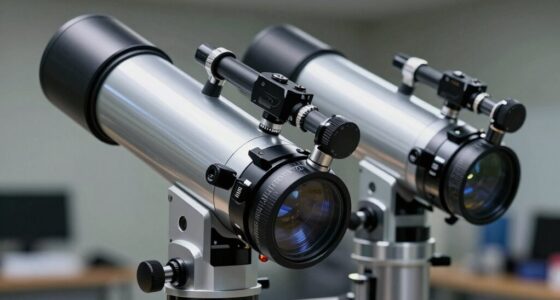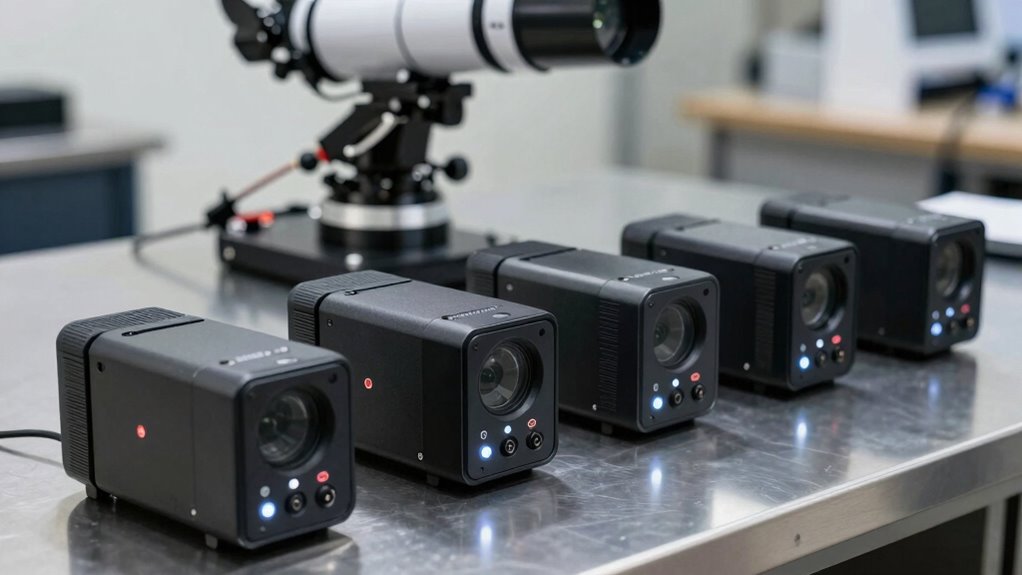

When selecting a guide camera for off axis guiders, the key considerations are sensitivity, stability, and ease of use. The OGMA Off-Axis Guider with Tilt Adjuster stands out as the best overall choice, thanks to its robust construction and flexible tilt adjustment. For those seeking high precision, the SVBONY SV238 Off-Axis Guider offers excellent image quality and a versatile filter drawer. The main tradeoffs involve balancing cost against features like autofocus, build quality, and compatibility. Keep reading for a detailed breakdown of each option and what makes them suitable for different needs.

Prime made for students and young adults
- Fast, free delivery for dorm and study essentials
- Prime Video and Amazon Music included
- Member-only deals
Key Takeaways
- Top picks distinguish themselves through stability and ease of focusing, critical for long exposure astrophotography.
- Build quality and adjustability are primary factors that separate premium options from budget-friendly models.
- Compatibility with various telescopes and accessories remains a common challenge, influencing overall usability.
- The best guide cameras offer a balance between sensitivity and noise, impacting guiding accuracy.
- Price often correlates with features like micro-focusing, filter drawers, and higher build quality, but some budget options still perform well.
| OGMA Off-Axis Guider with Tilt Adjuster (OAG PRO) for Astrophotography |  | Best Overall for Precise, Customizable Guiding | Guide Camera Compatibility: 1.25 inch cylindrical guide cameras | Prism Size: 14x7mm | Material: CNC Aluminum | VIEW ON AMAZON | See Our Full Breakdown |
| SVBONY SV238 Off-Axis Guider with M54-M48 Filter Drawer Set for Astrophotography |  | Best for Wide-Field, Deep-Sky Imaging | End Connection Method: Direct connection with M2.5 holes, extension tube needed | Filter Drawer Compatibility: SV226 M54; SV226P; compatible with ZWO and ToupTek filter wheels | Prism Size: 8x14mm | VIEW ON AMAZON | See Our Full Breakdown |
| Off-Axis Guider with Micro-Focusing, 12.5mm Prism for Astrophotography |  | Best for Versatile, Focus-Adjustable Guiding | Prism Size: 12.5mm | Adjustment Range: Over 100 degrees | Attachment Compatibility: 2″ focuser, T-thread | VIEW ON AMAZON | See Our Full Breakdown |
| Off-Axis Guider for Deep-Sky Imaging |  | Best for Compatibility with Various Cameras and Light Interference Reduction | Input: M48, M54, 360° rotatable helical | Output: M54, M48, M42, 360° rotatable helical | Guider Connection Adapter: 1.25″ helical focuser | VIEW ON AMAZON | See Our Full Breakdown |
| Astromania Off-Axis Guider with Microfocus Dual Helical Focuser |  | Best for Compact, Precise Astrophotography Guiding | Optical Tube Length: 1.25 inches | Item Dimensions: 3.3″D x 6″W x 3.6″H | Item Weight: 9.2 ounces | VIEW ON AMAZON | See Our Full Breakdown |
| Off-Axis Guider 12.5×12.5mm Prism for Astronomical Telescopes |  | Best Compact and Lightweight Option | Lens Diameter: Not specified | Focal Length: Not specified | Model Number: Off-axis star guide | VIEW ON AMAZON | See Our Full Breakdown |
| OAG Off-Axis Guider for Astrophotography |  | Most Precise and Stable Guiding | Material: Aluminium Alloy | Interface: 2-inch | Guider Interface: M42x0.75 | VIEW ON AMAZON | See Our Full Breakdown |
| guide camera for off axis guider | Prism Size |
|---|---|
| OGMA Off-Axis Guider with Tilt | 14x7mm |
| SVBONY SV238 Off-Axis Guider w | 8x14mm |
| Off-Axis Guider with Micro-Foc | 12.5mm |
| Off-Axis Guider for Deep-Sky I | — |
| Astromania Off-Axis Guider wit | — |
| Off-Axis Guider 12.5×12.5mm Pr | — |
| OAG Off-Axis Guider for Astrop | 8mm x 8mm |
More Details on Our Top Picks
OGMA Off-Axis Guider with Tilt Adjuster (OAG PRO) for Astrophotography
The OGMA OAG PRO stands out for its large prism and tilt adjuster, which together enable highly accurate star detection and alignment—crucial for long-exposure astrophotography. Unlike the SVBONY SV238, which emphasizes a wide field of view, the OGMA prioritizes precision, making it ideal for demanding imaging sessions. However, its compatibility constraints mean you’ll need specific adapters or filters, especially if using non-standard guide cameras. The lightweight CNC aluminum build ensures durability without adding bulk, but users must be prepared for some setup complexity and potential compatibility challenges. For those seeking a customizable guiding solution with excellent optical quality, this pick is a strong contender.Pros:- Precise guiding with integrated tilt adjuster for fine alignment
- Large prism enhances star detection for better imaging results
- Lightweight, durable CNC aluminum construction
Cons:- Requires compatible filter wheel or specific adapters for mounting
- Not compatible with box-shaped or square guide cameras
- May need additional components for certain camera setups
Best for: Astrophotographers who need precise guiding and are prepared to handle some setup intricacies
Not ideal for: Beginners or casual astronomers who prefer plug-and-play simplicity without additional adapters
- Guide Camera Compatibility:1.25 inch cylindrical guide cameras
- Prism Size:14x7mm
- Material:CNC Aluminum
- Design:Tall, ultra-slim profile
- Includes:Tilt adjuster
Our verdict“This guide camera suits experienced astrophotographers seeking high accuracy and customization, despite some setup complexity.”
SVBONY SV238 Off-Axis Guider with M54-M48 Filter Drawer Set for Astrophotography
The SVBONY SV238 offers a large 8x14mm prism and dual magnet filter holders, making it ideal for capturing wider star fields and maintaining stable filter alignment. Compared to the OGMA OAG PRO, it provides a broader view suitable for deep-sky imaging, especially with full-frame cameras. Its dual helical focuser allows smooth, precise adjustments, but it requires an extension tube for optimal back focus, adding an extra step in setup. Compatibility with various filter options and full-frame sensors make it versatile, though verification of filter drawer compatibility is necessary. This model is best for astrophotographers prioritizing a wide field of view and flexible filtering options.Pros:- Wide field of view with large prism for capturing more stars
- Smooth, precise focus via dual helical focuser
- Secure dual magnet filter holders for stability
- Compatible with full-frame cameras for vignetting-free imaging
Cons:- Requires extension tube for proper back focus setup
- Compatibility with filter wheel systems needs to be checked via drawings
- Cannot be used with the SV226 M42 filter drawer
Best for: Deep-sky astrophotographers needing wide-field imaging with flexible filter choices
Not ideal for: Photographers who want a compact guide camera or use non-standard filter systems, as setup may be more involved.
- End Connection Method:Direct connection with M2.5 holes, extension tube needed
- Filter Drawer Compatibility:SV226 M54; SV226P; compatible with ZWO and ToupTek filter wheels
- Prism Size:8x14mm
- Focusing Mechanism:Dual helical focuser
- Mount:Tripod mount
Our verdict“Ideal for astrophotographers seeking a wide-field, filter-ready off-axis guider for deep-sky imaging with flexible focusing.”
Off-Axis Guider with Micro-Focusing, 12.5mm Prism for Astrophotography
This guider’s 12.5mm prism combined with over 100 degrees of radial adjustment allows fine positioning of guide stars, especially beneficial when working with different telescopes. Its ability to attach to 2″ focusers or T-threads makes it adaptable, and the micro-focus adjustment enhances precision during guiding. Unlike the OGMA or SVBONY models, this unit excels when simultaneous imaging and guiding are needed, offering flexible prism tilt and positioning. However, setup can be complex, and the bulky design may be less suitable for tight or minimalist setups. It makes a compelling choice for users needing high flexibility and simultaneous imaging capabilities.Pros:- Over 100 degrees of radial adjustment for precise guide star placement
- Compatible with 2″ focusers and T-thread setups
- Allows simultaneous imaging and guiding through the same telescope
Cons:- Requires careful setup to avoid misalignment
- Potentially bulky design may not suit small setups
- Complex for users unfamiliar with precise adjustments
Best for: Astrophotographers who want flexible guide star positioning and dual-function imaging and guiding
Not ideal for: Beginners or those with limited space, as the setup demands careful adjustment and the design can be bulky.
- Prism Size:12.5mm
- Adjustment Range:Over 100 degrees
- Attachment Compatibility:2″ focuser, T-thread
Our verdict“Best suited for advanced users needing flexible, dual-purpose guiding and imaging with high adjustability.”
Off-Axis Guider for Deep-Sky Imaging
This model supports medium to long focal length telescopes with a large prism and 360-degree rotatable helical focusing, making it versatile for deep-sky projects. Its simple monocular design reduces light interference with a black structure, which can improve guiding stability. Compared to the SVBONY SV238, it offers broader compatibility with CCD cameras and a rotatable helical for fine adjustments. Still, the limited detailed info about camera compatibility and setup details means potential buyers need to verify fit for their equipment. This guider is well-suited for dedicated imaging setups needing reliable guiding without excessive complexity.Pros:- Supports medium and long focal length telescopes
- Large prism for increased guide star detection
- Rotatable helical focuser for precise adjustments
- Black structure minimizes light interference
Cons:- Limited detailed camera compatibility info
- Setup may require careful alignment and testing
- No explicit price or user ratings available
Best for: Deep-sky astrophotographers who want a flexible, compatible guiding accessory with minimal light interference
Not ideal for: Beginners or those needing detailed compatibility info and straightforward setup, as some details are lacking.
- Input:M48, M54, 360° rotatable helical
- Output:M54, M48, M42, 360° rotatable helical
- Guider Connection Adapter:1.25″ helical focuser
- Thickness:26mm
- Type:Monocular
Our verdict“A solid choice for experienced deep-sky imagers seeking broad compatibility and stable guiding with minimal light interference.”
Astromania Off-Axis Guider with Microfocus Dual Helical Focuser
The Astromania model excels in providing precise tracking correction within a compact form, thanks to its micro-focus dual helical focuser. Its 1.25-inch diameter and lightweight aluminum body make it easy to handle and mount on various telescopes, especially for those seeking a portable guiding option. Compared to larger units like the SVBONY SV238, it sacrifices some field of view for portability, but its high-precision focus mechanism ensures sharp guiding. The main tradeoff is its limited back focus of 75mm, which might restrict some setups, and manual focusing can be time-consuming for quick adjustments. This pick is perfect for astrophotographers prioritizing ease of use, portability, and accurate tracking.Pros:- Provides highly accurate tracking correction
- Compact and lightweight for portability
- Micro focusing with high precision
- Easy to connect using standard M48 threads
Cons:- Limited back focus of 75mm may restrict certain setups
- Requires manual focus adjustments, which can be time-consuming
- Primarily designed for astrophotography, not casual use
Best for: Amateur astrophotographers needing a portable, precise guide camera for on-the-go imaging
Not ideal for: Users requiring a wide field of view or extensive filter options, as its design favors compactness over versatility.
- Optical Tube Length:1.25 inches
- Item Dimensions:3.3″D x 6″W x 3.6″H
- Item Weight:9.2 ounces
- Back Focus:75mm
- Focuser Travel:10mm
Our verdict“Ideal for portable astrophotographers who need precise guiding in a lightweight, easy-to-use package despite some setup limitations.”
Off-Axis Guider 12.5×12.5mm Prism for Astronomical Telescopes
This off-axis guider stands out for its ultra-compact design, making it ideal for small telescopes where weight and space are at a premium. Unlike the OAG Off-Axis Guider for Astrophotography, which offers adjustable prism height and more precise framing, this model sacrifices some flexibility for simplicity. Its 12.5×12.5mm prism provides a straightforward guiding solution without the need for bulky accessories, but the lack of detailed specifications like focal length or lens diameter means it’s less transparent about its guiding capabilities. It’s best suited for astrophotographers seeking a minimal, easy-to-integrate component, particularly when weight reduction is critical. However, the limited field of view and absence of included accessories could be limiting for more advanced setups.
Pros:- Eliminates the need for a bulky guide scope, reducing setup weight
- Compact and lightweight, ideal for small telescopes
- Easy to connect with standard telescope and camera systems
Cons:- Lack of detailed specs such as lens diameter and focal length
- Limited field of view due to prism size
- No included accessories or specific camera compatibility details
Best for: Small telescope users who prioritize minimal weight and straightforward integration for deep-sky imaging
Not ideal for: Advanced astrophotographers requiring detailed specifications or a larger field of view for precise guiding
- Lens Diameter:Not specified
- Focal Length:Not specified
- Model Number:Off-axis star guide
- Type:Monocular
Our verdict“This pick is best for those seeking a simple, space-saving guiding solution for small telescopes, accepting some limitations in flexibility.”
OAG Off-Axis Guider for Astrophotography
This off-axis guider excels in delivering highly accurate guiding without the bulk of a guide scope, making it a strong choice for long-exposure astrophotography. Made from durable aluminum alloy, it offers notable stability compared to the more basic Off-Axis Guider 12.5×12.5mm Prism. Its 8mm x 8mm prism and adjustable height provide greater flexibility in framing, and the 2-inch interface ensures compatibility with most standard telescopes and guide cameras, similar to the SVBONY SV238. However, this model does require familiarity with astrophotography setups, as its features are more suited to experienced users. Its relatively lightweight at 200g makes it easy to handle, but it’s not designed for general use outside astrophotography applications.
Pros:- Provides highly accurate guiding without an external guide scope
- Made from durable aluminum alloy for enhanced stability
- Compatible with most guide cameras and standard telescope interfaces
- Adjustable prism height for flexible framing
Cons:- Requires familiarity with astrophotography equipment setup
- Limited to astrophotography applications, not suited for general use
- More complex installation process compared to simpler guides
Best for: Experienced astrophotographers looking for precise guiding without additional guide scopes
Not ideal for: Beginners or users seeking a simple, plug-and-play guiding solution for general astronomy use
- Material:Aluminium Alloy
- Interface:2-inch
- Guider Interface:M42x0.75
- Camera Interface:M42x0.75
- Prism Size:8mm x 8mm
- Weight:200g
Our verdict“This guider is ideal for seasoned astrophotographers needing reliable, high-precision guiding in long-exposure imaging, with some setup complexity.”

How We Picked
These guide cameras were evaluated based on a combination of performance metrics, build quality, ease of setup, and versatility. We prioritized models that provide stable guiding, accurate calibration, and user-friendly focusing mechanisms. Compatibility with common astrophotography setups was also a key factor, as many users seek plug-and-play solutions. The ranking reflects a balance between cost and features, aiming to recommend options suitable for both beginners and experienced astronomers. We also considered customer reviews and expert opinions to ensure reliability and value across different price points.Factors to Consider When Choosing Guide Camera For Off Axis Guider
Choosing the right guide camera for an off axis guider involves understanding several key factors. These considerations help ensure you select a device that enhances your astrophotography experience without unnecessary complexity or cost. Proper evaluation of features like sensitivity, build quality, and compatibility can prevent costly mistakes and improve guiding accuracy over long exposures.Sensitivity and Low-Light Performance
Guide cameras need to perform well in low-light conditions, as guiding stars are often faint. Cameras with higher sensitivity and lower noise levels allow for more precise guidance, especially in light-polluted skies. Investing in a camera with a larger sensor or better low-light performance can significantly improve guiding accuracy, but it may also increase cost and complexity. Be wary of models with poor sensitivity, which can result in guiding errors and longer calibration times.
Build Quality and Mechanical Stability
A sturdy, well-constructed guide camera reduces vibrations and misalignments during imaging sessions. Features like micro-focusing mechanisms and tilt adjusters improve ease of calibration and tracking precision. Cheaper models may lack durability or have flimsy focusing components, leading to unstable guiding. Prioritize models with solid materials and reliable focus adjustment options, especially if you plan extended imaging sessions or use heavy optical setups.
Compatibility and Integration
Ensure the guide camera is compatible with your telescope, off axis guider, and mount. Look for models that support standard threading and connection types, such as M54 or M48 filter drawers if needed. Compatibility issues can cause delays and frustration, so check specifications carefully before purchasing. Some models excel with specific types of telescopes but may be less versatile with others, influencing your long-term flexibility.
Cost versus Features
While premium guide cameras offer advanced features like micro-focusing, filter drawers, and higher sensitivity, they come at a higher price. Budget-friendly options often provide good performance for beginners but may lack some refinements. Consider your primary needs—if you’re just starting out, a mid-range model might be enough. For serious astrophotographers, investing in a higher-end camera can improve guiding precision, saving time and frustration in the long run.
Ease of Use and Setup
Guiding cameras should be straightforward to install, focus, and calibrate. Features like integrated focusing aids or micro-focusers can simplify setup, especially for less experienced users. Complex or poorly documented models can lead to longer learning curves and setup errors. Prioritize options with clear instructions, reliable software support, and intuitive focusing controls to ensure smooth operation during imaging sessions.
Frequently Asked Questions
How do I know if a guide camera is compatible with my off axis guider?
Compatibility depends on the thread size, connection type, and sensor interface. Most guide cameras support common standards like M48 or M54 threads, but it’s important to verify your off axis guider’s specifications. Checking the camera’s supported software and ensuring it works with your imaging setup can prevent compatibility issues. Reading user reviews and manufacturer details can clarify whether a particular model suits your existing equipment.
Is a higher sensitivity guide camera worth the extra cost?
Higher sensitivity typically translates into better performance in low-light conditions, which is vital for guiding faint stars during astrophotography. While more sensitive cameras tend to be more expensive, they can reduce calibration time and improve guiding accuracy, especially under light pollution. If you frequently shoot deep-sky objects or work in challenging conditions, investing in a more sensitive camera can provide noticeable benefits. For casual or daytime guiding, a less sensitive model might suffice.
Should I prioritize micro-focusing features in my guide camera?
Micro-focusing features allow for precise focus adjustments, which are especially helpful for achieving optimal guiding accuracy. They simplify calibration and reduce errors caused by slight focus shifts. However, these features can add to the cost and complexity. If you’re an experienced astrophotographer or plan to do long exposures regularly, micro-focusers are a valuable addition. Beginners might prefer models with straightforward focusing mechanisms until they are more comfortable with the setup process.
How important is build quality compared to sensor performance?
Both are vital, but the importance depends on your specific use case. Solid build quality ensures stability, minimizes vibrations, and prolongs the device’s lifespan, which is critical during long imaging sessions. Sensor performance directly affects guiding accuracy, especially in low-light conditions. Ideally, a guide camera should balance both aspects. A robust, well-made camera with a decent sensor offers the best long-term value, reducing downtime and guiding errors.
Can I use a guide camera designed for planetary imaging with an off axis guider?
While some guide cameras share similar sensors and connections, models optimized for planetary imaging often lack the sensitivity or low-light performance needed for guiding faint stars. Off axis guiders require cameras that can reliably detect and track dim objects over long exposures. Using a planetary camera might work in bright conditions but could lead to guiding inaccuracies in typical astrophotography scenarios. It’s best to choose a dedicated guide camera designed specifically for guiding tasks.
Conclusion
For most users, the OGMA Off-Axis Guider with Tilt Adjuster offers the best overall balance of stability, flexibility, and ease of use, making it ideal for serious amateur astrophotographers. Those on a budget will find the SVBONY SV238 Off-Axis Guider provides excellent value without sacrificing key features. Beginners should consider models with simpler focusing mechanisms and straightforward setup. For high-end setups, investing in premium options with micro-focusing and advanced build quality pays off in long-term reliability and guiding precision. Ultimately, your choice depends on your specific imaging goals, budget, and equipment compatibility.Halloween Picks
halloween
As an affiliate, we earn on qualifying purchases.