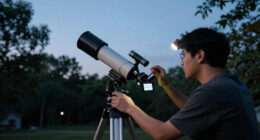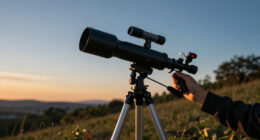
Searching for the 9 best star gazing binoculars? The top pick, Celestron SkyMaster 15×70, offers a great balance of power and affordability for deep-sky views. For those seeking long-range clarity, the Sogries 25×100 stands out with its high magnification, but it comes with increased size and weight. Meanwhile, the SVBONY SV407 provides a wide-angle view suitable for broader sky scans at a more accessible price. Each option presents tradeoffs between magnification, brightness, size, and ease of use. Keep reading for a detailed breakdown so you can choose the best binoculars for your stargazing adventures.

Prime made for students and young adults
- Fast, free delivery for dorm and study essentials
- Prime Video and Amazon Music included
- Member-only deals
Key Takeaways
- High magnification binoculars like 25×70 or 25×100 excel for long-range observation but can be bulkier and harder to stabilize without a tripod.
- Larger aperture sizes (70mm, 80mm, 100mm) significantly improve light gathering, making deep-sky objects more visible, but they also increase weight and price.
- Wide-angle binoculars like the SVBONY SV407 are great for scanning large sky areas quickly, ideal for beginners or casual star gazers.
- Optical quality, including coatings and glass type, plays a crucial role in image clarity and brightness, often justifying higher costs.
- Ease of handling and setup varies — lighter, compact models are more portable, but may sacrifice some brightness or magnification.
| Celestron SkyMaster 15×70 Astronomy Binoculars for Stargazing and Deep-Sky |  | Best Overall for Serious Astronomers | Magnification: 15x | Objective Lens Diameter: 70mm | Prism Type: BaK-4 | VIEW ON AMAZON | See Our Full Breakdown |
| Celestron SkyMaster 25×70 Binoculars for Astronomy, Long-Range & Wildlife |  | Best for Long-Distance Viewing and Wildlife Observation | Magnification: 25x | Objective Lens Diameter: 70mm | Prism Type: BaK-4 | VIEW ON AMAZON | See Our Full Breakdown |
| Sogries 18×70 High Power Binoculars for Adults Professional Long Range |  | Best for Professional-Grade Long-Range Observation | Objective Lens Diameter: 70mm | Magnification: 18x | Mount Type: Tripod Mount | VIEW ON AMAZON | See Our Full Breakdown |
| Celestron SkyMaster 20×80 Binoculars for Deep-Sky Astronomy |  | Best for Deep-Sky and Long-Distance Astronomy | Magnification: 20x | Objective Lens Diameter: 80mm | Prism Type: BaK-4 | VIEW ON AMAZON | See Our Full Breakdown |
| Sogries 25×100 Astronomy Binoculars for Stargazing and Long-Range Viewing |  | Best for Extreme Long-Range and Heavy-Duty Use | Objective Lens Diameter: 100mm | Magnification: 25x | Field of View: 147 ft | VIEW ON AMAZON | See Our Full Breakdown |
| 15×70 Astronomy Binoculars for Adults, High Powered Stargazing Binoculars |  | Best Overall for Deep-Sky Observations | Magnification: 15x | Objective Lens Diameter: 70mm | Weight: 2.9 lbs | VIEW ON AMAZON | See Our Full Breakdown |
| Celestron Cometron 7x50mm Astronomy Binoculars |  | Best for Beginners and Casual Stargazing | Magnification: 7x | Objective Lens Diameter: 50mm | Field of View: 6.6° | VIEW ON AMAZON | See Our Full Breakdown |
| 20×80 Astronomy Binoculars for Adults High Powered |  | Best for Serious Deep-Sky Observations | Magnification: 20x | Objective Lens Diameter: 80mm | Weight: 2.08 kg | VIEW ON AMAZON | See Our Full Breakdown |
| SVBONY SV407 Astronomy Binoculars 2.1x42mm Wide Angle for Stargazing |  | Best Compact Wide-Angle for Star Fields | Magnification: 2.1x | Objective Lens Diameter: 42mm | Field of View: 26 degrees | VIEW ON AMAZON | See Our Full Breakdown |
| star gazing binocular | Magnification | Objective Lens Diameter | Prism Type |
|---|---|---|---|
| Celestron SkyMaster 15×70 Astr | 15x | 70mm | BaK-4 |
| Celestron SkyMaster 25×70 Bino | 25x | 70mm | BaK-4 |
| Sogries 18×70 High Power Binoc | 18x | 70mm | — |
| Celestron SkyMaster 20×80 Bino | 20x | 80mm | BaK-4 |
| Sogries 25×100 Astronomy Binoc | 25x | 100mm | Porro Prism |
| 15×70 Astronomy Binoculars for | 15x | 70mm | BAK-4 |
| Celestron Cometron 7x50mm Astr | 7x | 50mm | — |
| 20×80 Astronomy Binoculars for | 20x | 80mm | BAK-4 |
| SVBONY SV407 Astronomy Binocul | 2.1x | 42mm | — |
More Details on Our Top Picks
Celestron SkyMaster 15×70 Astronomy Binoculars for Stargazing and Deep-Sky
This model stands out for its high 15x magnification combined with 70mm lenses, making it a top choice for deep-sky observation. Compared with the Sogries 25×100, the SkyMaster 15×70 offers slightly lower magnification but better portability and ease of use, especially for those who prefer handheld viewing without a tripod. Its bright, sharp images are a direct result of BaK-4 prisms and multi-coated optics. The water-resistant design adds durability, but its weight and size mean extended hand-held use is impractical without a tripod—making stability a key consideration. Overall, this pick makes the most sense for dedicated stargazers who want excellent image quality and don’t mind using a mount for long sessions.
Pros:- High magnification suitable for deep-sky objects
- Bright, detailed images even in low-light conditions
- Durable, water-resistant construction
- Tripod compatible for stable viewing
Cons:- Heavy and large, requiring tripod for extended use
- Not suitable for handheld use over long periods
Best for: Experienced amateur astronomers needing high-quality, deep-sky viewing in a durable, water-resistant package
Not ideal for: Casual users or beginners who prefer lightweight, handheld binoculars for occasional stargazing
- Magnification:15x
- Objective Lens Diameter:70mm
- Prism Type:BaK-4
- Tripod Mount:¼”-20 adapter included
- Water-Resistant:Yes
- Warranty:Limited Lifetime US Warranty
Our verdict“This binocular is ideal for serious astronomers who prioritize image quality and stability over portability.”
Celestron SkyMaster 25×70 Binoculars for Astronomy, Long-Range & Wildlife
The SkyMaster 25×70 provides significantly higher magnification than the 15×70 model, making it better suited for detailed long-range land and wildlife viewing, as well as astronomy. While the 15×70 offers excellent low-light performance, the 25×70’s increased power demands a tripod for steady images, similar to the Sogries 18×70, which also requires stabilization at high magnifications. Its bright, sharp images and water-resistant build make it a durable choice, but the larger size and weight reduce portability. This binocular makes the most sense for users who want to observe distant objects with precision and are comfortable with tripod use.
Pros:- High magnification ideal for distant objects
- Bright, detailed images in low-light conditions
- Water-resistant and rugged design
- Tripod compatible for stability
Cons:- Requires tripod due to size and weight
- Less portable for casual use
Best for: Wildlife enthusiasts and astronomers needing long-range, high-magnification binoculars for outdoor use
Not ideal for: Casual stargazers or those seeking lightweight, handheld options for brief observations
- Magnification:25x
- Objective Lens Diameter:70mm
- Prism Type:BaK-4
- Water-Resistant:Yes
- Tripod Mount:¼”-20 adapter included
Our verdict“This binocular is best for experienced outdoor observers who prioritize long-range clarity over portability.”
Sogries 18×70 High Power Binoculars for Adults Professional Long Range
The Sogries 18×70 strikes a balance between high magnification and quality, making it a top choice for those who want professional-level images for astronomy, wildlife, or long-distance viewing. Compared to the SkyMaster 25×70, these offer slightly lower magnification but are often easier to stabilize thanks to their slightly lighter weight and ergonomic design. Their fully multi-coated lenses and aircraft-grade chassis deliver excellent light transmission and durability. They are especially suitable for eyeglass wearers thanks to the long eye relief, but their bulk and need for tripod support at high magnification may deter casual users. This makes it ideal for serious hobbyists seeking high-quality optics with professional features.
Pros:- High 18x magnification with bright, detailed images
- Suitable for astronomy, bird watching, and long-distance land viewing
- Durable construction with aircraft-grade aluminum
- Eyeglass friendly with long eye relief
Cons:- Requires tripod for stable viewing at high magnification
- Heavier and bulkier than compact options
- Higher price point
Best for: Experienced stargazers and wildlife observers who require professional-grade optics and long-distance clarity
Not ideal for: Beginners or casual users seeking lightweight, portable binoculars for occasional use
- Objective Lens Diameter:70mm
- Magnification:18x
- Mount Type:Tripod Mount
- Eye Relief:18mm
- Coating:Fully Multi-Coated
- Warranty & Support:30-Day Return Guarantee
Our verdict“This pick is best for serious outdoor enthusiasts who need professional optics and can accommodate its size and weight.”
Celestron SkyMaster 20×80 Binoculars for Deep-Sky Astronomy
The 20×80 SkyMaster offers a compelling option for those seeking detailed deep-sky views, with larger 80mm lenses that gather more light than the 70mm models. Compared with the 15×70, it provides increased magnification and brighter images, but similar to the 25×70, it demands a tripod for prolonged viewing. Its water-resistant build and BaK-4 prisms ensure durability and sharpness, making it suitable for outdoor astronomy sessions. The heavier weight and larger size are drawbacks for portability, but for users committed to detailed, long-duration observation, this model provides excellent value and performance.
Pros:- High 20x magnification ideal for deep-sky observation
- Bright, sharp images with BaK-4 prisms
- Water-resistant and durable
- Tripod compatible for steady viewing
Cons:- Heavy and large, less portable
- Requires tripod for optimal use
Best for: Amateur astronomers seeking high-powered, deep-sky binoculars with excellent brightness and durability
Not ideal for: Travelers or casual stargazers who prioritize lightweight, handheld optics
- Magnification:20x
- Objective Lens Diameter:80mm
- Prism Type:BaK-4
- Water-Resistant:Yes
- Tripod Mount:¼”-20 adapter included
Our verdict“This binocular is best suited for dedicated astronomers wanting high magnification and brightness at the expense of portability.”
Sogries 25×100 Astronomy Binoculars for Stargazing and Long-Range Viewing
The Sogries 25×100 stands out for its enormous 100mm lenses and professional-grade features, making it ideal for serious astronomers and outdoor adventurers. Its 25x magnification surpasses the other options here, providing incredibly detailed views of distant objects. Compared with the SkyMaster 25×70, it offers increased light-gathering capability and an expansive field of view, but its weight—nearly 9 pounds—demands a sturdy tripod for any extended session. Fully multi-coated optics and waterproof construction ensure excellent performance in all weather conditions. This binocular is best suited for users who prioritize ultimate long-range detail and don’t mind the bulk.
Pros:- Extremely high 25x magnification for detailed long-range views
- Large 100mm lenses for maximum light collection
- Waterproof and fogproof for all-weather use
- Includes a backpack and accessories for transport
Cons:- Very heavy at 8.8 lbs, requiring tripod
- Bulky design reduces portability
- Individual focus system can be less convenient
Best for: Professional astronomers and wildlife researchers needing maximum magnification and ruggedness
Not ideal for: Casual users or travelers seeking lightweight, portable binoculars
- Objective Lens Diameter:100mm
- Magnification:25x
- Field of View:147 ft
- Exit Pupil Diameter:4mm
- Prism Type:Porro Prism
- Water Resistance Level:Waterproof
Our verdict“This binocular is best for professionals who need maximum magnification and are prepared for its weight and size for optimal outdoor observation.”
15×70 Astronomy Binoculars for Adults, High Powered Stargazing Binoculars
This pair stands out for their combination of high magnification and large objective lenses, making them ideal for detailed celestial viewing. Compared to the Celestron SkyMaster 15×70, these binoculars offer comparable brightness and clarity but include a sturdy tripod mount, which is essential for extended observing sessions. Their 15×70 specs translate into bright, sharp images even in low-light conditions, though their weight of 2.9 lbs makes handheld use tiring over long periods. The waterproof, shock-resistant build adds durability, but note that the tripod is sold separately, which increases the overall cost. This pick makes the most sense for serious amateur astronomers who prioritize image quality and stability over portability.
Pros:- High magnification with large 70mm lens for bright, detailed images
- Waterproof and shock-resistant construction ensures durability
- Includes tripod mount for stable, vibration-free viewing
Cons:- Relatively heavy for extended handheld use, leading to fatigue
- Tripod sold separately adds to overall expense
Best for: Experienced stargazers or astronomy enthusiasts seeking high magnification and detailed views.
Not ideal for: Casual observers or those who prefer lightweight, portable options for quick setup and transport.
- Magnification:15x
- Objective Lens Diameter:70mm
- Weight:2.9 lbs
- Prism Type:BAK-4
- Coating:Full Multi-Coating (FMC)
- Waterproof:Yes
Our verdict“This binocular excels for serious astronomy hobbyists who need high detail and stability, despite its weight and additional cost for a tripod.”
Celestron Cometron 7x50mm Astronomy Binoculars
This model makes sense for newcomers due to its straightforward 7×50 design, offering a wide field of view that simplifies locating star patterns. Unlike the 15×70 models, these are lighter and easier to handle without a tripod, but their lower magnification means less detail when observing faint objects. The 50mm objectives produce bright images suitable for casual astronomy and outdoor viewing, especially in well-lit conditions. They are compatible with tripods, although the adapter isn’t included, which can be a drawback for extended use. This choice is perfect for those just starting out or who want a versatile pair for daytime and night sky use without sacrificing ease of handling.
Pros:- Easy to operate with a wide 6.6° field of view
- Bright, multi-coated lenses improve image clarity
- Tripod mountable for stable viewing during long sessions
Cons:- Tripod adapter not included, requiring extra purchase
- Bulkier and less portable than compact options
- Limited to casual or daytime astronomy
Best for: Beginner astronomers or outdoor enthusiasts seeking simple, stable viewing without extra accessories.
Not ideal for: Advanced stargazers looking for high-magnification, detailed celestial observations or portability.
- Magnification:7x
- Objective Lens Diameter:50mm
- Field of View:6.6°
- Close Focus:26.2 feet
- Tripod Mount:Yes
- Weight:Light
Our verdict“This binocular is ideal for entry-level users who want a simple, stable, and bright view of the night sky and nature.”
20×80 Astronomy Binoculars for Adults High Powered
This pair is designed for users who want intense detail in celestial viewing, with 20x magnification and sizable 80mm lenses that gather ample light. Compared to the 15×70 options, these deliver better resolution for faint objects, but their weight of over 2 kg and need for a tripod make them less suitable for quick setups or casual outings. The waterproof, rugged design ensures resilience in different weather conditions, making them suitable for outdoor astronomy and wildlife watching alike. The Bak-4 prisms and UV coating enhance image brightness and clarity, but the higher magnification amplifies vibrations, necessitating a sturdy mount for best results. These binoculars are perfect for dedicated astronomers who prioritize clarity and detail over portability.
Pros:- High magnification with large 80mm lenses for bright, detailed views
- Waterproof and shock-resistant for durability outdoors
- Includes tripod mount for steady, long-duration viewing
Cons:- Heavy at over 2 kg, making handheld use difficult
- Requires tripod for extended use, adding setup complexity
- Focus adjustment may need fine-tuning for sharp images
Best for: Advanced amateur astronomers or wildlife watchers committed to high-magnification, stable observation sessions.
Not ideal for: Light travelers or casual users who prefer lightweight, compact binoculars for quick use or travel.
- Magnification:20x
- Objective Lens Diameter:80mm
- Weight:2.08 kg
- Field of View:173 feet
- Water Resistance:Waterproof
- Prism Type:BAK-4
Our verdict“This binocular excels in delivering detailed celestial views for dedicated users willing to handle its weight and setup needs.”
SVBONY SV407 Astronomy Binoculars 2.1x42mm Wide Angle for Stargazing
This pair is a standout for those who prefer a low-magnification, wide-angle view of the night sky, ideal for scanning large star fields and constellations. Unlike the high-magnification 15×70 or 20×80 models, the 2.1x magnification offers a broad 26-degree field, making it easier to locate and appreciate expansive star clusters. The FMC coating ensures bright, clear images despite the small objective size, and the compact design allows for effortless portability. However, the low magnification limits detail and is unsuitable for high-zoom celestial observation. The independent focusing feature is a plus for comfortable viewing of objects at different distances. This is perfect for casual sky watchers or those interested in wide-angle landscape and star field appreciation.
Pros:- Wide 26-degree field of view for expansive star field coverage
- Bright, clear images with FMC coating
- Compact and lightweight, easy to carry
Cons:- Limited magnification reduces detail for planetary viewing
- Focusing adjustments may be needed for different distances
- Not suitable for high-magnification astronomy
Best for: Beginner or casual astronomers seeking an easy-to-carry, wide-angle binocular for star field viewing and general outdoor use.
Not ideal for: Users wanting detailed planetary or deep-sky object observation requiring higher magnification.
- Magnification:2.1x
- Objective Lens Diameter:42mm
- Field of View:26 degrees
- Minimum Focusing Distance:1 meter
- Filter Thread:2-inch
- Weight:Light
Our verdict“This binocular is best suited for relaxed, wide-angle star viewing and outdoor exploration, especially for those prioritizing portability.”

How We Picked
The products in this roundup were selected based on key factors that influence star gazing performance: optical quality, magnification power, aperture size, build durability, and user-friendliness. We prioritized models that balance these elements, offering clear and bright images while remaining manageable for various user levels. Cost-effectiveness was also considered, ensuring options cater to different budgets without overly compromising quality. The ranking reflects how well each binocular performs in typical stargazing scenarios, with a bias toward versatility and durability in low-light conditions.| star gazing binocular | Prism Type |
|---|---|
| Celestron SkyMaster 15×70 Astr | BaK-4 |
| Celestron SkyMaster 25×70 Bino | BaK-4 |
| Sogries 18×70 High Power Binoc | — |
| Celestron SkyMaster 20×80 Bino | BaK-4 |
| Sogries 25×100 Astronomy Binoc | Porro Prism |
| 15×70 Astronomy Binoculars for | BAK-4 |
| Celestron Cometron 7x50mm Astr | — |
| 20×80 Astronomy Binoculars for | BAK-4 |
| SVBONY SV407 Astronomy Binocul | — |
Factors to Consider When Choosing 9 Best Star Gazing Binoculars
Choosing the right star gazing binoculars involves understanding several critical factors beyond just magnification and size. These considerations help prevent common pitfalls, such as purchasing a model that’s too heavy or underpowered for your needs. By weighing these factors, you can find a pair that enhances your night sky viewing experiences without unnecessary compromises.Magnification and Aperture Balance
Magnification determines how close objects appear, but higher magnification often results in a darker, shakier image. For stargazing, a balance between 15x to 25x is usually ideal, combined with large apertures (70mm and above) to gather enough light. Oversized magnification can be cumbersome, so consider your ability to stabilize the binoculars, either through a tripod or steadying techniques.
Optical Quality and Coatings
Quality lenses with multi-coated glass greatly enhance image brightness and contrast, especially important in low-light conditions like starry nights. Cheaper models often have fewer coatings, leading to glare and reduced clarity. Investing in well-coated optics increases the visual experience, making faint stars and nebulae more visible.
Size, Weight, and Portability
While larger apertures improve light gathering, they also add weight and bulk. Consider how portable your binoculars need to be—if you plan to travel or hike with them, lighter models are preferable, even if they offer slightly less light collection. Conversely, stationary setups or tripod use allow for bigger, heavier models that maximize viewing quality.
Ease of Use and Handling
Comfort and stability are key in star gazing. Look for models with smooth focusing mechanisms and ergonomic grips. Features like tripod adapters enable longer, steadier observations, which are essential at higher magnifications. Avoid overly complex models if you’re a beginner, as simplicity often enhances the experience.
Budget Considerations and Value
Higher-priced binoculars typically offer superior optics and durability, but some mid-range options provide excellent value for casual stargazing. Be wary of very cheap models that skimp on coating quality or build, as they can frustrate your viewing experience. Decide how much you’re willing to invest based on your level of interest and how often you plan to use them.
Frequently Asked Questions
Is larger aperture always better for star gazing?
Generally, yes — larger apertures gather more light, revealing fainter objects in the night sky. However, bigger apertures also mean heavier, bulkier binoculars, which can be less portable and harder to stabilize without a tripod. For casual or portable use, a balance around 70-80mm often offers a good compromise between performance and convenience.
Can I use daytime binoculars for stargazing?
While some daytime binoculars can work in a pinch, models designed specifically for low-light conditions will perform better at night. Night-focused binoculars typically have larger apertures and coatings optimized for darkness, providing brighter images and better contrast. Using regular daytime binoculars may limit your ability to see fainter stars and celestial objects clearly.
Do I need a tripod for high-magnification binoculars?
Yes, especially for models with 20x or higher magnification, a tripod stabilizes the image and reduces shakiness, leading to a more comfortable viewing experience. Without stabilization, even tiny hand movements can distort the view at high zoom levels, making it difficult to observe fine details or faint objects. Investing in a tripod adapter can significantly enhance your stargazing sessions.
What features should beginners look for in star gazing binoculars?
Beginners should prioritize ease of use, lightweight design, and sufficient brightness. Models with around 15x to 20x magnification and 70mm or larger apertures often strike the right balance. Simpler focusing mechanisms and ergonomic grips help new users get comfortable quickly, while a lower price point minimizes risk if they decide to upgrade later.
How important are coatings and glass quality?
Optical coatings and high-quality glass are vital for delivering bright, clear images, especially in low-light conditions like stargazing. Fully coated lenses reduce glare and improve contrast, revealing more detail in celestial objects. While they may increase the cost, these features significantly enhance the viewing experience and justify a higher price for serious enthusiasts.
Conclusion
For most casual star gazers and beginners, the Celestron SkyMaster 15×70 offers an excellent starting point, balancing power, size, and affordability. Enthusiasts seeking ultimate detail and long-range viewing might prefer the Sogries 25×100, despite its bulk. For those who value portability and quick scans, the SVBONY SV407 provides a wide-angle view at a lower price. Serious astronomers or deep-sky observers should consider investing in higher-end models with larger apertures and sturdier tripods, while casual users can enjoy versatile, mid-range options that deliver great value without over-complication.