
TL;DR
Play games included with Prime
Start a Prime free trial and play with Amazon Luna on your devices.
Start playingAs an affiliate, we earn on qualifying purchases.
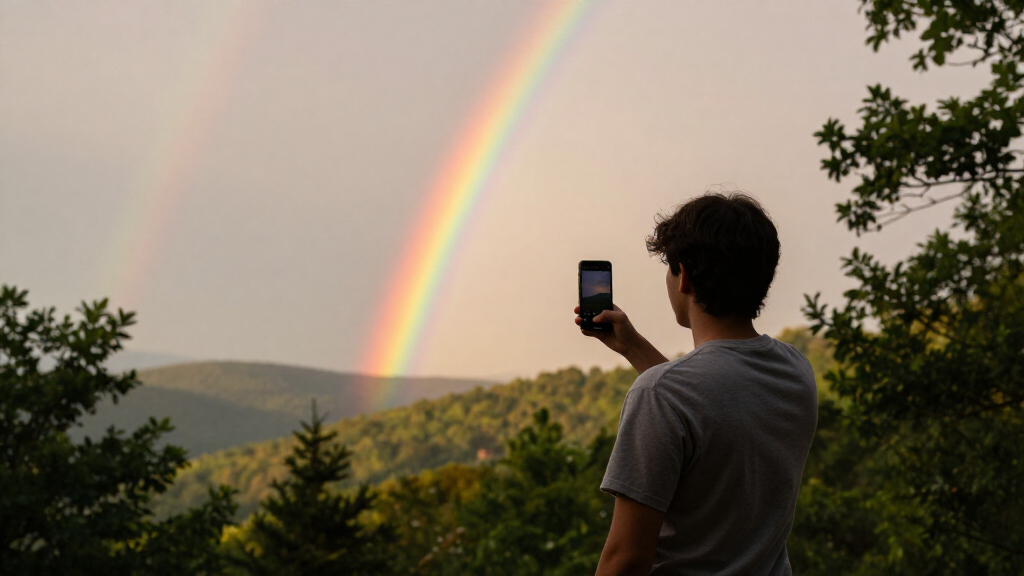
A fire rainbow, or circumhorizontal arc, appeared over West Virginia on August 2, 2026. It forms when sunlight refracts through high-altitude ice crystals in cirrus clouds at specific angles, creating vibrant, rainbow-like colors in the sky. Advances in imaging and public sharing make these rare phenomena more accessible to sky enthusiasts than ever before.
Imagine looking up and seeing a fiery, rainbow-colored arch stretching across the sky—an otherworldly spectacle that seems almost surreal. That’s exactly what happened over West Virginia on August 2, 2026, when a stunning fire rainbow lit up the sky. This phenomenon isn’t just pretty; it’s a rare dance of light and ice crystals that can turn an ordinary sky into a vibrant masterpiece.
If you’ve ever wondered what causes such breathtaking displays or how to catch one yourself, you’re in the right place. Today, we’ll explore what a fire rainbow really is, how it forms, and the simple steps you can take to witness or photograph this fleeting wonder. Trust me, once you understand the science, every sky becomes a little more magical.
Fire rainbows are caused by sunlight refracting through horizontally aligned ice crystals in cirrus clouds, not by rain.
You need the Sun at least 58° above the horizon and specific cloud conditions to see one.
Photographting a fire rainbow requires a wide lens, a clear sky, and patience—be ready when the conditions align.
These phenomena reveal details about our atmosphere and climate, making them valuable for scientists and skywatchers alike.
Despite their rarity, advances in imaging and social sharing make fire rainbows more accessible and inspiring than ever.
What Exactly Is a Fire Rainbow and Why Does It Look Like Flames?
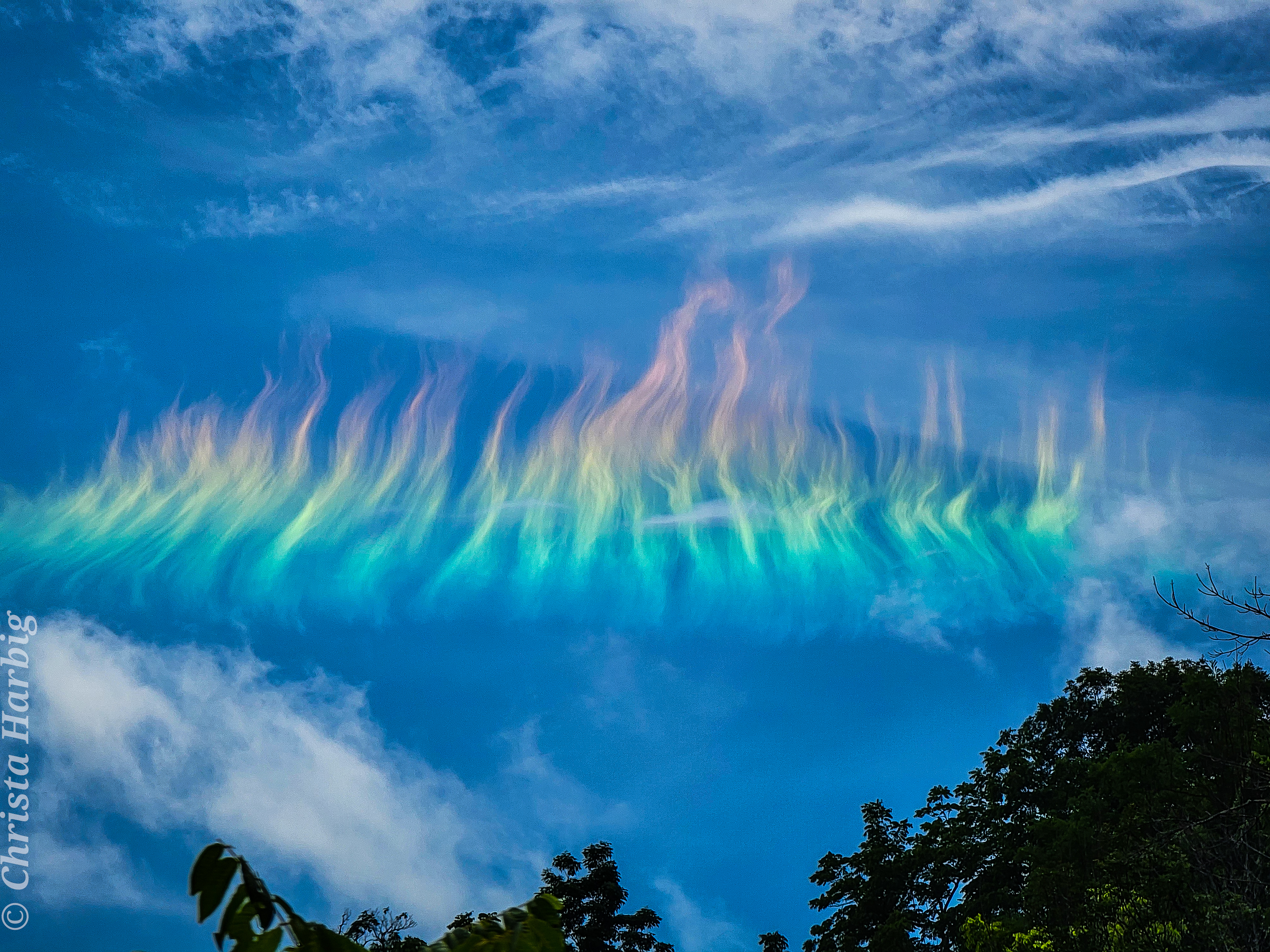
A fire rainbow, officially called a circumhorizontal arc, is a colorful, flame-like band that appears high in the sky. It looks like a rainbow on fire—bright reds, oranges, and yellows flickering against the blue. The magic lies in how sunlight interacts with tiny ice crystals in cirrus clouds, bending and dispersing light into a spectrum.
Think of the ice crystals as tiny floating prisms, perfectly aligned to funnel sunlight into a vibrant arc. When conditions are just right, these crystals refract sunlight at about 22 degrees, splitting it into its rainbow colors. The result? A fiery ribbon of color stretching across the sky, often appearing near the horizon during late morning or early afternoon.
For example, the photo taken near North Fork Mountain in West Virginia captures this fiery display, with colors so vivid they seem to dance in the breeze—like a flame frozen in time. Such moments are rare because they depend on specific cloud and sun positions, making every sighting special.
wide angle camera lens for astrophotography
As an affiliate, we earn on qualifying purchases.
As an affiliate, we earn on qualifying purchases.
How a Fire Rainbow Forms — The Simple Science Behind the Spark
Think of a fire rainbow forming like a perfect alignment of tiny, flat hexagonal ice crystals in the sky. When the Sun reaches at least 58 degrees above the horizon, its rays enter these crystals and bend — or refract — at precise angles. If the crystals are aligned horizontally, the sunlight disperses into a colorful band.
Here’s how it happens in 3 steps:
- The Sun must be high enough in the sky (at least 58°).
- Ice crystals in cirrus clouds are aligned horizontally, acting like tiny prisms.
- Sunlight passes through these crystals, bending and dispersing into a spectrum of colors, forming the fiery arc.
This setup is quite specific, which is why fire rainbows are rare and fleeting—like catching a fleeting glimpse of a rainbow’s fiery twin.
During the August 2, 2026 sighting, the conditions aligned perfectly—bright sunlight, high cirrus clouds, and the right angle—creating a spectacle that left viewers in awe.
As an affiliate, we earn on qualifying purchases.
Why Seeing a Fire Rainbow Is More Than Just Pretty — What It Tells Us
These fiery arcs aren’t just eye candy; they serve as important indicators of atmospheric conditions that can influence our understanding of weather and climate systems. When scientists analyze fire rainbows, they gain insights into the microphysics of ice crystals, including their size, shape, and orientation. These details matter because they affect how clouds reflect, absorb, and transmit radiation, which in turn influences global climate patterns.
For instance, an increase in high cirrus clouds capable of producing fire rainbows may suggest shifts in atmospheric temperature or humidity, potentially signaling changing climate conditions. Such clouds can trap heat in the atmosphere, contributing to warming trends—a subtle but significant factor in climate models. Understanding these optical phenomena helps scientists refine their predictions about future climate scenarios and assess the impact of clouds on Earth’s energy balance.
With advances in satellite technology and high-resolution imaging, we’re now able to observe these delicate ice crystal formations in unprecedented detail. This not only enriches our scientific knowledge but also enhances public awareness of atmospheric health and climate change. In essence, fire rainbows are more than fleeting beauty; they are windows into the complex, interconnected systems that sustain our planet.
high zoom digital camera for nature
As an affiliate, we earn on qualifying purchases.
As an affiliate, we earn on qualifying purchases.
How to Spot and Photograph a Fire Rainbow — Your Quick Guide
Want to catch your own fire rainbow? Here’s how:
- Check the weather forecast for clear days with high cirrus clouds. These clouds are the canvas for such displays, and their presence indicates the right atmospheric conditions.
- Make sure the Sun is at least 58° above the horizon—best during late morning or early afternoon—because the angle is critical for refraction through ice crystals.
- Use a wide-angle lens on your camera or smartphone to capture the full arc, especially if it’s sprawling across the sky. A broader view increases your chances of framing the phenomenon beautifully.
- Find an open space with a clear view of the sky—away from city lights and tall buildings that can obscure or distort the view. Elevated vantage points, like mountain ridges, often provide the best perspective.
- Be patient and keep an eye on the sky; these phenomena can appear suddenly and vanish quickly. Preparation is key to capturing the moment when it happens.
During the August 2, 2026 event, many photographers positioned themselves on mountain ridges like North Fork Mountain, where the expansive sky and high vantage point offered perfect views. The key is preparation—know when the Sun hits the right angle and be ready to shoot when it does.
Pro tip: Use your camera’s HDR setting and focus on the horizon to enhance color vibrancy and detail. Adjusting exposure settings can help capture the richness of the colors without overexposing the bright arcs.
As an affiliate, we earn on qualifying purchases.
Fire Rainbows vs. Other Sky Wonders — How They Compare
| Phenomenon | What Causes It | Appearance | Rarity |
|---|---|---|---|
| Fire Rainbow (Circumhorizontal Arc) | Refraction in ice crystals in cirrus clouds | Vivid, flame-like rainbow band | Rare, depends on specific conditions |
| Rainbow | Refraction, reflection, and dispersion in water droplets | Colorful arc in the sky | Common after rain or near waterfalls |
| Halo | Refraction in ice crystals in high clouds | Ring around the Sun or Moon | Fairly common |
| Sundog | Refraction through ice crystals | Bright spots on either side of the Sun | Occasional, during cold weather |
Compared to a typical rainbow, a fire rainbow is much rarer and requires specific sun angles and cloud types. Its ephemeral, fiery appearance makes it a striking reminder of the sky’s complexity and beauty. Recognizing the conditions that produce fire rainbows can deepen your appreciation for atmospheric physics, highlighting how delicate and fleeting such spectacles are—yet how profoundly they can impact our perception of the sky’s grandeur.
Frequently Asked Questions
How often do fire rainbows happen?
Fire rainbows are quite rare, occurring only when specific conditions align—mainly the right sun angle and cloud type. They typically appear a few times per year in favorable locations, but exact frequency varies.Can I see a fire rainbow from anywhere?
Not everywhere. You need high-altitude cirrus clouds, the Sun at least 58° high, and an open view of the sky. Mountain ridges or open fields away from city lights are ideal spots.Is it safe to photograph a fire rainbow?
Absolutely. Just avoid looking directly into the Sun. Use a camera with a wide lens or sunglasses if you’re watching for the phenomenon. The event itself poses no danger—just be cautious with direct sunlight.Do fire rainbows have any scientific significance?
Yes. They help scientists understand cloud microphysics, ice crystal shapes, and climate patterns. Studying these optical effects contributes to broader atmospheric research.Conclusion
The next time you find yourself under a high, thin cloud deck on a sunny day, keep an eye out. Those fiery ribbons aren’t just beautiful—they’re a window into the sky’s hidden mechanics. With a little patience and the right setup, you might just catch your own fire rainbow, turning an ordinary moment into something extraordinary.
Remember, the sky’s fleeting magic is there for those willing to look up. So, grab your camera, pick your spot, and watch the heavens ignite with color—because these moments are rare, but their beauty lasts forever in your memories.
NFL season / tailgating Picks
team gear
As an affiliate, we earn on qualifying purchases.