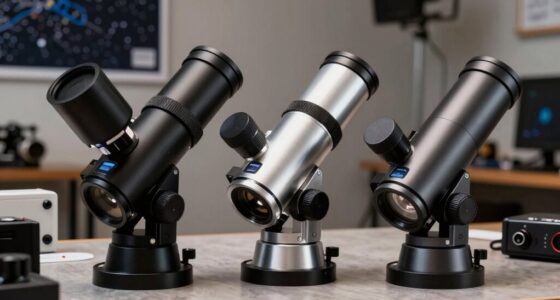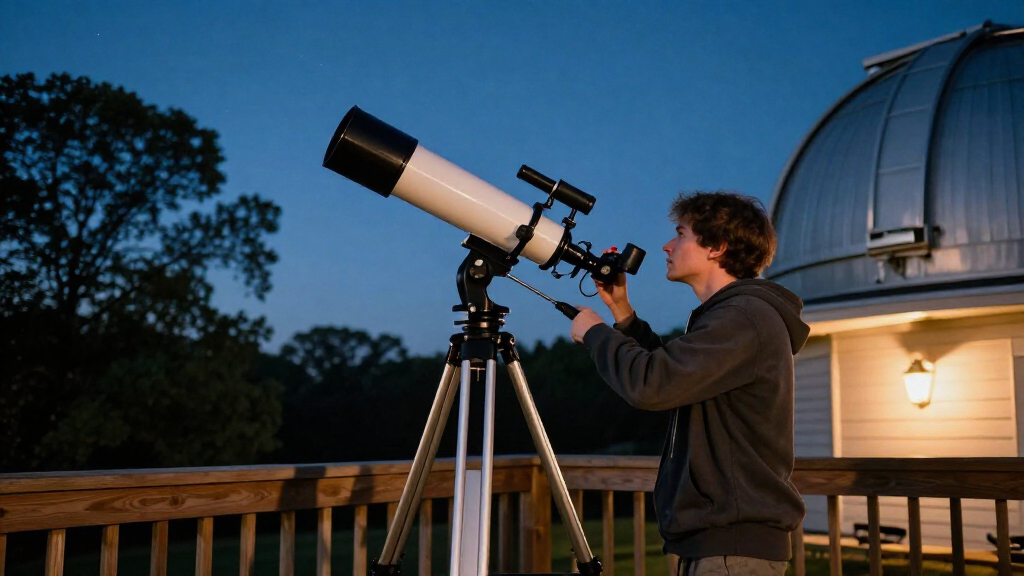
For most buyers seeking a refractor telescope for astrophotography, I’d start with the SVBONY SV503 80ED with its matching 0.8× field flattener: it pairs a versatile aperture with optics designed to produce a flatter imaging field. The Askar 71F is a strong compact alternative with a built-in flat-field design, while the SVBONY SV550 122mm triplet suits imagers who prioritize more aperture and color correction. The central tradeoff is between a conventional optical tube that gives you more control over your camera, mount, and accessories, and a smart telescope that bundles imaging hardware for simpler operation. Aperture, focal length, field correction, mount capacity, and setup complexity all change which option makes sense. Continue reading for the full breakdown and help matching a scope to your imaging goals.

Prime made for students and young adults
- Fast, free delivery for dorm and study essentials
- Prime Video and Amazon Music included
- Member-only deals
Key Takeaways
- The SV503 80ED bundle stands out as the balanced starting point because the included 0.8× flattener addresses field shape without requiring a separate matching purchase.
- Flat-field optics distinguish the Askar 71F and SV503 70mm ED from many standard refractors; this can simplify corner-to-corner imaging, though their smaller apertures favor portability over light gathering.
- The SV550 122mm triplet favors aperture and color correction over easy mounting, so its imaging potential comes with greater demands on the mount and setup.
- The lineup splits into two very different workflows: traditional optical tubes offer modular control, while the FASHIONARI, Smart Digital, and JVAXS models combine a telescope with camera and display features for a more integrated experience.
- Fast focal ratios are not a complete astrophotography shortcut: the SV48P’s f/5.5 speed may appeal for wide-field imaging, but buyers still need to account for tracking, focus, and image correction.
| SVBONY SV503 80ED Refractor Telescope with SV193 0.8× Field Flattener |  | Best Overall for Wide-Field Imaging | Optical design: ED refractor | Objective diameter: 80 mm | Focal length: 560 mm | VIEW LATEST PRICE | See Our Full Breakdown |
| SVBONY SV550 122mm f/7 Triplet APO Refractor Telescope |  | Best for Aperture and Deep-Sky Detail | Aperture: 122 mm | Lens design: FPL-51 ED triplet apochromat | Focal length: 854 mm | VIEW LATEST PRICE | See Our Full Breakdown |
| SVBONY SV550 80mm f/6 ED Triplet Apochromatic Refractor Telescope OTA |  | Best Compact Triplet for Imaging | Optical design: Air-spaced triplet apochromatic refractor | Aperture: 80 mm | ED glass: S-FPL51 | VIEW LATEST PRICE | See Our Full Breakdown |
| SVBONY SV503 102mm f/7 ED Refractor Telescope |  | Best for Flexible Camera Composition | Aperture: 102 mm | Optical glass: S-FPL51 ED | Focal length: 714 mm | VIEW LATEST PRICE | See Our Full Breakdown |
| SVBONY SV48P 90mm f/5.5 Refractor Telescope OTA |  | Best Value-Oriented Achromat | Optical design: Achromatic refractor | Aperture: 90 mm | Focal length: 500 mm | VIEW LATEST PRICE | See Our Full Breakdown |
| FASHIONARI Digital Refractor Telescope with Autofocus and 4K Camera |  | Best All-in-One for Casual Imaging | Objective lens diameter: 80 mm | Focal length: 300 mm | Focus: Autofocus | VIEW LATEST PRICE | See Our Full Breakdown |
| Smart Digital Refractor Telescope with 4K Camera and Dual Screens |  | Best for Screen-Based Beginners | Objective lens diameter: 78 mm | Focal length: 300 mm | Focus: Autofocus | VIEW LATEST PRICE | See Our Full Breakdown |
| FASHIONARI 80mm Auto-Focus Smart Refractor Telescope with 4K Camera |  | Best for Remote-Controlled Casual Capture | Aperture: 80 mm | Focal length: 300 mm | Focal ratio: f/8.89 | VIEW LATEST PRICE | See Our Full Breakdown |
| Askar 71F 71mm f/6.9 ED Quadruplet Flat-Field Refractor Telescope |  | Best Dedicated Imaging Optics | Aperture: 71 mm | Focal ratio: f/6.9 | Focal length: 493.9 mm | VIEW LATEST PRICE | See Our Full Breakdown |
| SVBONY SV503 70mm ED Refractor Telescope with Built-In Field Flattener |  | Best Value for a Conventional Camera Setup | Aperture: 70 mm | Focal length: 474 mm | Focal ratio: f/6.78 | VIEW LATEST PRICE | See Our Full Breakdown |
| JVAXS Smart Digital Astrophotography Telescope with 3-Inch Flip Screen |  | Best for Screen-Based Sharing | Brand: JVAXS | Model: spx6 | Objective lens diameter: 78 mm | VIEW LATEST PRICE | See Our Full Breakdown |
| refractor telescopes for astrophotography | Focal length | Focal ratio | Focuser | Aperture |
|---|---|---|---|---|
| SVBONY SV503 80ED Refractor Te | 560 mm | f/7 | 2-inch dual-speed, 1:10 micro-adjustment | — |
| SVBONY SV550 122mm f/7 Triplet | 854 mm | f/7 | 2.5-inch dual-speed, 1:10 | 122 mm |
| SVBONY SV550 80mm f/6 ED Tripl | 480 mm | f/6 | 2.5-inch dual-speed, 1:10 | 80 mm |
| SVBONY SV503 102mm f/7 ED Refr | 714 mm | f/7 | Manual dual-speed, 1:10 | 102 mm |
| SVBONY SV48P 90mm f/5.5 Refrac | 500 mm | f/5.5 | 2-inch dual-speed, 1:10 | 90 mm |
| FASHIONARI Digital Refractor T | 300 mm | — | — | — |
| Smart Digital Refractor Telesc | 300 mm | — | — | — |
| FASHIONARI 80mm Auto-Focus Sma | 300 mm | f/8.89 | — | 80 mm |
| Askar 71F 71mm f/6.9 ED Quadru | 493.9 mm | f/6.9 | Manual; rotates 360 degrees | 71 mm |
| SVBONY SV503 70mm ED Refractor | 474 mm | f/6.78 | Dual-speed manual focus | 70 mm |
| JVAXS Smart Digital Astrophoto | — | — | — | — |
More Details on Our Top Picks
SVBONY SV503 80ED Refractor Telescope with SV193 0.8× Field Flattener
I rank this kit first for astrophotography because it pairs an 80 mm ED refractor with an included 0.8× reducer and field flattener. The reducer shortens the effective focal length and speeds up imaging, while the flattener is designed to keep stars sharp toward the edges—an especially useful combination for wide-field deep-sky targets. Its 560 mm f/7 optics are more compact than the SVBONY SV550 122mm, and the 2-inch dual-speed focuser gives finer manual focus control than a basic single-speed setup. The tradeoff is that it gathers less light than the 122 mm SV550, so faint targets may demand more exposure time. Focus is manual, there is no finderscope, and the listed fixed mount means buyers still need to plan a suitable imaging support system.
Pros:- Included 0.8× reducer gives a wider field and faster imaging
- Field flattener is designed to improve star shape across the frame
- ED glass helps reduce chromatic aberration
- Light 2.5 kg optical tube and dual-speed focuser suit portable, careful setup
Cons:- 80 mm aperture collects less light than the 122 mm SV550
- Manual focusing requires user adjustment
- No finderscope is included
Best for: Deep-sky imagers who want an ED refractor with a reducer and field flattener included for wider, flatter camera framing.
Not ideal for: Astrophotographers prioritizing maximum aperture or a complete mount-and-finder setup; this 80 mm kit has no finderscope and its listed mount is fixed.
- Optical design:ED refractor
- Objective diameter:80 mm
- Focal length:560 mm
- Focal ratio:f/7
- Reducer/flattener:Included SV193 0.8× field flattener
- Focuser:2-inch dual-speed, 1:10 micro-adjustment
- Optical tube weight:2.5 kg
- Field of view:1.9°
Our verdict“Choose this kit for a portable, wide-field deep-sky setup with its reducer and flattener already matched to the telescope.”
SVBONY SV550 122mm f/7 Triplet APO Refractor Telescope
For buyers who want more light-gathering capacity than a compact imaging refractor offers, the 122 mm aperture makes this SV550 the strongest choice in this group for reaching faint deep-sky subjects. Its FPL-51 ED triplet is designed to control chromatic aberration, while the 854 mm focal length frames smaller targets more tightly than the SVBONY SV550 80mm f/6. That extra reach and aperture come with a real support penalty: at 6.4 kg, this OTA is substantially heavier than the 80 mm SV550, so the mount must handle both its weight and imaging accessories steadily. The 2.5-inch dual-speed focuser offers fine manual adjustment, but there is no autofocus. Buyers should also verify the mount and imaging components they need, rather than assuming the OTA supplies a complete imaging rig.
Pros:- 122 mm aperture gathers more light than the 80 mm refractors in this lineup
- FPL-51 ED triplet is designed to reduce color fringing
- 854 mm focal length gives tighter framing than the SV550 80mm f/6
- 2.5-inch dual-speed focuser supports precise manual focus
Cons:- 6.4 kg OTA is less convenient for travel and demands a capable mount
- Longer focal length makes mount tracking errors more apparent than with the 80 mm SV550
- Manual focus requires adjustment by hand
Best for: Deep-sky astrophotographers with a sturdy equatorial mount who want a larger aperture and a longer focal length for smaller targets.
Not ideal for: Travel-focused imagers or owners of lightweight mounts; its 6.4 kg OTA and 854 mm focal length call for more substantial support than the 80 mm SV550.
- Aperture:122 mm
- Lens design:FPL-51 ED triplet apochromat
- Focal length:854 mm
- Focal ratio:f/7
- Focuser:2.5-inch dual-speed, 1:10
- Focus travel:87 mm
- OTA weight:6.4 kg
- Field of view:1.67°
Our verdict“Pick the 122 mm SV550 if your mount can carry it and you value aperture and tighter framing over portability.”
SVBONY SV550 80mm f/6 ED Triplet Apochromatic Refractor Telescope OTA
The SV550 80mm is the more portable triplet choice here: its 480 mm f/6 focal length offers broad framing, and its 2.86 kg OTA is far easier to carry than the SV550 122mm. The air-spaced S-FPL51 ED triplet is designed to suppress color fringing, making it a more imaging-oriented optical design than the achromatic SV48P 90mm. A 2.5-inch dual-speed focuser and 87 mm back-focus distance give users useful manual adjustment and imaging-system flexibility. What it does not include is a mount, and the supplied data does not list a reducer or field flattener. That makes it a strong compact OTA for imagers who already have compatible support and know how they will handle field curvature, but a less ready-to-go choice than the SV503 80ED kit.
Pros:- Compact 480 mm focal length suits wide-field targets
- S-FPL51 ED triplet is designed to reduce chromatic aberration
- 2.5-inch dual-speed focuser allows fine manual focusing
- At 2.86 kg, it is substantially lighter than the 122 mm SV550
Cons:- Mount is not included
- No reducer or field flattener is listed, unlike the SV503 80ED kit
- Manual focus may be less convenient for unattended imaging
Best for: Portable deep-sky imagers who want an 80 mm triplet OTA with a short focal length and already own a compatible mount.
Not ideal for: Beginners seeking a ready-to-image package or buyers who need a reducer/flattener included; this is an OTA without a mount or listed flattener.
- Optical design:Air-spaced triplet apochromatic refractor
- Aperture:80 mm
- ED glass:S-FPL51
- Focal length:480 mm
- Focal ratio:f/6
- Focuser:2.5-inch dual-speed, 1:10
- Back focus:87 mm
- OTA weight:2.86 kg
Our verdict“Choose this OTA for a compact triplet imaging platform if you already have a mount and a plan for field correction.”
SVBONY SV503 102mm f/7 ED Refractor Telescope
This 102 mm SV503 takes a practical middle position between the compact SV550 80mm and the heavier SV550 122mm. Its 714 mm focal length and 102 mm aperture offer more reach and light collection than the smaller refractors, while the 3.95 kg tube remains less demanding to transport than the 122 mm model. For camera users, the standout is the 360° field rotator: it lets you adjust framing without turning the telescope tube, a helpful way to compose an image while preserving the setup. S-FPL51 ED glass and the dual-speed focuser support cleaner color and careful manual focusing. Unlike the SV503 80ED bundle, this model has no included reducer/flattener listed, so buyers planning wide-field imaging may need to source correction accessories separately. It also ships without a finderscope.
Pros:- 102 mm aperture provides more light collection than the 80 mm models
- 360° field rotator makes camera framing easier without turning the tube
- S-FPL51 ED glass helps reduce color fringing
- Dual-speed focuser offers fine manual adjustment
Cons:- No reducer or field flattener is listed, unlike the SV503 80ED kit
- Manual focusing requires user adjustment
- No finderscope is included
Best for: Camera users who want a 102 mm ED refractor with a built-in field rotator for adjusting image composition without rotating the tube.
Not ideal for: Wide-field imagers wanting a reducer and flattener included, or beginners who need a finderscope in the package.
- Aperture:102 mm
- Optical glass:S-FPL51 ED
- Focal length:714 mm
- Focal ratio:f/7
- Focuser:Manual dual-speed, 1:10
- Focus travel:90 mm
- Field rotator:360°
- OTA weight:3.95 kg
Our verdict“Choose this model if camera rotation and a step up from 80 mm aperture matter more than having a flattener included.”
SVBONY SV48P 90mm f/5.5 Refractor Telescope OTA
The SV48P is the straightforward option for buyers who want a 90 mm aperture and 500 mm focal length without stepping up to a more complex ED or triplet design. Its f/5.5 optics provide broad framing, and the 2-inch dual-speed focuser gives more control at focus than the basic focusing arrangements often found on entry-level refractors. The 360° tube rotation also helps with camera orientation. Compared with the SV503 102mm, however, this is an achromat rather than an ED refractor, so color fringing is a more meaningful concern for imaging bright stars and high-contrast targets. It also lacks an included finderscope, and no field flattener is specified. I would place it below the ED and triplet options for color-critical astrophotography, but it can suit wide-field experimentation when those compromises are acceptable.
Pros:- 90 mm aperture offers more light collection than the 80 mm refractors
- 500 mm focal length and f/5.5 optics suit broad-field framing
- 2-inch dual-speed focuser supports precise manual adjustment
- 360° tube rotation helps set camera orientation
Cons:- Achromatic optics are more prone to color fringing than the ED and triplet alternatives
- No field flattener is listed
- No finderscope is included
Best for: Budget-conscious beginners who want a short-focal-length refractor for broad-field astrophotography and can tolerate achromatic color fringing.
Not ideal for: Imagers seeking clean color on bright stars or a corrected field across a large camera sensor; the SV503 ED models are better suited to those priorities.
- Optical design:Achromatic refractor
- Aperture:90 mm
- Focal length:500 mm
- Focal ratio:f/5.5
- Focuser:2-inch dual-speed, 1:10
- Optical coating:Fully multi-layer coated
- Tube rotation:360°
- OTA weight:3 kg
Our verdict“Pick the SV48P for broad-field entry-level imaging if you accept achromat color fringing and plan to supply your own accessories.”
FASHIONARI Digital Refractor Telescope with Autofocus and 4K Camera
The FASHIONARI pairs an 80 mm objective with autofocus and built-in 4K capture, making it a self-contained choice for casual sky viewing and recording. Unlike the Askar 71F, which is designed around camera-ready optics and a rotating manual focuser, this model favors screen-based operation and simple capture over a conventional astrophotography workflow. Its dual screens, included tripod, and up to six hours of battery runtime suit users who want to observe and save images without attaching a separate camera. The tradeoff is that the listed 350× magnification does not establish useful image quality at that level, and the supplied data does not explain tracking or camera control for long exposures. Reported dimensions also appear inconsistent, so I would verify the physical size before buying.
Pros:- Built-in 4K photo and video capture avoids the need for a separate phone camera
- Autofocus and dual screens favor straightforward viewing
- 4500 mAh battery is rated for up to six hours
- Adjustable tripod is included
Cons:- No tracking or long-exposure capability is specified
- Listed item dimensions and optical tube length appear inconsistent
- Maximum magnification is listed without supporting detail about usable image quality
Best for: Beginners and families who want an autofocus telescope with built-in recording for casual lunar, wildlife, and daytime viewing.
Not ideal for: Astrophotographers building a long-exposure setup who need clearly specified camera integration, tracking compatibility, or verified optical dimensions.
- Objective lens diameter:80 mm
- Focal length:300 mm
- Focus:Autofocus
- Camera capture:4K photo and video
- Displays:Dual screens
- Storage:Expandable TF card up to 512 GB
- Battery:4500 mAh; up to 6 hours
- Tripod:Included
Our verdict“Choose this FASHIONARI for simple, self-contained viewing and recording, but look to the Askar 71F for a more conventional astrophotography optical setup.”
Smart Digital Refractor Telescope with 4K Camera and Dual Screens
This smart refractor is the most clearly specified option here for buyers who want a built-in display and camera without assembling a separate imaging train. Its 78 mm aperture, 300 mm focal length, autofocus, and foldable 3-inch screen make it more like an electronic viewing tool than the manual-focus SVBONY SV503 70mm ED. The included 32 GB card and six-hour battery rating also mean the basic recording setup is accounted for. However, its camera is listed as a 5 MP CMOS sensor, not 4K, despite the product title, so I would not assume 4K capture from the supplied specifications. Compared with the FASHIONARI 80 mm digital model, it has slightly less aperture and less storage detail, while its screen and sensor specifications are more explicit. Tracking and long-exposure support are not stated.
Pros:- Autofocus reduces manual setup for casual viewing
- Foldable 3-inch external display supports screen-based observing
- Includes a 32 GB memory card
- 4500 mAh battery is rated for up to six hours
Cons:- Specifications list a 5 MP sensor rather than confirming 4K capture
- No tracking or long-exposure capability is specified
- 78 mm aperture is slightly smaller than the FASHIONARI 80 mm digital model
Best for: New observers who want a foldable display, autofocus, and included memory for casual lunar or daytime snapshots.
Not ideal for: Buyers prioritizing confirmed 4K output or deep-sky long exposures, since the listed sensor is 5 MP and tracking is unspecified.
- Objective lens diameter:78 mm
- Focal length:300 mm
- Focus:Autofocus
- Camera sensor:5 MP CMOS
- Display:Foldable 3-inch external screen
- Diopter compensation:±4 diopters
- Included storage:32 GB memory card
- Battery:4500 mAh; up to 6 hours
Our verdict“Pick this model for an accessible screen-and-camera experience, but choose the SVBONY SV503 70mm ED if optical imaging features matter more than onboard convenience.”
FASHIONARI 80mm Auto-Focus Smart Refractor Telescope with 4K Camera
Among the digital refractors in this group, this FASHIONARI is the clearest fit for someone who wants app and remote control alongside autofocus and a stated 4K camera. That convenience separates it from the Askar 71F, whose manual focuser and camera-oriented optical design give the user more direct control but require hands-on adjustment. Its 80 mm aperture and 300 mm focal length make it a short-focal-length choice for broad, casual views rather than a specified long-exposure deep-sky system. The supplied listing has a serious data-quality caveat: it reports an objective diameter of 1 mm and optical tube length of 1.75 mm, values that conflict with the stated 80 mm aperture. I would confirm dimensions and camera details with the seller before relying on the listing for an imaging setup.
Pros:- 4K camera is specified for photo and video modes
- Autofocus avoids manual focusing during casual use
- App and remote control offer flexible operation
- 80 mm aperture is suitable for broad visual observing
Cons:- Reported 1 mm objective and 1.75 mm tube measurements conflict with the stated 80 mm aperture
- Tracking and long-exposure capability are not specified
- Camera sensor and storage details are not provided
Best for: Casual observers who want to control a built-in camera telescope from a phone or remote and value a simple capture workflow.
Not ideal for: Buyers who need dependable physical specifications or a documented deep-sky imaging rig with stated tracking and exposure support.
- Aperture:80 mm
- Focal length:300 mm
- Focal ratio:f/8.89
- Maximum magnification:350×
- Focus:Autofocus
- Camera:4K astrophotography camera
- Controls:App and remote control
- Warranty:1 year
Our verdict“Consider this FASHIONARI for remote-controlled casual imaging only after verifying its contradictory dimensions, while the Askar 71F is the more clearly described optical option.”
Askar 71F 71mm f/6.9 ED Quadruplet Flat-Field Refractor Telescope
The Askar 71F earns the strongest astrophotography-focused role in this batch because its ED quadruplet design and flat-field configuration are built around camera use, rather than adding a camera to an electronic viewing device. Its 493.9 mm focal length gives a narrower framing scale than the 300 mm digital FASHIONARI models, while the rotating focuser helps orient a camera without twisting the whole telescope. A matte tube interior is intended to limit stray light, and the 2.5 kg tube weight supports a portable setup. Unlike the SVBONY SV503 70mm ED, the Askar is described as a quadruplet APO, but it still uses manual focus and the listed mount is altazimuth, so buyers should check their mount and tracking needs for long exposures. Weight figures also vary by configuration.
Pros:- Air-spaced ED quadruplet APO design is aimed at camera imaging
- Rotating focuser simplifies camera framing
- Matte interior coating helps reduce stray light
- Reported optical tube weight is 2.5 kg
Cons:- Manual focus requires hands-on adjustment
- Altazimuth mount specification may not suit long-exposure imaging without a tracking solution
- Weight varies across the tube, assembled setup, and item listing
Best for: Astrophotographers seeking a portable, camera-oriented refractor with a flat-field optical design and willingness to focus manually.
Not ideal for: Beginners seeking an all-in-one autofocus camera telescope or imagers who need a clearly specified equatorial tracking mount in the package.
- Aperture:71 mm
- Focal ratio:f/6.9
- Focal length:493.9 mm
- Optical design:Air-spaced quadruplet APO refractor
- Focuser:Manual; rotates 360 degrees
- Mount type:Altazimuth
- Optical tube weight:2.5 kg (5.51 lb)
- Dovetail plate:230 mm Vixen
Our verdict“Choose the Askar 71F for a dedicated, portable imaging optical tube, and choose the SVBONY SV503 70mm ED if a built-in field flattener and dual-speed focuser are the stronger priorities.”
SVBONY SV503 70mm ED Refractor Telescope with Built-In Field Flattener
The SVBONY SV503 70mm ED is the straightforward choice for buyers who want conventional camera imaging without a separate field flattener. Its built-in flattener is intended to keep stars across the frame more evenly focused, while ED glass helps reduce color fringing; together, those features make it a more imaging-specific instrument than the autofocus digital FASHIONARI telescopes. The dual-speed manual focuser gives finer control than their autofocus systems, though it asks the user to focus by hand. Compared with the Askar 71F, the SV503 has a slightly shorter focal length and a stated built-in flattener, while the Askar offers a quadruplet design and rotating focuser. This scope does not include a finderscope, and its listed 1.08-degree field of view may depend on the attached equipment.
Pros:- Built-in field flattener avoids a separate flattener purchase and setup
- ED glass helps reduce chromatic aberration
- Dual-speed focuser supports precise manual adjustment
- Compact 2.69 kg listed item weight
Cons:- Manual focusing requires user adjustment
- Finderscope is not included
- No camera, tracking mount, or long-exposure capability is specified
Best for: Camera users seeking a compact ED refractor with a built-in field flattener and fine manual focus control.
Not ideal for: People who want autofocus, a built-in camera, or a complete ready-to-use observing package with a finderscope.
- Aperture:70 mm
- Focal length:474 mm
- Focal ratio:f/6.78
- Optical design:ED refractor with built-in field flattener
- Focuser:Dual-speed manual focus
- Mount type:Altazimuth
- Optical tube length:47.4 cm
- Item weight:2.69 kg
Our verdict“Choose the SV503 70mm ED for a conventional camera setup with a built-in flattener, while the Askar 71F suits buyers who prefer its quadruplet design and rotating focuser.”
JVAXS Smart Digital Astrophotography Telescope with 3-Inch Flip Screen
I’d pick the JVAXS for casual astrophotography when viewing and sharing on a built-in screen matters more than a traditional telescope setup. Its 3-inch flip-out display, smartphone app, and wireless remote make it easier to frame and show captures without gathering around an eyepiece. It records 4K video and 30 MP photos, with a 64 GB card included, so basic capture is ready to go.
Compared with the optical-tube designs in this roundup, such as the SVBONY SV503 80ED, this is a more self-contained digital experience, not a clearly specified imaging refractor with a stated focal ratio or field flattener. The 78 mm aperture and manual focus also call for modest expectations: focusing takes hands-on adjustment, and the supplied card is not the maximum supported capacity. I’d choose it for convenient screen-based observing, not for a serious mount-and-camera imaging rig.
Pros:- Flip-out screen and electronic viewing make sharing observations easier
- Captures 4K video and 30 MP photos
- Smartphone app and wireless remote support remote control and framing
- Includes a 64 GB storage card
Cons:- Manual focus requires the user to adjust focus rather than relying on autofocus
- 78 mm aperture may limit light gathering compared with larger-aperture options such as the SVBONY SV550 122mm
- Included 64 GB card is below the stated maximum supported capacity of 512 GB
Best for: Beginners and families who want to frame celestial targets on a built-in screen, capture video or photos, and share views through a phone app.
Not ideal for: Astrophotographers building a dedicated mount-and-camera setup who need a specified imaging field, optical tube compatibility, or automatic focusing.
- Brand:JVAXS
- Model:spx6
- Objective lens diameter:78 mm
- Focus type:Manual focus
- Display:3-inch flip-out screen
- Capture resolution:4K video; 30 MP photos
- Storage:64 GB card included; supports up to 512 GB
- Wireless remote range:Up to 85 feet
- Warranty:2 years
Our verdict“Choose the JVAXS if you want a screen-first, self-contained way to capture and share casual astronomy, but look to a dedicated optical tube like the SVBONY SV503 80ED for a more conventional imaging setup.”
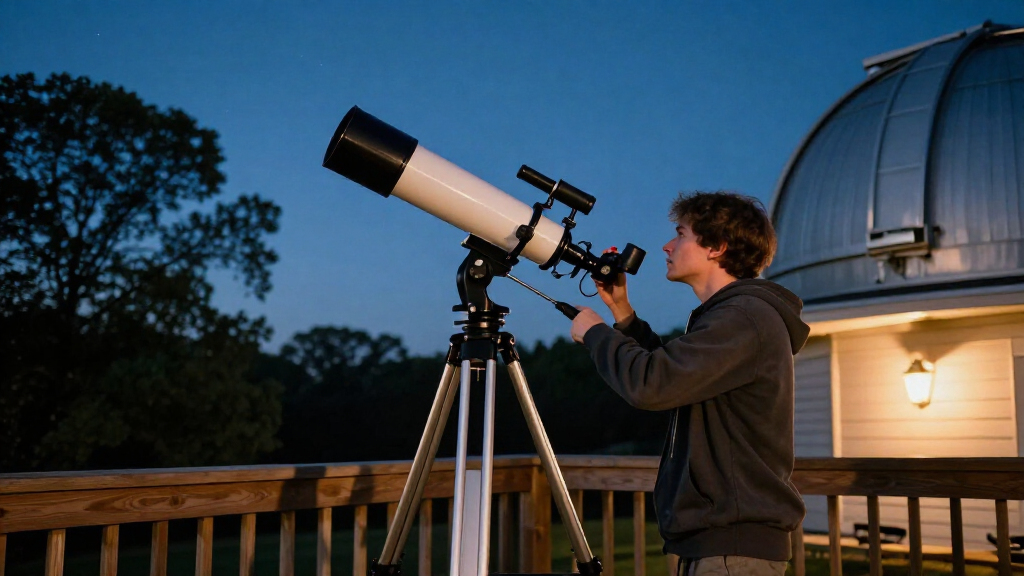
How We Picked
I ranked these scopes around their usefulness for capturing astronomical images, not their appeal as general-purpose visual telescopes. I looked at optical design, aperture and focal ratio, whether field correction is included or built in, and how each format fits a camera-based workflow. I also weighed practical factors that shape results: portability, likely mount demands, setup complexity, and how much of the imaging system a buyer must supply separately.
The order favors options with a clear imaging path and a useful balance of optics, correction, and flexibility. The SV503 80ED bundle leads because its matched flattener makes it a coherent conventional imaging package. The Askar 71F and SV503 70mm ED earn attention for compact flat-field designs, while larger triplets rank higher for buyers who can support their extra size and weight. Smart scopes are judged as integrated alternatives rather than direct replacements for modular telescope-and-camera rigs; their convenience may suit beginners, but they offer a different level of equipment choice. Product details and included accessories can vary by package, so I recommend checking the exact configuration before buying.
| refractor telescopes for astrophotography | Focal ratio |
|---|---|
| SVBONY SV503 80ED Refractor Te | f/7 |
| SVBONY SV550 122mm f/7 Triplet | f/7 |
| SVBONY SV550 80mm f/6 ED Tripl | f/6 |
| SVBONY SV503 102mm f/7 ED Refr | f/7 |
| SVBONY SV48P 90mm f/5.5 Refrac | f/5.5 |
| FASHIONARI Digital Refractor T | — |
| Smart Digital Refractor Telesc | — |
| FASHIONARI 80mm Auto-Focus Sma | f/8.89 |
| Askar 71F 71mm f/6.9 ED Quadru | f/6.9 |
| SVBONY SV503 70mm ED Refractor | f/6.78 |
| JVAXS Smart Digital Astrophoto | — |
Factors to Consider When Choosing Refractor Telescopes For Astrophotography
Choosing a refractor for imaging means planning a system, not just selecting a tube. I’d match the telescope to the targets you want, the mount you can support, and the amount of setup and processing you are willing to take on.
Match Focal Length to Your Targets
Focal length determines how large a target appears on your camera sensor, so it shapes which objects fit comfortably in the frame. Shorter focal lengths generally make wide nebulae and star fields easier to compose, while longer ones frame smaller targets more tightly. A common mistake is choosing a telescope for maximum magnification rather than checking the target’s apparent size against the camera sensor. Sensor dimensions and pixel size also affect framing and sampling, so a scope that suits one camera may not suit another. Before choosing, use a field-of-view calculator with your intended camera and a few targets you care about. That exercise can reveal whether you need a wide-field instrument or a longer focal length more clearly than aperture alone.
Budget for Field Correction and the Full Optical Train
A refractor can show elongated stars near the frame edges if its image field does not match the camera sensor. A dedicated flattener or reducer-flattener can correct that shape, and a reducer can also shorten the effective focal length. Built-in flat-field designs can simplify matching, but buyers still need to confirm the scope’s back focus and camera compatibility. Do not assume an accessory will fit just because it is made for astrophotography; thread sizes, spacing, filters, and adapters all matter. Incorrect spacing can degrade corners even when the correct model of flattener is installed. I’d price and plan the complete optical train before deciding that a bare optical tube is the cheaper or simpler route.
Choose a Mount Before You Choose More Aperture
For long exposures, tracking accuracy and mount stability can matter more than adding aperture to the telescope. A larger tube catches more wind and usually places greater demands on the mount, tripod, and balance, which can undermine the imaging gains it promises. Buyers often focus on a scope’s optical performance while overlooking the weight of cameras, flatteners, guide equipment, and mounting hardware. Check the mount’s practical imaging capacity rather than relying only on its advertised maximum load. A smaller refractor on a dependable tracking mount may produce more consistent results than a heavier scope on an undersized one. If you already own a mount, use its capacity and tracking performance to set a realistic upper limit for the telescope.
Decide How Much Control You Want
Traditional optical tubes let you choose the camera, mount, software, and accessories independently, which gives you room to adapt a system as your skills or targets change. That flexibility also means more decisions, extra connections, and more opportunities for compatibility problems. Smart telescopes bundle imaging components and controls, reducing setup work but narrowing the range of equipment choices. Neither format is automatically better: the right fit depends on whether you value a guided, integrated workflow or the ability to customize each part. Check what a smart model lets you export, adjust, and connect before treating its screen or autofocus features as a substitute for system flexibility. Buyers moving from visual observing should also plan time to learn tracking, focus, calibration, and image processing.
Treat Focal Ratio as One Part of Exposure Planning
A lower focal ratio can collect light more quickly over a given image area, which can help when recording extended objects. It does not remove the need for accurate tracking, careful focus, suitable camera settings, or processing. A faster system may also place greater importance on precise spacing and may reveal optical issues more readily across a wide sensor. Conversely, a slower telescope can frame small targets more tightly but may call for longer total exposure time. Buyers should compare focal ratio alongside focal length, target size, camera, and mount rather than treating the fastest number as an automatic winner. When two scopes look close on paper, the one that better matches your targets and imaging conditions is usually the more useful choice.
Check Color Correction and Portability Against Your Routine
Refractor designs differ in how well they control color fringing, especially around bright stars and high-contrast objects. ED glass and triplet designs can help, but performance still depends on the complete optical design, and a product label alone does not tell the whole story. More elaborate optics can add weight, cost, and mounting demands, while compact scopes are easier to transport and store. Think about where you will image: a backyard setup can tolerate a bulkier instrument more readily than frequent travel to a dark site. Also account for dew control, storage, and how quickly you want to set up on a clear night. A scope that fits your actual routine can be more productive than a larger or more elaborate option that is difficult to deploy.
Frequently Asked Questions
Should I buy a scope that includes a field flattener?
A matched flattener can reduce the work of choosing a separate corrector and can make it easier to get rounder stars across a camera frame. It is most useful when you plan to image with a sensor wide enough to show edge distortion. Check whether the accessory is included in the exact package, then confirm its required spacing, adapters, and compatibility with your camera. If you use a very small sensor or primarily observe visually, a flattener may be less urgent. I’d compare the cost and complexity of a complete imaging setup, not just the telescope tube.
Is a smart telescope a better first astrophotography setup than a standard refractor?
A smart telescope can be a more approachable first step if you want an integrated camera and controls with less equipment to assemble. A standard refractor offers more choice over cameras, mounts, and accessories, which can matter if you want to learn a modular workflow or upgrade parts over time. The tradeoff is that the conventional route usually requires more compatibility checks and hands-on setup. Before choosing a smart model, check how its software handles target selection, image saving, and access to captured data. Choose based on the experience you want, not on the assumption that either format guarantees better images.
How much aperture do I need for deep-sky astrophotography?
There is no single aperture that fits every target or setup. Aperture affects light gathering and resolution, but target framing, camera characteristics, tracking, and total exposure time also shape the result. Larger refractors can collect more light, yet their added size and weight may require a more capable mount and make transport harder. A compact scope can be a sensible match for wide targets or a limited mount, even if it has less aperture. I’d start with the targets and mount you plan to use, then choose the largest instrument your whole system can support reliably.
Can I use one refractor for both astrophotography and visual observing?
Many refractors can serve both roles, but the ideal imaging configuration may differ from a comfortable visual setup. Cameras and correctors need particular spacing and adapters, while eyepieces may require a diagonal or other accessories. A short focal length that captures expansive nebulae may not give the framing some visual observers want for small objects. Also check whether the focuser can handle the combined camera load and reach focus with your planned accessories. A dual-purpose scope makes sense when you value flexibility, but a dedicated imaging setup may be easier to optimize for one task.
What should I upgrade first if my stars are elongated?
Start by identifying where the elongation appears and whether it is consistent across the frame. Stars stretched in the same direction throughout the image can point to tracking, balance, or vibration, while distorted stars mainly near the corners may suggest field curvature or incorrect corrector spacing. Focus problems can affect the whole image, and poor alignment can complicate diagnosis. Review a short exposure and check the mount, focus, optical spacing, and camera orientation before buying another accessory. The cause matters: a new telescope will not fix a tracking problem, and a stronger mount will not correct a field-shape issue.
Conclusion
For the best overall balance, I’d choose the SVBONY SV503 80ED with SV193 0.8× field flattener, which pairs a versatile refractor with a correction accessory suited to imaging. The best compact choice is the Askar 71F for buyers drawn to a portable flat-field design; the SVBONY SV503 70mm ED is another compact route with a built-in flattener. For a premium, larger-aperture setup, the SVBONY SV550 122mm triplet is aimed at imagers prepared to support a bigger optical tube with a capable mount. Buyers seeking a value-oriented conventional option should compare the SV503 80ED package and the SV48P against their camera and accessory needs rather than judging by the tube alone. For beginners who prefer an integrated workflow, the FASHIONARI, Smart Digital, and JVAXS models offer a different path, while experienced or upgrade-minded imagers may prefer the control of a standard optical tube. My final pick depends on your mount, camera, and targets: match those first, then choose the scope whose tradeoffs you can live with.