TL;DR

Prime made for students and young adults
- Fast, free delivery for dorm and study essentials
- Prime Video and Amazon Music included
- Member-only deals
A 2024 National Academies consensus report concluded that long-term zinc creep in cable sockets caused support cables to pull out, bringing down the Arecibo telescope’s platform in December 2020. The report says Hurricane Maria preceded visible, progressive cable pullout, but does not establish why the zinc’s creep accelerated; it raises an electromagnetic-effects explanation as a possibility.
A 2024 National Academies report concluded that long-term zinc creep in the sockets anchoring support cables caused cables to pull out and the Arecibo telescope’s suspended platform to collapse in 2020. The finding identifies the root cause of the loss of the 305-metre instrument in Puerto Rico, while leaving open what accelerated the material failure.
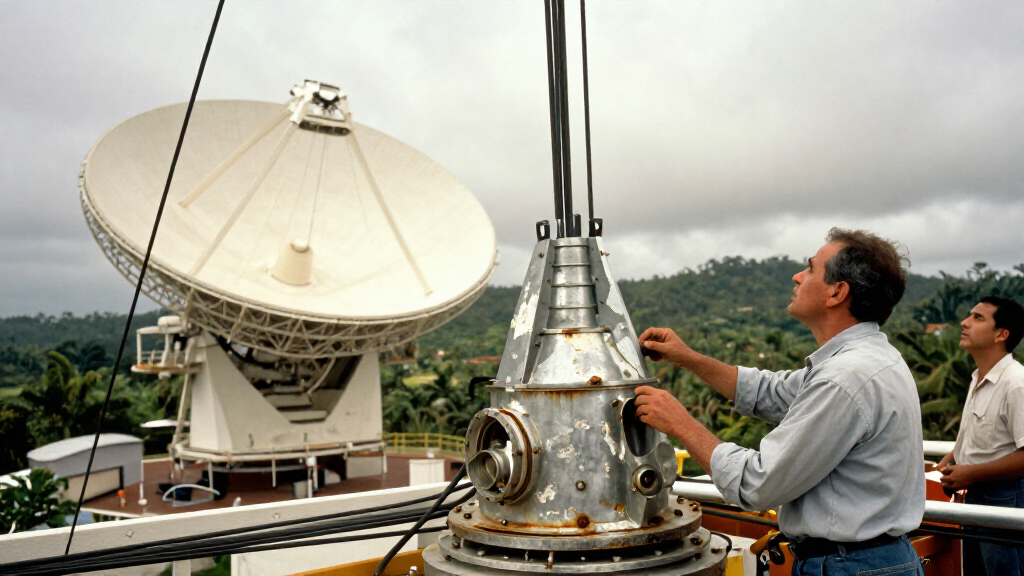
The telescope’s main platform hung above a 305-metre reflector on a system of cables. At the end of each cable, a socket filled with zinc held the cable in place. According to the National Academies’ consensus study, the zinc gradually lost its grip, allowing several cables to slip out; the platform then fell into the reflector below.
The report traces the failure sequence to Hurricane Maria in 2017, more than three years before the collapse. It says visual inspections after the hurricane showed large and progressive cable pullout, in contrast with minimal indications beforehand. The report’s review found that safety-factor calculations made after an earlier cable failure did not account for the accelerated, time-dependent materials failure that ultimately governed the zinc pullout.
The committee reviewed forensic investigations commissioned by the University of Central Florida and the National Science Foundation, along with employee accounts, engineering plans, structural analyses, inspection reports, photographs and repair proposals. The report, titled Failure Analysis of the Arecibo Observatory 305-Meter Telescope Collapse, also sets out recommendations on maintenance, inspections and independent audits.
Lessons for Aging Research Facilities
The report’s findings matter beyond Arecibo because the socket design had been used for more than a century, yet the committee described this as the first documented case of long-term zinc-induced creep failure in this type of application. A history of successful use, the report cautions, does not rule out a failure mode that emerges over time or under particular conditions.
For operators of major scientific facilities, the practical message is to treat progressive deterioration as a maintenance and funding issue, not only an engineering calculation. The National Academies recommends careful monitoring as facilities age, detailed and ongoing maintenance provisions, clear operations and maintenance manuals, suitable inspection regimes and independent reviews. These steps can help identify deterioration even when prior designs and experience offer little guidance.
The loss also ended the use of a landmark research instrument that supported astronomy and ionospheric research. The report does not claim its recommendations can eliminate all risk; it argues that monitoring and maintenance should be planned to address the possibility of unexpected failures in custom-built facilities.
Popular right now

De'Longhi Magnifica Evo Fully Automatic Espresso Machine with Manual Milk Frother, Silver

Shark PowerPro Reveal Plus Cordless Vacuum Cleaner, Charcoal, IZ376H

Breville Bambino Espresso Machine, Brushed Stainless Steel (BES450BSS)
As an affiliate, we earn on qualifying purchases.
From Hurricane Damage to Collapse
The Arecibo Observatory telescope was a National Science Foundation-supported facility in Puerto Rico, with research operations maintained for the National Astronomy and Ionosphere Center. Its suspended platform was held above a fixed reflector dish by cables, making the integrity of the cable terminations central to the structure’s support.
After Hurricane Maria, inspections recorded cable movement that the National Academies report describes as significant and progressive. A cable failure followed before the telescope collapsed in December 2020. The report distinguishes the early warning signs from the root cause: zinc creep weakened the sockets’ hold, while the post-hurricane observations indicated that pullout was developing. The source material does not establish that the hurricane alone caused the zinc process.
The National Academies’ committee assessed earlier forensic work and technical records rather than conducting a single new test that recreated the collapse. Its 2024 report combines that review with recommendations for the management of specialized science infrastructure.
What Accelerated the Zinc Creep
The report identifies zinc creep as the root cause, but the precise reason the process accelerated remains unsettled. It raises long-term, low-current electroplasticity associated with the telescope’s electromagnetic waves as one possible factor. The wording is explicitly tentative: the report does not establish that this effect caused or accelerated the failure.
The report recommends making the remaining cable and socket sections available to researchers for further study. The supplied material does not say whether that work has been completed or what subsequent testing has found. It also does not provide a detailed chronology of every inspection, repair decision or cable failure, so those specifics cannot be established here.
Further Study and Maintenance Reviews
The report recommends that the National Science Foundation offer remaining cable and socket sections for research, which could help investigators examine the material failure and test possible explanations. No outcome from that proposed study is established in the source material.
Its broader recommendations call for explicit funding for ongoing condition monitoring and maintenance, as well as stronger documentation, inspections and independent audits. The report’s release makes those recommendations available to facility operators; the source material does not specify an implementation timetable or confirm what actions NSF has since taken.
Key Questions
What caused the Arecibo telescope to collapse?
The National Academies report concluded that long-term zinc creep weakened the cable sockets’ grip, allowing support cables to pull out and the suspended platform to fall.
Did Hurricane Maria directly cause the collapse?
The report places Hurricane Maria in the failure sequence and says inspections afterward showed progressive cable pullout. The supplied account does not establish that the hurricane alone caused the zinc creep or the collapse.
What is the electroplasticity explanation?
The report says low-current electroplasticity linked to electromagnetic waves from the telescope may have accelerated zinc creep. It is a proposed explanation, not a confirmed finding.
When was the National Academies report released?
The consensus study report was released in 2024. The National Academies’ media advisory was last updated on October 25, 2024.
What does the report recommend for other research facilities?
It recommends age-appropriate monitoring, detailed ongoing maintenance funding, operations and maintenance manuals, inspection regimes and independent audits. It also calls for further study of the remaining Arecibo cable and socket sections.
Source: maketecheasier.com