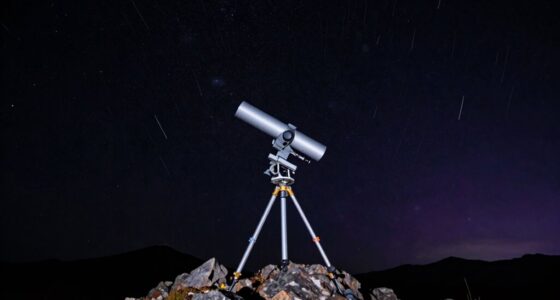
The best astrophotography camera star trackers depend on whether you want to track a camera lens, guide a telescope, or capture the night sky with an all-in-one smart scope. I rank the Sky-Watcher Star Adventurer GTi GoTo Mount Kit as the best overall choice for its balance of tracking capability, GoTo control, and field-ready kit. The iOptron SkyGuider Pro is a simpler fit for camera-and-lens imaging, while the ZWO Seestar S30 Pro stands out for beginners who want automated imaging rather than a separate camera and mount. The main tradeoffs are portability versus payload and automation versus hands-on control. Read on for the full comparison, including which products are trackers and which serve a different role in an astrophotography setup.

Prime made for students and young adults
- Fast, free delivery for dorm and study essentials
- Prime Video and Amazon Music included
- Member-only deals
Key Takeaways
- The Star Adventurer GTi Kit is the strongest all-rounder in this group: it pairs tracking with GoTo control and includes a tripod and pier extension, but its kit is less compact than a camera-only tracker.
- The SkyGuider Pro and SkyTracker Pro favor portability: both suit camera-based wide-field imaging better than heavier telescope rigs, so payload and balance limits should guide the choice.
- The two GTi listings are not identical packages: the kit includes a tripod and pier extension, while the mount-head kit leaves more support gear to the buyer.
- Smart telescopes change the setup equation: Seestar S30 Pro, Dwarf 3, and Celestron Origin Mark II combine imaging and automation, but they are not interchangeable with conventional camera trackers.
- The camera listings serve different imaging roles: SV405CC is a cooled deep-sky camera, SV305C Pro is a planetary-style camera, and NexImage 20 targets solar-system imaging rather than long-exposure tracking.
| Celestron NexImage 20 Solar System Imager |  | Best for Planetary Imaging and Guiding | Sensor: 20 MP AR2020 back-illuminated CMOS | Resolution: 5240 × 3840 | Pixel size: 1.4 microns | VIEW LATEST PRICE | See Our Full Breakdown |
| iOptron SkyGuider Pro Camera Mount with Accessories |  | Best Compact Camera Tracker | Model: SkyGuider Pro | Tracking rates: 1× sidereal, 1/2×, solar, and lunar | Slew speed: Up to 144× sidereal | VIEW LATEST PRICE | See Our Full Breakdown |
| Sky-Watcher Star Adventurer GTi GoTo Mount Kit with Tripod and Pier Extension |  | Best Complete GoTo Kit | Mount type: GoTo equatorial tracking mount | Payload capacity: 11 lb | Included components: Tripod, pier extension, counterweight bar, 5 lb counterweight | VIEW LATEST PRICE | See Our Full Breakdown |
| Explore Scientific iEXOS-100-2 PMC-Eight GoTo Equatorial Mount and Tripod |  | Best App-Controlled Mount | Mount type: Equatorial mount | Control system: PMC-Eight with eight independent CPUs | Drive system: Dual-axis worm gears with belt-driven stepper motors | VIEW LATEST PRICE | See Our Full Breakdown |
| ZWO Seestar S30 Pro Smart Telescope |  | Best All-in-One Smart Imaging System | Mount: Alt-azimuth; supports equatorial mode | Optics: Apochromatic optics with fully multi-coated surfaces | Focal length: 160 mm | VIEW LATEST PRICE | See Our Full Breakdown |
| SVBONY SV405CC Astrophotography Camera – Cooled Telescope Eyepiece with IMX294 Sensor |  | Best Cooled Deep-Sky Camera | Sensor: Back-illuminated IMX294, 4/3 inch, 11.7 MP | Resolution: 4144 × 2822 | Pixel size: 4.63 µm | VIEW LATEST PRICE | See Our Full Breakdown |
| iOptron SkyTracker Pro Camera Mount with Polar Scope |  | Best for Lightweight Wide-Field Setups | Payload capacity: 6.6 lb (3 kg) | Tracking: Automatic right-ascension tracking | Tracking rates: 1×, 1/2×, solar, lunar | VIEW LATEST PRICE | See Our Full Breakdown |
| Sky-Watcher Star Adventurer GTi GoTo Equatorial Mount Head Kit |  | Best Portable GoTo Mount | Mount type: Equatorial | Payload capacity: 11 lb | Connectivity: Built-in Wi-Fi | VIEW LATEST PRICE | See Our Full Breakdown |
| iOptron SkyGuider Pro Camera Mount Full Package |  | Best Lightweight Higher-Payload Tracker | Mount weight: 2.2 lb (1.00 kg) | Maximum payload: 11 lb (4.99 kg) when balanced | Latitude adjustment: -30° to 65° | VIEW LATEST PRICE | See Our Full Breakdown |
| SVBONY SV305C Pro 2MP Telescope Camera with IMX662 Sensor |  | Best for High-Frame-Rate Planetary Video | Sensor: IMX662 CMOS | Resolution: 2 MP; 1920 × 1080 | Maximum frame rate: 107 fps | VIEW LATEST PRICE | See Our Full Breakdown |
| TeSeek Equatorial Mount Star Tracker with Ball-Head Gimbal |  | Best Compact Tracker with Gimbal Flexibility | Shell material: PETG-carbon fiber | Main control chip: EESP32S dual-core | Tracking speeds: Stellar, lunar, and custom | VIEW LATEST PRICE | See Our Full Breakdown |
| Sky-Watcher Star Adventurer 2i Pro Pack |  | Best Value for a Versatile Camera Tracker | Model: S20512 | Tracker weight: 2.4 lb | Listed item weight: 7 lb | VIEW LATEST PRICE | See Our Full Breakdown |
| DWARFLAB Dwarf 3 Smart Telescope and Astrophotography Camera |  | Best Beginner-Friendly Smart Imaging System | Mount: Altazimuth | Objective lens diameter: 35 mm | Focus type: Autofocus | VIEW LATEST PRICE | See Our Full Breakdown |
| Celestron Origin Mark II Intelligent Home Observatory |  | Best Premium Home Observatory | Optical design: Rowe-Ackermann Schmidt Astrograph (RASA) | Aperture: 152 mm (6 in) | Focal ratio: f/2.2 | VIEW LATEST PRICE | See Our Full Breakdown |
More Details on Our Top Picks
Celestron NexImage 20 Solar System Imager
The Celestron NexImage 20 fills a different role from the SkyGuider Pro and Star Adventurer GTi: it is a telescope camera, not a camera-tracking mount. Its 20 MP sensor and Region of Interest cropping suit detailed lunar and planetary capture, while the ability to reach 90 frames per second in cropped areas helps gather many frames for stacking. It can also serve as an autoguider for a deep-sky setup, adding a second use beyond planetary work. Compared with the self-contained Seestar S30 Pro, this camera relies on a compatible telescope and Windows PC rather than automatic pointing and capture. The tradeoff is flexibility for setup effort: solar work needs a separate filter, and the included software requires Windows. I’d choose it for users who already have a telescope and want direct control over capture.
Pros:- 20 MP sensor supports detailed lunar and planetary captures
- Region of Interest cropping can raise frame rates and reduce file sizes
- Can also function as an autoguider for deep-sky imaging
- Includes iCap capture software and a USB-A to USB-C cable
Cons:- Requires a separate solar filter for solar imaging
- Included capture software requires a Windows PC
- Not water resistant
Best for: Telescope owners seeking a high-resolution lunar or planetary camera that can also guide a separate deep-sky imaging rig.
Not ideal for: Buyers who want a complete tracking mount or a phone-controlled, ready-to-image system; this camera needs a telescope and a Windows PC.
- Sensor:20 MP AR2020 back-illuminated CMOS
- Resolution:5240 × 3840
- Pixel size:1.4 microns
- Maximum continuous shooting:90 frames per second
- Maximum shutter speed:30 seconds
- Connectivity:USB-C
- Mounting:1.25-inch telescope eyepiece holder or C-thread adapter
- Compatible computer:Windows PC
Our verdict“Choose the NexImage 20 if planetary detail and optional autoguiding matter more than having a complete tracking mount.”
iOptron SkyGuider Pro Camera Mount with Accessories
The iOptron SkyGuider Pro is the most straightforward pick here for photographers who want a compact mount to track the sky with a camera and lens. Its four rates—sidereal, half-sidereal, solar, and lunar—make it more adaptable across subjects than a tracker limited to sidereal motion. The illuminated precision polar scope helps with alignment, while the included DEC and counterweight kit supports heavier camera setups than a bare mount head. Compared with the Sky-Watcher Star Adventurer GTi, it is a simpler, smaller tracker rather than a GoTo system with a tripod and higher stated payload capacity. That simplicity is also the limit: it does not provide the GTi’s full GoTo functionality, and the hand controller is optional. I’d favor it for portable camera-based imaging, not for users planning to grow into a small-telescope GoTo rig.
Pros:- Four tracking rates support sidereal, solar, lunar, and half-sidereal use
- Compact mount head has a rechargeable power source
- Included DEC and counterweight kit helps balance heavier camera setups
- Illuminated precision polar scope assists alignment
Cons:- Hand controller is optional
- Does not provide the full GoTo setup and included tripod kit of the Star Adventurer GTi
- Its camera-mount format is less suited to buyers seeking a complete small-telescope system
Best for: Traveling astrophotographers using a camera and lens who want a compact tracker with polar alignment and balancing accessories included.
Not ideal for: Imagers who want built-in GoTo control or a complete tripod-based telescope mount; the optional hand controller and simpler tracking approach may not fit their workflow.
- Model:SkyGuider Pro
- Tracking rates:1× sidereal, 1/2×, solar, and lunar
- Slew speed:Up to 144× sidereal
- Included accessories:Padded bag, DEC and counterweight kit, USB cable
- Power:Rechargeable power source
- Polar scope:Precision scope with adjustable illumination
- Dimensions:3.74 × 4.53 × 5.24 inches
- Water resistance:Water resistant
Our verdict“Pick the SkyGuider Pro for portable camera-and-lens tracking, but choose the Star Adventurer GTi if you want GoTo control and a fuller mount kit.”
Sky-Watcher Star Adventurer GTi GoTo Mount Kit with Tripod and Pier Extension
The Star Adventurer GTi kit is the strongest all-in-one mount choice in this group for someone moving beyond a simple camera tracker. Its 11 lb payload capacity, built-in illuminated polar scope, Wi-Fi control, tripod, pier extension, and counterweight give buyers a more complete starting point than the compact SkyGuider Pro. Full GoTo operation can reduce the time spent locating targets, while the included hardware supports compatible cameras and small telescopes. The tradeoff is portability: at 26 pounds, this kit is much less appealing for hikers or frequent air travel than the SkyGuider Pro. It also remains a small-mount platform, not a solution for larger telescope assemblies. Compared with the iEXOS-100-2, the GTi’s supplied kit and stated payload are easier to judge from the listed data, while the iEXOS-100-2 emphasizes app control and its PMC-Eight drive system.
Pros:- Full GoTo control in a portable equatorial mount design
- Built-in illuminated polar scope supports polar alignment
- Wi-Fi enables smartphone operation
- Kit includes tripod, pier extension, counterweight bar, and 5 lb counterweight
Cons:- 26-pound item weight limits easy transport
- 11 lb payload capacity does not suit larger telescope setups
- Bulkier and less travel-friendly than the SkyGuider Pro camera mount
Best for: Astrophotographers who want a bundled GoTo equatorial mount for a compatible camera or small telescope and can transport a 26-pound kit.
Not ideal for: Travelers prioritizing a lightweight tracker or owners of larger telescope systems that exceed its 11 lb payload capacity.
- Mount type:GoTo equatorial tracking mount
- Payload capacity:11 lb
- Included components:Tripod, pier extension, counterweight bar, 5 lb counterweight
- Polar scope:Built-in, illuminated
- Connectivity:Wi-Fi
- Tracking rates:Lunar, solar, sidereal
- Maximum height:44.5 inches
- Item weight:26 lb
Our verdict“Choose the Star Adventurer GTi kit when a complete GoTo mount matters more than minimizing carried weight.”
Explore Scientific iEXOS-100-2 PMC-Eight GoTo Equatorial Mount and Tripod
The Explore Scientific iEXOS-100-2 is the app-focused alternative to the Star Adventurer GTi, built around the PMC-Eight control system and dual-axis belt-driven stepper motors. ExploreStars provides alignment and celestial-object navigation through a compatible tablet, which may suit buyers who prefer screen-based control over a dedicated hand-controller workflow. Clutched axes help with balancing, and the RA-axis sight hole supports polar alignment. Unlike the SkyGuider Pro, this is an equatorial mount intended for a broader telescope-and-camera setup rather than just a compact camera tracker. The listed specifications do not give a payload capacity or include a focuser, so I would not assume it fits a heavier imaging rig without checking compatibility. Tablet dependence is another real constraint: buyers without a compatible device should favor a different control approach.
Pros:- PMC-Eight system uses eight independent CPUs
- ExploreStars app supports alignment and celestial-object navigation
- Clutched axes allow precise balancing
- Belt-driven stepper motors are designed for quiet operation
Cons:- No focuser is included
- App control requires a compatible tablet
- Listed product data does not specify payload capacity
Best for: Tablet-owning astrophotographers who want app-guided alignment and object navigation from an equatorial mount.
Not ideal for: Buyers who need a clearly specified payload capacity, an included focuser, or control that does not depend on a compatible tablet.
- Mount type:Equatorial mount
- Control system:PMC-Eight with eight independent CPUs
- Drive system:Dual-axis worm gears with belt-driven stepper motors
- App:ExploreStars
- Connectivity:Wi-Fi and Bluetooth
- Compatible control device:Tablet
- Focuser:None included
- Model number:ES-iEXOS-100-02
Our verdict“Choose the iEXOS-100-2 for tablet-based mount control, but verify payload fit before pairing it with a telescope or heavier imaging rig.”
ZWO Seestar S30 Pro Smart Telescope
The ZWO Seestar S30 Pro is the most automated option here, but it is not a conventional star tracker for a separate camera. Its app-based system handles automatic object locating and tracking, with one-tap imaging, plan mode, and automatic mosaic stitching aimed at reducing setup and processing work. Dual-camera 4K imaging, apochromatic optics, light-pollution filters, and AI processing make it a self-contained route to wide-field and deep-sky captures. Compared with the NexImage 20, the Seestar is far less dependent on a PC and separate telescope, but it is not intended for planetary observation and does not offer the same direct camera choice. It must also remain stationary during deep-sky imaging for stable tracking. I’d choose it for convenience and an integrated workflow, not for buyers building a modular camera-and-mount rig.
Pros:- Automatic GoTo targeting and tracking simplify object capture
- One-tap imaging and automatic mosaic stitching reduce manual work
- Light-pollution filters and AI processing support image capture in challenging skies
- Portable 3.64 lb design includes anti-dew protection
Cons:- Not intended for planetary observation
- Must remain stationary during deep-sky imaging for stable tracking
- Integrated smart-telescope design offers less freedom to choose a separate camera and optics
Best for: Beginners and casual imagers who want app-guided, automated wide-field and deep-sky imaging without assembling a separate camera, telescope, and tracker.
Not ideal for: Planetary imagers or photographers who want to use their own camera and lens on a traditional star-tracking mount.
- Mount:Alt-azimuth; supports equatorial mode
- Optics:Apochromatic optics with fully multi-coated surfaces
- Focal length:160 mm
- Field of view:4.6 degrees
- Imaging:Dual-camera, 4K quality
- Focus:Autofocus and manual focus
- Weight:3.64 lb
- Compatible devices:Smartphone and tablet
- Features:App control, auto tracking, EQ mode, one-tap Milky Way imaging, plan mode
Our verdict“Pick the Seestar S30 Pro for an automated, self-contained deep-sky imaging workflow, not for planetary work or a modular camera-tracker setup.”
SVBONY SV405CC Astrophotography Camera – Cooled Telescope Eyepiece with IMX294 Sensor
The SV405CC is a dedicated deep-sky imaging camera, not a star tracker: it records through a telescope but does not compensate for Earth’s rotation. Its back-illuminated 4/3-inch IMX294 sensor and two-stage TEC cooling make it a stronger fit for faint targets and long exposures than the SVBONY SV305C Pro, which is aimed at high-frame-rate planetary video. Cooling can reduce sensor noise, while the 11.7 MP resolution gives you more image detail to work with. USB 3.0 and a 256 MB buffer support sustained data transfer, and broad operating-system compatibility offers flexibility when choosing capture software. The tradeoffs are a need for external power and accessories such as a filter wheel for narrowband imaging. Its feature set also asks more of the user than a simpler planetary camera. Choose it for deep-sky capture with a separate tracking mount, not as a one-piece tracking solution.
Pros:- Back-illuminated 4/3-inch IMX294 sensor captures 11.7 MP of data for deep-sky targets.
- Two-stage TEC cooling reaches up to 30 °C below ambient to reduce sensor noise during long exposures.
- USB 3.0 and a 256 MB DDRIII buffer support high-speed data transfer.
- Compatible with Windows, macOS, Linux, Chrome OS, and Raspberry Pi.
Cons:- Does not track the sky; a separate equatorial mount or star tracker is required.
- Cooling and operation require an external power supply.
- No built-in filter wheel, so narrowband imaging requires additional equipment.
Best for: Deep-sky imagers who already own a tracking mount and telescope and want a cooled, high-sensitivity camera for longer exposures.
Not ideal for: Beginners seeking a simple all-in-one tracker, or planetary imagers who prioritize high-frame-rate video over cooled deep-sky capture.
- Sensor:Back-illuminated IMX294, 4/3 inch, 11.7 MP
- Resolution:4144 × 2822
- Pixel size:4.63 µm
- Cooling:Two-stage TEC, up to 30 °C below ambient
- Interface:USB 3.0, 5 Gbps
- Buffer:256 MB DDRIII
- Compatibility:Windows, Linux, macOS, Chrome OS, Raspberry Pi
- Dimensions and weight:5.59 × 5.61 × 4.76 inches; 3.08 lb
Our verdict“Choose the SV405CC if cooled deep-sky capture matters more than portability and you already have a tracking mount.”
iOptron SkyTracker Pro Camera Mount with Polar Scope
The SkyTracker Pro keeps wide-field tracking straightforward: its automatic right-ascension tracking, illuminated polar scope, and rechargeable battery suit camera-and-lens setups that need to travel light. Its 6.6 lb payload is well below the 11 lb capacity of the iOptron SkyGuider Pro, so I’d favor the SkyTracker Pro for a modest camera rig rather than a heavier lens or telescope combination. Four selectable rates cover sidereal, half-speed, solar, and lunar tracking, adding flexibility for different subjects. The built-in battery is rated for up to 24 hours, and the included carry bag helps with transport. The main limitation is that the ball head and tripod are sold separately, so the mount alone is not a complete setup. Buyers planning to grow into heavier gear may find the SkyGuider Pro’s higher capacity a better long-term fit.
Pros:- Compact mount with silent automatic right-ascension tracking.
- Illuminated polar scope offers eight brightness levels for alignment.
- Built-in rechargeable battery is rated for up to 24 hours.
- Four tracking rates support celestial, landscape, solar, and lunar imaging.
Cons:- 6.6 lb payload limit leaves less room for heavy lenses or small telescopes than the SkyGuider Pro.
- Ball head and tripod are not included.
- Micro USB charging is less convenient than a setup with a supplied external power option.
Best for: Traveling wide-field astrophotographers using a camera and lens within the 6.6 lb payload limit who want a compact, self-powered tracker.
Not ideal for: Photographers using heavier camera-and-lens combinations, or anyone expecting a complete tripod-and-head kit in the box.
- Payload capacity:6.6 lb (3 kg)
- Tracking:Automatic right-ascension tracking
- Tracking rates:1×, 1/2×, solar, lunar
- Polar scope:Illuminated, eight brightness levels
- Battery:Built-in rechargeable; up to 24 hours
- Charging:Micro USB, 5 V
- Mount threads:1/4-inch and 3/8-inch
- Included accessories:Padded carry bag and 1/4-inch-to-3/8-inch thread converter
Our verdict“Pick the SkyTracker Pro for portable, lighter camera rigs, but choose the SkyGuider Pro if your setup needs more payload capacity.”
Sky-Watcher Star Adventurer GTi GoTo Equatorial Mount Head Kit
The Star Adventurer GTi is the pick here for photographers who want GoTo control in a portable equatorial mount rather than a tracker limited to basic camera movement. Built-in Wi-Fi supports smartphone control, while the illuminated polar scope and included counterweight system help support more involved imaging setups. Its 11 lb payload capacity matches the SkyGuider Pro’s stated maximum, but the GTi adds GoTo functionality and USB and autoguider ports for a more expandable setup. That added capability comes with a real portability cost: the listed 6.9 kg weight makes it substantially less appealing for minimalist travel than the 2.2 lb SkyGuider Pro. The kit includes a counterweight bar and 5 lb counterweight, but not a tripod or camera. I’d choose it for small telescopes or camera rigs that benefit from target finding and control, not for a lightweight grab-and-go kit.
Pros:- GoTo functionality offers more automated target positioning than the SkyGuider Pro.
- Built-in Wi-Fi enables smartphone control.
- 11 lb payload capacity accommodates cameras and small telescopes.
- Includes a counterweight bar and 5 lb counterweight, plus an illuminated polar scope.
Cons:- Listed weight of 6.9 kg makes it less convenient to carry than the 2.2 lb SkyGuider Pro.
- Tripod and camera are not included.
- GoTo features add setup and power requirements beyond a basic camera tracker.
Best for: Astrophotographers who want smartphone-controlled GoTo operation and plan to use a camera or small telescope within the 11 lb capacity.
Not ideal for: Travelers prioritizing a very light tracker, or buyers who need a complete mount-and-tripod package.
- Mount type:Equatorial
- Payload capacity:11 lb
- Connectivity:Built-in Wi-Fi
- Ports:USB and autoguider
- Polar scope:Built-in illuminated
- Tracking rates:Lunar, solar, sidereal
- Included counterweight:5 lb, with counterweight bar
- Weight and dimensions:6.9 kg; 12 × 7 × 16 inches
Our verdict“Choose the GTi if GoTo control and small-telescope support outweigh the extra carrying weight and the need to supply a tripod.”
iOptron SkyGuider Pro Camera Mount Full Package
The SkyGuider Pro Full Package stands out for pairing an 11 lb balanced payload capacity with a mount body weighing just 2.2 lb. That makes it a more capable option for larger camera-and-lens setups than the SkyTracker Pro, whose payload tops out at 6.6 lb, without taking on the Star Adventurer GTi’s listed 6.9 kg weight. This package also includes a DEC mounting bracket, counterweight and shaft, Vixen dovetail saddle, and carry bag, which gives you more of the hardware needed to build a usable rig. Four tracking rates and illuminated polar alignment support different imaging subjects, while the rechargeable battery is rated for up to 20 hours. The capacity depends on proper balancing, and the battery-life figure is specified at 20 °C. It lacks the GTi’s GoTo functionality, so this is the better fit for manual, portable tracking rather than automated target finding.
Pros:- 2.2 lb mount body is easy to transport relative to the Star Adventurer GTi.
- Supports balanced payloads up to 11 lb.
- Full package includes DEC bracket, counterweight and shaft, Vixen dovetail saddle, and padded bag.
- Illuminated polar alignment and four tracking speeds support varied imaging subjects.
Cons:- The 11 lb capacity depends on proper balancing, which can add setup work.
- Rated battery life of up to 20 hours is specified at 20 °C and may not reflect colder conditions.
- No GoTo functionality for automated target positioning like the Star Adventurer GTi.
Best for: Mobile astrophotographers who want a light mount for balanced camera rigs up to 11 lb and value included mounting hardware.
Not ideal for: Buyers who want GoTo target finding, or users who cannot balance their equipment within the mount’s stated payload limit.
- Mount weight:2.2 lb (1.00 kg)
- Maximum payload:11 lb (4.99 kg) when balanced
- Latitude adjustment:-30° to 65°
- Azimuth adjustment:±5°
- Tracking speeds:1×, 1/2×, solar, lunar
- Battery life:Up to 20 hours at 20 °C
- Ports:ST-4 autoguiding, HBX, micro USB, shutter triggering
- Included accessories:DEC mounting bracket, counterweight and shaft, Vixen dovetail saddle, padded carry bag
Our verdict“Choose the SkyGuider Pro Full Package for a low-weight, higher-payload manual tracker with useful mounting accessories included.”
SVBONY SV305C Pro 2MP Telescope Camera with IMX662 Sensor
The SV305C Pro is a planetary capture camera, not a star tracker: it records video through a telescope but does not track the sky itself. Its 1920 × 1080 output at up to 107 frames per second is aimed at capturing sharp moments from fast-moving planets, while the low 0.7 e− readout noise and HDR support detailed video. That makes it a better planetary choice than the cooled SV405CC, which has a larger, higher-resolution sensor suited to longer deep-sky exposures rather than high-frame-rate capture. The SV305C Pro also includes USB 3.0, a 128 MB DDR buffer, and an ST4 guiding interface, so it can serve in a setup that uses compatible guiding software. The tradeoff is its 2 MP resolution and computer-dependent operation; it does not connect to iPad. Choose it for planetary video, not as a general-purpose deep-sky camera or mount.
Pros:- Captures 1920 × 1080 video at up to 107 frames per second for planetary imaging.
- IMX662 sensor has 0.7 e− readout noise and HDR support.
- USB 3.0 and a 128 MB DDR buffer support continuous capture.
- ST4 guiding interface works with compatible guiding setups.
Cons:- 2 MP resolution is a more limited fit for detailed deep-sky imaging than the SV405CC’s 11.7 MP sensor.
- Requires a computer and does not support iPad connection.
- Does not track the sky and requires a separate mount for tracking.
Best for: Planetary imagers who capture high-frame-rate video through a telescope and have a compatible computer for control.
Not ideal for: Deep-sky photographers seeking a cooled, high-resolution camera, or users who want iPad support or a camera with built-in tracking.
- Sensor:IMX662 CMOS
- Resolution:2 MP; 1920 × 1080
- Maximum frame rate:107 fps
- Readout noise:0.7 e−
- Connection:USB 3.0, 5 Gbps
- Guiding interface:ST4
- Buffer:128 MB DDR
- Compatible devices:Computer, including MacBook; not iPad
Our verdict“Choose the SV305C Pro for computer-based, high-frame-rate planetary video, not for cooled deep-sky capture or standalone tracking.”
TeSeek Equatorial Mount Star Tracker with Ball-Head Gimbal
The TeSeek stands out for combining a compact equatorial tracker with a ball-head gimbal that can also serve time-lapse work. At 360 g, it is much lighter to pack than the Sky-Watcher Star Adventurer 2i Pro Pack, though its 3 kg payload leaves less room for heavier camera and lens combinations. Stellar, lunar, and custom tracking speeds, plus support for both hemispheres, give it more flexibility than a basic star-only setup. The listed tracking references—five minutes with a 70 mm lens and one minute at 200 mm—make clear that focal length affects practical exposure time. Its tradeoff is power logistics: it has no built-in battery, and it needs an external USB supply with cable restrictions. I’d choose it for a light travel rig, not a self-contained or heavy-load setup.
Pros:- Very light 360 g body with a 3 kg payload capacity
- Stellar, lunar, and custom tracking speeds support varied shooting plans
- Works in both northern and southern hemispheres
- Included ball-head gimbal can also be used for time-lapse photography
Cons:- Requires an external power bank and has no built-in battery
- USB-C to USB-C power cables are prohibited
- Some ball heads may need a separate 1/4-to-3/8-inch adapter sleeve
Best for: Travel photographers using a lightweight camera and lens who want a compact tracker that can also support time-lapse shooting.
Not ideal for: Astrophotographers with heavier camera rigs, or anyone who wants an all-in-one tracker with an internal battery and unrestricted USB-C cabling.
- Shell material:PETG-carbon fiber
- Main control chip:EESP32S dual-core
- Tracking speeds:Stellar, lunar, and custom
- Hemisphere support:Northern and southern
- Maximum load capacity:3 kg without counterweight
- Net weight:360 g
- Dimensions:83 × 72 × 82 mm
- Power input:USB Type-C, 5 V 500 mA; supports USB-PD 9 V for camera loads over 2 kg
Our verdict“Choose the TeSeek for a lightweight, flexible camera setup; pick the Sky-Watcher Star Adventurer 2i Pro Pack instead if you need a higher listed payload.”
Sky-Watcher Star Adventurer 2i Pro Pack
The Star Adventurer 2i Pro Pack is the most adaptable conventional camera tracker in this group for buyers who want one mount for nightscapes, time-lapses, and panoramas. Its listed 11 lb payload capacity is higher than the TeSeek’s 3 kg limit, giving it more headroom for camera-and-lens combinations. Wi-Fi control through the SAM Console app also avoids relying on a tracker-only control interface. The tradeoff is that the listing describes the equatorial base, Dec bracket, and counterweight as optional, so buyers should verify which pieces are included before planning a complete rig. Its weight information is also split between 2.4 lb for the tracker and 7 lb for the listed item. Compared with the self-contained imaging approach of the DWARFLAB Dwarf 3, this is a more open camera-mount system, but it calls for more setup and accessory decisions.
Pros:- Listed 11 lb payload capacity gives it more load headroom than the TeSeek
- Wi-Fi smartphone control through the SAM Console app
- Supports astrophotography, time-lapse video, and panoramas
- Can be adapted for small telescopes with optional accessories
Cons:- Equatorial base, Dec bracket, and counterweight are described as optional accessories
- Listed weight differs between the tracker and the complete item
- Requires additional setup decisions compared with an app-driven smart telescope
Best for: Camera owners seeking a portable, app-controlled tracker for wide-field astrophotography, nightscapes, panoramas, and time-lapse work.
Not ideal for: Buyers who want a ready-to-shoot observatory-style system or do not want to source and confirm mount accessories separately.
- Model:S20512
- Tracker weight:2.4 lb
- Listed item weight:7 lb
- Payload capacity:11 lb
- Dimensions:13.9 × 9.6 × 6.3 in
- Connectivity:Wi-Fi
- Batteries:Lithium metal batteries required; included
Our verdict“Choose the Star Adventurer 2i when you want a versatile, higher-capacity camera tracker and are comfortable confirming the required accessories.”
DWARFLAB Dwarf 3 Smart Telescope and Astrophotography Camera
The DWARFLAB Dwarf 3 is the easiest fit here for buyers who want an integrated imaging system rather than a tracker for their own camera. Its autofocus, Auto GOTO, and app-based processing reduce the need to coordinate a separate camera, lens, and tracking mount, while dual imaging lenses also extend its use to wildlife, landscapes, and panoramas. That makes it a different proposition from the Sky-Watcher Star Adventurer 2i, which gives camera owners more freedom to choose their imaging gear. The Dwarf 3’s 35 mm objective and 2.28 kg weight make it portable, but it is not a substitute for a higher-capacity equatorial mount or a conventional camera tracker. App control is required, and cloud-powered processing may rely on internet access, so it suits convenience-focused imaging better than a fully independent workflow.
Pros:- Autofocus and Auto GOTO simplify imaging without a separate camera-and-tracker rig
- Dual imaging system supports daytime and nighttime subjects
- 4K auto-tracking and EQ mode add imaging flexibility
- App-based processing can reduce the need for a separate computer
Cons:- Smartphone or computer required for app control
- Cloud-powered image processing may depend on internet access
- An integrated 35 mm telescope is less flexible than a tracker used with interchangeable camera lenses
Best for: Beginners and mobile astrophotographers who want an integrated telescope-camera system with app-guided imaging and daytime uses.
Not ideal for: Photographers who want to track with their own camera and lenses, avoid app control, or depend on internet-independent processing.
- Mount:Altazimuth
- Objective lens diameter:35 mm
- Focus type:Autofocus
- Features:4K tracking, Auto GOTO, EQ mode
- Item weight:2.28 kg
- Dimensions:2.56 × 8.74 × 5.59 in (D × W × H)
- Battery:One lithium-ion battery included
- Warranty:2 years
Our verdict“Choose the Dwarf 3 if you value guided, integrated imaging over mounting your own camera on a traditional tracker.”
Celestron Origin Mark II Intelligent Home Observatory
The Celestron Origin Mark II is the premium, home-based alternative to portable trackers in this roundup. Its 6-inch RASA optics and fast f/2.2 focal ratio are built around gathering light for astrophotography, while the 8.4-megapixel Origin 678C camera sends a live feed to a smart TV and supports saving and sharing through the companion app. Unlike the Sky-Watcher Star Adventurer 2i, this is not a mount for a camera owner to build around; it is an integrated observatory system aimed at astronomy and imaging as a dedicated activity. That specialization is also its main limitation: it is less suited to travel, daytime photography, or buyers who want to use their existing camera and lenses. The supplied product details also omit setup and accessory information, so I would check what is included before treating it as a complete installation.
Pros:- Fast f/2.2 optical system is designed for wide-field astrophotography
- Six-inch aperture gathers light for observing faint celestial objects
- Integrated Origin 678C camera captures 8.4-megapixel images
- Companion app supports live viewing, saving, and sharing
Cons:- Designed primarily for astronomy and astrophotography rather than general camera tracking
- Product details do not specify setup requirements or included accessories
- Less portable and less flexible for existing camera-and-lens kits than tracker mounts
Best for: Home astronomers who want a dedicated, app-connected system for observing and capturing celestial objects with integrated optics and camera.
Not ideal for: Travel astrophotographers or camera owners who want a lightweight tracker for their own camera and lenses.
- Optical design:Rowe-Ackermann Schmidt Astrograph (RASA)
- Aperture:152 mm (6 in)
- Focal ratio:f/2.2
- Camera:Origin 678C
- Camera resolution:8.4 megapixels
- Sensor technology:Sony Starvis 2 CMOS
- Pixel size:2.0 microns
- Aspect ratio:16:9
Our verdict“Choose the Origin Mark II for a dedicated home imaging observatory, not for portable tracking with a camera you already own.”
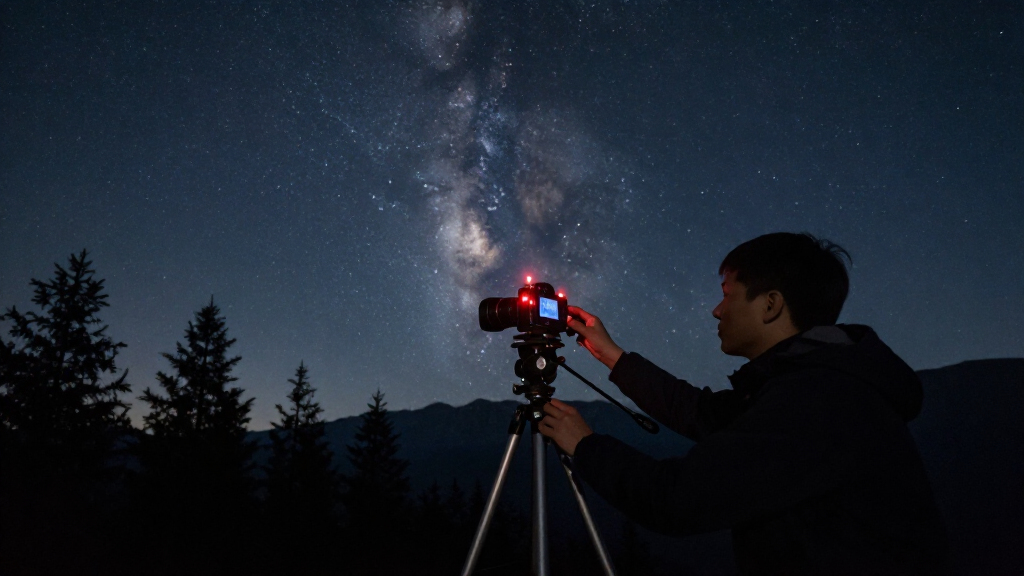
How We Picked
I compared these 14 products by how directly they answer the needs behind astrophotography camera star trackers: reliable tracking for long exposures, useful payload and control options, portability, setup demands, and the extra equipment a buyer must supply. I also separated conventional mounts from dedicated astronomy cameras and smart telescopes. Those categories can all support astrophotography, but they solve different problems; treating them as equivalent would make the ranking less useful.
The Star Adventurer GTi GoTo Mount Kit ranks first because it combines tracking and GoTo functionality with a more complete field setup. Camera-focused iOptron trackers rank well for lightweight wide-field work, while the head-only GTi package and standalone cameras call for more planning or supporting gear. Smart telescopes are judged on how much they simplify capture, not as substitutes for interchangeable camera-and-mount rigs. Product names and listed package contents inform these comparisons; buyers should confirm current compatibility and included accessories before ordering.
Factors to Consider When Choosing Astrophotography Camera Star Trackers
Before choosing among these options, decide what you expect the word “tracker” to do. A mount moves a camera or telescope to follow the sky; an astronomy camera records images but needs a suitable mount and optics; a smart telescope combines much of the imaging system in one package. These differences shape your total setup, learning curve, and room to grow more than a single feature label does.
Match the mount to your imaging payload
Start with the complete moving load: camera body, lens or telescope, mounting plate, guide gear, and cables. A setup that fits a mount’s stated capacity on paper can still be awkward if the weight sits far from the balance point. Camera-and-lens trackers such as the SkyGuider Pro are aimed at lighter field rigs, while a GoTo equatorial mount may better suit a telescope-based setup. Do not buy a larger mount solely to leave room for future gear if that added bulk will make you leave it at home. Check the manufacturer’s payload guidance and count every accessory before comparing models.
Choose between manual simplicity and GoTo control
A basic tracker can keep a framed region of sky moving with the camera, but it does not automatically point to a requested target. GoTo control can locate objects and reduce manual aiming, which is helpful when moving among targets or learning the sky. That convenience adds setup steps, power needs, and more components to manage outdoors. A common mistake is paying for GoTo features when the plan is simply to shoot wide-field scenes with a familiar lens. Decide whether target selection and telescope use are part of your routine before choosing a control system.
Account for polar alignment and setup time
Tracking accuracy depends on aligning the mount’s rotational axis with the celestial pole; a tracker cannot compensate for poor alignment indefinitely. Polar scopes and alignment aids can make this task easier, but visibility, tripod stability, and practice still matter. A lightweight kit may be quick to carry yet more sensitive to wind or an uneven surface. Beginners often underestimate setup time and focus only on the camera’s exposure settings. If you shoot from changing locations, prioritize a repeatable alignment process and a tripod you can level securely.
Plan for the whole imaging chain
A tracker is only one part of a long-exposure system. You may also need a compatible camera, lens or telescope, mount adapter, power source, intervalometer or control app, and image-processing software. Dedicated cameras such as the SV405CC and SV305C Pro do not replace the mount or optics, and their different sensor designs suit different targets. Smart telescopes reduce the number of separate parts, though they give you less freedom to swap components. Before buying, write down what you already own and check every physical, electrical, and software connection.
Decide how much automation and flexibility you want
Smart telescopes can simplify framing, capture, and basic control, making them appealing when convenience matters more than choosing every component. Traditional mounts offer a more modular path: you can change the camera, lens, telescope, or control method as your skills develop. Neither approach guarantees better images by itself; skies, focus, tracking, and processing remain decisive. One common buying mistake is assuming that an automated instrument will also behave like a universal camera tracker. Pick automation when a guided, integrated workflow is the goal, and modular gear when experimentation and reuse matter more.
Spend on the limitation you actually face
Paying more makes sense when it solves a real bottleneck, such as needing GoTo pointing, supporting a heavier optical tube, or reducing setup complexity with an integrated system. It brings less benefit if your main obstacle is learning polar alignment, choosing targets, or processing images. A complete kit can save compatibility guesswork, while a mount-head package can suit buyers who already own a dependable tripod. Also account for transport weight and power requirements, since both can affect how often the system gets used. Compare the full working setup rather than judging the mount or camera alone.
Frequently Asked Questions
Can I use an astronomy camera by itself as a star tracker?
No. A camera such as the SV405CC or SV305C Pro records light, but it does not move with the sky. For long exposures, it needs a tracking mount plus compatible optics, attachment hardware, and usually a computer or control system. The NexImage 20 also targets solar-system imaging rather than replacing a camera mount for wide-field long exposures. If you want a single integrated imaging unit, a smart telescope is a different category to compare.
Should I choose the Star Adventurer GTi kit or the mount-head kit?
Choose the kit with the tripod and pier extension if you need a more ready-to-use field package and do not already own suitable support gear. The head-only package may make more sense if you have a stable, compatible tripod and want to avoid duplicating equipment. Check the full package contents and attachment requirements before deciding; similar model names do not mean identical setups. Also weigh portability, since a complete support kit can be convenient but takes more space to carry.
Will a camera tracker work with my telescope?
It depends on the telescope’s weight, length, mounting interface, and balance, not just whether it can be physically attached. Camera-focused trackers are generally aimed at lighter camera-and-lens combinations, while longer or heavier telescopes can create more demanding loads and leverage. Compare the complete imaging rig with the mount maker’s payload guidance, then check whether counterweights and the required mounting hardware are included. If telescope imaging is your main plan, a GoTo equatorial mount may be a more suitable starting point than a compact camera tracker.
Are smart telescopes a good substitute for a conventional tracker?
They can be a good substitute when your priority is a guided, integrated capture workflow with fewer separate components. They are less suitable if you want to attach your own camera and lenses, choose a conventional optical tube, or build a modular system over time. Smart telescopes also have their own operating and power needs, so “all-in-one” does not mean setup-free. Compare the convenience you gain with the freedom to change hardware before choosing between an integrated scope and a tracker-based rig.
Which option makes the most sense for a first astrophotography setup?
For a beginner who wants to learn with a separate camera and lens, a camera-focused tracker offers a relatively direct way to practice alignment, framing, and exposure control. If you prefer guided capture and fewer separate components, a smart telescope such as the Seestar S30 Pro may be easier to approach. The Star Adventurer GTi kit offers more pointing control, but that added capability comes with more setup decisions. Base the choice on whether you want to learn a modular workflow or start with an integrated one, and check which accessories you already own.
Conclusion
For the broadest mix of tracking, GoTo control, and included field gear, I recommend the Sky-Watcher Star Adventurer GTi GoTo Mount Kit as best overall. For best value in a lightweight camera setup, the iOptron SkyGuider Pro is the more focused choice when you do not need GoTo; the SkyTracker Pro is another compact option for simpler camera-based use. For beginners who favor an automated workflow, I would look at the ZWO Seestar S30 Pro, while the Celestron Origin Mark II is the premium integrated observatory pick for buyers seeking a more advanced smart-telescope system. Choose the SV405CC for cooled deep-sky camera work or the SV305C Pro and NexImage 20 for solar-system imaging roles, remembering that these cameras still need suitable support gear. If you already own a tripod, the GTi head kit may fit; if you want the simplest wide-field route, a SkyGuider Pro is the more direct match.