
TL;DR
Open a free Amazon Business account
Business pricing, bulk buying and tax-exempt orders.
Create a free accountAs an affiliate, we earn on qualifying purchases.
On September 1, 2026, the Moon will pass in front of Venus during daylight hours, creating a rare and beautiful event visible in select regions. With the right tools and timing, you can witness this fleeting moment of planetary dance during the day.
Imagine catching a tiny, luminous dot vanishing behind the Moon during the broad light of day. Sounds impossible? Think again. On September 1, 2026, a rare event will unfold: the Moon will briefly hide Venus from view — during daylight hours. This isn’t just a pretty picture; it’s a window into the delicate ballet of celestial bodies, a chance for you to see something few ever witness without a telescope.
This event is a perfect example of how the planets and our Moon line up in a cosmic game of hide-and-seek. It’s a reminder that even during the busiest daylight moments, the sky still holds surprises. Curious how to witness this fleeting spectacle or why it’s so special? Keep reading — I’ll tell you everything you need to know.
What Is a Daytime Occultation of Venus and Why Does It Happen?
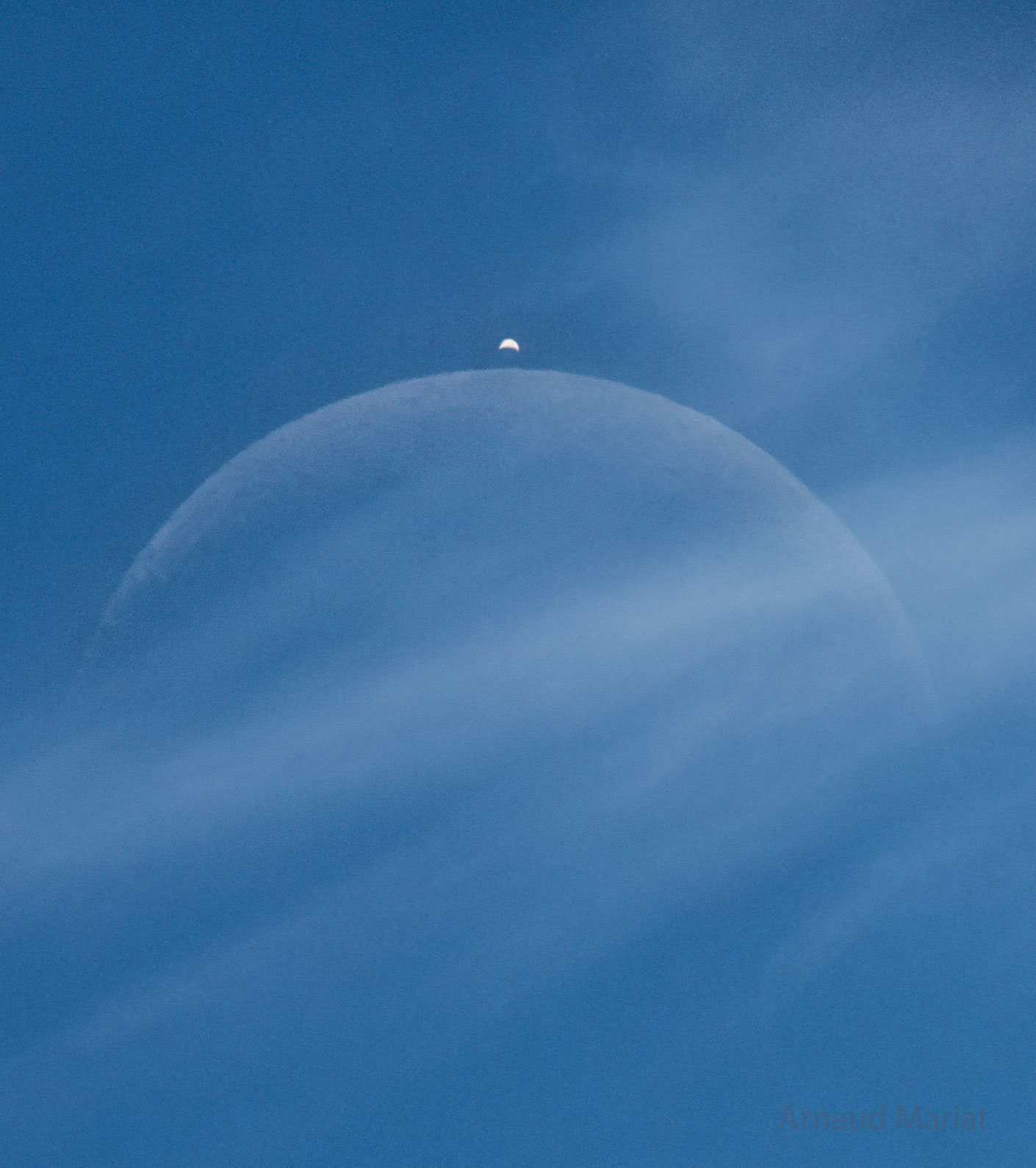
A daytime occultation is when the Moon passes directly in front of Venus, temporarily obscuring it from view. It sounds like a trick of the eye, but it’s simply a matter of the right angles and distances. The Moon and Venus are both orbiting the Sun, but from our perspective on Earth, their positions sometimes line up perfectly, causing the Moon to block the planet.
Venus is the brightest planet in our night sky, often mistaken for a star. During the event, it appears as a bright dot, sometimes with a slight crescent shape, depending on the phase and angle. The Moon, with only about 10% of its face illuminated, will drift across Venus’s path—like a tiny, glowing boat sailing behind a cloud.
This alignment matters because it demonstrates the intricate dance of celestial mechanics that govern our solar system. Such events are not merely optical curiosities; they are practical tests of our understanding of orbital dynamics. When the Moon covers Venus during the day, it confirms the precision of our models predicting the Moon’s orbit and the relative positions of planets. These alignments help astronomers refine their calculations, which can impact everything from spacecraft navigation to understanding gravitational influences. The rarity of these events also underscores the delicate balance required for such alignments—small changes in orbital inclination or timing could prevent such an event from happening for years. Recognizing and predicting these occultations deepens our understanding of celestial mechanics and reminds us of the complex gravitational choreography taking place above us.
As an affiliate, we earn on qualifying purchases.
When and Where Will You See the Moon Cover Venus?
The occultation of Venus by the Moon on September 1, 2026, will be visible only in specific regions — mainly parts of Europe, North Africa, and the Middle East. The exact timing varies by location, but it generally happens during mid-morning to early afternoon local time.
For example, in parts of southern France and northern Italy, you might see the Moon drifting across the daytime sky and covering Venus for a few minutes. In contrast, observers in North America or Asia will see little to no effect due to the geometry of the event.
Use online tools like NASA’s visibility maps or local astronomy club forecasts to pinpoint the exact time and position in your sky. Planning ahead is key—these are fleeting moments, lasting only a matter of minutes. Understanding where and when to look ensures you don’t miss this rare alignment, and appreciating the regional differences helps you grasp the precise celestial mechanics causing such a narrow window of visibility. This knowledge also highlights the importance of regional geography and local time zones in astronomical observations, emphasizing that celestial events are not universal but dependent on your position on Earth. The more you understand the specific conditions for your location, the better prepared you’ll be to witness this extraordinary event.
As an affiliate, we earn on qualifying purchases.
How Can You Safely Watch a Daytime Occultation?
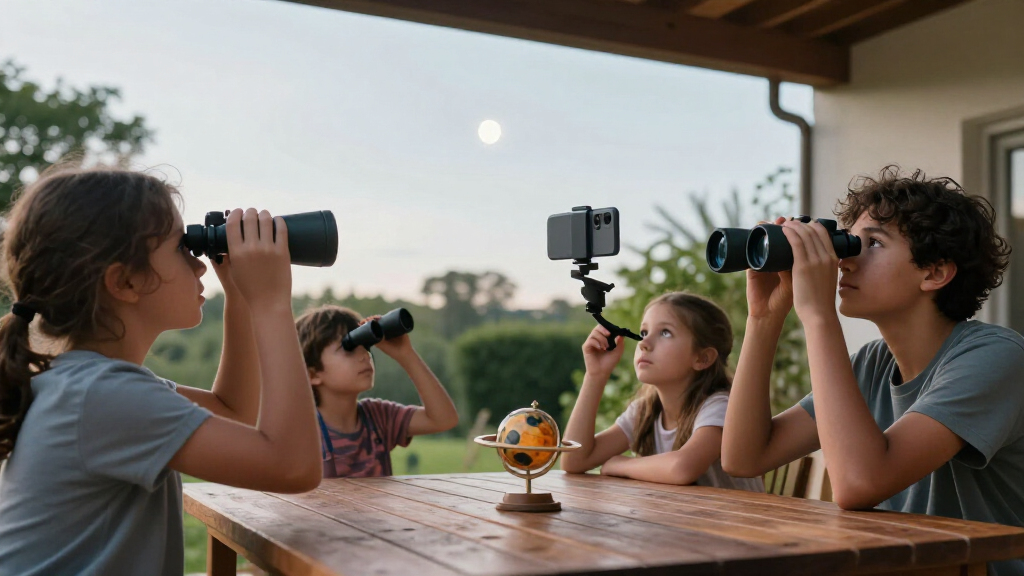
Observing a daytime occultation requires caution. Never look directly at the Sun with your naked eyes or unfiltered optics, as it can cause serious eye damage. Instead, use binoculars or a telescope equipped with a solar filter designed for daytime viewing.
Set up your equipment in a safe, shaded spot—away from direct sunlight that could harm your eyes or equipment. Check the timings carefully and position yourself so you can follow the Moon’s movement across the sky.
Capturing the event on camera? Use a solar filter and a steady tripod. A smartphone with a solar filter can also do the trick. Just remember: safety first. The goal is to observe without risking your eyesight.
Understanding the safety precautions is crucial because daytime viewing can be deceptively bright, increasing the risk of accidental eye exposure. Proper filters and careful planning not only protect your vision but also enable you to enjoy the event more fully. Using the right equipment and techniques ensures you can witness this rare alignment without harm, making the experience both safe and rewarding. Remember, the key tradeoff is between ease of viewing and safety—taking the proper precautions allows you to maximize your enjoyment while minimizing risk.
As an affiliate, we earn on qualifying purchases.
Top Tips for Photographing the Daytime Occultation
Photographing a daytime occultation is a challenge but rewarding. Here’s how to get the best shot:
- Use a telephoto lens — at least 200mm or more — to zoom in on Venus and the Moon.
- Set your camera to a fast shutter speed — 1/1000 second or quicker — to freeze movement.
- Use manual focus to ensure sharp images, focusing on the Moon’s edge or Venus’s bright disk.
- Bracket your shots: take multiple exposures to capture detail in varying lighting conditions.
- Practice beforehand to get familiar with the timing and positioning.
Imagine capturing the Moon’s dark silhouette drifting across Venus’s glowing face — a moment of cosmic elegance frozen in time. The key is patience, preparation, and a steady hand. The challenge lies in balancing exposure and focus, especially under the bright daytime sky, which can wash out subtle details. Proper planning and understanding your equipment’s capabilities are essential to capturing the event’s fleeting beauty. Experimenting with different settings and practicing beforehand will increase your chances of getting that perfect shot, allowing you to preserve a rare moment of celestial harmony for posterity.
portable telescope for daytime sky
As an affiliate, we earn on qualifying purchases.
As an affiliate, we earn on qualifying purchases.
How This Event Fits into the Bigger Picture of Celestial Mechanics
Venus’s occultation by the Moon illustrates the precise dance of planetary orbits. It’s a real-world example of how the Moon, Earth, and Venus align in a way that’s predictable but still wondrous.
Scientists use such events to refine orbital models, improving predictions for future occultations and planetary movements. They also serve as excellent educational tools, showing us that even during our busy days, the cosmos keeps spinning in perfect harmony.
This specific occultation emphasizes the importance of understanding orbital inclinations and synodic periods—how often planets align in such a way to produce observable events. These alignments are sensitive to tiny variations in orbital parameters, which can inform us about gravitational influences, orbital resonances, and the long-term evolution of the solar system. By studying these events, astronomers can detect subtle shifts in planetary orbits, test gravitational theories, and improve navigation accuracy for spacecraft. Recognizing how these celestial mechanics influence observable phenomena deepens our appreciation of the universe’s intricate design, and highlights the interconnectedness of all celestial bodies within the solar system’s grand choreography.
Comparison: Night Sky vs. Daytime Occultations — What’s the Difference?
| Feature | Night Sky Occultation | Daytime Occultation |
|---|---|---|
| Visibility | Usually dark, requires clear night sky | During daylight, can be hidden by clouds or brightness |
| Ease of Observation | Easier with binoculars/telescopes at night | More challenging due to bright sky, safety precautions needed |
| Frequency | Several times a year for different bodies | Rarer, depends on precise alignment and daylight conditions |
| Visual Experience | Dramatic silhouettes, star and planet pairs | Subtle, requires careful observation, brighter background |
Nighttime occultations are easier to spot but less surprising — you expect stars and planets to appear and disappear. Daytime events, like this Venus occultation, are rare jewels that challenge your eyes and equipment to see the unseen.
Key Takeaways for Your Celestial Bucket List
- Mark September 1, 2026: A rare daytime occultation of Venus by the Moon will occur in specific regions.
- Plan ahead: Use local visibility maps and set up your gear safely with solar filters.
- Capture the moment: Telephoto lenses, fast shutter speeds, and patience will help you document this fleeting event.
- Learn from it: Events like this deepen understanding of planetary orbits and celestial mechanics.
- Share your experience: Photos and stories inspire others and foster curiosity about our solar system.
Frequently Asked Questions
Is it safe to look at Venus during the occultation?
Yes. Venus itself is safe to observe with binoculars or a telescope, but never look directly at the Sun without proper solar filters. During the event, Venus appears as a bright dot against the daytime sky, not the Sun, so standard optical filters for daytime viewing are sufficient.
How long does the occultation last?
The duration varies by location, but typically it lasts only a few minutes — long enough for a quick observation or photo. Check local timings to plan your viewing window precisely.
Will I need special equipment?
While binoculars or a small telescope improve your view, a good pair of binoculars with solar filters is enough to spot Venus during the day. A camera with a telephoto lens can also help you capture the moment.
Why are daytime occultations so rare?
They require an exact alignment of the Moon, Earth, and Venus during daylight hours. Because of the tilt of the Moon’s orbit and the relative positions, such events happen only a few times every few years, and only in certain regions.
What scientific value does this event have?
It helps astronomers refine the orbits of Venus and the Moon, testing and improving planetary models. Plus, it’s a fantastic educational tool to demonstrate celestial mechanics in action.
Conclusion
This rare daytime occultation reminds us that the sky is full of surprises, even during the busiest hours. With a little preparation and caution, you can witness a fleeting moment when the Moon temporarily hides Venus during the glow of day. It’s a small spectacle, but one that’s packed with wonder — a glimpse of the universe’s intricate, beautiful choreography.
So, set your alarms, check your local sky charts, and keep your eyes peeled on September 1, 2026. The sky’s private dance is about to put on a show — don’t miss your chance to watch it unfold in real time.
Fall Picks
fall essentials
As an affiliate, we earn on qualifying purchases.