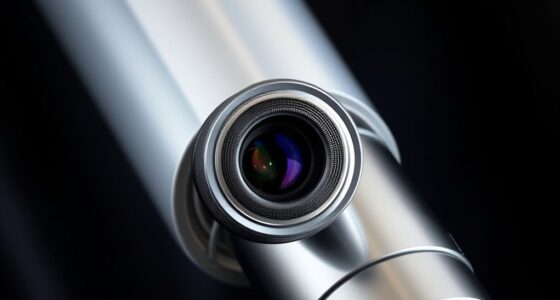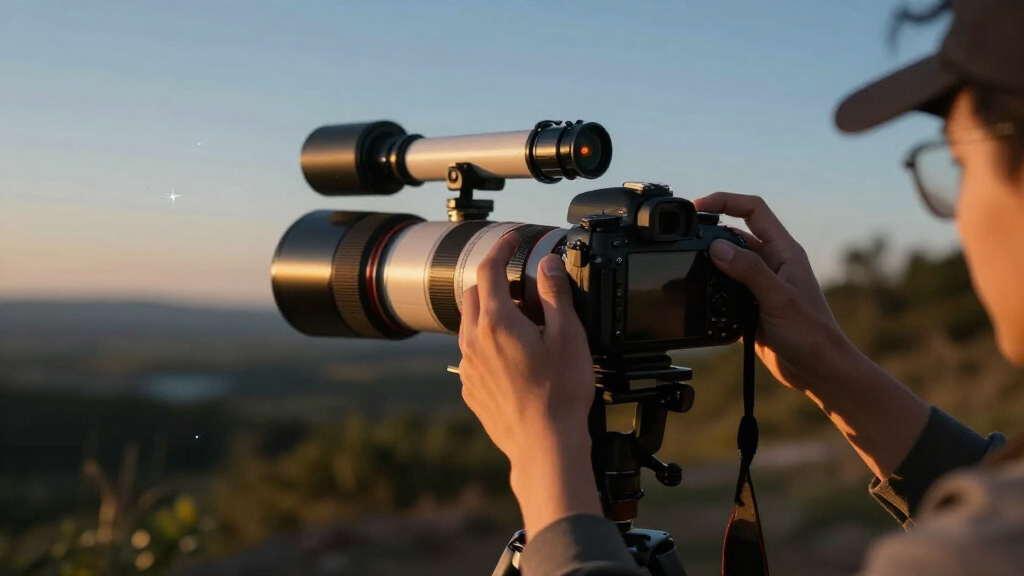
Astrophotography has a way of exposing the weakest link in your setup, and more often than not, that link is the connection between your camera and your telescope. That is why I put together this comparison of four astrophotography camera accessories in 2026: two dedicated eyepiece cameras and two mechanical adapters that turn an ordinary DSLR into a serious imaging tool. The products span very different budgets and philosophies, and understanding those differences matters more than any single spec sheet.

Prime made for students and young adults
- Fast, free delivery for dorm and study essentials
- Prime Video and Amazon Music included
- Member-only deals
If you want the short version: the SVBONY SV105 stands out as my top pick for beginners who want to shoot the Moon and planets tonight without buying anything else, while the Astromania 2 Inch T2 Adapter paired with a Nikon T-ring makes the most sense for anyone who already owns a DSLR and wants the image quality that only a large sensor can deliver. For observers who hate being tethered to a laptop, the 4K Wireless Telescope Camera offers a screen, WiFi, and standalone recording in one package. The main tradeoff running through this entire roundup is convenience versus image quality: eyepiece cameras get you imaging fast with small sensors and modest dynamic range, while adapter-based DSLR setups demand more patience and manual work but reward you with far more depth in nebulae and galaxies.
Key Takeaways
- The SVBONY SV105 wins on plug-and-play simplicity for lunar and planetary work, but its 1080p sensor cannot compete with a DSLR for deep-sky targets.
- The Astromania 2-inch T2 adapter plus a Nikon T-ring is the cheapest path to serious deep-sky imaging, since it reuses a camera you already own — but everything is manual.
- The 4K Wireless Telescope Camera is the only option here with a built-in screen, battery, and WiFi, making it the best choice for outreach and phone-free sessions.
- Eyepiece cameras trade sensor size for convenience; adapters trade convenience for sensor size — no single product does both well.
- Budget for the hidden costs: the T2 adapter needs a separate T-ring, and the wireless camera needs a microSD card before it records anything.
| SVBONY SV105 Telescope Camera, 1.25″ IMX307 CMOS Color Eyepiece Camera |  | Best Overall for Beginners | Sensor: 1/2.8″ IMX307 CMOS | Resolution: 1920×1080 | Frame Rate: Up to 30 fps | VIEW LATEST PRICE | See Our Full Breakdown |
| Astromania 2 Inch T2 Focal Telescope Camera Adapter for SLR/DSLR Cameras |  | Best Value for DSLR Users | Compatibility: All standard 2″ focusers | Camera Thread: M48x0.75 male thread | Optical Extension: 3mm | VIEW LATEST PRICE | See Our Full Breakdown |
| Astromania T2 T Ring and T Adapter for Nikon SLR/DSLR Camera |  | Best Budget Deep-Sky Entry Point for Nikon Shooters | Camera Compatibility: Nikon F-bayonet SLR/DSLR (D40–D800 series) | Adapter Type: T-ring and T-adapter with M42x0.75 T/T2 thread | Material: Aluminum | VIEW LATEST PRICE | See Our Full Breakdown |
| 4K Wireless Telescope Camera, 1.25” 2” Universal Eyepiece Camera |  | Best Wireless and Standalone Pick | Sensor: 8MP CMOS, up to 64MP interpolated stills | Video: 4K recording | Display: Rotatable 2.8-inch IPS screen | VIEW LATEST PRICE | See Our Full Breakdown |
| astrophotography camera accessorie | Compatibility | Sensor | Material |
|---|---|---|---|
| SVBONY SV105 Telescope Camera | Windows, Linux, Android, macOS | 1/2.8" IMX307 CMOS | — |
| Astromania 2 Inch T2 Focal Tel | All standard 2" focusers | — | Anodized aluminum |
| Astromania T2 T Ring and T Ada | — | — | Aluminum |
| 4K Wireless Telescope Camera | 23mm–60mm eyepieces; telescopes, binoculars, microscopes | 8MP CMOS, up to 64MP interpolated stills | — |
More Details on Our Top Picks
SVBONY SV105 Telescope Camera, 1.25″ IMX307 CMOS Color Eyepiece Camera
For anyone taking their first steps into lunar and planetary imaging, this option stands out for how little stands between unboxing and your first image. The camera slides into any standard 1.25-inch focuser, pulls power and data over a single USB cable, and requires no driver installation on most systems. That simplicity is not a small thing: many beginner-friendly astro cameras derail newcomers with configuration screens before they ever see the Moon on screen, and the SV105 avoids that trap almost entirely.
Compared with the 4K Wireless Telescope Camera later in this lineup, the SV105 makes a different bet. It gives up the built-in screen, battery, and WiFi in exchange for a much lower price and a simpler, more reliable workflow through free capture software like SharpCap or the SVBONY app. For someone imaging from a backyard table with a laptop nearby, that trade makes sense. Where the wireless camera is better suited to grab-and-go observing sessions, the SV105 is built for structured imaging sessions where you stack frames in software afterward to squeeze out detail.
The honest limitation is the sensor itself. A 1/2.8-inch CMOS chip at 1080p is fine for the Moon, Jupiter, and Saturn, but it will not resolve fine planetary detail the way a dedicated planetary camera with a larger sensor and higher frame rates can, and it is simply not the tool for nebulae or galaxies. The 30 fps ceiling also limits how many frames you can capture during a brief window of stable seeing. Still, judged as an entry point rather than an endgame, it delivers more imaging value per dollar than anything else in this roundup, which is why it earns the top overall spot for beginners.
Pros:- True plug-and-play setup with no drivers needed on major platforms
- Real-time live viewing makes framing and focusing intuitive
- Works across Windows, Linux, macOS, and Android
- Fits any standard 1.25-inch focuser, so it survives telescope upgrades
Cons:- Small 1/2.8-inch sensor with 1080p output limits planetary detail
- No iOS support, which rules out iPhones and iPads
- Different capture software must be downloaded depending on your platform
Best for: Beginners who want to image the Moon and planets from a laptop without a steep learning curve or a big budget.
Not ideal for: Anyone targeting deep-sky objects like nebulae and galaxies, or iOS users — the camera does not work with iPhones or iPads.
- Sensor:1/2.8″ IMX307 CMOS
- Resolution:1920×1080
- Frame Rate:Up to 30 fps
- Video Recording:2K at high speed
- Connection:USB, 1.25″ threaded M28.5×0.6
- Compatibility:Windows, Linux, Android, macOS
Our verdict“The SV105 is the most sensible first astro camera for laptop-based lunar and planetary imaging, as long as you accept its small sensor as the price of entry.”
Astromania 2 Inch T2 Focal Telescope Camera Adapter for SLR/DSLR Cameras
Most people who own a DSLR already own the best astro camera they need for deep-sky work — they just have no way to attach it to a telescope. This adapter solves that problem for less than the cost of a decent eyepiece, and that is precisely why it earns the value slot. The 2-inch barrel fits every standard 2-inch focuser on the market, from Dobsonian reflectors to refractors, and the T2 external thread on the camera side is the universal standard that virtually every astronomy accessory in existence is built around.
The 3mm optical extension is the spec that separates this from cheaper adapters, and it matters more than it sounds. A short extension preserves your focuser’s inward travel, which can be the difference between reaching focus and staring at an out-of-focus blur with no room left to rack in. The anodized aluminum build also keeps reflections down, and the quick-release design means you can swap between visual and imaging setups in seconds rather than fumbling with threaded connections in the dark.
The obvious catch: this adapter is useless on its own. It needs a T-ring matched to your camera brand, which is sold separately and adds to the real cost — that is why it pairs naturally with the Astromania Nikon T-ring elsewhere in this roundup. Compared with the SV105, this setup demands far more from the user: manual everything, longer exposures, and usually a tracking mount for anything beyond the Moon. But the payoff is a full APS-C or full-frame sensor collecting light, something no eyepiece camera here can match. This pick makes the most sense for the patient imager who values image quality over convenience.
Pros:- Universal fit with all standard 2-inch focusers across telescope types
- Minimal 3mm optical extension preserves precious focuser travel
- Machined anodized aluminum minimizes internal reflections
- Quick-release design makes swapping between visual and imaging fast
Cons:- T-ring sold separately, so it is not a complete solution out of the box
- Assumes some familiarity with threaded astronomy accessories and back-focus
Best for: DSLR owners who want to enter deep-sky imaging by reusing the camera body they already have.
Not ideal for: Beginners expecting a complete imaging solution, or anyone without a T-ring and a camera to attach to it.
- Compatibility:All standard 2″ focusers
- Camera Thread:M48x0.75 male thread
- Optical Extension:3mm
- Threads:T2 external threads for photography
- Material:Anodized aluminum
- Includes:Adapter only — T-ring not included
Our verdict“For a few tens of dollars, this adapter unlocks the deep-sky potential of a DSLR you already own — just remember to budget for the T-ring.”
Astromania T2 T Ring and T Adapter for Nikon SLR/DSLR Camera
Where the 2-inch adapter above is half of a system, this T-ring and T-adapter set is the other half — and together they form the complete Nikon-to-telescope pipeline. The T-ring locks onto the Nikon F-bayonet mount found on decades of bodies from the D40 through the D800, while the included 1.25-inch T-adapter threads into it and slides into the focuser. The hex wrench in the box lets you adjust the ring’s rotational position, a small detail that keeps your camera oriented correctly without untwisting the whole assembly.
The all-metal construction earns real credit here. Plastic T-rings exist at similar prices, and they develop play over time that translates into a wobbling sensor plane — fatal for sharp stars. This set is better suited to years of mounting cycles than its cheaper plastic competitors. Compared with the SV105, the difference in approach could not be starker: instead of a small sensor streaming video to a laptop, you are putting a large DSLR sensor directly in the light path, capturing long exposures of nebulae and star fields that an eyepiece camera simply cannot record.
The tradeoff is total manual control. There are no electrical contacts, so no autofocus, no auto exposure, and no aperture control from the body — everything is set by hand while the sky darkens. Nikon Z-series mirrorless shooters will also need a separate F-to-Z adapter before this ring even mounts. And of course, this is an accessory, not a camera; it presupposes you already own a compatible body and a telescope. But for a Nikon DSLR owner, this is the least expensive legitimate route into deep-sky imaging, which is exactly why it holds this spot in the lineup.
Pros:- Broad compatibility across the Nikon F-bayonet DSLR lineup
- All-metal construction with no play between camera and telescope
- Hex wrench allows precise rotational adjustment of the ring
- 1.25-inch filter thread adds options for light-pollution filters
Cons:- No electrical contacts — manual focus and manual exposure only
- Requires additional accessories for a complete imaging setup
- Not directly compatible with Nikon Z mirrorless bodies
Best for: Nikon F-mount DSLR owners building a manual deep-sky imaging setup on a tight budget.
Not ideal for: Mirrorless shooters without an F-mount adapter, or anyone expecting autofocus and auto exposure to work.
- Camera Compatibility:Nikon F-bayonet SLR/DSLR (D40–D800 series)
- Adapter Type:T-ring and T-adapter with M42x0.75 T/T2 thread
- Material:Aluminum
- Focus Type:Manual
- Filter Thread:1.25″ standard
- Weight:1.76 ounces
- Included Accessories:Hex wrench for adjustment
Our verdict“This is the missing link that turns a Nikon DSLR into a telescope camera, provided you are comfortable running everything by hand.”
4K Wireless Telescope Camera, 1.25” 2” Universal Eyepiece Camera
Every other option in this roundup needs a laptop, a DSLR, or both. This one needs neither. With an 8MP sensor recording 4K video, a built-in 2000mAh battery, a rotatable 2.8-inch IPS screen, and WiFi streaming to phones via the XDVPRO app, it is a complete self-contained imaging device — and that independence defines both its appeal and its price premium. For public star parties, family viewing sessions, or remote dark-site trips where dragging a computer along is unappealing, this design is genuinely liberating: multiple people can watch the Moon live from their phones within a 32-foot radius.
Compared with the SV105, the differences go well beyond resolution. The SV105 assumes a tethered, laptop-driven workflow and rewards it with rock-bottom cost; this camera assumes nothing, packing its own storage (microSD up to 512GB), display, and power. The universal eyepiece compatibility from 23mm to 60mm also means it mounts on binoculars and microscopes, not just telescopes, which broadens its usefulness well beyond astronomy. The rotatable screen solves a real ergonomic problem too — anyone who has contorted themselves to peer through a refractor pointed near zenith will appreciate framing shots standing upright.
The drawbacks are worth stating plainly. The microSD card is not included, so the camera cannot record anything until you buy one. Setup is more involved than the SV105’s plug-and-play experience, with WiFi pairing and app configuration adding steps. And while 64MP interpolated stills sound impressive on paper, interpolated resolution never equals true sensor detail — the 8MP hardware sensor is the honest figure. Battery life is unspecified, which makes long all-night sessions a gamble without a power bank. Still, as a standalone, wireless, multi-purpose imager, it occupies a niche nothing else in this lineup touches.
Pros:- Fully standalone operation with built-in battery and IPS screen
- 4K video and WiFi streaming to iOS and Android via the XDVPRO app
- Fits eyepieces from 23mm to 60mm on telescopes, binoculars, and microscopes
- microSD support up to 512GB for long recording sessions
Cons:- microSD card required but sold separately
- Setup involving WiFi pairing and app configuration is more complex than plug-and-play
- Battery life is not specified, and 64MP stills are interpolated rather than native
Best for: Observers and outreach hosts who want standalone recording, a built-in screen, and phone-based viewing without any laptop.
Not ideal for: Budget-conscious planetary imagers comfortable with a laptop, or anyone unwilling to buy a separate microSD card.
- Sensor:8MP CMOS, up to 64MP interpolated stills
- Video:4K recording
- Display:Rotatable 2.8-inch IPS screen
- Battery:2000mAh lithium polymer
- Storage:microSD up to 512GB (card not included)
- WiFi Range:32 feet
- Compatibility:23mm–60mm eyepieces; telescopes, binoculars, microscopes
- App:XDVPRO for iOS and Android
Our verdict“If the laptop-free, wireless, screen-equipped workflow appeals to you, this camera justifies its premium — just add a memory card to your cart.”
How We Picked
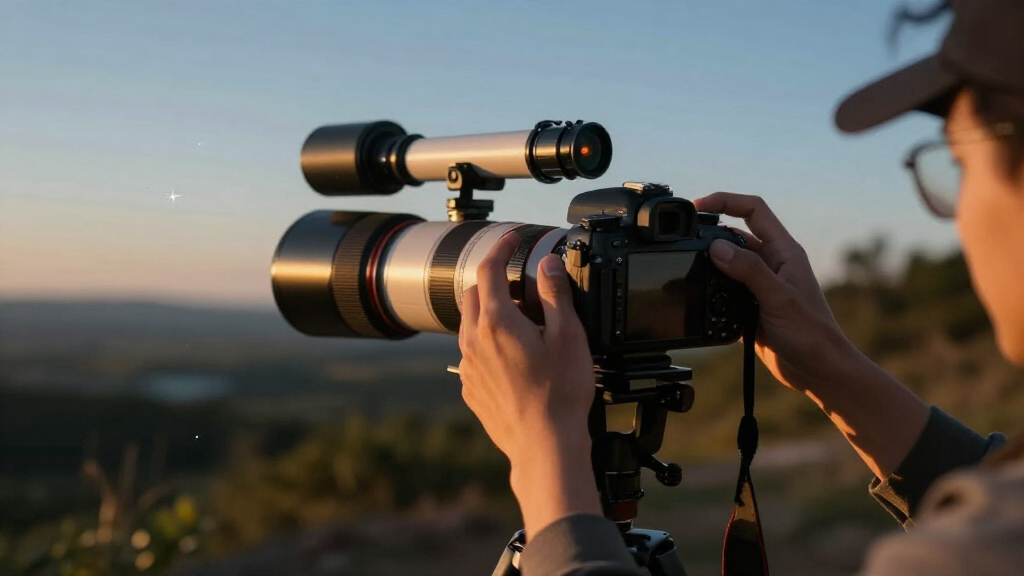
Since these four accessories solve different problems, I judged each one against the job it is actually meant to do rather than against a single scoring rubric. For the two eyepiece cameras, I focused on sensor performance, ease of setup, and software compatibility, because those three factors determine whether a beginner’s first night with a new camera ends in a keepsake image or a frustrating driver hunt. For the two mechanical adapters, the criteria shifted toward build quality, threading accuracy, and optical extension length, since a poorly machined adapter can throw off back-focus and introduce tilt that no amount of post-processing can fix.
I also weighed versatility heavily. Astronomy gear tends to outlive the specific telescope or camera it was bought for, so an adapter that fits every standard 2-inch focuser earns more credit than one locked to a single mount. Finally, I factored in the total cost of ownership — a cheap adapter that requires a separate T-ring, or a wireless camera that needs its own memory card, is not as cheap as its sticker price suggests. Where real tradeoffs existed, I kept them front and center rather than burying them, because the right choice here genuinely depends on what is already sitting in your gear closet.
| astrophotography camera accessorie | Material |
|---|---|
| SVBONY SV105 Telescope Camera | — |
| Astromania 2 Inch T2 Focal Tel | Anodized aluminum |
| Astromania T2 T Ring and T Ada | Aluminum |
| 4K Wireless Telescope Camera | — |
Factors to Consider When Choosing Astrophotography Camera Accessories
Choosing among these four accessories comes down to a few questions about your existing gear and how you like to observe. Before clicking buy, work through the factors below — they will eliminate most of the lineup immediately.Camera vs. Adapter: The Fundamental Choice
The first decision splits the roundup in half. Eyepiece cameras (the SV105 and the 4K wireless model) are self-contained imaging devices with their own small sensors — great for the Moon, planets, and live viewing, but limited for faint deep-sky targets. Adapters (the Astromania pair) contain no sensor at all; they attach a camera you already own directly to the telescope, giving you a much larger sensor for long-exposure nebula and galaxy work. If deep-sky imaging is the goal, adapters win. If simplicity and live viewing matter more, an eyepiece camera wins.
What You Already Own
Your existing equipment should drive the decision more than any product feature. A Nikon DSLR owner needs only the T-ring and the 2-inch adapter — roughly the cheapest path here — to start imaging. Someone with no camera and no laptop should look at the 4K wireless model, since it depends on neither. And a beginner with a laptop and any telescope with a 1.25-inch focuser can start with the SV105 tonight. Buying gear that duplicates what you already have is the most common waste in this hobby.
Hidden Costs and Complete Setups
Sticker prices understate real costs. The 2-inch T2 adapter requires a brand-specific T-ring to attach any camera. The wireless camera records nothing without a separately purchased microSD card. The SV105 needs free capture software downloaded for your platform. Factor these in before comparing prices, and check whether your telescope’s focuser is 1.25-inch or 2-inch, since that determines which barrels fit at all.
Manual Control Tolerance
Adapter-based DSLR setups strip away all automation: no autofocus, no auto exposure, no electronic aperture control. Everything is set by hand in the dark, and focusing on a dim star by live-view magnification takes practice. Eyepiece cameras, by contrast, handle exposure automatically in their software. If the idea of manual everything frustrates you, lean toward the camera picks; if you enjoy the deliberate process, the adapter route rewards patience with better images.
Frequently Asked Questions
Can I photograph nebulae and galaxies with the SVBONY SV105?
The SV105 is designed around lunar and planetary imaging, where its small sensor and video-style capture work well because those targets are bright and benefit from stacking many sharp frames. Nebulae and galaxies are a different problem: they are extremely faint, requiring long exposures on a sensor with good sensitivity and low noise. The SV105’s 1/2.8-inch sensor and 30 fps frame rate are simply not built for that regime. For deep-sky work, the adapter route — pairing the Astromania 2-inch adapter and T-ring with a DSLR on a tracking mount — will produce dramatically better results, because the larger sensor gathers far more light over multi-second or multi-minute exposures.
Do I need to buy anything else with the Astromania 2-inch T2 adapter?
Yes — a T-ring matched to your camera brand. The adapter’s camera side uses a standard T2 thread, and the T-ring is what converts that thread to your specific lens mount, whether Nikon F, Canon EF, Sony E, or something else. The Astromania Nikon T-ring in this roundup is one such option. This is the single most common point of confusion for buyers, because the adapter alone cannot attach to any camera. Beyond the T-ring, deep-sky success usually also depends on a tracking equatorial mount, since exposures longer than a few seconds will trail without one.
Will these accessories work with a mirrorless camera?
It depends on the specific product. The Nikon T-ring reviewed here fits only the F-bayonet DSLR mount, so Nikon Z-series mirrorless bodies need Nikon’s F-to-Z mount adapter before the ring will attach. Canon RF, Sony E, and other mirrorless shooters can use the same 2-inch T2 adapter but must buy a T-ring made for their own mount — they are inexpensive and widely available. The two eyepiece cameras avoid this question entirely, since they connect to the telescope’s focuser or eyepiece and interface with your computer or phone rather than replacing a camera body.
Is the 4K wireless telescope camera better than the SV105 for beginners?
It depends on what kind of beginner you are. The wireless camera is better for someone who does not want a laptop in the workflow at all — its built-in screen, battery, and phone app make it feel more like a consumer gadget, and it doubles on binoculars and microscopes. The SV105 is better for a beginner whose actual goal is learning astrophotography technique, because the laptop-based workflow with stacking software like SharpCap builds skills that transfer directly to more serious cameras later, and it costs far less. Also note that the wireless model needs a microSD card purchased separately before it can record anything, while the SV105 records straight to your computer.
Why does my DSLR need manual controls for astrophotography through a telescope?
When a camera attaches to a telescope through a T-ring and adapter, there is no electrical connection between body and optics — the telescope replaces the lens entirely, and with it goes any electronic communication. That means autofocus has nothing to drive, automatic exposure metering cannot read through the system, and aperture control disappears because there is no lens aperture to control. In practice this is less painful than it sounds: you frame and focus manually using live view at high magnification on a bright star, set exposure by trial, and control brightness with ISO and shutter speed. It is one reason the adapter route favors patient photographers, but it costs nothing in image quality.
Conclusion
After comparing all four, my recommendations break down cleanly by buyer type. Complete beginners with a laptop and a 1.25-inch focuser should start with the SVBONY SV105 — it delivers the fastest path from box to first lunar image at the lowest entry cost. Nikon DSLR owners ready for deep-sky work should buy the Astromania T-ring and T-adapter, ideally paired with the 2-inch T2 focal adapter for maximum focuser compatibility; together they cost less than one eyepiece and unlock imaging that no small-sensor camera can match. Observers who hate cables and computers — star party hosts, family stargazers, anyone wanting phone-based viewing — are the natural audience for the 4K Wireless Telescope Camera, provided they remember the microSD card. And if you are still unsure, my simplest advice is this: buy based on the gear you already own, not the gear you wish you had. The right accessory is the one that makes your existing telescope and camera work together tonight, not six months from now.
Fall Picks
fall essentials
As an affiliate, we earn on qualifying purchases.