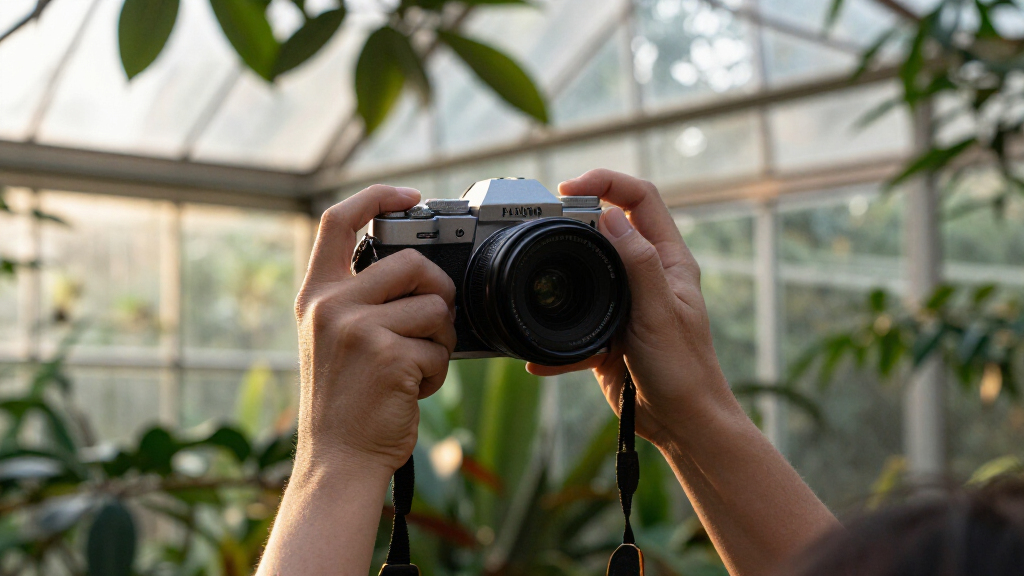
If you’re searching for the best Fujifilm cameras, the Fujifilm X-T5 bundle with the XF 16-50mm f/2.8-4.8 lens stands out as the top overall pick thanks to its 40MP sensor, five-axis stabilization, and weather-resistant kit lens. For a fixed-lens street photography option, the X100VI remains the most coveted camera in the lineup, while the X-M5 with the XC 15-45mm lens is the most affordable entry into the X-mount system. The main tradeoff you’ll face is between interchangeable-lens versatility and the pocketable simplicity of the compact X100 series, plus deciding how much resolution and handling you actually need. Keep reading for the full breakdown of all 15 cameras and which one fits your budget and shooting style.

Prime made for students and young adults
- Fast, free delivery for dorm and study essentials
- Prime Video and Amazon Music included
- Member-only deals
Key Takeaways
- The X-T5 and X100VI share the same 40MP X-Trans sensor, so the choice between them comes down to lens versatility versus portability — not image quality.
- Fujifilm‘s lineup splits cleanly into three tiers: full-hybrid bodies (X-T5, X-S20), creative mid-range bodies (X-T50, X-E5, X-T30 III), and entry-level compacts (X-M5, X-T30 II), with meaningful handling and stabilization differences at each step.
- The X100VI appears four times in this roundup in different bundles and colors — the differences are cosmetic and accessory-based only, so pick the cheapest listing that includes the accessories you’d actually buy.
- The X-T30 II is the value play of the group for budget buyers, but its older sensor and smaller body cost you the dedicated dials and IBIS found on the X-T50.
- The X-M5 is the only pick here without a viewfinder, which makes it great for vlogging and travel but frustrating for bright-day stills shooting — a tradeoff worth weighing before buying.
| FUJIFILM X-T50 Mirrorless Digital Camera with XC15-45mm F3.5-5.6 OIS PZ Lens Kit – Silver |  | Best Overall | Sensor: 40.2 MP X-Trans CMOS 5 HR | Film Simulations: 20, including REALA ACE | Video: 6.2K/30P, 4K/60P, FHD/240P, 4:2:2 10-bit | VIEW LATEST PRICE | See Our Full Breakdown |
| Fujifilm X-T5 Mirrorless Digital Camera with XF 16-50mm f/2.8-4.8 R LM OIS Lens Bundle (Silver, 6 Items) |  | Best Enthusiast Bundle | Camera: Fujifilm X-T5 Mirrorless Digital Camera | Lens: XF 16-50mm f/2.8-4.8 R LM OIS | Color: Silver | VIEW LATEST PRICE | See Our Full Breakdown |
| Fujifilm X-M5 Mirrorless Digital Camera with XC15-45mm f/3.5-5.6 OIS PZ Lens Kit – Black |  | Best Value Entry Point | Sensor: 26.1MP APS-C X-Trans CMOS 4 | Included Lens: XC15-45mm f/3.5-5.6 OIS PZ | ISO Range: 160-12800 (expandable to 51200) | VIEW LATEST PRICE | See Our Full Breakdown |
| FUJIFILM X-T30 III Mirrorless Camera Body, Black |  | Best for Street and Style | Effective Resolution: 26.1 MP | Sensor Size: APS-H CMOS | Mount: Fujifilm X | VIEW LATEST PRICE | See Our Full Breakdown |
| Fujifilm X100VI 40.2 MP Mirrorless Camera with 23mm F2 Lens – Black |  | Best Premium Compact | Resolution: 40.2 MP | Sensor: APS-C X-Trans CMOS 5 HR | Processor: X-Processor 5 | VIEW LATEST PRICE | See Our Full Breakdown |
| Fujifilm X-T50 Mirrorless Digital Camera with XC 15-45mm f/3.5-5.6 OIS PZ Lens Kit, Charcoal Silver |  | Best Travel Kit | Sensor: 40.2MP X-Trans CMOS 5 HR | Lens Kit: XC 15-45mm f/3.5-5.6 OIS PZ | Video: 6.2K/30P, 4K/60P, FHD/240P, 4:2:2 10-bit | VIEW LATEST PRICE | See Our Full Breakdown |
| FUJIFILM X-M5 Mirrorless Digital Camera Body, Silver |  | Best Value Entry Body | Sensor: 26.1MP APS-C X-Trans CMOS 4 | Processor: X-Processor 5 | Autofocus: Hybrid AF with AI-based subject detection | VIEW LATEST PRICE | See Our Full Breakdown |
| Fujifilm X100VI Digital Camera – Black |  | Best Premium Compact | Sensor: 40.2MP X-Trans CMOS 5 HR | Lens: Fixed 23mm f/2 | Image Stabilization: Up to 6.0 stops sensor-shift IBIS | VIEW LATEST PRICE | See Our Full Breakdown |
| Fujifilm X100VI Black |  | Best for Hybrid Creators | Sensor: 40.2MP X-Trans 5 HR | Processor: X-Processor 5 | Video: Up to 6.2K/30P and 4K/60P | VIEW LATEST PRICE | See Our Full Breakdown |
| Fujifilm X-E5 Mirrorless Camera, Silver |  | Best Style-Forward Interchangeable-Lens Pick | Sensor: 40.2MP X-Trans 5 HR | Processor: X-Processor 5 | In-body Image Stabilization: Up to 7 stops (center), 6 stops (edges) | VIEW LATEST PRICE | See Our Full Breakdown |
| Fujifilm X-S20 Mirrorless Camera with 15-45mm Lens and Accessory Bundle |  | Best for Hybrid Photo-and-Video Shooters | Camera type: Mirrorless | Sensor: 26.1 MP X-Trans CMOS 4 | Image processor: X-Processor 5 | VIEW LATEST PRICE | See Our Full Breakdown |
| FUJIFILM X-T30 III Mirrorless Camera with XC 13-33mm Lens Bundle, Silver (6 Items) |  | Best Modern APS-C Kit for Enthusiast Upgraders | Sensor: 26.1MP APS-C X-Trans CMOS 4 | Processor: X-Processor 5 | Kit lens: XC 13-33mm f/3.5-6.3 | VIEW LATEST PRICE | See Our Full Breakdown |
| Fujifilm X100VI Point & Shoot Camera Bundle (Silver) |  | Best Loaded Everyday-Carry Package | Sensor: 40.2MP APS-C X-Trans CMOS 5 HR | Processor: X-Processor 5 | Lens: Fujinon 23mm f/2 (35mm equivalent) | VIEW LATEST PRICE | See Our Full Breakdown |
| Fujifilm X100VI Point & Shoot Camera Bundle (Silver) |  | Best Minimalist X100VI Kit | Sensor: 40.2MP APS-C X-Trans CMOS 5 HR | Processor: X-Processor 5 | Lens: Fujinon 23mm f/2 (35mm full-frame equivalent) | VIEW LATEST PRICE | See Our Full Breakdown |
| Fujifilm X-T30 II Mirrorless Camera with XC 15-45mm Lens, Silver |  | Best Value Entry Into the X System | Sensor: X-Trans CMOS 4 back-illuminated APS-C | Processor: X-Processor 4 | Kit lens: XC 15-45mm | VIEW LATEST PRICE | See Our Full Breakdown |
| Fujifilm camera | Sensor | Film Simulations | Video | Image Stabilization |
|---|---|---|---|---|
| FUJIFILM X-T50 Mirrorless Digi | 40.2 MP X-Trans CMOS 5 HR | 20, including REALA ACE | 6.2K/30P, 4K/60P, FHD/240P, 4:2:2 10-bit | — |
| Fujifilm X-T5 Mirrorless Digit | — | — | — | — |
| Fujifilm X-M5 Mirrorless Digit | 26.1MP APS-C X-Trans CMOS 4 | — | — | — |
| FUJIFILM X-T30 III Mirrorless | — | — | — | Optical (lens-dependent) |
| Fujifilm X100VI 40.2 MP Mirror | APS-C X-Trans CMOS 5 HR | 20 | — | 5-axis IBIS, up to 6.0 stops |
| Fujifilm X-T50 Mirrorless Digi | 40.2MP X-Trans CMOS 5 HR | 20, including REALA ACE | 6.2K/30P, 4K/60P, FHD/240P, 4:2:2 10-bit | Up to 7.0 stops in-body |
| FUJIFILM X-M5 Mirrorless Digit | 26.1MP APS-C X-Trans CMOS 4 | — | 6.2K/30p 10-bit internal, 4K/60p, Full HD up to 240 fps | — |
| Fujifilm X100VI Digital Camera | 40.2MP X-Trans CMOS 5 HR | 20 including REALA ACE | 6.2K/30P | Up to 6.0 stops sensor-shift IBIS |
| Fujifilm X100VI Black | 40.2MP X-Trans 5 HR | 20 modes including REALA ACE | Up to 6.2K/30P and 4K/60P | Up to 6 stops, 5-axis IBIS |
| Fujifilm X-E5 Mirrorless Camer | 40.2MP X-Trans 5 HR | — | — | — |
| Fujifilm X-S20 Mirrorless Came | 26.1 MP X-Trans CMOS 4 | — | 4K at 60 fps | Five-axis IBIS, up to 7 stops |
| FUJIFILM X-T30 III Mirrorless | 26.1MP APS-C X-Trans CMOS 4 | — | Up to 6.2K in 3:2 aspect ratio | — |
| Fujifilm X100VI Point & Shoot | 40.2MP APS-C X-Trans CMOS 5 HR | 20, including REALA ACE | — | 6-stop in-body |
| Fujifilm X100VI Point & Shoot | 40.2MP APS-C X-Trans CMOS 5 HR | 20 | — | 6-stop in-body |
| Fujifilm X-T30 II Mirrorless C | X-Trans CMOS 4 back-illuminated APS-C | 18 | 4K/30p, 1080p/240fps, 10-bit 4:2:2 via HDMI, F-Log internal | — |
More Details on Our Top Picks
FUJIFILM X-T50 Mirrorless Digital Camera with XC15-45mm F3.5-5.6 OIS PZ Lens Kit – Silver
The X-T50 earns the top spot because it balances everything a modern Fujifilm shooter wants: the 40.2MP X-Trans CMOS 5 HR sensor shared with the flagship X100VI, a genuinely useful dedicated Film Simulation dial with 20 modes including REALA ACE, and 7.0 stops of in-body stabilization — more than the X100VI’s 6.0. Unlike the fixed-lens X100VI, the X mount opens up the entire Fujifilm lens library, which makes this the more flexible long-term system camera. Compared with the X-M5, the resolution jump and IBIS make a real difference for cropping and handheld low-light work. The tradeoff is the kit lens: the XC15-45mm’s slow F3.5-5.6 aperture undersells the sensor, so budget-conscious buyers may want to factor in a faster prime down the road.
Pros:- 40.2MP sensor shared with the X100VI for heavy cropping and large prints
- Dedicated Film Simulation dial with 20 modes including REALA ACE
- 7-stop in-body stabilization beats even the X100VI
- Interchangeable X mount supports the full Fujifilm lens range
Cons:- Kit lens aperture of F3.5-5.6 limits low-light and background blur
- 6.2K/30P video is good but not the strongest video feature set in the lineup
Best for: Enthusiast photographers and travelers who want flagship image quality in a compact, upgradeable system body
Not ideal for: Buyers who want one lens and no decisions — the X100VI’s fixed 23mm F2 simplifies everything
- Sensor:40.2 MP X-Trans CMOS 5 HR
- Film Simulations:20, including REALA ACE
- Video:6.2K/30P, 4K/60P, FHD/240P, 4:2:2 10-bit
- In-Body Image Stabilization:Up to 7.0 stops (CIPA)
- Digital Teleconverter:1.4x and 2x
- Lens Mount:Fujifilm X
- Kit Lens:XC15-45mm F3.5-5.6 OIS PZ
- Connectivity:Frame.io Camera to Cloud (native)
Our verdict“The most complete package here — flagship sensor, IBIS, and lens flexibility for photographers who want room to grow.”
Fujifilm X-T5 Mirrorless Digital Camera with XF 16-50mm f/2.8-4.8 R LM OIS Lens Bundle (Silver, 6 Items)
This X-T5 bundle makes the most sense for buyers who want a working kit on day one rather than a body plus a shopping list. The XF 16-50mm f/2.8-4.8 is a step up optically from the XC15-45mm kit lenses bundled with the X-T50 and X-M5, with a brighter wide end and faster linear-motor focusing. Add the SanDisk 128GB Extreme PRO card, spare NP-W235 battery, and travel charger, and you skip the accessory scramble that follows most camera purchases — plus a 1-year Fujifilm USA warranty on the body. The tradeoffs: some bundled accessories are third-party rather than Fujifilm-branded, and the lens still has a variable aperture, so low-light shooters will eventually want a constant-F2.8 zoom or a prime.
Pros:- XF 16-50mm lens outclasses the XC15-45mm kits on other bodies
- Bundle includes card, spare battery, charger, and reader
- 1-year Fujifilm USA warranty on the camera
- X-T5 body offers classic dial-driven handling and high resolution
Cons:- Several included accessories are third-party, not Fujifilm
- Variable f/2.8-4.8 aperture is not a true constant-F2.8 zoom
Best for: Photographers upgrading from a starter camera who want a complete, ready-to-shoot kit immediately
Not ideal for: Minimalists who already own cards, batteries, and lenses — they’re paying for accessories they don’t need
- Camera:Fujifilm X-T5 Mirrorless Digital Camera
- Lens:XF 16-50mm f/2.8-4.8 R LM OIS
- Color:Silver
- Bundle Size:6 items
- Memory Card:SanDisk 128GB Extreme PRO SDXC
- Spare Battery:Power2000 NP-W235
- Warranty:1-year Fujifilm USA
Our verdict“A smart one-purchase upgrade path for enthusiasts who value a genuinely usable zoom and complete accessories over the absolute cheapest entry.”
Fujifilm X-M5 Mirrorless Digital Camera with XC15-45mm f/3.5-5.6 OIS PZ Lens Kit – Black
The X-M5 is the value pick because it delivers two of the lineup’s headline features — 26.1MP X-Trans CMOS 4 image quality and 6.2K/30fps video — without the flagship pricing of the X-T50 or X100VI. Its hybrid autofocus working down to -7.0EV is genuinely strong for the class, locking onto subjects in light where cheaper cameras hunt. The tilt-type touchscreen keeps operation approachable for anyone coming from a smartphone, which positions it as the friendliest first Fujifilm. The compromises are real, though: no in-body image stabilization, unlike the X-T50 and X100VI, means steadier hands or a tripod for video, and the kit lens’s f/3.5-5.6 aperture is the same soft spot found across the entry-level kits here.
Pros:- 6.2K/30fps video at an entry-level price point
- Hybrid AF effective down to -7.0EV for dim conditions
- 26.1MP X-Trans CMOS 4 sensor with Fujifilm’s signature color science
- Compact body with approachable tilt touchscreen
Cons:- No in-body image stabilization for stills or video
- Kit lens aperture of f/3.5-5.6 limits creative and low-light shooting
Best for: First-time interchangeable-lens buyers and content creators who want 6.2K video on a tight budget
Not ideal for: Handheld video shooters — the lack of IBIS makes footage noticeably shakier than the X-T50 or X100VI
- Sensor:26.1MP APS-C X-Trans CMOS 4
- Included Lens:XC15-45mm f/3.5-5.6 OIS PZ
- ISO Range:160-12800 (expandable to 51200)
- Video Resolution:6.2K at 30fps
- Autofocus:Hybrid AF (contrast + phase detection), effective to -7.0EV
- Screen:3.0-inch tilt-type touchscreen LCD
- Lens Mount:Fujifilm X Mount
Our verdict“The cheapest credible way into the Fujifilm ecosystem with modern video specs — if you can live without IBIS.”
FUJIFILM X-T30 III Mirrorless Camera Body, Black
The X-T30 III occupies the style-focused slot in this lineup: vintage styling in three classic colors, a dedicated Film Simulation dial with 20 modes, and AI subject-detection autofocus in a body that disappears into a jacket pocket. Where the X100VI locks you to one focal length, the X-T30 III’s X mount means you can pair it with compact primes — arguably a better street-photography tool once you add a small lens. Compared with the X-M5, the 1/32000 second electronic shutter and Intelligent Auto mode give it an edge for fast action and casual handoffs. Two things hold it back from a higher rank: this listing is body only, so the true cost includes a lens, and there’s no built-in flash, a feature older entry-level rivals still offer.
Pros:- Retro design in three colors with a dedicated Film Simulation dial
- AI-powered subject detection autofocus for reliable tracking
- 1/32000s shutter speed handles fast motion and wide apertures in bright light
- X mount compatibility with compact prime lenses
Cons:- Body only in this listing — no lens included
- No built-in flash for fill light in casual shooting
Best for: Street and everyday photographers who prioritize compact primes and classic design over all-in-one convenience
Not ideal for: First-time buyers who need everything in the box — the body-only listing means extra purchases before the first shot
- Effective Resolution:26.1 MP
- Sensor Size:APS-H CMOS
- Mount:Fujifilm X
- Video Resolution:6.2K
- Maximum Shutter Speed:1/32000 seconds
- Image Stabilization:Optical (lens-dependent)
- Screen Size:3 inches
- Weight:1.4 pounds
Our verdict“A beautifully styled, pocketable body for photographers who already know which prime they want on the front.”
Fujifilm X100VI 40.2 MP Mirrorless Camera with 23mm F2 Lens – Black
The X100VI is the camera people actually aspire to own, and the spec sheet explains why: a 40.2MP X-Trans CMOS 5 HR sensor, 5-axis IBIS with 6.0 stops of compensation, and the unique hybrid viewfinder that switches between optical and electronic modes — something no other camera in this roundup offers. Its fixed 23mm F2 lens is matched to the sensor for edge-to-edge sharpness, and that constraint is the point: no lens decisions, no bag of glass, just a single disciplined tool. Against the X-T50, you give up the interchangeable mount and one stop of IBIS in exchange for a simpler, more pocketable shooting experience. The obvious tradeoffs: no zoom flexibility whatsoever, and demand frequently outstrips availability, so expect to hunt for stock.
Pros:- Hybrid EVF/OVF viewfinder unique in this lineup
- 5-axis IBIS up to 6.0 stops in a compact fixed-lens body
- 40.2MP sensor paired with a purpose-matched sharp 23mm F2 lens
- Two-way tilting 1.62-million-dot touchscreen for high and low angles
Cons:- Fixed 23mm lens with no zoom or lens swapping
- High demand makes availability unpredictable
Best for: Photographers who want one fixed-lens camera with zero gear decisions and flagship image quality
Not ideal for: Wildlife, sports, and travel-zoom shooters — the fixed 23mm field of view rules out reach and wide versatility
- Resolution:40.2 MP
- Sensor:APS-C X-Trans CMOS 5 HR
- Processor:X-Processor 5
- Lens:Fixed 23mm F2
- Image Stabilization:5-axis IBIS, up to 6.0 stops
- Viewfinder:Hybrid (EVF/OVF)
- LCD:Two-way tilting touchscreen, 1.62 million dots
- Film Simulations:20
Our verdict“The definitive one-camera, one-lens choice — buy it if you embrace the 23mm constraint rather than fight it.”
Fujifilm X-T50 Mirrorless Digital Camera with XC 15-45mm f/3.5-5.6 OIS PZ Lens Kit, Charcoal Silver
This option stands out as the most complete out-of-the-box travel package in this lineup. Unlike the body-only X-M5, the X-T50 arrives ready to shoot with a compact power-zoom lens, and its dedicated Film Simulation dial puts creative color profiles one twist away — something the X-E5 also offers, but here paired with a more traditional SLR-style handling. The 40.2MP sensor matches the X100VI’s resolution, yet you keep the flexibility of the full X Mount lens range, so you can start with the kit zoom and upgrade glass later. The tradeoff is the lens itself: the XC 15-45mm’s f/3.5-5.6 aperture is modest for low light or heavy background blur, and high-resolution files will fill cards quickly if you shoot 6.2K video.
Pros:- Dedicated Film Simulation dial gives instant access to 20 color profiles including REALA ACE
- 40.2MP sensor with 6.2K/30P 10-bit video matches Fujifilm’s flagship resolution
- Up to 7 stops of in-body stabilization makes handheld travel shooting practical
- Complete kit with lens included, unlike body-only alternatives
Cons:- XC 15-45mm kit lens has a modest f/3.5-5.6 maximum aperture
- Compact body offers less grip comfort than larger DSLR-style cameras
- High-res stills and video demand larger storage and faster editing hardware
Best for: Travelers and everyday shooters who want a high-resolution, ready-to-shoot kit without buying lenses separately
Not ideal for: Low-light portrait shooters — the kit lens aperture is slow, and the compact grip frustrates fans of larger DSLR-style bodies
- Sensor:40.2MP X-Trans CMOS 5 HR
- Lens Kit:XC 15-45mm f/3.5-5.6 OIS PZ
- Video:6.2K/30P, 4K/60P, FHD/240P, 4:2:2 10-bit
- Image Stabilization:Up to 7.0 stops in-body
- Film Simulations:20, including REALA ACE
- Autofocus:Deep learning AI subject tracking
- Cloud Integration:Frame.io Camera to Cloud
- Lens Mount:Fujifilm X (all X Series lenses)
Our verdict“Buy this if you want one-box, high-resolution travel photography with room to grow into better lenses; skip it if you need fast glass on day one.”
FUJIFILM X-M5 Mirrorless Digital Camera Body, Silver
For buyers who already own a lens or plan to buy one separately, the X-M5 makes the most sense as the most affordable path into Fujifilm’s modern feature set. It runs the same X-Processor 5 as the pricier X-T50 and X100VI, which means you still get 6.2K/30p 10-bit internal video and AI subject detection — the main sacrifice is resolution, dropping from 40.2MP to a still-generous 26.1MP. Compared with the fixed-lens X100VI, the interchangeable mount gives you far more creative range for the money. The catch is that this is a body-only purchase, so the true cost climbs once you add a lens, and beginners may find the deep video and AF menus take time to learn.
Pros:- Same X-Processor 5 as higher-end models, delivering 6.2K/30p 10-bit internal video
- AI-based hybrid autofocus tracks people, animals, and other subjects reliably
- Articulating 3.0-inch touchscreen enables vlogging and awkward-angle shooting
- Wi-Fi and Bluetooth make wireless transfer and remote control simple
Cons:- Body only — a lens must be purchased separately, adding to total cost
- Advanced video and autofocus settings involve a learning curve for newcomers
- 26.1MP sensor trails the 40.2MP resolution of the X-T50 and X-E5
Best for: Upgraders and second-body buyers who already own X Mount glass and want modern video features at the lowest entry cost
Not ideal for: First-time camera buyers expecting a complete kit — no lens is included, so it isn’t ready to shoot out of the box
- Sensor:26.1MP APS-C X-Trans CMOS 4
- Processor:X-Processor 5
- Autofocus:Hybrid AF with AI-based subject detection
- Video:6.2K/30p 10-bit internal, 4K/60p, Full HD up to 240 fps
- Display:3.0-inch articulating touchscreen LCD
- Connectivity:Wi-Fi, Bluetooth
- Color:Silver
Our verdict“The smartest pick if you have lenses already and want flagship processing power without the flagship price.”
Fujifilm X100VI Digital Camera – Black
The X100VI remains the definitive fixed-lens compact, and this listing is the cleanest option for buyers who just want the camera itself. Its 40.2MP sensor and 6-stop IBIS put it on par with the X-T50 for image quality, but the fixed 23mm f/2 lens reframes the entire proposition: you trade zoom flexibility for a bright aperture, pocket-relative portability, and a shooting experience closer to a classic rangefinder. The built-in 4-stop ND filter and dual digital teleconverters soften the single-focal-length limitation, though cropping costs resolution. Compared with the X-M5, you give up lens choice entirely — that constraint is exactly what many photographers love here, but anyone who shoots distant subjects will find it confining.
Pros:- Bright fixed 23mm f/2 lens excels in low light and shallow-depth work
- Up to 6 stops of in-body stabilization steadies handheld stills and video
- 20 Film Simulation modes including REALA ACE for in-camera color creativity
- Classic dial-based design with built-in 4-stop ND filter
Cons:- Fixed 23mm lens limits framing flexibility to digital teleconverters only
- Compact form factor means fewer physical controls than larger bodies
- Premium compact pricing despite the single-focal-length constraint
Best for: Street, travel, and everyday photographers who value a bright fixed lens and tactile controls over zoom versatility
Not ideal for: Wildlife, sports, and event shooters who need telephoto reach — digital teleconverters can’t replace real zoom glass
- Sensor:40.2MP X-Trans CMOS 5 HR
- Lens:Fixed 23mm f/2
- Image Stabilization:Up to 6.0 stops sensor-shift IBIS
- Video:6.2K/30P
- Internal ND Filter:4 stops
- Film Simulations:20 including REALA ACE
- Viewfinder:Electronic
- Weight:521 g
Our verdict“The one-camera, one-lens choice for photographers who see the fixed 23mm as a feature, not a limitation.”
Fujifilm X100VI Black
Same camera as the listing above, but this configuration earns a separate mention for buyers whose priority is the hybrid viewfinder and creator workflow. The optical-electronic hybrid viewfinder is unique in this roundup — no other model here, including the X-E5 or X-T50, lets you switch between an optical window and an EVF, which changes how you compose on the street. The two-way tilting LCD and native Frame.io Camera to Cloud support make it a stronger fit for creators delivering content quickly, and 4K/60P rounds out the video options. Be aware that cloud uploads require an active authenticated internet connection, and beginners may find the dense dial-driven control scheme intimidating at first.
Pros:- Hybrid optical/EVF viewfinder offers a composing experience no other model in this lineup matches
- 5-axis IBIS up to 6 stops keeps handheld video and low-light stills steady
- Frame.io Camera to Cloud enables direct-to-team delivery
- Two-way tilting 1.62M-dot LCD supports low-angle and selfie-style filming
Cons:- Wireless Frame.io uploads require internet access and authentication
- Dense tactile controls present a real learning curve for newcomers
- Fixed 23mm field of view limits framing options
Best for: Content creators and hybrid shooters who want the X100VI’s portability plus cloud delivery and a tilting screen for solo filming
Not ideal for: Beginners who want guided, menu-driven simplicity — the analog control layout rewards experience and patience
- Sensor:40.2MP X-Trans 5 HR
- Processor:X-Processor 5
- Video:Up to 6.2K/30P and 4K/60P
- Image Stabilization:Up to 6 stops, 5-axis IBIS
- Viewfinder:Hybrid (optical + electronic)
- LCD:Two-way tilting, 1.62 million dots
- Film Simulations:20 modes including REALA ACE
- Connectivity:Frame.io Camera to Cloud, wireless
Our verdict“Pick this X100VI configuration if your workflow blends photography and fast-turnaround video; the hybrid viewfinder alone justifies it over rangefinder rivals.”
Fujifilm X-E5 Mirrorless Camera, Silver
The X-E5 answers the question of what an X100VI with swap-able lenses would look like, and that’s precisely its role here. You get the same 40.2MP X-Trans 5 HR sensor and retro machined-aluminum aesthetic, but with access to over 40 X Mount lenses — solving the X100VI’s biggest limitation while keeping the charm. Its customizable Film Simulation dial goes a step further than the X-T50’s, letting you save your own recipes to the dial positions. Stabilization is strong at up to 7 stops in the center of frame. Two honest caveats: the 1.4x/2x digital teleconverter works by cropping, which reduces resolution, and the rangefinder-style layout — viewfinder in the corner rather than centered — takes adjustment for anyone coming from a DSLR-style body like the X-T50.
Pros:- Interchangeable lens system supports 40+ X Mount optics
- Up to 7 stops of in-body stabilization (center) leads this lineup for low-light shooting
- First customizable Film Simulation dial in the X Series with saveable user recipes
- Premium machined-aluminum build with analog controls
Cons:- Digital teleconverter relies on sensor cropping, cutting resolution at 1.4x and 2x
- Rangefinder-style layout feels unfamiliar to DSLR users
- Body-only styling means budgeting separately for lenses
Best for: Design-conscious enthusiasts who want X100VI styling but refuse to be locked into a single focal length
Not ideal for: DSLR converts who expect a centered viewfinder and deep grip — the rangefinder ergonomics demand adaptation
- Sensor:40.2MP X-Trans 5 HR
- Processor:X-Processor 5
- In-body Image Stabilization:Up to 7 stops (center), 6 stops (edges)
- Lens Mount:Fujifilm X Mount (40+ lenses)
- Base ISO:125
- Digital Teleconverter:1.4x / 2x
- Autofocus:Deep learning AI-powered subject detection
- Connectivity:Bluetooth
Our verdict“The best choice for photographers who love the X100VI’s look but need lens flexibility — accept the rangefinder ergonomics as part of the deal.”
Fujifilm X-S20 Mirrorless Camera with 15-45mm Lens and Accessory Bundle
The X-S20 earns its spot as the most video-capable body in this batch. Its five-axis in-body stabilization rated up to seven stops means handheld walking footage and low-light stills stay usable without a gimbal — something the X-T30 II simply cannot match, since it lacks IBIS entirely. Add 4K at 60 fps, a dedicated Vlog mode, and both microphone and headphone jacks, and this pick makes the most sense for creators who shoot moving footage as much as photos.
Compared with the X-T30 III bundle, this model trades some resolution-era polish (6.2K video, AI subject detection) for a deeper feature set aimed at working shooters. The tradeoff: the XC 15-45mm kit lens is slow at the telephoto end, so low-light shooters will want a prime lens sooner rather than later.
Pros:- Seven-stop in-body stabilization for handheld stills and video
- 4K/60 recording with mic and headphone jacks plus Vlog mode
- Complete bundle with spare battery, charger, and 128GB card
- Fast X-Processor 5 pairing with the 26.1MP sensor
Cons:- Slow variable-aperture kit lens struggles in low light
- Larger and heavier than the X-T30 series for travel-first buyers
Best for: Content creators and vloggers who need stabilized 4K/60 video plus a complete starter kit in one purchase
Not ideal for: Photographers who mostly shoot static images — the X-S20’s video-heavy features add cost you may never use
- Camera type:Mirrorless
- Sensor:26.1 MP X-Trans CMOS 4
- Image processor:X-Processor 5
- Kit lens:XC 15-45mm f/3.5-5.6 OIS PZ
- Image stabilization:Five-axis IBIS, up to 7 stops
- Video:4K at 60 fps
- Screen:3-inch touchscreen
- Included accessories:128GB SanDisk card, spare NP-W235 battery, charger, card wallet, SD reader
Our verdict“This is the bundle for hybrid shooters who want stabilized video and a full accessory kit out of the box.”
FUJIFILM X-T30 III Mirrorless Camera with XC 13-33mm Lens Bundle, Silver (6 Items)
The X-T30 III is the most current interchangeable-lens body in this group, and it shows: 6.2K video in 3:2 and AI-based subject detection that tracks people, pets, and vehicles put it a generation ahead of the X-T30 II, which tops out at 4K/30p and relies on conventional autofocus. For anyone upgrading from an older Fujifilm body, those two differences are the whole story.
Where it sits against the X-S20 is more nuanced — you gain resolution in video and smarter focus, but you give up in-body stabilization, which matters more than most beginners expect. The retro dial-based design with an automatic mode makes it approachable, though the third-party battery and charger in this bundle are a step down from OEM gear, and the XC 13-33mm’s modest aperture limits dim interiors.
Pros:- 6.2K video recording in 3:2 aspect ratio
- AI autofocus identifies and tracks people, animals, and vehicles
- Six-item bundle covers memory, power, and storage immediately
- Compact retro body with physical dials plus an automatic mode
Cons:- No in-body stabilization, unlike the X-S20
- Third-party battery and charger instead of OEM accessories
- Slow variable-aperture kit lens for low-light work
Best for: Existing Fujifilm owners or enthusiasts upgrading from older bodies who want the newest sensor features in a compact dial-driven camera
Not ideal for: Handheld video shooters — without IBIS, footage gets shaky compared with the X-S20
- Sensor:26.1MP APS-C X-Trans CMOS 4
- Processor:X-Processor 5
- Kit lens:XC 13-33mm f/3.5-6.3
- Video:Up to 6.2K in 3:2 aspect ratio
- Autofocus:AI subject detection and tracking
- Memory card:SanDisk 128GB Extreme PRO SDXC
- Battery:NP-W126 / NP-W126S
- Bundle count:6 items, USA warranty
Our verdict“The most future-proof APS-C kit here, ideal for upgraders who prioritize resolution and smart autofocus over stabilization.”
Fujifilm X100VI Point & Shoot Camera Bundle (Silver)
Of the two X100VI bundles in this roundup, this is the one for buyers starting from zero. You get two 64GB cards, two spare batteries, an external charger, an LED light, a soft case, and a tripod — essentially a complete shooting kit wrapped around one camera. The camera itself is identical to the other silver bundle: a 40.2MP X-Trans CMOS 5 HR sensor, 6-stop IBIS, and the hybrid optical/electronic viewfinder that makes the X100 line famous.
Compared with the X-S20 bundle, the appeal is portability and simplicity — no lens decisions, no menu-diving, just a fixed 23mm f/2 (35mm equivalent) and tactile dials. The cost of that simplicity is fixed-lens inflexibility: you cannot zoom, and you cannot swap. Casual beginners may also find the feature depth overwhelming.
Pros:- Highest-resolution sensor in this batch at 40.2MP with X-Processor 5
- 6-stop in-body stabilization in a fixed-lens compact
- Hybrid OVF/EVF plus tilting touchscreen and 20 film simulations
- Extensive 13-item bundle with dual batteries and dual cards
Cons:- Fixed 23mm prime lens with no zoom or swapping option
- Feature-rich interface may overwhelm casual snapshooters
- Bundle duplicates accessories many photographers already own
Best for: Travelers and street photographers buying their first serious compact who want every accessory included on day one
Not ideal for: Anyone who already owns memory cards, batteries, and a tripod — the redundant accessories inflate the package for no benefit
- Sensor:40.2MP APS-C X-Trans CMOS 5 HR
- Processor:X-Processor 5
- Lens:Fujinon 23mm f/2 (35mm equivalent)
- Image stabilization:6-stop in-body
- Viewfinder:Hybrid 0.66x OVF with 3.69m-dot OLED EVF
- Screen:3.0-inch 1.62m-dot tilting touchscreen
- Film simulations:20, including REALA ACE
- Bundle contents:Camera, 2x 64GB cards, 2 batteries, charger, LED light, case, tripod, and more
Our verdict“The X100VI bundle for first-time premium-compact buyers who want nothing left to purchase afterward.”
Fujifilm X100VI Point & Shoot Camera Bundle (Silver)
This X100VI bundle covers the same exceptional camera — 40.2MP sensor, 6-stop IBIS, hybrid viewfinder, dial-based controls — but trims the package to essentials: a 64GB card, reader, soft case, and cleaning kit. If you compare it directly with the larger X100VI bundle (B0FP5M6VHS), the difference comes down to who you are: existing photographers with batteries and tripods already in a drawer will pay for duplicates they don’t need with the bigger kit, and this version respects that.
Against interchangeable-lens options like the X-T30 II, the X100VI stands out for its all-in-one simplicity and premium build, but the fixed 35mm-equivalent prime demands commitment. One battery and a modest 64GB card also mean heavy shooters will need to expand soon.
Pros:- Same flagship 40.2MP stabilized sensor as the larger bundle
- Compact, tactile body with hybrid OVF/EVF and tilting touchscreen
- Lean bundle with no duplicated accessories
- 20 film simulations for straight-out-of-camera color
Cons:- Single 64GB card and no spare battery in the box
- Fixed prime lens rules out zoom or lens swaps
Best for: Experienced photographers adding a premium everyday-carry compact who already own accessories
Not ideal for: Wildlife, sports, or event shooters — the fixed prime cannot reach or zoom to these subjects
- Sensor:40.2MP APS-C X-Trans CMOS 5 HR
- Processor:X-Processor 5
- Lens:Fujinon 23mm f/2 (35mm full-frame equivalent)
- Image stabilization:6-stop in-body
- Autofocus:425-point Intelligent Hybrid AF
- Viewfinder:Hybrid 0.66x OVF with 3.69m-dot OLED EVF
- Film simulations:20
- Bundle contents:64GB card, card reader, deluxe soft case, card wallet, cleaning kit
Our verdict“The smarter X100VI purchase for shooters who only need the camera plus basics, not a full accessory wardrobe.”
Fujifilm X-T30 II Mirrorless Camera with XC 15-45mm Lens, Silver
The X-T30 II remains the value gateway into Fujifilm’s X-mount, and this kit keeps the price sensible while covering the fundamentals: 4K/30p video, 240fps slow motion, 10-bit external output, and 18 film simulations in a compact silver body. Autofocus locks in as fast as 0.02 seconds, which still feels snappy next to the newer X-T30 III — though without that model’s AI subject detection, tracking erratic subjects is less reliable.
The real gap versus both the X-S20 and the X-T30 III is the absence of in-body stabilization, so dim-light handheld shooting depends heavily on the slow kit lens. Still, with a tilting touchscreen, wireless sharing, and the full X-mount lens catalog at your disposal, this pick makes the most sense for budget-conscious photographers planning to grow through lenses rather than body upgrades.
Pros:- Access to the full X-mount lens system at an accessible price
- 4K/30p, 240fps slow motion, and 10-bit 4:2:2 output
- Fast 0.02-second autofocus with subject tracking
- Compact body with tilting touchscreen and Bluetooth/Wi-Fi sharing
Cons:- No in-body image stabilization, unlike the X-S20 and X100VI
- Best low-light autofocus figures require specific fast glass, not the kit lens
- Older processor and feature set compared with the X-T30 III
Best for: First-time interchangeable-lens buyers on a budget who want Fujifilm color science and a path to build a lens collection
Not ideal for: Video-first creators — no IBIS and no 4K/60 puts it behind the X-S20 for moving footage
- Sensor:X-Trans CMOS 4 back-illuminated APS-C
- Processor:X-Processor 4
- Kit lens:XC 15-45mm
- Autofocus speed:As fast as 0.02 seconds
- Low-light AF:Down to -7EV with XF50mm F1.0 R WR
- Video:4K/30p, 1080p/240fps, 10-bit 4:2:2 via HDMI, F-Log internal
- Film simulations:18
- Display:3-inch two-way tilting touchscreen
Our verdict“The most affordable way into the Fujifilm ecosystem, best for stills shooters willing to invest in lenses over body features.”

How We Picked
I evaluated these 15 cameras against the factors that actually separate Fujifilm’s overlapping lineup: sensor generation and resolution, in-body image stabilization, handling and controls, video capability, and value relative to the included lens or bundle. Because Fujifilm sells several bodies that look nearly identical on paper, I paid close attention to the small differences — the presence of a viewfinder, dedicated exposure dials, IBIS, articulating versus tilting screens — that change the day-to-day shooting experience far more than spec sheets suggest.
The ranking favors cameras that deliver the most complete experience at their price point. The X-T5 earns the top spot for combining flagship resolution, weather sealing, and a genuinely versatile kit lens, while the X100VI ranks highly as a second body rather than an only camera. Entry models like the X-M5 and X-T30 II rank lower not because they’re poor cameras, but because their compromises — no viewfinder, older sensors, fewer controls — are real limitations for buyers who want room to grow.
| Fujifilm camera | Processor |
|---|---|
| FUJIFILM X-T50 Mirrorless Digi | — |
| Fujifilm X-T5 Mirrorless Digit | — |
| Fujifilm X-M5 Mirrorless Digit | — |
| FUJIFILM X-T30 III Mirrorless | — |
| Fujifilm X100VI 40.2 MP Mirror | X-Processor 5 |
| Fujifilm X-T50 Mirrorless Digi | — |
| FUJIFILM X-M5 Mirrorless Digit | X-Processor 5 |
| Fujifilm X100VI Digital Camera | — |
| Fujifilm X100VI Black | X-Processor 5 |
| Fujifilm X-E5 Mirrorless Camer | X-Processor 5 |
| Fujifilm X-S20 Mirrorless Came | — |
| FUJIFILM X-T30 III Mirrorless | X-Processor 5 |
| Fujifilm X100VI Point & Shoot | X-Processor 5 |
| Fujifilm X100VI Point & Shoot | X-Processor 5 |
| Fujifilm X-T30 II Mirrorless C | X-Processor 4 |
Factors to Consider When Choosing Best Fujifilm Cameras
Fujifilm’s X-series has grown so large that several cameras in this roundup overlap heavily. Before choosing, it helps to understand the broader decisions that shape which body is right for you — decisions that go beyond any single model comparison.Interchangeable Lens or Fixed Lens?
The single biggest fork in this lineup is between X-mount bodies like the X-T5, X-T50, and X-M5, and the fixed-lens X100VI. A fixed lens means you can never outgrow or change your focal length — 23mm (roughly 35mm equivalent) is what you get, period. That constraint is liberating for some photographers and limiting for others. If you shoot street, travel, or documentary work, the X100VI’s constraint sharpens your eye and its leaf shutter enables near-silent shooting and higher flash sync speeds. If you photograph portraits, wildlife, or events, you’ll hit a wall fast. A common mistake is buying the X100VI because of its popularity, then realizing a month later that you needed a telephoto. Interchangeable-lens bodies also protect your investment: lenses hold value across body upgrades, while a fixed-lens camera is a complete package that ages as a unit.
Sensor Generation Matters More Than Megapixels
Fujifilm currently fields two main sensors in this roundup: the 40.2MP X-Trans 5 HR found in the X-T5, X-T50, and X100VI, and the 26.1MP X-Trans 4 in the X-T30 II. The older sensor is not a bad sensor — it’s still excellent — but the newer one buys you more cropping room, better detail at large print sizes, and improved autofocus subject detection driven by the newer processor. What megapixels don’t tell you is the low-light tradeoff: higher resolution on the same sensor size means smaller photosites, so the practical difference in noise between 26MP and 40MP at high ISO is smaller than the numbers suggest. My advice is to treat sensor generation as a proxy for overall platform modernity — AF algorithms, film simulation options, and video features tend to advance together. Buying last generation saves money; buying current generation future-proofs your lens system.
In-Body Stabilization: The Feature People Regret Skipping
Several cameras in this roundup — the X-M5, X-T30 II, and X-T30 III — lack in-body image stabilization (IBIS), while the X-T5, X-T50, X-S20, and X-E5 include it. IBIS is one of those features that seems optional until you shoot handheld in dim light and realize you can shoot two to four stops slower without camera shake. It also steadies adapted vintage lenses and makes video dramatically smoother. The mistake I see most often is buyers saving a modest amount on a non-stabilized body, then spending more than they saved on fast stabilized lenses to compensate. If you shoot mostly in daylight at faster shutter speeds, you can skip IBIS without regret. If you shoot interiors, evening street scenes, or handheld video, treat IBIS as non-negotiable and steer toward the X-S20 or X-T50 tier.
Handling: Dials Versus Touchscreen-Driven Menus
Fujifilm’s identity is built on tactile controls — shutter speed dials, aperture rings, exposure compensation wheels — but not every body in this lineup offers them fully. The X-T5 and X-T50 provide the classic dial experience, the X-E5 takes a rangefinder-style approach, while the X-M5 leans heavily on touchscreen control with minimal physical buttons. Handling preference is deeply personal: photographers trained on DSLRs tend to love dials because settings are visible with the camera off, while content creators who shoot one-handed on a grip often prefer screen-driven control. Try to handle a body before buying if you can, or at least watch walkthrough videos that show menu diving for common tasks like changing autofocus modes. The hidden cost of a button-light body is slower settings changes in fast situations — sports, events, fleeting street moments — where a dial flick beats a menu swipe every time.
Bundles: When They Help and When They Waste Money
Many listings in this roundup are bundles rather than body-only options, and bundle quality varies enormously. A bundle makes sense when it includes genuinely useful glass — the X-T5’s XF 16-50mm f/2.8-4.8 kit lens is a real upgrade over consumer zooms and justifies its cost. Bundles make less sense when they pad the price with generic accessories: third-party tripods, cleaning kits, and SD cards of unknown speed that you’d never choose yourself. The X100VI appears in multiple nearly identical bundles in silver and black, and the honest answer is that the accessories, not the camera, are what differ. My rule: price the body plus the one lens you actually want separately, then compare. If the bundle costs the same or less and includes that lens, buy it; if it’s built around filler accessories, skip it.
Think About Where You’re Heading, Not Where You Are
The most expensive mistake in camera buying is choosing a body that fits your current skill and outgrowing it in a year. The X-M5 and X-T30 II are superb learning cameras, but their minimal controls and smaller bodies can feel restrictive once you develop preferences for how you like to shoot. Conversely, buying an X-T5 as a first camera is overkill for someone who mostly shares photos socially — the extra resolution, weather sealing, and dual card slots solve problems casual shooters don’t have. Ask yourself two questions: will I want a second lens within a year, and will I shoot video seriously? A yes to either pushes you toward the X-S20 or X-T50 tier. If the answer to both is no, the cheaper bodies will serve you well and fund a nice trip to actually use the camera.
Frequently Asked Questions
Is the Fujifilm X100VI worth it when I already own an interchangeable-lens camera?
The X100VI makes the most sense as a second camera for someone who already owns a system body, because its fixed 23mm f/2 lens duplicates a focal length you likely own. What it offers that your main camera doesn’t is discretion: it’s quiet, compact, and unobtrusive in ways an X-T5 with a zoom never will be, which changes how people behave around your camera. Its leaf shutter also enables silent operation and flash sync at high speeds, useful for flash-lit daylight portraits. The mistake is buying it as your only camera — if you later want a portrait lens or a telephoto, you’ll need a second body anyway. If you shoot primarily at one focal length and value portability above all, it can absolutely be a primary camera. Otherwise, treat it as a specialized tool, not a system replacement.
What’s the real difference between the X-T50 and the X-T5 besides size?
Both share the 40MP X-Trans 5 HR sensor, so image quality is essentially identical — the differences are in the body around it. The X-T5 offers weather sealing, dual SD card slots, a higher-resolution viewfinder, a larger grip, and better battery life, which matter for working photographers and harsh conditions. The X-T50 is lighter, slightly more affordable, and adds a dedicated film simulation dial that casual shooters actually use more than pros expect. Neither has a wrong answer: the X-T5 suits travel, landscape, and event work where reliability is paramount, while the X-T50 suits everyday and hobbyist photography where weight discourages carrying the camera at all. A camera you bring beats a camera you leave home, so if portability drives your usage, the smaller body is the smarter buy.
Can I start with the X-M5, or will I outgrow it too quickly?
The X-M5 is a legitimate starting point as long as you accept two specific limitations: it has no viewfinder and no in-body stabilization. Shooting on the rear screen in bright sunlight is genuinely difficult, and many buyers underestimate how much they miss a viewfinder until they experience it. In its favor, it shares the same X-mount as every camera above it in this roundup, so every lens you buy carries forward to a future body — that’s the key to starting cheap without wasting money. It also handles video and vlogging better than its price suggests, with a flip screen and strong subject tracking. My honest framing: if your budget is fixed, the X-M5 plus a good lens is a stronger long-term position than a mid-tier body with a poor lens. If you can stretch to the X-T30 III or X-T50, the viewfinder alone justifies the jump for stills shooters.
Should I buy the X-T30 II now or wait for newer models?
The X-T30 II sits at the end of its generation, and that’s exactly what makes it a value play rather than a compromise. Its 26MP sensor and X-Processor 4 still produce images that hold up against current bodies in good light, and discounted pricing on outgoing models typically beats the performance-per-dollar of new releases. What you give up is current-generation autofocus, the 40MP sensor’s cropping latitude, IBIS, and some film simulations introduced later. The practical question is whether those features match how you shoot: sports and wildlife shooters benefit most from newer AF, while static subjects — landscapes, portraits, products — barely notice the difference. One caution: because it’s an older design, lens and accessory compatibility is unchanged but firmware support will wind down sooner. For a hobbyist on a budget, buying the older body and spending the savings on a quality lens is the stronger strategy.
Which of these cameras is best if video is a priority?
The X-S20 is the clear video-first choice in this lineup, and it’s not particularly close. It combines the current-generation sensor with a larger body that dissipates heat during long 4K recording, a fully articulating screen for self-shooting, a 3.5mm microphone input, and IBIS for smooth handheld footage. The X-M5 also deserves consideration for video despite its size — Fujifilm gave it strong subject tracking and 6.2K open-gate recording, which vloggers love for vertical crops. The X-T5 can shoot good video but its tilting screen and stills-oriented ergonomics make it awkward for solo content creation. The X100VI, despite its popularity, is a poor video choice: its fixed lens, fixed screen, and overheating tendencies limit it. If video is even 40% of your intended use, the X-S20’s grip, ports, and thermal design justify choosing it over prettier stills-focused bodies.
Conclusion
After comparing all 15 cameras, the right choice depends less on specs and more on what kind of photographer you are. For the best overall package, the X-T5 with the XF 16-50mm lens bundle wins — flagship resolution, weather sealing, and a genuinely versatile lens in one purchase. For best value, the X-T30 II with the XC 15-45mm lens delivers the classic Fujifilm color experience at the friendliest price, while the X-M5 kit is the smart pick if video matters and you can live without a viewfinder.
Beginners get the gentlest on-ramp with the X-M5 or X-T30 II, both of which accept every X-mount lens you’ll ever buy, protecting your investment as you improve. For the premium experience, nothing in this lineup matches the X100VI as a second body for street and everyday photography — just don’t make it your only camera unless you’re certain about that fixed 23mm lens. Video-first creators should step straight to the X-S20 bundle for its grip, thermal handling, and articulating screen, and hybrid shooters who want a middle path will find the X-T50 kits hit the sweet spot between size, controls, and the current 40MP sensor. Whatever you choose, you’re buying into one of the most lens-rich and enjoyable systems in photography — pick the body that matches how you shoot today, and the system will grow with you.
Fall Picks
fall essentials
As an affiliate, we earn on qualifying purchases.